
Author’s Note & Disclaimer
This essay synthesizes and expands upon the core legal, political, and humanitarian frameworks established in my previous works, specifically “Creeping Genocide” and “The ICC: A Global Political Pawn — The Case of Ukraine.” The arguments presented here reflect my firsthand observations of international humanitarian responses—from the fields of Rwanda in 1994 to my work as a UN consultant in Sudan from 2004 to 2008—and continue to indict the selective conscience governing global justice.
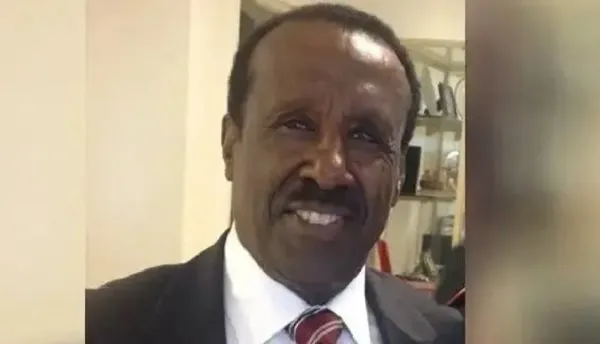
To advocate and practice international law across multiple global forums requires understanding the rules of order, but my understanding of genocide is not merely academic. It was forged in the blood and ash of the twentieth century’s most efficient slaughter. In 1994, as a veteran of international humanitarian response, I led the first United Nations emergency team into Rwanda and arrived during the final weeks of the 100 days of massacre. Our initial mission was to help a fragile new government stabilize a shattered nation, establish a semblance of security, and restore basic public services. But before the architecture of justice could be built, we had to confront the physical reality of absolute hatred. My team spent months clearing streets, public squares, and churches of mutilated bodies to prepare mass graves. The horror was total; in some instances, we had to deploy snipers simply to eliminate packs of stray dogs feasting on human corpses.
Virtually all the victims were Tutsis, alongside moderate Hutus who refused to kill. The bodies bore the marks of unimaginable cruelty. Most had been savagely beaten after they were already dead—a testament to a rage that sought not just to eliminate life, but to desecrate the very humanity of the victim. People were hunted solely for who they were, systematically chopped to pieces to vent an apocalyptic anger. Once the land was cleared, our most agonizing task was retrieving the swollen bodies choking the Kagera River—thrown there, just as ‘Radio Télévision Libre des Mille Collines’ had gleefully broadcast, to “join their ancestors in Ethiopia.”
Under the 1948 Genocide Convention, the crime requires two distinct elements: the physical act of destruction and the specific “intent to destroy, in whole or in part, a national, ethnical, racial or religious group as such.” To anyone with legal training, what occurred in Rwanda was unquestionably genocide on a massive scale. Yet, the United States and the broader international community engaged in a craven linguistic dance, refusing to utter the word. Years later, President Bill Clinton would face the embarrassment of delivering a calculated apology at the Kigali airport, seemingly too ashamed or fearful to even enter the capital city.
Justice eventually arrived, albeit slowly. I walked the halls of the International Criminal Tribunal for Rwanda in Arusha, watching the architects of the slaughter lined up and convicted. Over decades, perpetrators were held accountable in Arusha, in Rwandan national courts, through local Gacaca tribunals, and across European jurisdictions.
History, however, is a cyclical nightmare. When the world said “Never Again” after the Second World War, it was believed that a new order with accountability would replace the primitive custom of dominating, killing, displacing, and oppressing people for control of resources and power. Since the signing of the Genocide Convention, 152 countries have ratified that treaty, pledging to prevent another catastrophe. Yet, from Cambodia to the former Yugoslavia, Iraq, Syria, Afghanistan, Liberia, Sierra Leone, Darfur, and now in one of the most ancient countries with over 2000 years of recorded history, Ethiopia, the killing machines have not been silenced.
Since 2018, I have watched this terrifying pathology unfold in an ancient land with the oversight of an indifferent society trapped in a state of manufactured public amnesia. For over thirty years, the Amhara people—encompassing Muslims, Orthodox Christians, and Orthodox Oromos—have been the targets of a systematic extermination. I call it a “Creeping Genocide” because it occurs and develops slowly, gradually, and almost imperceptibly over decades rather than exploding in a single, well-defined flashpoint like in Rwanda. This slow burn allows perpetrators to weaponize plausibility and maintain a state of permanent denial.
The atrocities committed in Ethiopia mirror the worst of Rwanda: human beings slaughtered like cattle, hacked with machetes, burned alive, and dragged through the streets for public amusement. Pregnant mothers have been ripped open, their unborn babies torn from their wombs, and their organs paraded as trophies. These were not hidden crimes. They were executed in broad daylight, filmed on cell phones, and broadcast widely on social media. Not surprisingly, the Prime Minister and his government have not offered a single word of condemnation. This administrative silence is the ultimate form of denial, signaling total impunity to the perpetrators.
As a legal adviser for Orthodox Tewahedo Against Genocide (OTAGE), I helped compile an exhaustive dossier of these atrocities with the explicit intention of seeking justice through the International Criminal Court. I traveled to The Hague and Geneva and met with ICC and other legal experts. The evidence we presented met every structural and evidentiary requirement of the Genocide Convention, including the elusive “dolus specialis,” or special intent. We documented hate speech from the highest levels of power, including recordings of the Prime Minister fanning animosity against the Orthodox Church and ethnic Amharas. We preserved directives given to youth cohorts to kill and burn, verified the presence of state authorities at the scenes of these crimes, and secured testimonies from thousands of survivors. Yet, because Ethiopia is not a state party to the Rome Statute, the ICC remains hamstrung, leaving a vacuum where international justice should be. There are other ways of bypassing this, including Universal Jurisdiction, referral by the UN Security Council, and special ad hoc tribunals like the Rwandan Tribunal in Arusha. But all these need the full cooperation of the international community, which was a complicated task for a community group that had no popular recognition.
But let us look closely at how this vacuum is maintained, and expose the profound bankruptcy of the international legal framework. In my previous work, The ICC A Global Political Pawn: The Case of Ukraine, I detailed the extraordinary, unprecedented speed with which the ICC Prosecutor rushed to take action in the wake of the 2022 invasion. Within mere days, under massive political pressure from Western powers, the court mobilized resources, sent investigators, and generated headlines for cases involving a relatively small number of documented civilian victims.
The historical and legal contrast is devastating. While the international community and the ICC panicked and fast-tracked proceedings in Europe to serve geopolitical interests, hundreds of thousands of black bodies have been systematically targeted, hacked, and displaced in Ethiopia to total silence. Not a single preliminary examination has been opened; not a single state member has rushed to refer the horrors then of Shashemene, Wellega, Metekel, or Ataye to the court. The international criminal justice system has exposed itself as a purely political machine—weak with the strong, selective in its conscience, and structurally indifferent to African suffering except when it serves their interests.
Furthermore, we are witnessing the inevitable consequence of this selectivity. The ICC was designed and tolerated by Western powers primarily as a tool to impose their own version of order upon the Global South. Yet, the moment the court attempts to function independently—when it doesn’t do enough to serve Western mandates or when its mechanisms threaten Western allies—the reaction is swift and punitive. The United States has aggressively sanctioned the court and its officials, threatening asset freezes and visa bans. Weaponized by its own architects and sabotaged when it steps out of line, the ICC is now an institution on the very verge of structural collapse, losing whatever fragile thread of legal legitimacy it once claimed.
This structural paralysis extends across the entire landscape of the Global South, where international law has been reduced to an empty rhetorical game. We see it in the Rohingya case, which, despite being brought before the International Court of Justice and receiving sporadic bursts of superficial global attention, leaves the victims isolated as the military apparatus continues its campaigns. We see it in Gaza, where the systemic eradication of life has wound up as a sterile legal exercise played out in European courtrooms; the world watches, entirely unable or unwilling to act, while the binding judgments and warrants of both the ICJ and ICC are rendered completely toothless by the political calculations of superpowers.
The tragedy of this selective conscience is written in the endless, neglected crises of Africa. The Democratic Republic of the Congo has been trapped in a meat grinder of cyclical crisis since the very dawn of its independence. It plays host to the largest, longest, and most expensive humanitarian and peacekeeping operations in United Nations history, yet the world displays no serious interest in stopping the continuing carnage. Nearby, the Central African Republic remains fractured by permanent instability, deliberately maintained by Russian mercenaries and local factions who loot rare minerals under the cover of chaos. Peace is never allowed to take root because the looters require state fragility to sustain their plunder.
This is a pathology I know intimately. Between 2004 and 2008, I stood on the ground as a United Nations consultant in Sudan when the first alarms of the Darfur genocide were announced to the world. The ICC issued its symbolic indictments against the architects of that slaughter, and the international community shed its customary crocodile tears. Yet, over two decades later, that same destruction process has merely expanded its bastion. Today, Sudan undergoes total devastation and active genocide because the geopolitical drivers remain untouched: the United Arab Emirates systematically finances the destabilization to loot Sudan’s gold, funneling transnational mercenaries through an unruly Chad, drawing fighters from the Russian Wagner remnants to Colombian syndicates. The theater of persecution has changed, but the fundamental mechanics—unhinged external plunder enabling local mass slaughter—remain identical to the day I left.
This systemic vacuum is actively sustained within Ethiopia by a towering wall of elite denial, political stonewalling, and systemic self-preservation. Those who benefit from the current system, or fear that a collapse of the regime or an independent prosecution would put their own lives and status in jeopardy, choose to aggressively defend their positions by obscuring the slaughter. The shifting nature of this crisis reveals a deliberate strategy of distraction. Recent security standoffs with internal opposition and neighboring countries serve a dual purpose: they internationalize the conflict to legitimize the Prime Minister’s ambitions while simultaneously mobilizing nationalist sentiment to drown out the internal horrors.
While global forums engage in diplomatic indifference, proxy conflicts, and the passive acceptance of state denials, the disenfranchised are left with no choice but to turn to asymmetric resistance. As we enter a period of dramatic global realignment, international law has abandoned the vulnerable, making the sheer scale of modern military power an illusion. Global powers are desperately attempting to bring advanced technology under their absolute control through extensive systems of surveillance, plunder, and digital dominance. Yet, they remain fundamentally dependent on the poorer nations of the Global South for the raw materials that make this technology possible.
Simultaneously, a shift is occurring at the grassroots level. Everyday people and anonymous technicians, working from their homes in impoverished nations outside industrialized regulatory frameworks, are increasingly capable of devising rudimentary technologies that disrupt sophisticated, multi-billion-dollar infrastructures powered by AI and the internet. This reality is already unfolding in theaters like Iran, Yemen, and Ukraine, where traditional superpower might is slowed or defeated by low-cost drones and devastating cyberattacks. Ultimately, these unconventional, village-constructed means may become the ultimate equalizer—functioning in modern geopolitics much like Death, the Leveler.
As the Amhara people organize an armed resistance that has begun to draw in other regions, the uprising has transformed into an existential struggle for both sides. Yet, we must confront a brutal truth: human misery is no longer considered a matter of national or international interest. The international community has given itself a pause, focusing strictly on other parts of the world that are more relevant to the narrow national interests of major powers. Experience shows that the world’s major powers, including the United States, rarely respond until the consequences of a crisis arrive directly at their own doorsteps—and even then, their interventions remain strictly calibrated to mirror their own self-interest.
What disturbs the survivors most, however, is that international indifference is governed by a separate, cynical calculation of geopolitics. But the denial of genocide by those who are close to the scene, who have watched the video evidence, escapes rational explanation. How does one explain figures like Dr. Dagnatchew, a professor of philosophy, who steps into the public square to deny that a genocide has taken place? These are public figures whose education was bought with the sweat and taxes of Ethiopia’s impoverished, dirt-poor farmers. Yet, when those very farmers are slaughtered, these intellectuals refuse to stand on their behalf. They have nothing to lose by speaking the truth, yet they choose the cheap currency of political recognition and the adulation of a brutal regime. They are blinded by a proximity to power, seemingly oblivious to the fact that their moral conscience is bankrupt and that history will eventually call them to account.
Ethiopia is a historic country where Christian, Islamic, moral, and social values have been deeply ingrained for millennia. Where did those values go? How does a society give in to such profound ruthlessness, followed by an equally aggressive campaign of cover-ups and gaslighting? Elites who stand by or actively obscure the truth are modern manifestations of the intellectuals who watched Hitler rise and validated the destruction of millions. We must learn these bitter lessons. We must aggressively remind the living that no decent, moral life can be lived without fighting evil when it arrives at your doorstep. Silence is complicity; denial is the final stage of the genocide itself.
Genocide and crimes against humanity have long been enabled by the cold indifference of the most powerful nations, where physical and diplomatic might is used to execute whatever they wish. But the poor and the marginalized of this world will not simply disappear into the silence of public amnesia. When international law abandons them, they turn to asymmetric warfare, a realm where modern, conventional military power is quickly exposed as an illusion. There will always be enough decentralized knowledge across the globe to disrupt unhinged plunder and blatant disregard for human rights and the rule of law. Ultimately, we are arriving at a historic crossroads. We must build a humane, considerate world where the powerful and the poor can genuinely coexist on terms of mutual respect and legal accountability. Unless we make this planet livable and just for all of humanity, we will perish together.
Editor’s Note: Views in the article do not necessarily reflect the views of borkena.com
__
Join our Telegram Channel: t.me/borkena
Like borkena on Facebook
To submit a press release, send the submission to info@borkena.com
Add your business to Ethiopian Business Listing / Ethiopian Business Directory
Join the conversation. Follow us on X (formerly Twitter) @zborkena to get the latest Ethiopian news updates regularly.