
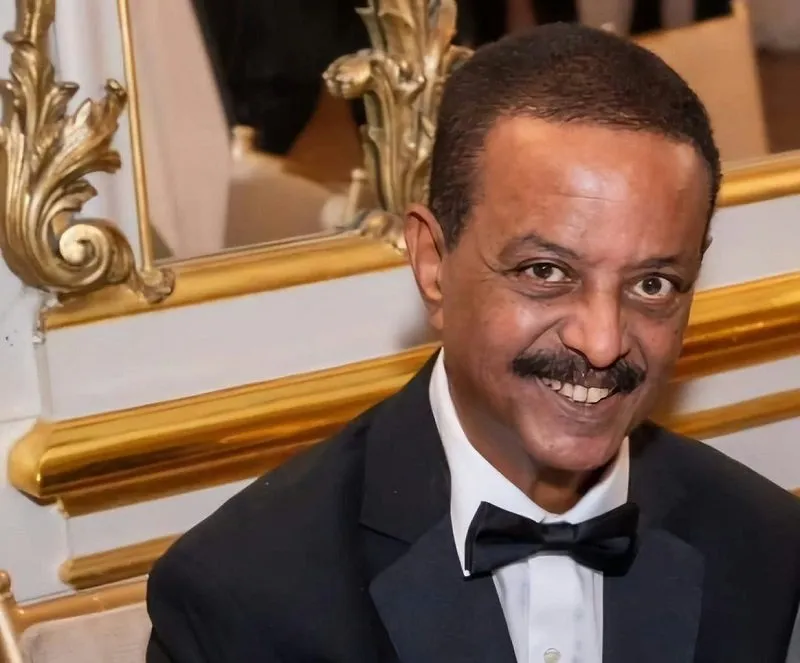
Mikael Wossen, PhD.
Whose Suffering Counts?
Why does mass violence in Africa often struggle to receive the same urgency of recognition and international attention as atrocities committed in Europe, such as those in the former Yugoslavia? This question raises fundamental issues of power, race, historical memory, and the politics of recognition. The decades-long prolonged violence against the Amhara people in Ethiopia makes this question particularly pressing. The issue is not simply why international actors hesitate to use the term genocide, but who possesses the authority to define mass atrocities, whose suffering commands international attention, and whose is relegated to the margins of history.
The argument is not that European suffering is undeserving of recognition, nor that every mass atrocity in Africa must automatically be classified as genocide. Rather, it is that the recognition of human suffering appears unevenly distributed across geopolitical and racial boundaries. This disparity demands critical examination.
The Imperial Legacy and the Hierarchy of Human Suffering
European imperialism established hierarchies of humanity in which the lives, rights, and dignity of colonized peoples were systematically subordinated to imperial interests. Although formal colonialism has largely ended, its ideological legacies continue to shape international perceptions of whose lives matter, which atrocities attract sustained attention, and whose suffering is considered politically consequential.
When mass violence occurs in Africa, it is frequently framed as tribal conflict, ethnic clashes, intercommunal violence, or ,at best, a humanitarian crisis. Such descriptions may sometimes be factually appropriate, but they can also obscure questions of organized persecution, political responsibility, and systematic destruction. Comparable violence elsewhere may be examined more directly through the language of state criminality, crimes against humanity, and genocide.
The contrast between the international response to atrocities in the former Yugoslavia and the failures surrounding Rwanda in 1994 illustrates the need to scrutinize this unequal politics of recognition. Darfur in Sudan offers another troubling example of the distance between international commitments to prevent mass atrocities and the realities of political response.
The critical question, therefore, is not whether European suffering receives too much attention. It is why African suffering so often struggles to receive equivalent moral urgency, investigative resources, and political commitment. When the identity of victims influences the intensity of international concern, the universality of human rights collapses, or at least becomes a matter of legitimate doubt.
Genocide: A Legal Category and a Political Battleground
To call an atrocity genocide is to do more than describe mass killing. The term carries immense legal, moral, and political weight. It identifies an exceptionally grave international crime, challenges the legitimacy of perpetrators, and strengthens demands for prevention, protection, and accountability. It is known as the crime of crimes.
The 1948 United Nations Convention on the Prevention and Punishment of the Crime of Genocide defines genocide through specified acts committed with the intent to destroy, in whole or in part, a national, ethnical, racial, or religious group as such. The decisive legal question is therefore not simply how many people have been killed, but whether the prohibited acts and the specific intent required by the Convention can be established.
This distinction matters in the Ethiopian case. Allegations of systematic violence against the Amhara population, including killings, drone attacks on civilians and schools , displacement, and other grave abuses, warrant rigorous, independent investigation. Claims that Oromo political authorities intend to reduce the Amhara to a minority in particular areas, or otherwise destroy the group in whole or in part, must be assessed against reliable evidence and the applicable legal standard. If substantiated, such evidence could have profound implications for the legal characterization of the violence.
Yet legal precision must not become a convenient instrument of political evasion. Governments and international institutions may have strategic, economic, or diplomatic reasons to avoid language that could strain relations with an incumbent government or its international partners. Although political reluctance cannot by itself establish that genocide has occurred, it can help explain why credible allegations may receive inadequate scrutiny or an insufficiently urgent response.
The problem is compounded when African political elites, intellectuals, and institutions reproduce the reluctance of more powerful international actors. In Fanon’s point of view, they have learned to judge themselves by the standard of their oppressors. There is no international recognition of genocide, is the famous refrain of those who have learned to see themselves through the eyes of those who look down on them. When external recognition becomes the principal measure of whether African suffering deserves to be taken seriously, the unequak hierarchy of recognition is internalized. The resulting silence is not merely a failure of solidarity; it is also a form of political and moral dependence.
The Amhara Case and the Responsibility to Investigate
The allegations of prolonged and systematic violence against Amhara communities in Ethiopia expose the tension between universal human rights principles and the strategic calculations of states. Reports and allegations of killings, displacement, and regular attacks on civilians demand serious attention regardless of the political identity of the victims or the perpetrators.
The appropriate response is neither to declare genocide without sufficient evidence nor to withhold the term indefinitely because its application might prove diplomatically inconvenient. Credible allegations must be investigated independently, evidence preserved, civilians protected, and those responsible held accountable under applicable law.
International institutions should also explain their standards transparently. If the evidence is insufficient to establish genocidal intent, they should identify what remains unproven rather than allowing uncertainty to become an excuse for indifference. Conversely, where evidence supports the legal threshold, political sensitivities should not prevent recognition.
The principle must be consistent: the identity of the victims should not determine the seriousness with which their suffering is investigated, and the strategic importance of the perpetrators should not determine whether accountability is pursued.
A Gramscian Perspective: Who Has the Power to Define Reality?
A Gramscian analysis directs attention beyond the immediate violence, to the power to shape public understanding. Hegemony operates not only through coercion but also through the production of dominant interpretations of reality. Institutions, diplomatic networks, media organizations, and influential states help establish which descriptions of events become legitimate, authoritative, and widely accepted.
The classification of mass violence is therefore both a legal process and a political struggle over meaning. Internationally influential actors possess disproportionate power to shape the vocabulary through which atrocities are understood. Their descriptions can determine which crises become priorities, which victims are recognized as subjects of international concern, and which perpetrators face sustained demands for accountability.
This does not mean that genocide is merely a political label or that legal determinations should be subordinated to ideological preferences. Rather, it means that the application of legal standards takes place within an unequal international order. The law may be universal in principle while the political conditions under which it is interpreted, publicized, and enforced remain profoundly unequal.
The problem becomes especially acute when African governments, intellectuals, and publics accept the judgments of powerful external actors as the ultimate measure of political judgement and truth. Such deference reproduces an international hierarchy in which recognition flows from the powerful to the powerless, rather than from impartial evidence and universal principles.
Conclusion: Are Human Rights Truly Universal?
The experiences of Rwanda, Darfur, and the allegations of systematic violence against the Amhara raise a fundamental question about the credibility of the international human rights order. The issue is not simply whether the word genocide is used, but whether the institutions responsible for preventing and punishing mass atrocities apply their principles consistently and equally.
Universal human rights cannot be genuinely universal if the recognition of their violation depends, in practice, on the identity of the victims, the geopolitical importance of the perpetrators, or the strategic interests of powerful states.
The moral test of the international community is not how eloquently it condemns atrocities where recognition carries few political costs. It is whether it is willing to investigate, acknowledge, and confront credible allegations of mass violence when doing so challenges its own alliances and interests.
The central question is therefore unavoidable: If the recognition of African suffering remains contingent on the approval of powerful external actors, can human rights truly be called universal—or do they remain privileges unevenly distributed by the international hierarchy of power?
Editor’s Note: Views in the article do not necessarily reflect the views of borkena.com
__
Join our Telegram Channel: t.me/borkena
Like borkena on Facebook
To submit a press release, send the submission to info@borkena.com
Add your business to Ethiopian Business Listing / Ethiopian Business Directory
Join the conversation. Follow us on X (formerly Twitter) @zborkena to get the latest Ethiopian news updates regularly.