
By Shanko Dache
Introduction: A Capital Cannot Be Claimed by One Ethnic Group
Addis Ababa is not the sole property of the Oromo, Amhara, Tigrayan, Gurage, or any other people. It is the capital of Ethiopia—the city built and inhabited by all Ethiopians. Any political project that sets out to claim the city on an ethnic basis and make it the sole property of one people negates the simple fact that the city belongs to all Ethiopians. Any such project could create ethnic cleavages, frictions, and alienation among residents that could spread far beyond the city. Addis Ababa should be a national capital for all, where all Ethiopians have equal rights.
This policy debate on the political and administrative placement of Addis Ababa, as well as the question of the OPDO political establishment and their offspring, poses a pertinent question: Does the capital belong to all Ethiopians who reside there, or does it belong to the ethnic group whose political wing controls the federal government?
This is not an administrative argument but one about the character of a multiethnic state and the political rights of its citizens. If political elites can use their control of the federal government to turn the capital into the exclusive domain of one ethnic group, what would prevent other political elites from pursuing the same objective in cities across Ethiopia? Such a precedent will endanger citizenship as a position of equality; increase divisions along ethnic lines; and erode the principle that public institutions, especially state capital cities, should serve all citizens, regardless of their ethnicity. It is not the holding of power per se, but whether political power is used to serve the public or exclusive groups.
Awassa is not the capital of Ethiopia, but its story is a premonition. In the number of articles I posted in Borkena, such as in “Awassa Too Belongs to Its Residents!” and “The Rush to Make Awassa a Symbol of a Single Ethnic Group and a Milk Cow for a Few Ethnic Zealots Must Stop,” I highlighted ethnic politics, political representation, and Awassa’s position as a possession of a single ethnic group. Those aspects apply to the Addis Ababa question.
What is at stake for Addis Ababa? Will the capital be a city for all Ethiopians, or will it be the exclusive possession of a political establishment pursuing ethnic interests? The experience of Awassa can explain why this matters. The city’s administration must prioritize the interests of its residents, safeguard their rights, and serve them equally regardless of ethnicity.
1. The Dangerous Aspiration to Ethnicize Addis Ababa
For several decades, the OPDO political establishment has led the politics of Oromia and continues to have considerable influence within the federal administration. Under present conditions, doubts have arisen that the OPDO aims at self-interests, the strengthening of an Oromo perspective on the Ethiopian federal system, and the expanding political influence of the Oromia political establishment in Addis Ababa.
The Oromo and the inhabitants of the Oromia region have social, cultural, linguistic, and economic ties to Addis Ababa and its environs. These ties must be recognized and respected. The rights of the Oromo people, like those of every other ethnic group in Ethiopia, must be protected. However, recognizing those rights does not mean granting any ethnic group exclusive ownership of Addis Ababa.
There is a fundamental difference between defending the rights of an ethnic community and claiming that their rights justify controlling a city at the expense of its other residents. The rights of some should not be at the cost of the rights of others. So, the political and administrative fate of Addis Ababa must be decided in ways that protect the interests and rights of all its residents.
By accepting to have the situation about Addis Ababa contested because of its location, history, and ethnic composition of the so-called administrative ruling clique, political leaders are not only endorsing a claim for the enhancement of Oromo representation in the capital but also advancing a completely different understanding of politics and citizenship.
This is the same for all the rest of the ethnic groups in Ethiopia. The Sidama don’t have exclusive ethnic control of Awassa, the Amhara don’t have exclusive ethnic control of Addis Ababa or any other multi-ethnic city, the Tigrayans don’t have exclusive ethnic control of any city in Ethiopia, and the Gurage don’t have exclusive ethnic control of any city. The city belongs to its residents and should be governed based on the rule of law and equal rights of people of all ethnic groups.
If the OPDO political establishment and political figures who emerged from it advance the ethnic capture of Addis Ababa, their position should be challenged through legitimate political and legal means. Such a project raises serious concerns about the rights of residents who do not belong to the Oromo ethnic group and sets a potentially dangerous precedent for ethnic exclusion in other Ethiopian cities. The capital’s political and administrative future should be determined through arrangements that respect the rights of all its residents, rather than treating it as the exclusive possession of any single ethnic group.
2. Addis Ababa is Ethiopia’s capital, not a trophy for those in power.
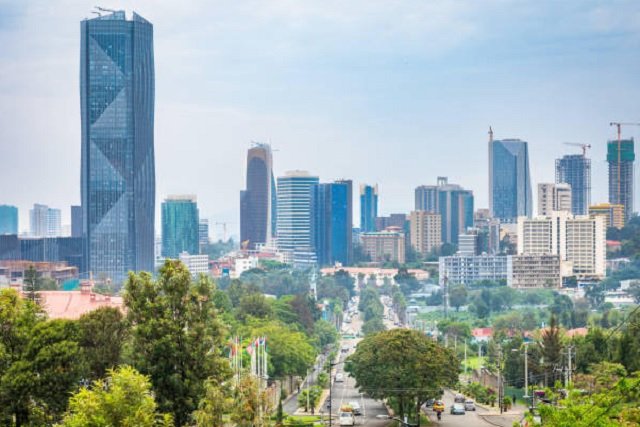
Addis Ababa is the capital city of Ethiopia. It serves as a diplomatic, economic, and administrative center and provides a home and opportunities for hundreds and thousands of Ethiopians who have arrived to study, start businesses, find work, settle, and raise families. It is hard to justify the idea that the people of Addis Ababa should be subject to the ethnic dominance of the Oromo.
If this position is to be accepted as valid and just, it would set a dangerous precedent. It would mean the people of Addis Ababa would be politically subordinate to the Oromo because the capital of Ethiopia is located in the region of Oromia.
However, the city is not only for the urban residents. If the political agenda of the OPDO and its successors is to make Addis Ababa the private property of a single ethnic group, then such a political project must not be imposed on the city’s residents or pursued in violation of constitutional and legal arrangements. Nor should any attempt to establish ethnic dominance be tolerated under any circumstances, particularly with political maneuvers designed to give one ethnic group an upper hand over the city’s other residents.
It would be premature to declare that the Ethiopian state is ethnically occupying Addis Ababa before analyzing the constitutional provisions, administrative restructuring, and political decisions involved. However, if political steps are being taken to seize exclusive ethnic dominance of the capital, then they could have unlawful and profoundly destabilizing effects for the country. They also risk setting a worrying precedent by incentivizing other ethnic groups to claim other cities within their territory.
Ethnic take-over of Ethiopia’s capital would pose grave constitutional and democratic problems. Using the state power for an ethnic takeover of the capital would risk further ethnic claims and political domination of other parts of the country. It has to be considered on the basis of the actual policies and behavior of the authorities and not by political statements alone.
3. Awassa: A Red Flag for the Politics of Ethnic Ownership
Awassa is a red flag for the politics of ethnic ownership that is going to blow up in Addis Ababa. The people of Awassa have been part of a process creating modern Ethiopia, a growing city that has grown exponentially in recent years, while the Sidama had been living in the surrounding area. But the rights of Sidama people and their right to self-government do not give them a right to claim ethnic ownership of Awassa or make it a city closed for others.
This is a principle, and my own writing, including research, has a long history documenting this issue. I wrote and published both “Rush to Make Awassa a Symbol of a Single Ethnic Group and a Milk Cow for a Few Ethnic Zealots Must Stop,” published by Borkena on August 2, 2020, and “Awassa Belongs to its Residents,” published on September 19, 2026. In the first text I wrote, “My friends, it is indeed not easy to live in this country under a regime that works out of the window, but living under a regime that rules over the window should not be taken as a right.” In the second I discussed the question of public property and public institutions in Awassa.
These opinion pieces are not judgments of the courts or decisions of the bench. However, the questions they raise deserve serious consideration, particularly in a diverse and multiethnic city like Awassa, where the Sidama are not the majority of the urban population.
Are the highest public officials appointed on the basis of merit and professional qualifications, or primarily because of their political loyalty and ethnic affiliation? Are public funds and government contracts distributed fairly, or do people belonging to the ruling political circle or favored ethnic group receive preferential treatment at the expense of others? Does the Awassa administration protect the constitutional rights of all ethnic communities, including minorities, or do its policies and actions undermine their ability to exercise those rights equally?
These are critical questions, and candid responses could lead to real change. But those changes cannot be realized in a context where ethnic loyalty is a precondition for government jobs, public resources, or impunity. When residents recognize that one must be a member of a certain ethnicity to win public office, access welfare benefits, or escape punishment, the civic and economic structures begin to collapse. Individuals are unable to obtain gainful employment because of nepotism; state finances are robbed or exploited; and every ordinary citizen suffers the fallout.
That is why it can be so damaging to develop a system based on ethnic supremacy. It can lead to a situation where ethnic minorities are subjected to exploitation, abuse, and segregationist policies. This applies to both Awassa and Addis Ababa, and if either were subjected to exclusive control by one group, then the repercussions could be far-reaching in Ethiopia. The rights of one ethnic group should not come at the expense of the rights of another.
4. Between Awassa and Addis Ababa: Same Political Logic – Larger Consequences
This is not to suggest that Awassa and Addis are comparable or that the two places are the same. It is simply to point to a dangerous political trend that needs recognition. In both scenarios, however, ethnic capture would have devastating implications.
Some people believe that the current Oromo-led government has made it easier for Sidama political elites to consolidate their power in Awassa while ignoring the interests and wishes of the city’s residents. They suspect that the government has tolerated this situation to gain the goodwill of the Sidama while pursuing its own political agenda in Addis Ababa. Critics argue that tolerating ethnic dominance in one city could help create political conditions for pursuing similar ambitions in another. In their view, what has happened in Awassa amounts to taking a city away from other Ethiopians and former residents of the Southern Nations, Nationalities, and Peoples’ Region (SNNPR) who helped build it.
Such reasons can be taken seriously. They put us in a dilemma: Is the government able to accept partiality of one group for the benefit of its own political interests? Unless the government guarantees the rights of every citizen and recognizes that no Ethiopian city should be treated as the exclusive possession of a single ethnic group, such allegations will continue. The lives of the residents of Awassa and Addis Ababa should not be sacrificed for the political terms of the narrow politicizing of city administration on one hand and preoccupied power seeking in the other.
The threats to Addis Ababa are even more serious since the city is located at the heart of the country’s political framework. Trying to monopolize the capital on an ethnic basis can have implications well beyond the city.
One possible development sequence illustrates the danger:
· First, the political leaders would support the historical narratives of a particular group of people to support its political power.
· They conclude that government agencies must also serve the interests of that group or be controlled by representatives who can be expected to do so.
· Ethnic and political loyalties may weaken professionalism in public institutions.
· As this influence grows, members of other ethnic groups may face discrimination, lose access to opportunities, or find themselves excluded from public life.
· Over time, this buildup of resentment and mistrust might eventually create problems for the entire country and for the ethnic group whose political power has increased. Increased political control might not provide lasting security or acceptance throughout the country, and other groups may suffer for their exclusion.
No objective justification exists to insist with certainty that this sequence will unfold, but the risk is so severe as to merit our notice whenever there is credible evidence of ethnic preference and discrimination. Such trends ought to be countered before they set in by legal, transparent, and resolute measures.
In Addis Ababa, the price for such an attack would be extremely high because the city is the nation’s capital. If the political-administrative infrastructure of the city were restructured to benefit exclusively an ethnic group, public confidence in the federal government would erode and divisions in the country would intensify.
A clear distinction must be made between protecting the rights of an ethnic group and claiming that its rights entitle it to exclusive control over a city. The link that an ethnic group has to a specific city must be acknowledged but should not be used as an argument to deny all other residents an equal right to participate in governance. Political leaders will be responsible if their policies oppose these principles.
Every Ethiopian citizen must feel secure that he/she is protected by the universal law. In other words, no ethnic group must be discriminated against in terms of services, jobs, political representation, dignity, and status by fellow citizens of a different ethnic group.
The fate of Awassa and Addis Ababa must be decided by equal citizenship and the rule of law and not by the notion of ethnic ownership. The extreme Ethiopian federalist political agenda that aims at making Addis Ababa the capital of only the Oromo people must be firmly opposed. No ethnic group can claim to belong exclusively to a city or town that is not exclusively theirs and must not use ethnicity as an ideological weapon to intimidate others, commit atrocities, and advance their political interests.
The agenda of using ethnicity to divide Ethiopians and commit human rights abuses needs to be confronted using Ethiopian law, facts on the ground, and equality of opportunity among all Ethiopian citizens. Such an agenda will create adverse ethnic tensions, threaten the rights of
Addis Ababa’s residents will serve as a convenient tool to advance secessionist endeavors and weaken Ethiopia’s territorial integrity.
Addis Ababa belongs to every Ethiopian citizen as the Federal Capital, just like Awassa belongs to all of us. Diversity and equality must be the foundation upon which Ethiopia must be built, and not division and discrimination. Ethiopia cannot and must not continue to be a country of ethnic polarization, political and territorial hegemony, and mayhem but rather a nation of equal citizens who share a common vision of coexistence, based on territorial integrity and universal human rights, the rule of law, and respect for democratic principles. No ethnic group has the God-given or otherwise bestowed right to use its numerical strength to impose its will on others and violate rights, including freedom of self-determination.
__
Editor’s Note: Views in the article do not necessarily reflect the views of borkena.com
__
Join our Telegram Channel: t.me/borkena
Like borkena on Facebook
To submit a press release, send the submission to info@borkena.com
Add your business to Ethiopian Business Listing / Ethiopian Business Directory
Join the conversation. Follow us on X (formerly Twitter) @zborkena to get the latest Ethiopian news updates regularly.