
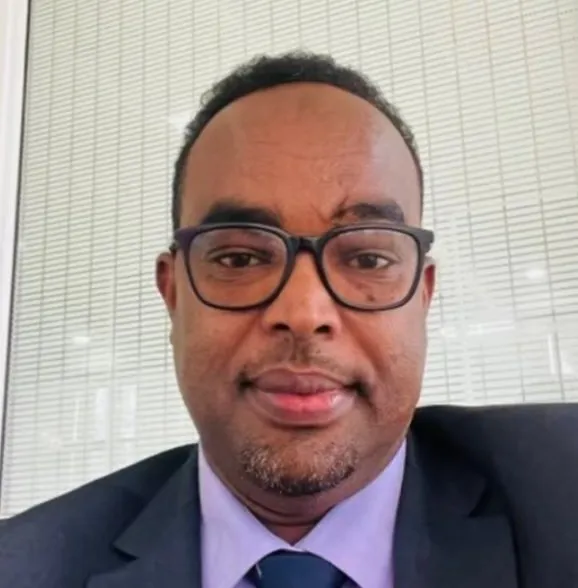
By Hussien Mohamed Yusuf
Ahmed Shide’s election as Speaker of Ethiopia’s House of Peoples’ Representatives on 5 October 2026 carries a significance that extends beyond a change in parliamentary leadership. For Somalis in Ethiopia, it is a moment that brings a long and often difficult political journey into sharper focus. A community whose place in the state has frequently been discussed through questions of security, belonging and loyalty now sees one of its own entrusted with presiding over the country’s federal legislature. That development deserves to be understood in the context of the history that preceded it.
There is a particular attention in seeing a Somali occupy that chair. It speaks to an expectation that generations have carried: that Somalis should be recognised as people capable of sharing responsibility for Ethiopia’s direction, with the same standing as their fellow citizens.
The Somali Region’s relationship with the Ethiopian state has never been simple. Imperial expansion, colonial boundary arrangements and successive conflicts shaped a political inheritance marked by contested authority and deep mistrust. The experiences of communities across the region differed, but many shared the feeling that decisions concerning their lives were made elsewhere, often by officials with limited understanding of their language, social institutions or livelihoods. Governments could appear more familiar through a military presence than through a functioning school, a reliable water supply or an accessible public service.
The Ethiopia–Somalia war of 1977–1978, together with the violence and displacement surrounding it, further complicated that relationship. Families carried memories of loss across generations. Political disputes became entangled with questions of identity, and the distance between citizens and the state acquired an emotional depth that administrative reforms could not easily overcome. Any serious account of Somali participation in Ethiopia must allow room for those memories. They help explain why recognition at the national level can carry a meaning that outsiders may underestimate.
Yet Somali history in Ethiopia cannot be reduced to conflict. It also includes the persistence of communities that educated their children, sustained livelihoods under difficult conditions and gradually expanded their participation in public life. Across the region, people continued to build futures even when the political environment offered little certainty. That quieter history deserves a place alongside the better-known accounts of confrontation.
The changes introduced after 1991 brought an important opening. The federal arrangement recognized the Somali Region and gave Somali language and identity a formal place within the state. Regional institutions created space for local administration and political participation. These developments mattered, and a fair assessment should acknowledge them.
However, a significant contradiction remained within the political system that governed the federation.
The Ethiopian People’s Revolutionary Democratic Front was built around four constituent organisations representing Tigray, Amhara, Oromia and the southern region. The ruling parties of the Somali, Afar, Benishangul-Gumuz, Gambella and Harari regions remained affiliates. They supported the governing coalition and administered their respective regions, but they did not enjoy the same organisational standing as the parties within its core.
For Somalis, this distinction was consequential. Their region belonged to the federation, their representatives sat in parliament and their officials participated in government. Nevertheless, their regional party remained outside the central coalition structure where much of the country’s political direction was determined. The arrangement placed a ceiling on the meaning of inclusion. Somalis were present within the state while their political organisation occupied a subordinate position within the ruling system.
It is important to describe this accurately. Somali officials did hold federal responsibilities during the EPRDF period. Their service should neither be overlooked nor written out of history. Ahmed Shide’s own experience in the federal government began before the establishment of the Prosperity Party. The issue was therefore the enduring difference between access granted to individuals and the standing afforded to the political organisations representing their regions.
That distinction helps explain the grievance. An individual could rise through government while the community’s ruling party continued to be treated as an affiliate. Capable Somali officials could contribute to national administration without altering the hierarchy within the coalition. For people who already carried memories of exclusion, this reinforced the sense that their participation came with limits established by others.
The formation of the Prosperity Party in 2019 changed that arrangement. Three EPRDF member parties merged with the previously affiliated regional parties into a common organisation, while the Tigray People’s Liberation Front declined to join. The Somali party entered that organisation alongside the other participants. Its former position outside the EPRDF core came to an end.
This was a meaningful political change, and it deserves acknowledgment.
For Somalis and the other former affiliate regions, the merger opened a route into the same national party structure as those who had previously occupied the coalition’s centre. It challenged a hierarchy that had become deeply embedded in political life. Whatever views one holds about the Prosperity Party’s wider record, this particular change should be assessed on its merits. Political judgment gains credibility when it can recognise progress as clearly as it identifies shortcomings.
Prime Minister Abiy Ahmed’s leadership and Prosperity Party deserve credit for creating that opening. Recognising it does not require agreement with every government decision. It requires an honest understanding of what changed and why that change matters to communities whose political organisations had spent decades outside the ruling coalition’s core.
Ahmed Shide’s election gives this opening a powerful and visible expression. Alongside the earlier elevation of Adan Farah within Prosperity Party’s national leadership, it suggests that Somali participation is becoming more firmly established at the centre of the governing system. These developments do not settle every question about equality or influence, but they demonstrate that national responsibility is increasingly being entrusted to Somali leaders.
The torch now carries a different meaning.
For a community accustomed to arguing for recognition, being entrusted with national leadership creates an opportunity to shape the institutions through which recognition becomes practical. The responsibility is considerable. It calls for competence, fairness and a willingness to serve beyond the boundaries of one’s immediate constituency. The value of this moment will grow through the quality of the work that follows it.
A Somali Speaker must serve the whole House. Representatives from every region should be able to expect fair treatment, respect for parliamentary procedures and an orderly setting in which to conduct their work. Shide’s background can help him understand the concerns of communities that have felt distant from national institutions. His success will depend on applying that understanding with fairness to all.
The election also invites a wider reconsideration of how the Somali Region is understood. Public discussion too often returns to drought, insecurity or humanitarian need. These are serious concerns, but they tell only part of the story. The region is also home to pastoral knowledge, commercial experience and a growing body of educated professionals. Somali communities have much to contribute to the country’s understanding of development, governance and its relationships across the Horn of Africa.
Pastoral livelihoods offer a clear example. Policies designed around settled populations can fail to account for seasonal movement, access to grazing and the changing availability of water. Bringing pastoral experience into national debate can improve how education, health care and other services reach mobile communities. Somali traders and entrepreneurs likewise bring practical knowledge of markets and the movement of goods across borders. National policy benefits when these experiences are heard and taken seriously.
This is where representation can acquire substance. A broader range of leaders should bring a broader understanding of the people the government serves.
For young Somalis, the meaning may be more immediate. A student in Jigjiga, Gode, Awbarre or a distant rural settlement can look at the federal parliament and imagine a future in public service that extends beyond regional boundaries. Such expectations matter. They influence what young people believe education can make possible and whether they regard national institutions as places in which they belong.
Visible leadership must now be supported by credible opportunities. Education, fair recruitment and professional development will determine whether this moment encourages a wider generation to participate. One person’s rise becomes more valuable when it helps make the path less exceptional for those who follow.
Those who dismiss Shide’s election altogether risk overlooking this change. Criticism of the government remains legitimate, and public officials must continue to face scrutiny. But recognising the significance of Somali participation does not weaken the case for accountability. Both judgments can be held together. An appointment can deserve celebration while the institution and its leadership remain open to examination.
To see Somalis only through their grievances is to overlook their agency. They are also officials, professionals, citizens and decision-makers helping to shape Ethiopia’s present. Their political role should be assessed with the same seriousness afforded to other communities. Whoever ignores that role offers an incomplete reading of the country.
The expectations arising from this election should nevertheless remain grounded in the responsibilities of the office. The Speaker cannot personally deliver every road, resolve every local dispute or direct the work of every ministry. Parliament can provide a setting in which public needs receive attention and government performance is examined. Shide’s contribution should be judged by how effectively he supports that work and protects the dignity of the institution.
Somali leaders also have responsibilities closer to home. Greater access to federal leadership should encourage stronger regional institutions and wider opportunities for capable citizens. Its benefits should reach beyond a small circle of officeholders. Women, young professionals and communities across the region should feel that national recognition creates room for their contribution too. Fairness within the region will strengthen the Somali claim to equality across the federation.
Political affiliation must not become a condition of belonging. Somalis who support opposition parties, or who belong to no party, share the same entitlement to dignity and public service. The opening achieved within the Prosperity Party will have greater lasting value if it helps establish a wider expectation that Somali participation in national leadership is ordinary, legitimate and secure.
Ahmed Shide deserves congratulations as he assumes this responsibility. His election offers grounds for hope, rooted in a clear change from the affiliate status of the EPRDF years to a more visible place in national leadership under the Prosperity Party. That progress should be acknowledged with confidence and used with care.
Hussien is a Climate Change adaptation and Environmental Sustainability Practitioner based in Nairobi, Kenya. He can be reached at : hussienm4@gmail.com
Editor’s Note: Views in the article do not necessarily reflect the views of borkena.com
__
Join our Telegram Channel: t.me/borkena
Like borkena on Facebook
To submit a press release, send the submission to info@borkena.com
Add your business to Ethiopian Business Listing / Ethiopian Business Directory
Join the conversation. Follow us on X (formerly Twitter) @zborkena to get the latest Ethiopian news updates regularly.