
By Minadama Lelebe
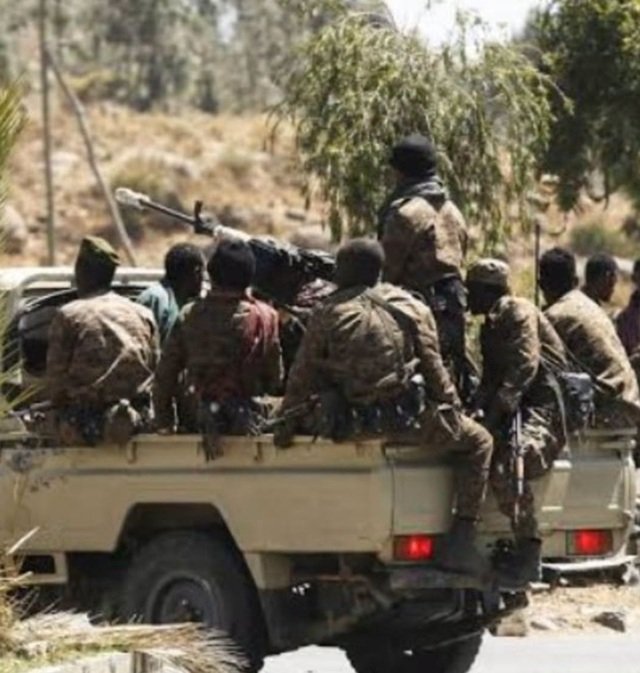
The establishment of the Ethiopian Peoples’ Forces Alliance for Survival marks a new chapter in Ethiopia’s political and military crisis. Seven opposition and armed groups from different parts of the country have united in a coalition with a common objective of overthrowing the regime in Addis Ababa. These include armed groups from Tigray, Amhara, Oromia, Somali, Afar, and Benishangul-Gumuz, among others. (AP News)
However, there is another constituency consisting of over 20 million people who are suffering and politically oppressed; their concerns and aspirations must not be overlooked: the peoples of Southern Ethiopia.
Southern ethnic communities have been witnessing killings, displacement, political discrimination, and the dismantling of an administrative system that, regardless of its flaws, brought together several dozen nations and nationalities into one “small Ethiopia” in the Southern Nations, Nationalities, and Peoples’ Regional State (SNNPR).
Violence against the Gedeo community and the repressive acts associated with increased autonomy demands in the Wolaita Zone, including the violence against the Wolaita people in Awassa, are all valid grievances. In 2018, there were violent clashes between the Gedeo and West Guji communities, leading to the deaths of thousands of people. On the other hand, in the Wolaita Zone, security forces killed at least 17 people in August 2020 amid protests calling for regional autonomy, with a conflict-monitoring website recording 21 deaths. (The New Humanitarian). In addition, the 2018 violence in Awassa caused many deaths and property destruction.
The Gurage people have also been experiencing conflicts for a long time. Many have complained of perceived aggression, coercion, and expansionist policies by the Oromo ethnic region against their communities and territory. This, together with other factors such as political representation and administrative boundaries, has contributed to a sense of marginalization among the Gurage. Gamo Zone is another area experiencing continued conflict between communities within the same region.
All of these developments came against the backdrop of wider political contestations in the South. Many peoples in the South wanted greater governance rights. Before the creation of the Sidama Region, no fewer than eleven of the most populated regions in the South had demanded referendums on establishing their own regional states. (Ethiopia Insight)
Nevertheless, the restructuring of the South did not address all these grievances. In fact, many of the issues that were raised were not necessarily raised directly by the people themselves, but by certain political actors claiming to represent them. In some cases, political actors compared their regions with other regions or administrative units, putting the future of the people at risk. Sidama is a good example for this. In other words, some political and administrative decisions about the South were not always made in the interests of the people.
For example, the creation of the Sidama Regional State was also justified by reference to the example of the Harari Regional State, although these two regions differ from each other in terms of population and geography. Despite this, there have already been discussions and complaints about the impact that the new regional state could have on its economy and whether it could contribute to poverty. Prior to the creation of the Sidama Regional State within the framework of the SNNPR, the regional economy provided greater economic opportunities.
The dismantling of the SNNPR region was orchestrated by OPEDO to diminish the cohesiveness of the people and to impose a divide-and-rule strategy in that area, enabling OPEDO to act as it pleases. Awassa, built with the funds from the SNNP and public investment, was taken away from the people and handed over to a single group. Awassa was seized from the Southern people and presented as a gift to a specific ethnic group without explanation, highlighting the irresponsibility and shortsightedness of the current government. Ethiopians from everywhere wanted to visit, and the diaspora wanted to invest in the city; however, Awassa is a ghost town today. None talks about it anymore.
The peoples of the South do not need any kind of patronage, especially not from political organizations such as the Oromo Prosperity Party (OPP). The South has its own unique cultures, as well as communities that are capable of governing themselves and holding public positions.
Political accommodation of certain individuals or political leaders should not be equated with representing the interests of the people in general. Political accommodation of some Sidama political leaders does not in itself constitute a sufficient basis for claiming that the interests of the Sidama people are being represented. There is a significant difference between winning the support of certain politicians and addressing the security, political, and economic concerns of the people they represent.
Some people in the South are experiencing insecurity and political uncertainty, while some political leaders are viewed as enjoying close relationships with those in power. This poses a major question regarding whose interests are being represented: the interests of the people or those of individual political actors.
Holding Nations, Nationalities, and Peoples’ Days annually while drones are attacking different ethnic groups in various regions of the country is an oxymoron. It is also questionable how taxpayers’ money is being spent when it could instead have been used to improve people’s lives.
The people of the South should not be considered political clientele whose interests can be served through patronage or accommodation of a few individuals or officials. They should be seen as political communities with their own interests, institutions, cultures, and aspirations. Their political future should be left to their representatives and not to arrangements among political elites.
Population Increase and Mobility Opportunities
There is one more factor that should be mentioned when discussing the South: this region has experienced a considerable increase in population and, consequently, pressure on its land and economic resources. Some areas of Southern Ethiopia are considered among the country’s most productive agricultural regions; however, even the highest productivity of the land cannot solve the problem of population growth and competition for land, work, and other resources.
With the increasing population density in the region, many inhabitants of southern Ethiopia tend to move to other regions of the country in order to pursue education, look for work, and improve their lives.
In this regard, political systems based on ethnic division that hinder mobility can have severe consequences for the peoples of the South.
Therefore, the politics of ethnicity that pushes people into certain geographical areas is not in the interest of a mobile and growing South. To summarize, the ethnic politics that sees ethnic regions as countries within the same country is against not only the very survival of the Southern people but also against the interest of the entire Ethiopian community.
Due to the emergence of ethnic politics, conflicts and divisions among the people of Southern Ethiopia have, in many cases, become more rampant, while differences between communities that have been neighbors for centuries have also gained importance. Communities with a history of interaction, shared culture, and economic connections are being forced to see each other in terms of ethnic and territorial identities.
The relationship between the Wolaita and Sidama communities is a good example in this respect. The two communities lived beside each other for ages and had extensive cultural and economic interaction. However, political changes and competition over land and administrative status have created tension between them. Communities living side by side as neighbors have, in some cases, become suspicious of one another.
The same tensions are also found in other areas of the South. There have been rising tensions between the Selte and Gurage groups over issues of politics and administration. Similarly, there have been rising tensions between the Kembata and Tambaro communities, whose languages and cultures are related and who are historically close, because of increasing political tensions.
This is one of the saddest aspects of ethnic politics in the South: instead of simply acknowledging the diversity that is already there, competitive ethnic politics tends to turn relatively small differences into large political barriers. Groups that speak the same language, share a culture and common history, and are geographically adjacent may end up seeing themselves as opposing political groups.
In my opinion, the color-coding of Ethiopian ethnic groups and the use of symbols will not improve their lives; on the contrary, it will only drive them apart; whoever introduced such an approach has made a grave mistake.
Thus, the problem for the peoples of Southern Ethiopia is not only whether each needs its administrative entity. But also, whether politics is improving relations between neighboring communities or turning communities against one another. Politics that makes neighboring communities suspicious of each other is socially and economically disastrous for the entire Southern Ethiopia.
Many citizens in southern Ethiopia consider the emergence of ethnic politics something that has caused untold agony to their communities. Rather than securing their safety, unity, and prosperity, ethnic politics have widened rifts and created boundaries that were previously unknown.
For a population whose future partly depends on mobility and access to resources across the country, the South of Ethiopia has a vital reason to want an Ethiopia in which citizenship and individual rights are not defined in terms of ethnic divisions.
The Southern Question Is Not About Ethnicity
One of the troubling aspects of Southern Ethiopia is that its people have been viewed as parts of different political calculations rather than as communities whose interests are legitimate.
The fragmentation of the SNNPR caused many questions to arise regarding the political and administrative area that had served these communities for decades.
Children in schools were forced either to drop out or to take time away from their classes. Communities that once lived and worked together became fragmented because of the emergence of new administrative organizations.
But for most people of Southern Ethiopia, this entailed much more than an administrative transformation. The changes represented a political, economic, social, and psychological issue for them.
There is a broader political issue in Southern Ethiopia.
Why Have the Southern Peoples Not Armed Themselves?
Obviously, it is a reasonable question to ask: if the peoples of the South have been subjected to all these injustices, why have they not developed armed movements like those in other parts of Ethiopia?
The explanation is partly geographical and historical.
Geographically and politically, Southern Ethiopia is a highly diversified region. It is home to communities, zones, and new regions. Moreover, unlike the armed movements in other parts of Ethiopia, there is no common contiguous territory in the South from which a significant number of people could develop a well-organized armed movement.
This does not mean that the people of the South are unaware of the political situation in the country.
The people of the South have sacrificed their lives in the pursuit of political stability in the country, with little input into the process.
For the people in the South, getting involved in the conflict taking place in the North would pose a problem because they would have to move far from their surroundings, which is difficult at the moment. One way that people in the South can participate in the broader political struggle is by appealing to the many soldiers from Southern Ethiopia who are serving in the army.
Significance of Wolaita
The political significance of Wolaita must not be underestimated. As one of the key ethnic groups of the former SNNPR, Wolaita has shown a great sense of unity and readiness to stand up for its interests. With its history of mobilizing masses on social and political issues, Wolaita proves that united behind a political goal, it can turn into a powerful political and civic force.
Thus, the significance of Wolaita should not be judged by the fact of its existence as an armed or military force. With its history, population, social network, political consciousness, and organization, it possesses a great potential to affect political processes in Southern Ethiopia.
However, the problem is not only Wolaita. The former SNNPR includes a variety of ethnic groups with their history, interests, and aspirations. The main point is how the political and civic potential of these groups will be realized in the process of shaping the future of the whole South.
If well-organized and presented, Wolaita can be a key player in the discourse not just for itself but also in the wider political discourse about the future of the SNNPR.
The South Must Not Be Invisible in the New Alliance
It is therefore important for these facts to be noted by Southern representatives in the new alliance.
They have clearly indicated that they are united in their rejection of the current regime and their call for a different political direction in Ethiopia. (AP News)
The people of Southern Ethiopia who feel that they have been subjected to violence, displacement, political exclusion, and division will be watching these developments closely.
This is not to say that the people of the South support the new alliance unconditionally simply because they believe they are part of some other political plan. On the contrary, the development can be viewed as an opportunity for them to voice their frustrations and aspirations concerning Ethiopia’s future political landscape.
This distinction is important.
It is unjust to ask the peoples of the South to provide soldiers without listening to their political grievances. It is also wrong to conclude that the lack of an army in the South means acceptance of the status quo.
Ethiopia’s Future Will Need to Consider the South
Should Ethiopia survive its current political transition period, the people of the South should not be brought to the negotiating table as an afterthought.
An equitable solution will need to take into account issues that have affected Southern Ethiopia for many years:
- What kind of political rights should the various Southern nations and nationalities enjoy?
- What kind of borders are appropriate for regions?
- What kind of protection and aid are available to displaced populations?
- How can communities whose connections have been disrupted by administrative reorganization reunite?
- What protections will be available against political violence and collective punishment?
- How can local communities govern themselves?
- How can development projects reach impoverished and displaced communities?
- How can Ethiopians retain their freedom to move about, go to school, work, and conduct business across the nation, without regard to ethnicity?
This is no small matter. It is at the core of Ethiopia’s political crisis.
Indeed, the peoples of the former Southern Nations, Nationalities, and Peoples’ Regional State have already suffered much as a result of the Ethiopian political crisis. They must not become the sufferers again in the face of the new political dispensation.
It may not have a Southern army that has been united by its flag and cause. Nonetheless, lack of armed struggle must never be read as the lack of grievance, lack of political aspirations or lack of dream for a better future.
For the country to move towards a stable and inclusive political dispensation, the peoples of the former Southern Nations, Nationalities, and Peoples’ Regional State must play a role in that regard. The issues of security, political representation, self-rule, displacement, administration boundaries, economic development, and right to movement cannot be sidelined.
The people of the former SNNPR should not be called to the negotiation table as a mere postscript. Many peoples and communities within it have to take part in the formation of the future politics of Ethiopia.
Furthermore, if the current coalition is really interested in providing an alternative future for Ethiopia, then this future cannot be constructed on the exclusion of the peoples of the former SNNPR, or on decisions about their political future by outsiders. The alternative political arrangement must be both inclusive as well as must consider the interests of all the Ethiopian people.
The peoples of the former SNNPR deserve protection and representation in Ethiopia. They have the right to governance and self-governance, dignity, and a role in shaping the future of Ethiopia. It should not just be the people who provide fighters during war time but also have a say in politics.
Editor’s Note: Views in the article do not necessarily reflect the views of borkena.com
__
Join our Telegram Channel: t.me/borkena
Like borkena on Facebook
To submit a press release, send the submission to info@borkena.com
Add your business to Ethiopian Business Listing / Ethiopian Business Directory
Join the conversation. Follow us on X (formerly Twitter) @zborkena to get the latest Ethiopian news updates regularly.