
Tekeleselassie Woldemariam
October 2026
Abstract
This article examines the prolonged collapse of the education sector in Ethiopia’s Amhara Region, arguing that the situation extends far beyond a temporary, conflict-driven logistical pause in schooling. Synthesizing data from domestic statutory bodies, international human rights watchdogs, and independent regional media, the analysis outlines a staggering crisis characterized by thousands of non-operational schools, widespread displacement of educators, and the exclusion of over 3.1 million school-age children from formal learning environments. Moving beyond descriptive humanitarian narratives, this paper examines the short-term, intermediate, and long-term socio-economic consequences of educational collapse, including declining national examination performance, the degradation of multi-sectoral human capital pipelines, and deep-seated gender-based vulnerabilities. Crucially, the study evaluates this catastrophe through the lenses of International Humanitarian Law (IHL) and domestic constitutional obligations. By demonstrating that the destruction and militarization of learning environments unfolded through documented, highly visible patterns of warning, the article contends that the ongoing emergency represents a profound crisis of protection, governance, and institutional accountability. Ultimate systemic recovery demands a transition from physical infrastructural reconstruction toward a framework of restorative educational justice that directly addresses state responsibility and dismantles the normalization of impunity.
Keywords: Ethiopia, Amhara Region, education under attack, state accountability, protection of civilians, human capital, International Humanitarian Law (IHL).
Introduction
Education is widely recognized as one of the most essential foundations of human development, economic growth, and social stability. Through education, societies develop the knowledge, skills, and institutions necessary to sustain progress and prepare future generations for civic, professional, and community leadership (UNESCO, 2020; World Bank, 2021). When educational systems fail, the consequences extend far beyond classrooms, affecting social mobility, institutional capacity, and long-term development (Psacharopoulos & Patrinos, 2018).
In Ethiopia’s Amhara Region, the education sector has experienced a prolonged and devastating collapse driven by armed conflict, insecurity, displacement, and repeated disruptions to civilian life (EHRC, 2024; Belay & Tamrat, 2022). Millions of children have been excluded from education, thousands of schools have ceased functioning, teachers have been displaced, and educational facilities have increasingly been exposed to violence and military activity (AAA, 2025; GCPEA, 2026; NORRAG, 2024). What began as an emergency interruption of learning has evolved into a multi-year crisis with profound implications for the region’s future.
The consequences of this collapse are neither temporary nor confined to the classroom. Academic performance has deteriorated, access to higher education has narrowed, communities have experienced growing social and economic vulnerability, and an increasing number of young people face prolonged uncertainty regarding their futures (UNICEF Ethiopia, 2024; Tareke et al., 2026). The longer educational disruption persists, the more difficult recovery becomes and the more extensive the resulting social, institutional, and developmental losses.
Yet perhaps the most troubling feature of this crisis is that it has unfolded in plain sight. Humanitarian organizations, civil society groups, educational authorities, journalists, and human rights institutions have repeatedly documented the scale of educational destruction and warned of its likely consequences (UN OCHA Ethiopia, 2024; UNICEF Ethiopia, 2024; EHRC, 2024; AAA, 2025). The crisis was not hidden, the evidence was readily available, and the structural risks were known. Nevertheless, millions of children remain outside the classroom, and educational recovery continues to lag severely behind the scale of the devastation.
This article argues that the educational crisis in the Amhara Region is not simply a humanitarian emergency or a disruption of schooling. It is fundamentally a crisis of protection, governance, and accountability. The destruction of educational opportunity on such a scale raises critical questions about the willingness and ability of Ethiopian state institutions—particularly federal authorities responsible for safeguarding educational access—to fulfill their constitutional and international obligations. The pressing core question is why such extensive educational destruction has been allowed to persist despite repeated, explicit warnings from humanitarian agencies, domestic statutory watchdogs, and international rights groups (UN OCHA Ethiopia, 2024; EHRC, 2024; GCPEA, 2026). Understanding these institutional and state failures is essential to unpacking the accountability challenges at the heart of the crisis.
The sections that follow examine the precise scale of the educational collapse, attacks on and militarization of educational institutions, the resulting social and developmental consequences, and the governance failures that have enabled the crisis to continue. Ultimately, this article contends that meaningful recovery requires more than just rebuilding physical infrastructure. It demands confronting the systemic failures that allowed educational destruction to become normalized, ensuring that those responsible for protecting educational opportunity can no longer evade accountability.
1. The Extent of the Educational Crisis
The educational crisis in the Amhara Region has reached a scale that can no longer be understood as a temporary disruption of schooling. What began as conflict-related interruptions has evolved into a prolonged collapse affecting millions of children, thousands of educational institutions, and virtually every level of the regional education system. The magnitude of the destruction documented by humanitarian organizations, civil society groups, and educational authorities reveals a crisis whose consequences extend far beyond the boundaries of the classroom.
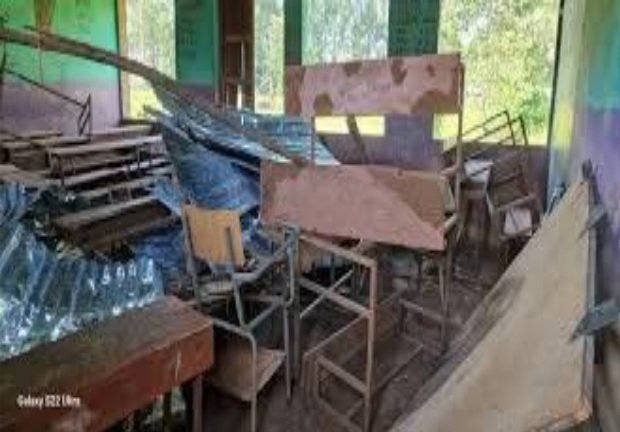
Humanitarian assessments conducted by UNICEF and the Ethiopia Education Cluster estimate that between 4.1 and 4.5 million children have been pushed out of school, while more than 3,600 schools have become non-operational because of conflict-related insecurity (UN OCHA Ethiopia, 2024; Addis Standard, 2024). These figures alone represent one of the most severe educational emergencies in contemporary Ethiopia. Yet independent documentation suggests an even deeper level of devastation. According to a comprehensive assessment by the Amhara Association of America, 5,231 schools became non-operational, 1,390 educational facilities were completely destroyed, and more than 830 schools were occupied or repurposed for military activities (AAA, 2025). The conflict displaced more than 2.7 million students and approximately 138,000 teachers while inflicting extensive damage on educational infrastructure across the region (AAA, 2025).
Beyond damaged classrooms and collapsed buildings lies an equally severe institutional crisis. Teachers represent the backbone of any educational system, yet insecurity, displacement, violence, and intimidation have forced many educators to abandon their posts. Reports by the Global Coalition to Protect Education from Attack indicate that attacks, threats, and insecurity have severely weakened the educational workforce (GCPEA, 2026). Other education analyses have similarly documented the resulting decline in the region’s capacity to maintain educational services (NORRAG, 2024). In many communities, educational disruption has become a defining feature of daily life rather than a temporary emergency.
Although regional authorities, communities, and humanitarian organizations have undertaken significant efforts to restore educational access, recovery has remained substantially behind the scale of destruction. The Amhara Region Civil Society Organizations Council reported that despite extensive mobilization initiatives during the 2025/2026 academic year, more than 3.1 million school-age children remained outside formal education by the close of the enrollment cycle (Borkena, 2026). These figures underscore the depth of the crisis and suggest that the damage cannot be reversed through limited interventions alone.
The true scale of the emergency may be even greater than available figures suggest. Active conflict zones, communication restrictions, insecurity, and limited access for independent monitors have prevented comprehensive documentation in many affected areas (UN OCHA Ethiopia, 2024; EHRC, 2024). Consequently, existing estimates should be understood as a minimum measurement of educational devastation rather than a complete account of its scope.
Recent reports suggesting renewed instability and conflict in parts of northern Ethiopia further threaten already fragile recovery efforts (Al Jazeera, 2026; BBC, 2026). Continued insecurity risks pushing additional children out of school, delaying reconstruction, disrupting educational services, and deepening an already severe crisis. Each additional year of disruption increases the difficulty of recovery and expands the number of children whose education may never fully recover.
The significance of these figures extends beyond the education sector itself. More importantly, they reveal a crisis that has persisted for years despite repeated documentation, repeated warnings, and repeated appeals for intervention. The destruction of schools, exclusion of millions of children from learning, displacement of educators, and deterioration of educational infrastructure were not hidden developments. They were observed, measured, and repeatedly reported by humanitarian agencies, educational authorities, civil society organizations, and human rights groups (UN OCHA Ethiopia, 2024; UNICEF Ethiopia, 2024; AAA, 2025; EHRC, 2024). The central issue therefore is not whether evidence of educational collapse exists, but why federal authorities failed to prevent its continuation despite widespread recognition of its consequences. The scale of the crisis is therefore not merely evidence of educational failure; it is evidence of a broader failure by state authorities to adequately protect education and respond to repeated warnings regarding its collapse.
2. Educational Institutions Under Attack
Schools and universities across the Amhara Region are no longer functioning solely as institutions of learning. Throughout the conflict, educational facilities have increasingly become sites of violence, military activity, occupation, and insecurity (GCPEA, 2026; EHRC, 2026). Institutions that should have been protected as civilian spaces have instead become entangled in the conflict itself, exposing students, educators, and surrounding communities to repeated danger. The result has been the systematic erosion of one of society’s most important public institutions and the further deterioration of access to education across the region.
Documented incidents illustrate the severity of this threat. In May 2024, a drone strike attributed to Ethiopian government forces affected Gulo Primary School in North Shewa, injuring civilians and an education professional (Insecurity Insight, 2025). In April 2025, an airstrike reportedly struck an academic facility in South Achefer, while another drone strike exploded near Gedeb Primary School in East Gojjam, resulting in substantial civilian casualties (Insecurity Insight, 2025). These events are significant not merely because educational facilities sustained damage, but because they demonstrate the extent to which schools have ceased to function as protected civilian spaces.
The vulnerability of higher education institutions has been equally alarming. Amnesty International documented extensive damage to university infrastructure, including laboratories, lecture halls, and student residences (Amnesty International, 2025). Reuters similarly reported severe impacts on Gondar University and its academic community during periods of intense fighting (Reuters, 2026). The broader pattern of devastation is further illustrated by the experience of Wollo University. According to Scholars at Risk, TPLF forces occupied the Dessie campus as a military command center and the Kombolcha campus as a military training site, transforming educational facilities into active components of the conflict environment (Scholars at Risk, 2021).
The occupation was accompanied by widespread looting and destruction, while subsequent federal drone strikes reportedly caused additional damage to university property, including medical skill laboratories, chemistry facilities, and computer resources (Scholars at Risk, 2021; Insecurity Insight, 2025). Students and academic staff reportedly suffered casualties during these episodes of violence, highlighting the degree to which higher education became exposed to the broader conflict. Such events do not merely interrupt academic calendars; they undermine institutions upon which future educational recovery depends. The scale of devastation was so severe that university officials later estimated that Wollo University would require approximately two years to resume normal operations (Ethiopia Observer, 2021).
Of particular concern are reports that educational facilities have increasingly been used for military purposes. Human rights organizations have documented the occupation and repurposing of schools and university facilities, including their reported use as military positions, operational centers, and temporary detention sites (EHRC, 2026; Human Rights Watch, 2026). Independent monitoring has similarly documented incidents involving military use of educational facilities in conflict-affected areas (Insecurity Insight, 2025). Regional assessments identified more than 830 schools affected by military occupation or military use (AAA, 2025). Such practices fundamentally erode the civilian status of educational institutions and increase the likelihood that schools will become associated with military objectives rather than education. Once schools lose their protected status in practice, students and educators become increasingly vulnerable to harm.
Teachers themselves have increasingly become victims of the broader insecurity. Across the region, educators have faced killings, abductions, intimidation, and displacement. Reports from 2024 and 2025 documented multiple incidents involving teachers who were killed or abducted while attempting to continue their professional duties (HRW, 2025). These attacks represent more than individual acts of violence. They further weaken a system already struggling to function, deepen fear among educational personnel, and contribute to the long-term degradation of educational capacity across affected communities.
The cumulative significance of these developments extends beyond the immediate damage inflicted on individual schools or universities. International humanitarian law provides special protections for educational institutions precisely because their preservation is regarded as vital during periods of armed conflict (GCPEA, 2026). The repeated exposure of schools and universities to attack, occupation, militarization, and insecurity therefore raises broader concerns regarding the adequacy of measures taken to protect education throughout the conflict. Educational facilities were not merely casualties of conflict; they increasingly became part of the conflict environment itself.
More importantly, the deterioration of educational protection did not occur in isolation. Reports documenting attacks on schools, military occupation of educational facilities, violence against educators, and disruptions to higher education were repeatedly published by humanitarian organizations, monitoring groups, journalists, and human-rights institutions (GCPEA, 2026; EHRC, 2026; Human Rights Watch, 2026; Amnesty International, 2025; Insecurity Insight, 2025). The risks were visible, the patterns were documented, and the consequences were foreseeable. The persistence of these trends therefore raises a difficult but unavoidable question: why did Ethiopian authorities fail to provide the protection that domestic and international obligations required them to guarantee? Understanding the attacks themselves is important but understanding why Ethiopian authorities failed to prevent or adequately respond to those attacks and occupations is central to any meaningful discussion of accountability.
3. Short-Term and Intermediate Consequences: Educational Decline and the Breakdown of Aspirations
The consequences of educational collapse emerge long before long-term developmental losses become visible. The immediate aftermath of school closures, armed incursions, and forced displacement produces a profound disruption to the lives of students, teachers, and communities. Children abruptly separated from their schools lose not only access to learning but also the safety, routine, and social support that educational environments provide. Research from conflict-affected areas of northern Ethiopia documents elevated levels of psychological distress, anxiety, depression, and educational uncertainty among students exposed to prolonged insecurity (Tareke et al., 2026). Families forced into displacement often become preoccupied with securing basic necessities, leaving education displaced by more immediate concerns of survival (UN OCHA Ethiopia, 2024). At the same time, abandoned schools become vulnerable to looting, vandalism, deterioration, and military occupation, undermining their ability to function as safe civilian spaces and further disrupting educational continuity (AAA, 2025; GCPEA, 2026). These initial disruptions represent more than temporary interruptions. They constitute an acute breakdown of the protective and stabilizing functions that schools play within communities.
The intermediate educational decline now visible across the Amhara Region was not an unexpected development. Rather, it is the cumulative result of unresolved short-term disruptions that evolved into years of school closures, displacement, insecurity, teacher shortages, and infrastructure destruction. Once millions of children were excluded from learning and thousands of schools ceased functioning, declining educational outcomes became increasingly inevitable. The current crisis therefore reflects more than educational disruption; it represents the accumulated consequences of failures that were repeatedly documented, repeatedly acknowledged, and repeatedly left unresolved.
One of the clearest indicators of this deterioration is student performance on Ethiopia’s Grade 12 national examinations, which serve as the principal gateway to higher education and professional advancement. Research by Belay and Tamrat demonstrated how conflict-related disruptions undermine educational participation and learning outcomes among affected students (Belay & Tamrat, 2022). Reporting by Addis Standard similarly documented concerns regarding examination performance and educational disruption in conflict-affected areas (Addis Standard, 2024). Students who experienced repeated school closures, displacement, insecurity, and psychological distress were ultimately required to compete under the same national standards as those whose education continued under comparatively stable conditions. The resulting decline in educational performance was not an isolated outcome but a predictable consequence of prolonged educational disruption.
The implications of this decline extend well beyond examination results. Poor educational outcomes increasingly translate into reduced access to universities, teacher-training institutions, vocational programs, and other opportunities that shape future life chances. As these pathways narrow, an increasing number of young people face exclusion from professional and academic advancement. This process gradually transforms a temporary educational disruption into a long-term barrier to socioeconomic mobility.
Equally concerning is the growing evidence of wider social consequences. Humanitarian organizations have reported rising dropout rates, increased child labor, unsafe migration, and heightened protection risks among conflict-affected children and adolescents (International Rescue Committee, 2026). Education-focused analyses have similarly documented the broader vulnerabilities associated with prolonged educational interruption (NORRAG, 2024). These outcomes are neither surprising nor accidental. They mirror patterns observed in conflicts around the world where prolonged educational interruption leaves vulnerable populations with diminishing alternatives and increasing exposure to exploitation and insecurity.
The crisis is also reshaping how communities perceive education itself. For generations, education represented one of the few pathways through which families could improve their economic circumstances and create opportunities for future generations. Yet prolonged disruption, declining educational outcomes, and the continued absence of meaningful recovery have steadily weakened confidence in that promise. Young people who witness years of educational instability increasingly struggle to view schooling as a realistic route toward opportunity and advancement (Mihretu, 2026). The breakdown of educational systems therefore risks becoming a breakdown of public faith in the institutions that education represents.
Most importantly, none of these consequences emerged without warning. Humanitarian agencies and educational organizations repeatedly warned that prolonged educational disruption would generate declining academic performance, increased dropout rates, heightened protection risks, and long-term social harm (UNICEF Ethiopia, 2024; IRC, 2026; NORRAG, 2024). The consequences now unfolding across the Amhara Region closely resemble those warnings. The crisis therefore raises a fundamental accountability question: if the likely outcomes were repeatedly identified and publicly documented, why did federal authorities fail to take stronger measures despite years of warnings from humanitarian organizations, educational experts, and human-rights institutions?
The significance of these developments lies not only in their educational impact but in what they reveal about the broader response to the crisis. The decline in examination performance, growing educational exclusion, rising dropout rates, and collapsing aspirations should not be viewed as unfortunate side effects of conflict alone. They are also indicators of a prolonged failure to adequately protect educational continuity despite years of evidence demonstrating what was at stake. As a result, educational decline has become more than a consequence of conflict. It has become evidence of the costs associated with delayed action, inadequate protection, and insufficient accountability.
4. Long-Term Consequences: Human Capital Under Attack
The most severe consequences of the educational crisis may not be fully visible for years. Unlike damaged infrastructure, which can be repaired through financial investment and reconstruction, prolonged educational disruption leaves lasting effects that cannot easily be reversed. Lost years of learning interrupted educational pathways, and the exclusion of millions of children from formal education create long-term consequences that often persist long after violence subsides. The current crisis therefore represents not only a humanitarian emergency but also a growing developmental crisis whose effects are likely to shape the Amhara Region for decades.
The future functioning of any society depends upon its ability to continuously prepare, educate, and replace its skilled workforce. Yet that process has been severely disrupted across the Amhara Region. Years of educational interruption have weakened the pathway through which teachers, health professionals, engineers, administrators, researchers, and other skilled individuals enter public institutions and professional sectors. Development organizations and policy analyses have repeatedly warned that prolonged educational breakdown creates future shortages of qualified personnel and weakens institutional capacity across multiple sectors (NORRAG, 2026; Berean Institute, 2026). The consequences may therefore extend well beyond the education sector itself, affecting governance, healthcare, economic development, and public administration.
These risks are compounded by the loss of trained professionals already occurring across the region. Reporting has documented the departure of significant numbers of educators and skilled personnel, creating additional challenges for educational recovery and institutional rebuilding (Addis Standard, 2026). Educational systems rely not only upon students but also upon experienced teachers, administrators, and specialists capable of rebuilding institutions after periods of crisis. The simultaneous disruption of student learning and educator retention increases the likelihood that recovery will be slower, more expensive, and more difficult than many anticipate.
Economic consequences are equally significant. Research on conflict-affected societies consistently demonstrates that prolonged educational disruption contributes to reduced employment opportunities, lower lifetime earnings, diminished productivity, and slower economic growth (NORRAG, 2026). Educational loss therefore does not remain confined to classrooms. It increasingly becomes visible in labor markets, household incomes, economic mobility, and broader patterns of social inequality. As these losses accumulate across millions of individuals, educational destruction evolves into a regional development challenge with consequences extending across generations.
Women and girls are likely to bear a disproportionate share of these long-term effects. Educational exclusion is closely associated with increased vulnerability to early marriage, economic dependency, exploitation, and long-term barriers to participation in economic and civic life (UNICEF Ethiopia, 2024; Tareke et al., 2026). As educational opportunities diminish, existing gender inequalities risk becoming further entrenched, making future recovery efforts even more complex.
Yet perhaps the most important aspect of these long-term consequences is that they are neither unexpected nor unforeseeable. The relationship between prolonged educational disruption and future developmental harm has been repeatedly documented across conflict settings worldwide. Humanitarian agencies, educational experts, development institutions, and researchers have consistently warned that years of interrupted education produce enduring institutional, economic, and social costs (NORRAG, 2026; UNICEF Ethiopia, 2024; Berean Institute, 2026). The dangers currently facing the Amhara Region were therefore not unknown. They were repeatedly identified long before many of their consequences became fully visible.
This reality shifts the discussion from consequences alone to responsibility. The long-term losses described above should not be viewed simply as unfortunate outcomes that emerged without warning. They represent risks that were repeatedly documented and publicly communicated by organizations monitoring the crisis (NORRAG, 2026; UNICEF Ethiopia, 2024; Berean Institute, 2026). The future shortages of skilled professionals, weakened public institutions, reduced economic opportunities, and declining social mobility now facing the region are increasingly becoming the realized consequences of warnings that were not adequately addressed.
The significance of this distinction cannot be overstated. If the long-term consequences were foreseeable, then the discussion is no longer confined to the damage itself. It must also include an examination of the decisions, priorities, and failures that allowed those consequences to become increasingly likely. The issue is therefore not merely that the Amhara Region faces future institutional and developmental challenges. The issue is that many of those challenges were predictable, repeatedly documented, and insufficiently addressed by federal authorities despite years of evidence demonstrating what was at stake (NORRAG, 2026; UNICEF Ethiopia, 2024; Addis Standard, 2026).
5. Accountability, State Responsibility, and the Normalization of Impunity
The educational collapse in the Amhara Region cannot be understood solely as a humanitarian or developmental crisis. The evidence presented throughout this article demonstrates that it is also a crisis of accountability. The destruction of schools, militarization of educational facilities, displacement of students and teachers, collapse of academic performance, and exclusion of millions of children from learning did not occur in secret. These developments were repeatedly documented by humanitarian organizations, educational authorities, civil society institutions, journalists, and human-rights groups (UN OCHA Ethiopia, 2024; UNICEF Ethiopia, 2024; EHRC, 2024; GCPEA, 2026; AAA, 2025; Human Rights Watch, 2026). The crisis was visible. The consequences were predictable. The warnings were abundant.
The central question, therefore, is no longer whether educational devastation occurred. The evidence overwhelmingly confirms that it did. The central question is why such devastation was allowed to continue for years despite repeated evidence of its consequences. At what point does an ongoing failure to protect educational access cease to be viewed as an unfortunate by-product of conflict and become a matter of accountability? How many years of disruption, how many destroyed schools, how many displaced students, and how many missed opportunities must accumulate before responsibility is openly confronted?
The Ethiopian state occupies a unique position within this crisis because it bears the primary constitutional obligation to protect children’s right to education and safeguard civilian institutions. The Constitution of the Federal Democratic Republic of Ethiopia establishes these responsibilities not as optional policy preferences but as legal obligations. International humanitarian and human-rights law impose similar duties regarding the protection of education during armed conflict. Schools and universities are afforded special protection because societies recognize that children’s education should not become a casualty of war. Yet throughout this crisis, educational institutions across the Amhara Region have increasingly been exposed to attack, occupation, militarization, abandonment, and prolonged disruption (GCPEA, 2026; EHRC, 2026; Human Rights Watch, 2026). The gap between these legal obligations and the realities experienced by students and educators demands independent investigation and meaningful accountability.
Particularly troubling is the persistence of patterns that should have triggered urgent corrective action. Reports documenting attacks affecting schools, military use of educational facilities, violence against educators, displacement of students and teachers, and the exclusion of millions of children from learning have circulated for years (GCPEA, 2026; EHRC, 2026; Human Rights Watch, 2026; UN OCHA Ethiopia, 2024; AAA, 2025). The educational consequences identified throughout this article were not unforeseeable. They were repeatedly highlighted by those monitoring the crisis. Nevertheless, federal authorities failed to implement recovery measures commensurate with the scale of documented educational destruction. The persistence of this gap reflects the failure of federal authorities to adequately protect educational institutions and restore educational access despite repeated warnings. After years of documented warnings from humanitarian organizations, educational authorities, civil society groups, and human-rights institutions (UN OCHA Ethiopia, 2024; UNICEF Ethiopia, 2024; EHRC, 2024; GCPEA, 2026; AAA, 2025), educational destruction continued on a scale that raises serious questions regarding government responsibility and the adequacy of state protection efforts. Recovery consistently lagged behind need, protection consistently lagged behind risk, and accountability consistently lagged behind documented violations. The result was the prolonged abandonment of millions of children whose right to education should have been protected by the Ethiopian state.
Equally concerning is the apparent normalization of educational destruction. Conditions that should have generated sustained outrage gradually became accepted as routine features of the conflict. The closure of thousands of schools, militarization of educational facilities, interruption of higher education, displacement of educators, and collapse of educational opportunity increasingly came to be treated as expected consequences of war rather than extraordinary failures demanding urgent intervention. The danger of such normalization is that it transforms accountability from an immediate necessity into an endlessly postponed aspiration.
Accountability is not merely about assigning blame. It is about ensuring that documented failures are acknowledged, investigated, addressed, and prevented from recurring. Meaningful accountability begins with recognizing that millions of children did not lose access to education simply because conflict existed. They lost access because state institutions responsible for safeguarding educational access repeatedly failed to take measures sufficient to preserve educational continuity throughout the conflict. The distinction matters because it shifts attention from the inevitability of war to the responsibility of institutions.
The educational crisis in the Amhara Region therefore raises issues that extend beyond schools and classrooms. It raises questions about governance, protection, institutional responsibility, and the value placed on children’s rights during periods of conflict. The longer these questions remain unanswered, the greater the risk that educational destruction will be remembered not merely as one consequence of the conflict but as one of its most enduring failures.
6. Measures to Be Taken: Recovery, Justice, and the Protection of Educational Rights
The magnitude of educational destruction in the Amhara Region demands a response that extends far beyond humanitarian relief and physical reconstruction. Reopening schools alone will not resolve a crisis that has been years in the making. The evidence presented throughout this article demonstrates that the educational emergency is rooted not only in damaged infrastructure but also in failures of protection, accountability, and governance. Any recovery strategy that focuses exclusively on rebuilding classrooms while ignoring these underlying causes risks reproducing the same vulnerabilities that enabled the crisis to unfold.
Educational recovery must also confront the failures of federal authorities and state institutions that allowed educational devastation to persist despite years of warning. A school rebuilt without accountability remains vulnerable to future destruction. A classroom reopened without protection remains vulnerable to future closure. Reconstruction therefore cannot be separated from accountability. Without independent investigations, protection measures, and credible consequences for violations affecting educational institutions, educational recovery risks repairing physical structures while leaving untouched the conditions that enabled their destruction (GCPEA, 2026; EHRC, 2026; Human Rights Watch, 2026; Amnesty International, 2025).
The first and most urgent priority must be the restoration of educational protection. Schools and universities must be re-established as genuinely civilian spaces protected from military activity, occupation, and conflict-related interference. Reports documenting attacks, occupation, and military use of educational institutions demonstrate the importance of restoring the civilian character of schools and universities (GCPEA, 2026; EHRC, 2026; Human Rights Watch, 2026). The continued use of educational institutions for military purposes undermines both educational recovery and public confidence in the safety of learning environments. Protecting education requires more than reopening schools; it requires ensuring that students, educators, and families can return without fear.
Recovery must also address the accountability deficit identified throughout this article. The destruction of educational facilities, attacks affecting schools, violence against educators, prolonged exclusion from education, and other documented violations cannot simply be treated as unfortunate historical events to be forgotten once reconstruction begins. Independent investigations into attacks affecting educational institutions and civilians should be supported, evidence should be preserved, and responsible actors should be subject to appropriate legal and institutional scrutiny (EHRC, 2026; Human Rights Watch, 2026; Amnesty International, 2025). Durable recovery cannot be built upon impunity.
Equally important is the restoration of educational opportunity for those who have already lost years of learning. Millions of students have experienced prolonged educational interruption, creating challenges that will not disappear merely because schools reopen. Humanitarian and educational organizations have repeatedly emphasized the need for accelerated learning initiatives, catch-up programs, academic support systems, and expanded educational access for conflict-affected learners (UNICEF Ethiopia, 2024; UN OCHA Ethiopia, 2024). The massive scale of this task is underscored by recent regional enrollment efforts; despite these active initiatives to return children to classrooms, a staggering 3.1 million school-age children remain entirely out of school and excluded from formal learning (Borkena, 2026). Accelerated learning initiatives, catch-up programs, examination accommodations, and expanded access to higher education will be necessary to prevent this population from becoming a permanently excluded generation. Educational recovery must therefore focus not only on rebuilding physical institutions but also on restoring the human potential of the young people most affected.
Special attention must be directed toward educators. Teachers have borne a disproportionate share of the crisis through displacement, insecurity, intimidation, abduction, and loss of livelihood (GCPEA, 2026; HRW, 2025). Educational reconstruction will be impossible without qualified teachers willing and able to return to classrooms. Recovery initiatives must therefore include teacher retention measures, professional support, security guarantees, recruitment strategies, and long-term investment in rebuilding the educational workforce.
Beyond immediate educational needs, recovery must be linked to broader efforts aimed at peace, institutional reform, and civilian protection. The evidence reviewed throughout this article suggests that educational collapse was not an isolated event but part of a wider breakdown in the protections that should safeguard civilian life during periods of conflict. Lasting educational recovery therefore depends upon addressing the broader conditions that enabled educational destruction to persist. Without meaningful progress toward security, accountability, and respect for civilian institutions, educational gains will remain fragile and vulnerable to future disruption.
The ultimate challenge facing the Amhara Region is not simply rebuilding what has been destroyed but preventing its destruction from becoming a permanent feature of the future. Classrooms can be reconstructed. School compounds can be repaired. Educational materials can be replaced. What cannot easily be restored are the years of opportunity already lost by millions of children. For that reason, recovery must be guided not only by reconstruction but also by justice. Genuine recovery requires acknowledgment of failures, protection of educational rights, accountability for violations, and a sustained commitment to ensuring that future generations do not experience the same abandonment. Without those measures, rebuilding schools may repair structures, but it will not repair the deeper failures that allowed the educational crisis to endure.
Conclusion
The evidence presented throughout this article reveals a crisis that extends far beyond educational disruption. Years of conflict have left millions of children outside the classroom, thousands of schools non-operational, educators displaced or targeted, and universities struggling to function (UN OCHA Ethiopia, 2024; UNICEF Ethiopia, 2024; AAA, 2025; GCPEA, 2026). What began as a temporary interruption has evolved into a prolonged and systemic collapse whose consequences are already visible in declining academic performance, shrinking access to higher education, widespread student displacement, and growing social vulnerability (Addis Standard, 2024; UNICEF Ethiopia, 2024; Tareke et al., 2026).
Equally troubling is the persistence of the crisis despite years of warnings from humanitarian agencies, educators, civil society organizations, and human-rights groups. The destruction of educational infrastructure, military use of schools, attacks affecting students and teachers, and the continued exclusion of millions of children from learning have all been extensively documented by humanitarian agencies, educational monitors, civil-society organizations, and human-rights institutions (UN OCHA Ethiopia, 2024; UNICEF Ethiopia, 2024; GCPEA, 2026; EHRC, 2024; AAA, 2025; Human Rights Watch, 2026).
States are ultimately judged not only by their ability to exercise power but by their willingness to protect their citizens, particularly children. The Ethiopian government bears primary constitutional responsibility for safeguarding access to education and protecting civilian institutions from the effects of conflict. International humanitarian and human-rights law impose similar obligations. The continued deterioration of educational access across the Amhara Region reflects a failure to adequately fulfill these responsibilities despite years of warning from humanitarian organizations, educational authorities, and human-rights institutions (EHRC, 2024; UN OCHA Ethiopia, 2024; GCPEA, 2026).
The normalization of educational destruction may be among the most damaging consequences of the conflict. Schools occupied by armed actors, academic facilities exposed to military activity, teachers living under constant fear, and children growing up without meaningful access to learning risk becoming accepted as ordinary conditions rather than treated as unacceptable failures demanding urgent action (GCPEA, 2026; EHRC, 2026; Human Rights Watch, 2026). When such conditions persist year after year, the issue can no longer be described solely as a humanitarian emergency. It becomes a question of governance, political priorities, and accountability.
Recovery requires far more than rebuilding damaged structures. It requires restoring public trust, protecting educational institutions from military use, ensuring safe access to learning, addressing the trauma experienced by students and teachers, and creating credible mechanisms of accountability for violations. Above all, it requires a commitment to preventing another generation from experiencing the same losses. Humanitarian and educational organizations have repeatedly emphasized that long-term recovery depends not only on reconstruction but also on restoring access, protection, and educational continuity for conflict-affected learners (UNICEF Ethiopia, 2024; UN OCHA Ethiopia, 2024).
History is unlikely to remember this crisis simply as a period of educational disruption. It will be remembered as a test of whether the Ethiopian government and state institutions entrusted with protecting children, schools, and educational opportunity fulfilled their responsibilities when confronted with overwhelming evidence of harm. The destruction of educational access in the Amhara Region was documented, visible, and repeatedly warned about by humanitarian agencies, educational authorities, civil society institutions, and human-rights groups (UN OCHA Ethiopia, 2024; UNICEF Ethiopia, 2024; EHRC, 2024; AAA, 2025; GCPEA, 2026). Millions of children paid the price while recovery consistently lagged behind the scale of devastation. The central question that remains is not whether the damage occurred, but whether meaningful accountability will ever accompany it. Until that question is answered, the educational crisis in the Amhara Region will remain not only a humanitarian tragedy but also a lasting indictment of the failure to protect a generation when protection was most needed.
Editor’s Note: Views in the article do not necessarily reflect the views of borkena.com
__
Join our Telegram Channel: t.me/borkena
Like borkena on Facebook
To submit a press release, send the submission to info@borkena.com
Add your business to Ethiopian Business Listing / Ethiopian Business Directory
Join the conversation. Follow us on X (formerly Twitter) @zborkena to get the latest Ethiopian news updates regularly.
References
References
Addis Standard. (2024, August 15). Grade 12 national examination performance heavily disrupted in conflict-affected zones of Northern Ethiopia. Addis Standard. addisstandard.com
Addis Standard. (2026, January 22). Mass displacement and economic flight of teachers out of the Amhara Region due to non-payment and insecurity. Addis Standard. addisstandard.com
Al Jazeera. (2026, March 14). Renewed instability and clashes threaten fragile truce in northern Ethiopia. Al Jazeera English. aljazeera.com
Amhara Association of America. (2025, April 10). Education under siege: The state of education in the ongoing Amhara War in Ethiopia. Amhara Association of America Research Report. amharaamerica.org
Amnesty International. (2025). Ethiopia: Targeted infrastructure destruction and the collapse of protected civilian facilities in regional conflicts (AFR 25/8812/2025). Amnesty International Publications. amnesty.org
BBC. (2026, April 3). Structural insecurity and humanitarian barriers deepen in conflict-affected regions of Ethiopia. BBC News. bbc.com
Belay, T., & Tamrat, W. (2022). High school education under fire: Assessing learning disruptions and educational participation in active conflict zones of Northern Ethiopia. Journal of Educational Development, 44(2), 112–128. doi.org
Berean Institute. (2026). Human capital degradation and institutional capacity erosion in East Africa: Long-term policy briefs. Berean Global Press.
Borkena. (2026, September 16). Amhara Region reports rising school enrollment amid deficits. Borkena Ethiopian News. borkena.com
Ethiopia Observer. (2021, December 14). Wollo University would need two years to be operational again, University Vice-President. Ethiopia Observer News. ethiopiaobserver.com
Ethiopian Human Rights Commission. (2024). Annual human rights situation report: Human rights and the denial of educational rights in conflict-affected areas. EHRC Publications. ehrc.org
Ethiopian Human Rights Commission. (2026). The weaponization of learning: Independent monitoring of school occupations and military use in the Amhara Region. EHRC Special Focus Report. ehrc.org
Global Coalition to Protect Education from Attack. (2026). Education under attack 2026: A global study on threats to schools, universities, students, and educators. Global Coalition to Protect Education from Attack. protectingeducation.org
Human Rights Watch. (2025). Targeting the messengers: Killings, abductions, and intimidation of civil servants and educators in Ethiopia. Human Rights Watch Report. hrw.org
Human Rights Watch. (2026). Schools as barracks: The systematic occupation and militarization of secondary and tertiary learning centers. Human Rights Watch Publications. hrw.org
Insecurity Insight. (2025). Education under fire: Tracking explosive weapons deployment, drone strikes, and infrastructure threats in the Horn of Africa. Insecurity Insight Research Repositories. insecurityinsight.org
International Rescue Committee. (2026). Coping through crisis: Rising dropout rates, child labor, and unsafe youth migration in the Amhara Region. IRC Humanitarian Insights. rescue.org
Mihretu, A. (2026). The psychology of displacement and the erosion of educational trust among youth in Northern Ethiopia. East African Sociological Review, 19(1), 45–62.
NORRAG. (2024). Global education in emergencies: Mapping vulnerabilities and protection risks during protracted regional conflicts. Network for International Policies and Cooperation in Education and Training. norrag.org
NORRAG. (2026). The structural costs of lost learning: How prolonged educational collapse alters human capital trajectories. Network for International Policies and Cooperation in Education and Training. norrag.org
Psacharopoulos, G., & Patrinos, H. A. (2018). Returns to investment in education: A decennial review of the global literature. Education Economics, 26(5), 445–458. doi.org
Reuters. (2026, February 11). Insecurity and structural fallout cripple higher education institutions in Gondar. Reuters News. reuters.com
Scholars at Risk. (2021, November 01). Academic freedom monitor: Wollo University campus occupation and bombardment. Scholars at Risk Network. scholarsatrisk.org
Tareke, M., Yirdaw, B. A., Demeke, S. M., Gebeyehu, A., & Azale, T. (2026). High school students in armed conflict-affected North Wollo, Ethiopia, struggle with lived experiences of depression and academic challenges. Scientific Reports, 16(1), Article 7272. doi.org
UNESCO. (2020). Global education monitoring report 2020: Inclusion and education: All means all. United Nations Educational, Scientific and Cultural Organization. unesco.org
UN Office for the Coordination of Humanitarian Affairs Ethiopia. (2024). Ethiopia education cluster quarterly evaluation: 4.4 million children pushed out of the classroom. UN OCHA Humanitarian Response. reliefweb.int
UNICEF Ethiopia. (2024). Humanitarian situation report No. 9: Protection threats, early marriage metrics, and the crisis of learning continuity. UNICEF Publications. reliefweb.int
World Bank. (2021). The state of global education crisis: A path to structural recovery and human development. World Bank Group. worldbank.org
Editor’s Note: Views in the article do not necessarily reflect the views of borkena.com
__
Join our Telegram Channel: t.me/borkena
Like borkena on Facebook
To submit a press release, send the submission to info@borkena.com
Add your business to Ethiopian Business Listing / Ethiopian Business Directory
Join the conversation. Follow us on X (formerly Twitter) @zborkena to get the latest Ethiopian news updates regularly.