
The 2026 global passport power index ranks the Ethiopian passport among the lowest in international travel mobility, highlighting ongoing restrictions on global mobility
By Staff Writer
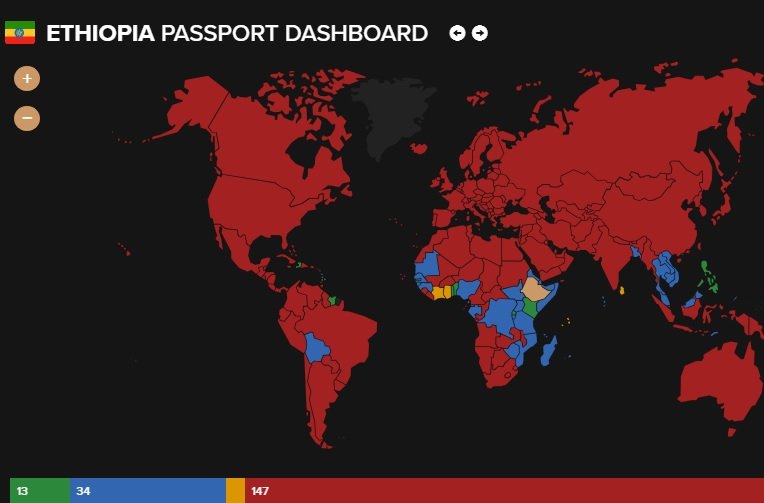
(Nairobi, Kenya) — The 2026 global passport power index report ranks the Ethiopian passport among the lowest in international travel mobility, placing the country in the 90th rank alongside nations facing severe conflict and political crisis, including Somalia, Yemen, Syria, and Afghanistan.
According to the latest global index data, Ethiopian passport holders can enter only 17 countries completely visa-free. An additional 33 international destinations grant visa-on-arrival access upon landing. Across the 54 member states of the African Union, only Kenya, Benin, Gambia, Rwanda, and Togo extend full visa-free travel privileges to Ethiopian citizens. Worldwide, only 10 countries hold a lower passport power score than Ethiopia.
The severe restriction on travel mobility stems from a combination of economic indicators, security challenges, and diplomatic dynamics. Foreign governments determine visa policies primarily by evaluating per capita income levels, internal security stability, and potential risks of irregular migration or visa overstays. Persistent domestic instability and regional security concerns across the Horn of Africa have led foreign states to enforce strict, advance embassy vetting protocols. Additionally, a persistent reciprocity deficit impacts mobility, as Ethiopia’s diplomatic strategy has traditionally prioritized regional infrastructure and continental policy over securing mutual visa-waiver agreements.
This weak passport standing presents major obstacles to national trade, foreign investment, and international relations. Ethiopian entrepreneurs and business executives encounter prolonged processing delays, extensive documentation requirements, and high visa rejection rates when attempting to attend international trade expos or negotiate with foreign partners. The dynamic creates an asymmetric commercial environment where foreign investors enter Ethiopia with relative ease via e-Visas or visas on arrival, while domestic firms struggle to secure basic travel permissions. Furthermore, these travel barriers hamper academic collaboration, restrict cultural exchange programs, and complicate outward commercial expansion for domestic enterprises.
__
Join our Telegram Channel : t.me/borkena
Like borkena on Facebook
Join the conversation. Follow us on X (Formerly Twitter) @zborkena to get the latest Ethiopian News updates regularly. Subscribe to YouTube channel To share information or for submission, send e-mail to info@borkena.com
To Support Borkena : https://borkena.com/subscribe-borkena/ – one time support or small monthly options available. Inquire information about it : info@borkena.com