
High-Level Delegates Convene in Addis Ababa to Address External Financial Shortfalls, Climate Risks, and the Urgent Need for Continental Autonomy
By Staff Writer
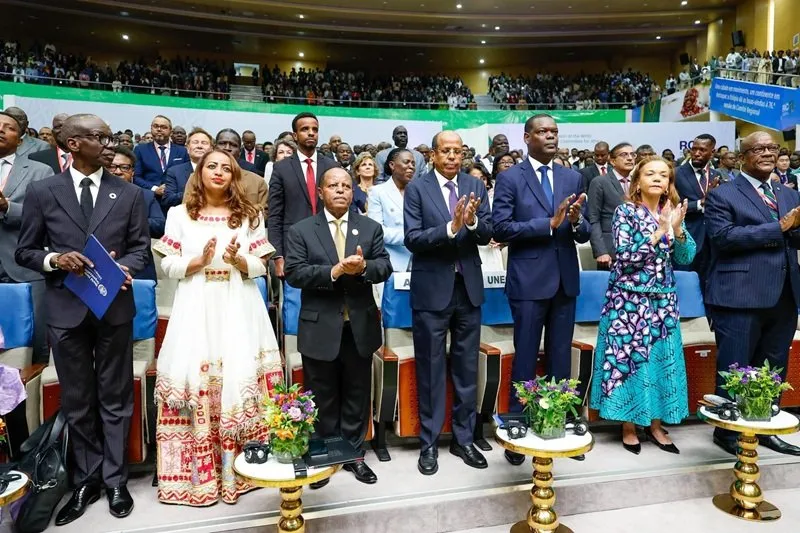
(NAIROBI, Kenya) — The 76th session of the World Health Organization (WHO) Regional Committee for Africa (RC76) is underway in Addis Ababa.
The meeting is organized in collaboration with the WHO Regional Office for Africa, aiming to deliberate on the region’s health agendas and strengthen continental cooperation.
The four-day governance summit, which has drawn over 800 delegates including health ministers from 47 African member states, international partners, and donor organizations, focuses on formulating unified strategies to overcome the continent’s growing public health pressures.
Addressing the assembly, President Taye Atske-Selassie emphasized that external financial shortfalls are placing unprecedented strain on national health budgets across the continent. Beyond fiscal constraints, he noted that Africa remains uniquely exposed to climate-driven health risks, which worsen food and water insecurity while creating conditions for infectious disease outbreaks.
To address these vulnerabilities, President Taye urged African governments to move beyond reliance on foreign aid by strengthening domestic financial allocations and building regional manufacturing capacity:
- Expanding Budgetary Commitments: Increasing national budget allocations to absorb reductions in international development assistance.
- Local Manufacturing Autonomy: Developing continental production capacity for vaccines, essential medicines, and critical medical supplies to guarantee health security.
WHO Director-General Dr. Tedros Adhanom Ghebreyesus highlighted that African health systems are currently managing a dual burden: combating long-standing endemic diseases like HIV, tuberculosis, and malaria while simultaneously responding to emerging health emergencies, including Ebola outbreaks in the Democratic Republic of Congo and regional cholera surges. Dr. Tedros stressed that declining external aid threatens critical operational pillars, including health worker training, pharmaceutical supply chains, and disease surveillance networks.
WHO Regional Director for Africa, Professor Mohamed Janabi, called for structural reforms to insulate African health infrastructure from geopolitical tensions, financial instability, and humanitarian crises. He commended Ethiopia’s successful containment of the recent Marburg virus outbreak as an example of effective regional emergency response capability.
Ethiopian Health Minister Dr. Mekdes Daba noted that hosting the regional committee for the fourth time underscores Ethiopia’s role in advancing health diplomacy across the continent. She emphasized that global health shocks and rapid technological shifts require member states to adopt innovative, resilient healthcare delivery models.
The WHO Regional Committee serves as the principal governing body for the African region, setting priority policies, evaluating program implementation, and establishing unified positions for global health forums. Delegates will continue deliberations through August 29, 2026, before adopting formal resolutions on health security, universal coverage, and regional production frameworks.
__
Join our Telegram Channel: t.me/borkena
Like borkena on Facebook
Join the conversation. Follow us on X (formerly Twitter) @zborkena to get the latest Ethiopian news updates regularly. Subscribe to the YouTube channel. To share information or for submission, email info@borkena.com