
By Caleb Ta (Dr.)
Independent Researcher in African Political Affairs; Human Rights Advocate
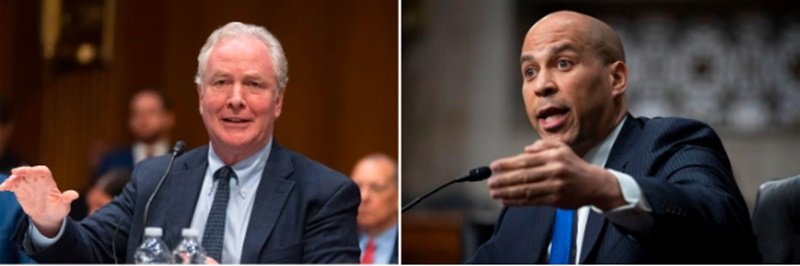
I want to publicly thank Senators Chris Van Hollen and Cory Booker for not accepting the Ethiopian government’s invitation to visit Addis Ababa at this time.
That decision deserves recognition.
A congressional visit to Ethiopia is never simply a trip. When senior American lawmakers arrive in Addis Ababa and stand beside Prime Minister Abiy Ahmed’s government, the images can become political currency. They can be used to communicate legitimacy, international acceptance, and political confidence—even when millions of Ethiopians continue to question the direction of their country.
That is why saying no can sometimes be more meaningful than saying yes.
I hope Senators Van Hollen and Booker will continue to exercise this kind of caution whenever they are invited by Prime Minister Abiy Ahmed’s government or other Ethiopian authorities.
The issue is not whether America should engage Ethiopia.
America should engage Ethiopia.
The issue is how America engages Ethiopia.
The United States should not allow diplomatic engagement to become a public-relations exercise for whichever government happens to be in power.
Ethiopia is not Abiy Ahmed.
The Ethiopian people are not the Ethiopian government.
And America’s relationship with Ethiopia should not be reduced to its relationship with one prime minister.
If American policymakers genuinely want to understand Ethiopia, they should go beyond government offices and official receptions. They should listen to Ethiopians who have been displaced. They should speak with families affected by conflict. They should hear from journalists, human rights advocates, scholars, religious leaders, civil society organizations, community representatives, and ordinary citizens from across the country.
They should listen to people who disagree with the government.
They should listen to people who support the government.
They should listen to people who have lost trust in nearly every political institution.
Most importantly, they should listen to Ethiopians whose voices are rarely heard in Washington.
That is what meaningful engagement looks like.
I am concerned that the Ethiopian government may seek to use Washington and influential American politicians as part of a broader strategy of political image-making at a moment when Ethiopia’s political future remains deeply contested.
This is precisely when American policymakers should be most independent.
Washington should not become a stage where Ethiopian political leaders demonstrate their international legitimacy.
A photograph with an American senator should not substitute for political reform.
A diplomatic visit should not substitute for accountability.
An official reception should not substitute for listening to victims of conflict.
International recognition should not substitute for the trust of the Ethiopian people.
If Prime Minister Abiy Ahmed’s government wants stronger relations with Washington, the answer should not simply be more invitations and more diplomatic ceremonies. The answer should be meaningful progress that Ethiopians themselves can see and independently verify.
That means greater respect for human rights.
It means genuine political inclusion.
It means accountability.
It means peaceful political competition.
It means addressing insecurity.
It means creating conditions in which Ethiopians from different regions and political backgrounds can participate in determining their country’s future without fear.
The United States has enormous influence in Ethiopia and throughout the Horn of Africa. That influence should be exercised carefully.
American policymakers should not ask only, “What does the Ethiopian government want from us?”
They should also ask:
“What do the Ethiopian people need from us?”
Those are not always the same questions.
That is why I appreciate Senators Van Hollen and Booker for declining the invitation at this time. Their decision provides an opportunity for a broader conversation about what principled American engagement with Ethiopia should look like.
I hope they continue to listen widely, question official narratives, and resist becoming instruments of political image-making.
Ethiopia needs American engagement.
But Ethiopia does not need Washington to simply validate whoever is in power.
The Ethiopian people need Washington to stand for principles that survive political administrations: democracy, human rights, accountability, peace, inclusion, and human dignity.
Thank you, Senators Van Hollen and Booker, for choosing caution. I hope you continue to put the Ethiopian people—not political symbolism—at the center of America’s engagement with Ethiopia.
Editor’s Note: Views in the article do not necessarily reflect the views of borkena.com
__
Join our Telegram Channel: t.me/borkena
Like borkena on Facebook
To submit a press release, send the submission to info@borkena.com
Add your business to Ethiopian Business Listing / Ethiopian Business Directory
Join the conversation. Follow us on X (formerly Twitter) @zborkena to get the latest Ethiopian news updates regularly.