
A Comprehensive Analysis of the Political and Military Crisis Reshaping the Horn of Africa
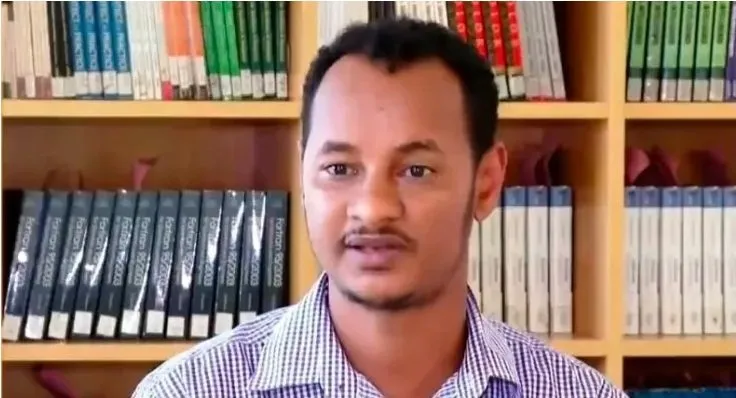
By Surafel Getahun
Contributor, Horn of Africa Analyst
Introduction: As of August 2026, the Horn of Africa stands on the precipice of a regional conflagration. The November 2022 Pretoria Cessation of Hostilities Agreement—which brought a tentative halt to a two-year war estimated to have claimed up to 600,000 lives—has effectively collapsed. Armed clashes have re-ignited across multiple fronts in northern Ethiopia.
This analysis dissects the intricate web of political maneuvers, military postures, and geopolitical rivalries driving the crisis. It examines the emergence of the “Tsimdo” operational framework, the strategic calculus of Asmara and Cairo, Sudan’s spillover dynamics, the deep fragmentation within Tigray’s political apparatus, and how global power rivalries over the Red Sea and Nile Basin have transformed an internal Ethiopian conflict into a dangerous regional theater.
Part One: The Pretoria Post-Mortem – From Truce to Confrontation
1.1 The False Promise of Peace
The Pretoria Agreement signed in South Africa was never a genuine reconciliation; it was a strategic breathing space. While it temporarily halted a devastating war between the Ethiopian federal government and the Tigray People’s Liberation Front (TPLF)—a conflict that left northern Ethiopia shattered and displaced millions—the accord papered over fundamental structural disputes rather than resolving them.
Among the most contentious unresolved issues were:
The Status of Western Tigray: Territories administered by Amhara forces since the early stages of the war remained outside Tigrayan control which is among the most contentious unresolved issue.
The Incomplete Withdrawal of Non-ENDF Forces: Eritrean military forces, which fought alongside federal troops, never fully pulled back from Ethiopian territory.
Vague Disarmament Mechanisms: Timelines and concrete enforcement procedures for disarming TPLF combatants were never clearly established.
Deferred Transitional Justice: Critical questions of accountability for wartime atrocities were kicked down the road.
Unsettled Political Status: The TPLF was never fully re-integrated into Ethiopia’s broader legal and constitutional structure.
By leaving these foundational grievances unaddressed, negotiators created a fragile truce. As diplomats quietly acknowledged at the time, Pretoria ended a “mutually hurting stalemate,” but it failed to cure the political sickness at the heart of the Ethiopian state.
1.2 The Road to Renewed Conflict
The slide back toward war accelerated through 2025 and reached a breaking point in mid-2026 through a series of rapid escalations:
May 2025 (Deregistration of the TPLF): The National Election Board of Ethiopia (NEBE) officially revoked the TPLF’s legal registration, citing its failure to satisfy mandated “corrective measures.” The TPLF denounced the decision as a politically motivated effort to disenfranchise Tigray.
May 2026 (Unilateral Council Reconstitution): Rebuffing federal authority, the TPLF leadership unilaterally reinstated its pre-war 2020 regional council and reappointed Chairman Debretsion Gebremichael as executive head, effectively nullifying the interim administrative framework agreed upon with Addis Ababa.
June 5, 2026 (The Sheraro Drone Strike): Federal forces launched a high-impact drone strike against a TPLF military convoy (“Army 13”) in Sheraro, near the Eritrean border. Veteran politician Gebru Asrat reported heavy material and human casualties, noting that approximately ten weapons-laden transport vehicles were hit as they moved toward the Sudanese border.
July 2026 (The “Axe Politics” Metaphor):In a fiery parliamentary address, Prime Minister Abiy Ahmed accused Sudan, Eritrea, and the TPLF of orchestrating a coordinated campaign against the state. Abiy likened the threat to an axe: the TPLF as the iron blade, Eritrea as the wooden handle, and foreign adversaries providing the arm to strike.
July 11, 2026 (Formal Declaration of Collapse):Tigray regional authorities declared the Pretoria Agreement dead, accusing Addis Ababa of maintaining a punitive economic siege and preparing for outright war.
August 1, 2026 (Outbreak of Open Hostilities): Heavy fighting erupted in Western Tigray’s Shererina area. While Tigrayan officials declared the arrival of “open war,” federal authorities insisted TPLF units initiated the offensive.
1.3 Military Deployments and Expanding Fronts
Independent defense analysts pinpoint three primary battle lines consolidating across the north, alongside a dangerous emerging vector:
The Sudanese Front (Humera-Metemma): ENDF forces are heavily massed to block TPLF units operating out of eastern Sudan under the designation “Army 70.” Former senior TPLF official Gebru Asrat revealed that these forces have integrated into Sudanese Armed Forces (SAF) operations, wearing SAF uniforms and acting essentially as contract fighters.
The Kobo Line (Kobo-Mekelle Axis): A heavily fortified corridor extending from Kobo toward Mekelle, representing a historic invasion route toward central Ethiopia via Sekota.
The Shire Front (Northwest): High concentrations of armor and artillery deployed along the border with Eritrea, serving as the launchpad for recent air and drone strikes.
The Emerging Nile Vector (Benishangul-Gumuz): Military movements near the Grand Ethiopian Renaissance Dam (GERD) echo strategic maneuvers from the 1980s Derg era, raising fears of potential sabotage targeting vital national infrastructure.
Part Two: The “Tsimdo” Axis – Geopolitical Bedfellows
2.1 Anatomy of “Tsimdo”
At the core of Addis Ababa’s strategic anxiety is what officials call *Tsimdo*—a Tigrinya term meaning “yoke” or “tether,” referring to a tactical alliance between the TPLF and external adversaries, primarily Asmara. In an October 2, 2025 letter to the UN Secretary-General, Ethiopia’s Ministry of Foreign Affairs formally charged Eritrea and the TPLF with conspiring to wage a coordinated war against the federal state.
“The TPLF has aligned itself with other forces—with Shabia (Eritrea), with Fano, and with other forces they refer to as Ethiopian militants—with the intent to enter Addis Ababa.”
— Gebru Asrat, Veteran Ethiopian Politician
Both parties reject the label. TPLF spokespersons maintain that Tigray relies solely on its own forces and has invited no foreign troops to its cause. In Asmara, Information Minister Yemane Gebremeskel dismissed Prime Minister Abiy’s claims as “rambling accusations” meant to cover up regional miscalculations. Nevertheless, field reports confirm tactical intelligence sharing and coordinated pressure along Ethiopia’s perimeter.
2.2 Eritrea’s Strategic Calculus
Eritrean President Isaias Afwerki’s willingness to entertain an understanding with his historic foes in Mekelle represents one of the most striking geopolitical pivots in the region’s modern history. Analysts point to three key drivers behind Asmara’s calculations:
1. Denying Maritime Power: Asmara’s primary objective is to neutralize Addis Ababa’s push for sovereign access to the Red Sea. A weak, internally conflicted Ethiopia cannot mount a serious campaign for port access at Assab or Massawa.
2. Encircling Federal Forces: By establishing informal channels with both Tigrayan command structures and Amhara Fano militias, Eritrea forces the ENDF to commit resources across multiple internal theaters simultaneously.
3. Outmaneuvering Regional Rivals: Strengthening security ties with Egypt allows Asmara to break out of diplomatic isolation while anchor-building an anti-Addis coalition in the broader Horn.
Part Three: Regional Flashpoints – Cairo, Khartoum, and the Red Sea
3.1 The Cairo Alignment
The Ethiopian crisis can no longer be contained within its national borders. President Isaias Afwerki’s high-profile summit in Cairo (June 7–9, 2026) solidified a growing alignment between Egypt and Eritrea.
For Cairo, hedging against Ethiopia serves an obvious purpose: the Grand Ethiopian Renaissance Dam (GERD). Having failed to secure a legally binding treaty on Nile water allocations, Egypt sees partnership with Asmara—and indirect leverage over Ethiopian domestic insurgents—as its strongest hand to keep Addis Ababa off-balance.
3.2 The Sudan Proxy Arena
The civil war in Sudan has fused with Ethiopia’s northern crisis. TPLF combatants operating in eastern Sudan have formed operational ties with General Abdel Fattah al-Burhan’s Sudanese Armed Forces (SAF).
Mercenary Dynamics:TPLF units (“Army 70”) provide specialized infantry capabilities to the SAF in exchange for logistical support, rear-area sanctuary, and freedom of movement along the border.
Border Escalation: This arrangement risks dragging the ENDF into direct conflict with Sudanese units, particularly around the disputed Al-Fashaga border zone.
The RSF Counter-Weight: Reports indicate growing contact between Ethiopian intelligence and Mohamed Hamdan Dagalo’s Rapid Support Forces (RSF), turning the borderlands into a classic proxy war.
3.3 The Battle for the Red Sea
Addis Ababa has pushed back hard against what it calls a “littoral-centric security structure” designed by Cairo and Asmara to isolate landlocked nations. Writing in Horn Review Ethiopian policy strategists argue that long-term stability requires expanding Red Sea governance to include the entire river basin, treating the region as a unified Afro-Arab economic corridor rather than an exclusive coastal club.
Somalia’s role highlights the fluidity of these alliances. While Mogadishu briefly gravitated toward Cairo and Asmara following Ethiopia’s controversial maritime MoU with Somaliland, recent diplomatic interventions under the Ankara Declaration have tempered Somalia’s stance, keeping it from committing fully to an anti-Ethiopia bloc.
Part Four: Internal Fractures – The Split Within Tigray
The narrative of a unified Tigrayan front against federal authority is outdated. The current crisis is further complicated by severe political fragmentation within Tigray itself:
1. The Dual-Authority Gridlock: The TPLF’s decision to reactivate its 2020 regional council created an unmanageable dual-authority framework. Addis Ababa recognizes only the Pretoria-mandated Tigray Interim Regional Administration (TIRA), which has itself fallen into disarray due to internal infighting.
2. The Rise of the TPF:A breakaway faction—the Tigray People’s Front (TPF)—has aligned directly with the federal government. Engaging in localized skirmishes with TPLF loyalists in South Eastern Tigray and along the Afar border, the TPF aims to prove that Tigray’s economic recovery is best served by cooperating with Addis Ababa.
3. Diaspora Friction and U.S. Sanctions:The TPLF’s international lobbying network faces mounting obstacles. In June 2026, the U.S. State Department issued targeted visa restrictions against select TPLF officials for actively undermining the Pretoria accord—a sign that Washington’s patience with Mekelle is wearing thin.
Part Five: The Global Arena – Power Rivalries in the Horn
5.1 The United States: Transactional Realism
Under the Trump administration in 2026, Washington’s regional policy has shifted toward transactional security realism. Key diplomatic engagements—such as U.S. Special Adviser Massad Boulos’s July 19, 2026 summit in Cairo with Egyptian, Eritrean, and Somali officials—emphasize Red Sea maritime security above internal political reform. Washington has signaled that Ethiopia’s access to preferential trade arrangements depends heavily on its willingness to reach compromises on both Red Sea access and GERD operational oversight.
5.2 China: Infrastructural Protectionism
Beijing continues to follow a strategy of “infrastructural indifference,” prioritizing the security of its vast capital investments. Chinese-built rail lines and industrial parks continue to operate near active conflict zones under an unwritten understanding that neither side can afford to alienate Ethiopia’s primary creditor. However, as fighting nears strategic mining and energy concessions, Beijing has begun adopting a more active “security-first” posture to protect its assets.
5.3 The African Union: Struggling for Leverage
The African Union’s Monitoring, Verification, and Compliance Mechanism (MVCM)—established under Pretoria—has been rendered largely ineffective by mutual violations and escalating troop movements. Lacking enforcement power, the AU faces severe challenges in bringing the warring parties back to the negotiating table without renewed support from international partners.
Part Six: Strategic Scenarios and Projections
Scenario 1: Low-Intensity War of Attrition (Highest Probability)
Hostilities remain focused along the Sheraro, Kobo, and Humera sectors without launching a full assault on major urban centers. Both sides use drone strikes, artillery duels, and proxy operations to wear down the opponent. The regional economy deteriorates further, and humanitarian access across northern Ethiopia remains severely restricted.
Scenario 2: Full-Scale Regional Conflagration (Moderate to High Risk)
TPLF forces, supported by Eritrean artillery and cross-border logistics from Sudan, launch a combined offensive aimed at breaking the ENDF’s northern lines. In response, federal forces initiate a full military campaign toward Mekelle. Egypt steps up arms deliveries to anti-Ethiopian forces, turning the conflict into a multi-front regional war that disrupts Red Sea shipping lanes.
Scenario 3: Diplomatic Breakthrough (Low Probability)
Facing severe economic strain and international pressure, the warring parties agree to an immediate ceasefire. A renegotiated framework addresses the core gaps of the Pretoria Agreement—establishing a clear timetable for demobilization, resolving the status of Western Tigray through a constitutional referendum, and securing an Eritrean troop pullback under international monitoring.
“The 2022 Pretoria document helped end large-scale conflict, but it failed to address the root causes of disagreement between the federal government and the Tigray leadership.” — Kjetil Tronvoll, Professor of Peace and Conflict Studies, Oslo New University
Part Seven: Conclusion – The Path Ahead
The crisis in northern Ethiopia has evolved beyond a domestic political feud into a volatile regional struggle. The breakdown of the Pretoria Agreement, the emergence of the *Tsimdo* alignment, and the growing involvement of Red Sea powers have created a dangerous environment where a single miscalculation could trigger a wider war.
Preventing a catastrophic outcome will require moving beyond short-term tactical fixes. Lasting peace depends on addressing the underlying issues that doomed the 2022 accord:
1. Demilitarize the Borderlands: Enforce a complete, verifiable withdrawal of all non-ENDF forces from northern regions.
2. Address Land Disputes via Consultation : Execute transparent, legal mechanisms to resolve administrative disputes over Western Tigray.
3. Commit to Inclusive National Dialogue: Re-integrate regional political entities into a recognized, unified federal framework.
As humanitarian conditions worsen across Tigray and neighboring regions, the warning issued in the TPLF’s July 2026 statement remains painfully relevant: attempts to resolve complex political questions through military force will yield only deeper instability. The people of the Horn of Africa urgently need durable political solutions, economic recovery, and peace—not another cycle of war.
About the Author: Surafel Getahun is a Political Science and International Relations lecturer,researcher, seasoned political analyst, and journalist. With numerous insights into the Horn of Africa’s geopolitics, diplomacy, and conflicts, he has published several scholarly articles and numerous analyses in various national and international media outlets.
Editor’s Note: Views in the article do not necessarily reflect the views of borkena.com
__
Join our Telegram Channel: t.me/borkena
Like borkena on Facebook
To submit a press release, send the submission to info@borkena.com
Add your business to Ethiopian Business Listing / Ethiopian Business Directory
Join the conversation. Follow us on X (formerly Twitter) @zborkena to get the latest Ethiopian news updates regularly.
It is a precise objective analysis encompassing the main political actors. I disagree with your mentioning “Wellqauit “ region as a Western Tigray such name is a creation of “ TPLF’s ” leadership after their victories occupation . I wish you include the role of State of Israel and Gulf states as secondary political actors