
By Staff Writer
(NAIROBI, Kenya) — Participants in the ongoing Ethiopian National Dialogue Commission (ENDC) conference are voicing critical proposals that diverge sharply from positions advocated by the ruling Prosperity Party, testing fundamental assumptions regarding the country’s future constitutional and administrative design.
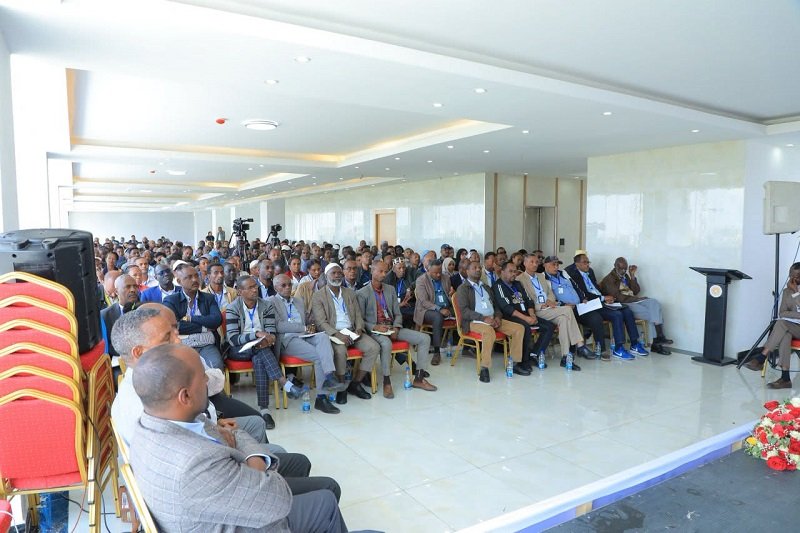
During strategic working sessions held at the Addis Ababa International Convention Center, intense debates emerged across key thematic areas, particularly regarding federal organization, regional demarcation, administrative systems, and the Commission’s own procedural methodology.
During deliberations on government structure and form, a majority of participants supported maintaining a federal framework, but urged substantive amendments to address the limitations of the current ethnic-based model. While some delegates introduced geographically based federalism as an alternative, others cautioned that a total structural overhaul amidst ongoing political tensions and deeply entrenched identity questions could escalate regional instability.
However, while supporting the continuation of federalism in principle, delegates overwhelmingly called for a fundamental reconfiguration of regional states. Participants argued that regional boundaries should transition away from strict ethnic definitions toward models determined by geographical viability, economic self-sufficiency, and population density—a proposal that directly challenges the existing framework.
A major point of divergence emerged regarding the form of executive governance. Reports indicate that despite prior guidance conveyed to ruling party members urging them to lobby for a transition toward a presidential system, participants across strategic working groups set the preference aside. Instead, delegates voiced strong support for retaining the existing parliamentary system, signaling that the ruling party’s anticipated leverage over the dialogue agenda is facing active challenges from non-aligned participants and independent representatives.
Participants also raised critical objections regarding the guiding questions drafted by the National Dialogue Commission to structure the consultations. Critics argued that the official questions failed to provide adequate structural alternatives, diluted major national grievances, and omitted key agenda points. Although debaters succeeded in introducing omitted issues during plenary sessions, delegates expressed lingering concerns that without formal procedural guarantees, these items may be excluded from the final recommendations document.
__
Join our Telegram Channel: t.me/borkena
Like borkena on Facebook
Join the conversation. Follow us on X (formerly Twitter) @zborkena to get the latest Ethiopian news updates regularly. Subscribe to the YouTube channel. To share information or for submission, email info@borkena.com
All I want to say to the participants in the nation’s fate deciding dialogue is keep talking your mind in civil and constructive manner with the spirit of accommodate and compromise. Many of these nations in the democratic West did have such dialogue with some of them calling it convention. Their such gatherings were not smooth sailing. They had stalemate on thorny and critical issues but managed to come up with a compromise to accommodate the other side. Learn from them but don’t be overworked to copy them to the letter. Once you cemented your unity the bugs could be taken out with a series of amendments at the later dates. So far you have shown the world you are cultured peoples with a long and rich history of how to come up with a give and take lasting solutions. You have made us all proud.
Godspeed!!!