
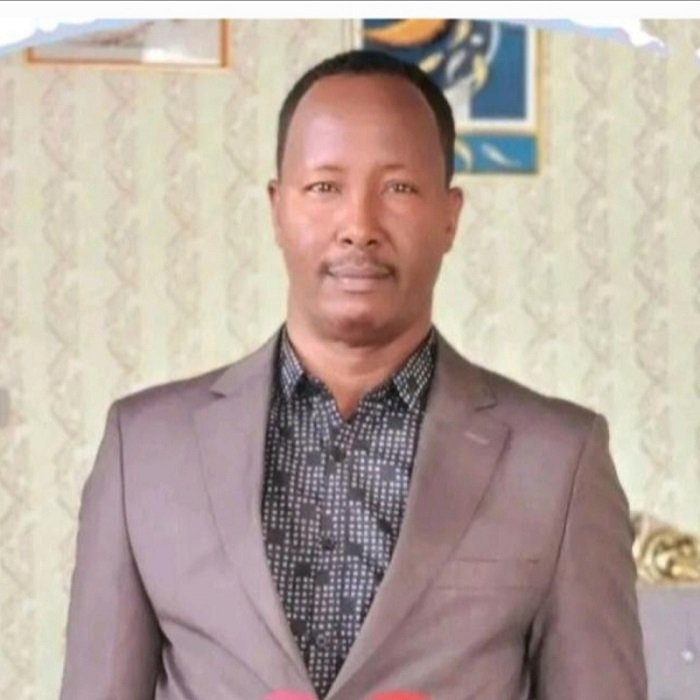
By: Mohamed Hassan Xareed
The Quote That Sparked the Debate
In a recent panel discussion hosted by the independent news platform Zeteo, veteran Middle East journalist and analyst Rami Khouri offered a framing of Iran’s regional behavior that cuts sharply against the dominant narrative found in most Western coverage. Rather than describing Tehran purely as an aggressor destabilizing its neighborhood, Khouri situated Iran’s actions within a much longer historical arc — one defined by the region’s decades-long struggle to shake off foreign domination.
“[Iranians] are trying to end the colonial period.”
— Rami Khouri, journalist and Middle East analyst, on the Zeteo panel discussing major U.S. escalation against Iran
It is a provocative sentence, deliberately so. In seven words, Khouri reframes a conflict that is usually discussed in the vocabulary of nuclear proliferation, proxy militias, and sanctions regimes, and instead places it inside the vocabulary of decolonization — a lens more commonly applied to twentieth-century independence movements in Africa and South Asia than to twenty-first-century geopolitics in the Gulf.
Who Is Rami Khouri, and Why His Perspective Carries Weight
Rami Khouri is one of the most established English-language voices writing on Arab and Middle Eastern affairs, known for decades of columns, editorial leadership at regional publications, and academic work bridging journalism and Middle East studies. His commentary is often distinguished by a willingness to challenge both Western foreign-policy assumptions and the failures of Arab governments themselves — a dual critique that shapes how he approaches a topic as charged as Iran’s role in the region.
That background matters here. Khouri is not arguing from a pro-Tehran political platform; he is applying a historical framework — colonialism and its long aftermath — to explain why Iran behaves the way it does, and why so much of the Arab world, in his view, has struggled to do the same.
Unpacking “The End of the Colonial Period”
To understand Khouri’s claim, it helps to recall what the “colonial period” actually meant for the Middle East. Following the collapse of the Ottoman Empire after World War I, Britain and France carved up the region through arrangements such as the Sykes-Picot framework, installing mandates, redrawing borders, and often propping up rulers who depended on Western patronage to stay in power. Iran, though never formally colonized in the way Iraq or Syria were, endured its own version of foreign interference — most notably the 1953 coup, orchestrated with British and American backing, which removed a democratically elected prime minister after he moved to nationalize the country’s oil industry.
Khouri’s argument, in this context, is that the 1979 revolution and everything that followed — Iran’s support for allied militias and governments across Lebanon, Syria, Iraq, and Yemen, its nuclear program, its refusal to align with Western security architecture in the Gulf — should be read as a continuous project of asserting independent state sovereignty, rather than simply as destabilizing aggression. In his framing, Iran acts the way a formerly dominated power acts once it decides it will no longer take orders from external patrons.
Sovereignty in Contrast: Iran Versus the Wider Arab World
The second half of Khouri’s argument is arguably the sharper one: that Iran’s conduct throws into relief how many Arab states have not achieved the same degree of independent maneuver. Several Gulf and Levantine governments continue to host foreign military bases, rely heavily on Western arms sales, and coordinate closely with U.S. regional strategy — arrangements that, in Khouri’s view, resemble a continuation of colonial-era dependency rather than a clean break from it.
Seen through this lens, Iran’s willingness to defy Western pressure — even at enormous economic and human cost through sanctions — becomes, for Khouri, a demonstration of what full sovereignty looks like in practice: an insistence on setting one’s own foreign policy, military posture, and alliances without deferring to former colonial or contemporary superpowers.
The Other Side of the Argument
Khouri’s framing is compelling, but it is far from the only lens through which Iran’s regional role is understood, and it is worth laying out the strongest counterarguments fairly.
Critics — including many Arab governments, Israeli officials, and Western analysts — argue that Iran’s regional posture is better described as expansionist than anti-colonial. They point to Tehran’s financing and arming of non-state militias in Lebanon, Iraq, Yemen, and Syria as evidence of an effort to project power well beyond its own borders, often at the expense of the sovereignty of the very states in which those militias operate. From this vantage point, calling Iran’s conduct a rejection of colonialism inverts the picture: Iran, in this reading, is not ending foreign domination but exporting a new version of it into fractured neighboring states.
There is also a domestic counterpoint. Sovereignty, critics note, is not only about resisting external powers — it is also about a state’s relationship with its own people. Iran’s government has faced sustained internal protest movements over political repression, restrictions on women’s rights, and economic mismanagement, which some argue complicates any narrative that presents the Islamic Republic as a clean symbol of liberation. A state can resist foreign control abroad while still limiting the freedoms of its own citizens at home, and observers on this side of the debate argue that the “anti-colonial” framing risks obscuring that tension.
Finally, many regional commentators push back on the idea that Gulf and Arab states’ security cooperation with Western powers reflects lingering colonial dependency rather than sovereign choice. They argue that smaller and mid-sized states routinely form security alliances with larger powers as a rational strategy — not a surrender of independence — and that framing those alliances as neo-colonial understates the agency of the governments involved.
Why This Debate Matters Amid the Current U.S.–Iran Escalation
This exchange did not happen in a vacuum. It took place on a panel specifically convened to discuss what Zeteo described as major U.S. escalation against Iran — a reminder that how commentators frame Iran’s motivations has direct consequences for how audiences interpret the stakes of military confrontation. If Iran’s posture is understood primarily as anti-colonial self-assertion, then U.S. and allied military pressure can be framed as an extension of the same historical domination Khouri describes. If, instead, Iran’s posture is understood as expansionist or destabilizing, then that same pressure is framed as a defensive or corrective response to a regional threat.
Neither framing is neutral, and that is precisely why this kind of language matters. Words like “colonialism” and “sovereignty” are not just descriptive — they carry moral weight, and whoever successfully attaches them to a given actor gains a significant advantage in the broader battle for public opinion, both within the region and internationally.
Conclusion
Rami Khouri’s characterization of Iran as a state “trying to end the colonial period” is not a simple defense of Tehran’s foreign policy — it is an invitation to view a familiar geopolitical standoff through an unfamiliar historical frame. Whether one finds that frame persuasive likely depends on which piece of evidence carries more weight: Iran’s long history of resisting foreign intervention, or the costs its regional interventions have imposed on the sovereignty of its neighbors and the freedoms of its own citizens.
What is clear is that as U.S.–Iran tensions escalate, the language used to describe Iran’s behavior — liberation or aggression, sovereignty or expansion — will continue to shape how the conflict is understood far beyond the region itself. Engaging seriously with arguments like Khouri’s, alongside the strongest objections to them, is essential for anyone trying to understand the Middle East on its own terms rather than through a single inherited narrative.
Mohamed Hassan Mohamed (Xareed), an MBA graduate of distinguished merit, is a seasoned academic and lecturer whose expertise spans scientific economic management, business information systems, human development, and a range of interdisciplinary domains. His intellectual contributions—marked by a fusion of advanced scholarly inquiry and strategic analysis—primarily explore the intricate dynamics of geoeconomic competition and regional conflict across the Horn of Africa.
Editor’s Note: Views in the article do not necessarily reflect the views of borkena.com
__
Join our Telegram Channel: t.me/borkena
Like borkena on Facebook
To submit a press release, send the submission to info@borkena.com
Add your business to Ethiopian Business Listing / Ethiopian Business Directory
Join the conversation. Follow us on X (formerly Twitter) @zborkena to get the latest Ethiopian news updates regularly.
To Support Borkena : https://borkena.com/subscribe-borkena/—one- time support or small monthly options available. Inquire information about it : info@borkena.com
“Rami Khouri’s characterization of Iran as a state “trying to end the colonial period” is not a simple defense of Tehran’s foreign policy — it is an invitation to view a familiar geopolitical standoff through an unfamiliar historical frame. Whether one finds that frame persuasive likely depends on which piece of evidence carries more weight: Iran’s long history of resisting foreign intervention, or the costs its regional interventions have imposed on the sovereignty of its neighbors and the freedoms of its own citizens.”
Despite one’s current geopolitical inclinations (calculations) ( which tend to shift as one gets more informed/bribed (world cup 2026) in time) the 3 ‘pieces of evidence’ have their own roots independent of each other.
Here is how:
#1) ‘Iran’s long history of resisting foreign intervention’
‘1953 coup’ is a very recent portion of a very long struggle, the Persian Empire (Iran) predates both the Byzantine & Ottoman Empire… (part of today’s Turkey & all the the Arab states were was part of the Persian empire , while Byzantine Empire, including Egypt were part of the Roman empire some 3000 to 4000 years back)
History lesson:
‘The REAL reason the US can’t beat Iran’
link = youtube.com/watch?v=-DDbYSg0Alw
#2) ‘.. the costs its (Iran’s) regional interventions have imposed on the sovereignty of its neighbors..’
Iran’s involvement in the region has its root in the Palestinians issue vs Israel’s brutal treatment of them since 1948 (perhaps earlier than that) , ( this concern is not limited to Palestine, Iran opposed the Apartheid South Africa as well as the other such states in Africa.). They also sympathize with and stand in solidarity with fellow Shia Islam in the Middle East & elsewhere. So, their involvement in Lebanon & Yemen is not accidental or an attempt to reclaim their old Persian territory far from it; both have more than 30 % Shia populations.
#3) ‘…the freedoms of its own citizens.’
This is purely a Western narrative, Saudi ‘kingdom’ , Qatar, Kuwait, UAE in the western eye is ‘democratic, and Afghanistan next door after 20 years of liberating ‘Women & girls’ the US (NATO) reinstated the Taliban… There are other Muslim states where women’s dress-code is similar to that of Iran, but Western narratives never touch it except magnifying Iran’s “To the ninth degree”.
Young people are susceptible to certain such ‘western’ narratives, a few years ago a young Iranians video (several videos) went viral the world over following the release of the song “Happy” by Pharrell William; even UN (=US) got into action to milk-it to what it is worth and more… a political narrative intended to subjugate Iran using its most vulnerable elements in Iranian society… (remember it happened to us too, during Mengistu Newaay, 1974, 1991…)
As for the women’s dress-code in the Muslim world, even in Ethiopia only the Aderea-women & girls were the only ones I know growing up in Addis that had or maintained religious dress-code, fast forward to today it’s just about everyone.
Both in Iran and Afghanistan in the 1970’s Mini Skirts and Bikinis were the order of the day just like it was everywhere; but now they are religious states and things have changed… That is how a certain culture that was pushed to the hilt reaches its farthest limits and starts to put a bad test in the recipients mouth… which is about to end with first slowly & all of a sudden diminishing of the Western-hegemon along with the FIAT $. And the Empire is fighting back to its final breath against Iran kinetically and via ‘sanctions’ & ‘Tariffs’ with the rest of the world (including its dear VASSAL Europe.)
As for the Arab states, before this US & Israeli war against Iran began, they advised Iran, “better to accept western offers and to relinquish and you get economic development both from us and western investment, instead of being destroyed, you have no chance to stand against all of them combined…” Afew Months Later’ each Arab state is begging Iran (including the (not so) thought UAE that was against the US & Iran MOU as is Israel ) to NOT target their critical infrastructure ( desalination & Power generating fasciitis) turning the entire middle east uninhabitable desert.
Even for Trump the term ‘Excursion’ seems to escape hit vocabulary for good…
“The times that are a changin”
‘There Are Decades Where Nothing Happens’ and ‘Weeks Where Decades Happen’
The new
‘There are millennia where nothing happens & weeks where millennia happens’ ( 0 BCE – 2026 & 2026 – 2030 )
Do not blink!
Be well.
I mentioned “bribe’ in my first paragraph comment above….
Hunter Biden’s ‘X’ post on July 23rd confirms and more, “DEALS’ & the US president’s private INVOYs represents just that.
Link = x.com/HunterBiden/status/2080106055355220031
The Russians ( Putin) mistakenly thought it would be an INSULT to ‘bribe’ the US President and his envoys, as a result their Ukraine (Ankara, Alaska… ‘DEALS’) are still languishing in limbo… ( Trump, is saying “they are not READY TO DO BUSINESS” , translation, ‘please INSULT me in that way, I am so used to them and I LOVE BEING INSULTED, I live for them… ‘ IT IS A BEAUTIFUL THING, THERE IS NOTHING LIKE IT, NOT EVEN CLOSE… BY A LONG SHOT… ” ).
First of all, the Iran war is about OIL, it could have been Trunkey, Pakistan, or India ( via proxy, since both have Nukes, as is the case with Russia) but none of them have OIL, but Iran. (Iraq, Syria, Libya, Venezuela before it…)
Second, with this Saudi Nuke-DEAL, what is missing in Iran’s civilian-Nuke setup are (1) Iranians refuse to sign a ‘DEAL ( pay BRIBE, to the 3 entities in the picture) (2) According to Trump’s press sec. Iran’s Nuke buildup does NOT include US firms… It is being constructed by a Russian firm. it wouldn’t matter if it were a French firm, it would still be BOMBED.
Key issues, OIL, no Bribe paid, Israel wants it, and US firms are not doing the construction, managing all things (in the world…).
These are just past and present, but the FUTURE of WAR is becoming bleak… capitalist ‘lawyers’ aren’t comparable to STEM graduates when it comes to building things… As a result the smart Chinese (‘communist’s) outsmarted the ‘rich’ (debt ridden ) smart (claim) American (capitalists) in a few decades.
War:
‘Investor alert: Rare earth mining isn’t paying off’
Inside China Business
Link = https://www.youtube.com/watch?v=C-B9q0gmTS0
Oil:
‘US Debt Market Implodes as Saudi Oil Shock Triggers Global Panic’
Sean Foo
Link = youtube.com/watch?v=oN4dwgYt2Fw
Funny enough: African union & European union are out guns blazing…
AU:
Want to fight the Yemeni Huties on behalf of Saudi Arabia. ( Uganda to fight Iran on behalf of Israel, declaimed a few months a go )
EU:
#1) Wants to set the price of Russian Oil ( the age of ‘customer setting the price’) $44.
#2) Planning to board Russian Oil-tankers in the Indian ocean, but it doesn’t even have a military, let alone a Navy; as yet.
EU is one of the first resource deprived region of the world, their dimwit ‘leadership’ have no clue SHORTAGE of oil and other resources in the market affects them FIRST.
Yet, they are not only encouraging Ukraine to hit oil-refineries oil tankers & oil fields , as well as Russian grain ship… and prices are going up in EU for corn and wheat, soon follows starvation… but policy makers in Brussels are popping Champaign drunk on their ‘EU value’ narratives (invasions & looting) how that ( EU value) pays this time around may not be as good as the last, and it understood less so in EU it self.
Top is bottom, bottom is top.
8 ኛው ሺህ።
Be well.