
Small is Beautiful and Effective
Aderru Janni
USA
Introduction
Government is one of the essential features of a Nation or a State considering it is a Complex Adaptive System (CAS). It is a crucial factor in the state’s stability, development, and adaptability. When a government fails, the entire national system suffers a systemic breakdown, leading to instability, economic decline, and social fragmentation (Marion & Uhl-Bien, 2001). The entire system can spiral into self-reinforcing dysfunction, making recovery difficult. A typical situation in many African countries, including Ethiopia. In a multi-ethnic, multi-religion and large population nation like Ethiopia, a properly structured federal governance system is indeed one of the pillars of federalism.
Federalism allows diverse groups to coexist within a single political system while maintaining a degree of autonomy (Watts, 2008). In practice, however, federal governance becomes particularly vulnerable in economically weak countries (Stepan, 2001) such as Nigeria, Pakistan, and Ethiopia. Ethiopia’s case is further complicated by the compounded effects of ethnic-based divisions, asymmetrical state powers, and the absence of a broadly debated and consensual national agreement.
Ethiopia’s experiment with purely ethno-federal governance has been marred by rising ethnic polarization, recurrent violent conflicts, institutional decay, and a profound crisis of national identity. It is not the ethno-political system that is an issue, but rather the lack of institutional, social, economical environment to manage ethnic based ideologies. Purely ethnic based political systems and governance structures are always difficult to implement and create more complicated problems, pushing people into group-based grievances, externalization, and blame games. When the complexity of a governance problem exceeds the adaptive capacity of the system, rethinking and learning a lesson is important.
For instance, India’s model of governance is not purely ethnic but “ethnic-affiliated” federalism and has been working relatively well for over eighty years. India managed its ethnic-based states not by merging linguistic or ethnic groups into large homogenous units, but by incorporating a range of pragmatic criteria. While language served as a major organizing factor, administrative efficiency, economic viability, historical identity, strategic security, and political compromise played crucial roles in how India devised its states (Austin, 1966). Most importantly, the process was debated nationally and broadly agreed upon..
Ethiopians must draw critical lessons from how India’s leaders pragmatically balanced unity and diversity while deliberately resisting the temptations of pure ethnic federalism.This article explores an alternative and scientifically grounded approach for restructuring Ethiopia’s federal governance, aimed at fostering greater internal homogeneity, effective autonomy, administrative efficiency, and achieving diversity within unity, as opposed to the fragile notion of unity in diversity.
Scientific Frameworks
Federalism often struggles in developing countries because it demands strong institutions, administrative capacity, equitable resource distribution, and legal stability. One remedy under such circumstances is to reorganize governance structures in a manner compatible with the society’s realities. Scientifically, studies indicate that smaller, decentralized, and autonomous governing structures are more efficient in adapting to local needs. If we consider nations as complex adaptive systems, the support for small-scale governance units is well-aligned with Complex Adaptive Systems (CAS) theory.
Yaneer Bar-Yam (2024) works on complex systems and suggests that smaller, decentralized units within a larger system can adapt more effectively by managing diversity through the creation of autonomous sub-units that adjust independently to local conditions. Federal systems, where power is distributed across smaller, semi-autonomous units, often strike a balance between adaptability and cohesion. Similar findings have been observed in organizational settings; Mintzberg (1983) demonstrated that small, semi-autonomous teams are often more effective in dynamic environments because they can innovate faster due to reduced bureaucracy and clearer communication.
Hooghe and Marks (2003), in their governance studies, also found that smaller, decentralized units are more efficient in responding to local needs, further reinforcing the alignment with CAS theory. Distributing power across semi-autonomous units enables a federal system to balance the flexibility of local governance with the coherence of the larger political structure.
Elinor Ostrom’s groundbreaking work on polycentric governance (Ostrom, 2010) further validated the effectiveness of decentralized systems. She demonstrated that multiple, smaller, self-organized, and overlapping decision-making units often outperform centralized approaches in complex, dynamic environments. Polycentric systems are more responsive to local needs, encourage collective action, enhance accountability, and adapt more effectively to change.
In countries with complex political, social, and environmental dynamics like Ethiopia, small, homogenous, and autonomous governance structures offer several key advantages:
1. Adaptability and Responsiveness: Small, homogenous units can adapt more rapidly to change, as they involve fewer layers of complexity and encounter less resistance when implementing new strategies. Adaptability is a core requirement in CAS, and smaller units are better positioned to respond effectively to evolving challenges.
2. Alignment of Interests: Homogeneous groups often share common values, goals, and priorities, reducing internal friction and fostering cohesive decision-making. In contrast, larger
and more diverse groups can struggle to find solutions that satisfy all parties, slowing the adaptation processes essential in CAS.
3. Ease of Information Flow: In small units with shared languages, norms, and perspectives, communication flows more smoothly, allowing for faster feedback loops. Rapid feedback is vital in CAS, enabling continuous learning, real-time adjustments, and dynamic adaptation.
4. Local Autonomy and Innovation: Smaller, autonomous units empower localized decision-making, which fosters innovations tailored to specific community needs. CAS thrives on decentralized adaptation rather than rigid top-down management, and small units are naturally conducive to this decentralized process.
5. Reinforcing the Unity Government: In countries with weak or emerging institutions and a fragile rule of law, large regional states often develop hegemonic dominance and can frustrate efforts toward national unity. In contrast, smaller, autonomous governance units are more likely to focus on local development and autonomy rather than challenge the cohesion of the central government.
6. Strengthening Community-to-Community Relations: Small autonomous governance structures also enhance neighborly interactions by facilitating cooperative resource management, culturally relevant conflict resolution, sustaining local economies, and preserving traditions of cultural exchange. This decentralized approach enables communities to maintain strong mutual support systems and resilient local social bonds. For instance, in pastoralist communities, rigid boundaries of large regions often prevent necessary inter-community cooperation, such as cattle movements during droughts. Smaller, more flexible governance structures would allow such vital interactions to continue, strengthening solidarity and resilience across neighboring communities.
7. Local Dialects as Source of Hidden Knowledge – small, homogenous, and autonomous regional state configuration helps preserve local linguistic dialects, cultural variations, and community innovations. The importance of this in scientific terms is not to maintain and transmit dialect differences to generations. Not at all, it helps scientists to explore native knowledge and wisdom of the past that is not explored for the benefit of societies – a wealth of spiritual, survival, and management innovations. God knows how much hidden knowledge and wisdom died in many parts of the world.
Testing the theory in Ethiopia
Smaller, decentralized, and autonomous governing structures are more efficient in adapting to local needs and offer the above seven listed benefits. Realizing the current reality of strong ethnic governance system and the essentiality of a small-scale governance system for the people,
Ethiopia can construct an ‘Ethnic-Affiliated Multi-Factor (EAMF)’ effective governance system that resembles India but is small enough to allow modern scientific governance and national unity. The following three features can be considered in designing governance structures to manage both group interests (ethnic and religious) as well as national interests. Ethiopia must consider redesigning regions/states such that
1. They are small enough to preserve the local ethnic, cultural, religious, linguistic, and geographic homogeneities, redistribute resources, and facilitate fair economic and social equity opportunities
2. They are small enough to prevent large ethnic group dominance over the federal government and neighboring states. Large state dominance frustrates both the unity government and neighboring smaller regional/state governments (power asymmetry)
3 . They are large enough to resist or prevent any illegal federal or neighboring region/state dominance and undue interference.
Let’s take a practical example to argue the point. Wollo district in Amhara regional state has a more distinctive mosaic culture than the rest of the Amhara region. The Agew people of Wag Himra have stronger social, economic, and cultural bonds with neighboring Amhara (Wollo) communities than the Amhara and Agew of Gojjam. Similarly, Borana communities of the Oromia region have unique social, economic, and cultural bonds and shared resource management practices with neighboring Somali communities more than Oromos in Wollega or Shewa. Welkait and Raya have a distinctive cultural identity rather than an ethnic identity. One can continue to demonstrate effective states as Jimma, Wellega, Metekel, Gojjam, Wolayta, Gamo, Gurage, Kaffa, etc
What does it mean? It means that an autonomous Borena regional state would cope better with an autonomous regional state carved from a Somali regional state than being blended with the larger context of the Oromia region. An autonomous Wollo state would build a cordial and strong bond with Afar, Tigray, Wag, and Afar as an autonomous state rather than being part of the greater Amhara regional state.
In this new model, additional considerations may be implemented as is in India, such as population size, geography, security, economic efficiency, and the communities’ desires. This model also provides an opportunity to resolve Welquite, Metekel, and Raya issues.
In addition to fairness, effectiveness, and local inter-tribal harmony, Argawal (1995) argues that small autonomous governance systems are well-suited to the level of local knowledge and expertise. They allow leaders to apply localized knowledge, operate within a manageable scope, build governance skills over time, and maintain accountability—all while aligning with traditional governance practices. This approach enhances effectiveness, sustainability, and responsiveness in governance, particularly where centralized structures may lack the capacity to address diverse local needs. One shouldn’t forget that the biggest challenge in Ethiopia is the concentration of capital, intellectual, and financial powers first in Addis Ababa, and next in the regional capitals. If genuinely implemented, this approach will distribute capital, intellectual, and financial resources to effectively crafted small but homogeneous autonomous regional states.
From a practical point of view, small governance structures prevent the formation of large armed violence, as autonomous small regions will have effective control of their region. It is easy to isolate a small troubled region, and the rest of the country can run without being affected. This It prevents breeding lawlessness, preventing space for movement of illegal and violent criminals and armed struggle groups, encouraging political engagement through nonviolence.
This model of small-sized governance is not unique but is practiced in many African countries. In our region of East and Horn of Africa, Uganda is divided into 134 districts and one capital city (Kampala), Kenya into 47 counties, Tanzania into 31 regions, and Sudan into 18 regions. The most populous country in Africa, Nigeria, is divided into 36 states + 1 Federal Capital Territory (FCT). Their division or regional philosophy may vary, but they effectively prevented big district or state hegemony and dominance. In nations with weak institutions and economic bases, homogeneity fosters shared identity, and small sizes encourage governability without threatening the center. It helps the nation to focus its attention on international opportunities and threats rather than endless internal squabbles.
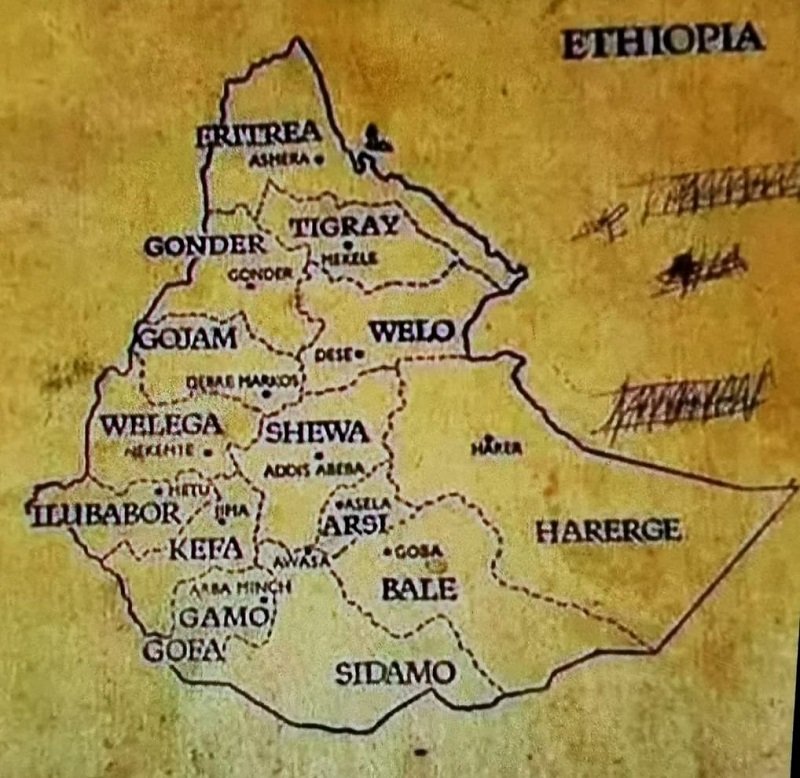
Therefore, Ethiopia must allow research and study for a better, small autonomous governance that is natural, more legitimate, adaptive, cohesive, and resilient. This approach not only respects local identities and knowledge but also fosters a stable, unified national framework that can more effectively respond to both local and international hydro-geopolitical threats. I have no clear model, but I suggest creating autonomous federal regions that a regional autonomous state that is between zonal and the autonomous administrative structure that resembles that of 1988 G.C. would be an appropriate federal governance structure.
The goal of designing smaller culturally and linguistically aligned, economically effective states/regions, on the one hand, helps to preserve cultural and linguistic identity, ensures economic and administrative viability, on the other hand, prevents regional hegemony and dominance, maintains national unity, and fosters neighborly community-to-community interactions and transactions. A small, effective governance system is viable from the CAS perspective, as it fulfills effective self-organization, easy adaptability and is less aggressive to destabilize the mother system. It supports a dynamic and peaceful nation spurring progress, and unity of the nation for better management of the meager resources and defending itself from growing hydro-geopolitical threats brewing in the region.
Editor’s Note: Views in the article do not necessarily reflect the views of borkena.com
__
Join our Telegram Channel: t.me/borkena
Like borkena on Facebook
To submit a press release, send the submission to info@borkena.com
Add your business to Ethiopian Business Listing / Ethiopian Business Directory
Join the conversation. Follow us on X (formerly Twitter) @zborkena to get the latest Ethiopian news updates regularly.
To Support Borkena : https://borkena.com/subscribe-borkena/—one- time support or small monthly options available. Inquire information about it : info@borkena.com
Reference:
Bar-Yam, Y. (2004). “Making Things Work: Solving Complex Problems in a Complex World.” Knowledge Press.
Hooghe, L., & Marks, G. (2003). “Unraveling the Central State, but How? Types of Multi-level Governance.” American Political Science Review, 97(2), 233-243.
Mintzberg, H. (1983). “Structure in Fives: Designing Effective Organizations.” Prentice-Hall.
Agrawal, A. (1995). “Dismantling the Divide Between Indigenous and Scientific Knowledge.” Development and Change, 26(3), 413-439.
Ostrom, E. (2010). “Beyond Markets and States: Polycentric Governance of Complex Economic Systems.” American Economic Review, 100(3), 641-67
Watts, R. L. (2008). Comparing Federal Systems (3rd ed.). McGill-Queen’s University Press.
This is it!!! Thank you!!!