
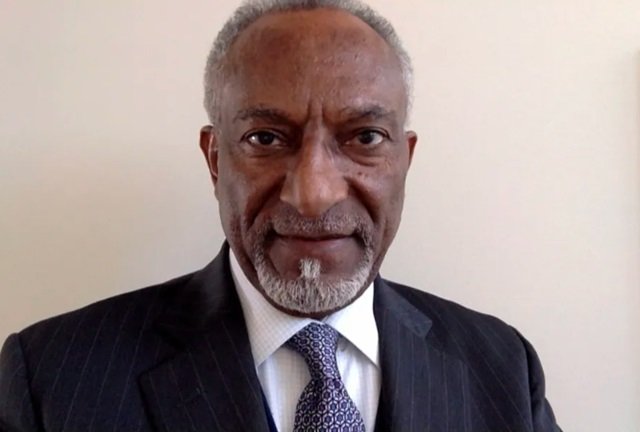
By Teshome Abebe
A note to the reader: in this brief essay, I am tempted to go back on purpose to collect something from the past to help us get through the present. I do so because it might help us understand the behavior and help change what we do next. The behavior: the need to belong.
C.S. Lewis, in his 1944 lecture “The Inner Ring,” described a subtle but powerful human drive: the desire to penetrate unofficial circles of insiders—the “Inner Ring”—within any organization, profession, or power structure. This is not formal hierarchy or public ambition but an informal, shifting group of those “in the know.” Lewis warned that this longing, more than greed or overt vice, corrupts decent people. It operates through hints, confidential asides, and the terror of exclusion. Once inside, one discovers yet another ring; the quest never ends. The passion for it leads people to compromise morals quietly, as it feels like friendship, seriousness, or belonging rather than wrongdoing.
In Ethiopia under Prime Minister Abiy Ahmed, this dynamic illuminates how power operates amid ethnic federalism’s fractures. Abiy has masterfully exploited divisions among Amhara, Oromo, Tigrayan, and other groups through selective inclusion, pitting factions against each other while offering aspirants a path into his inner circle of loyalty. This aligns with classic divide and rule (Julius Cesar) but gains psychological depth from Lewis’s insight: the lure is not just material reward but the intoxicating sense of being “inside,” trusted with secrets, and part of the real decision-makers.
Manipulation of Opposition and Divide-and-Rule
Since taking power in 2018, Abiy has dismantled the old EPRDF coalition (dominated by Tigrayan elements) and formed the Prosperity Party, promoting pan-Ethiopian unity rhetoric while navigating ethnic tensions. Critics argue his approach involves co-opting elites from rival groups, amplifying grievances selectively, and using force or proxy conflicts to weaken unified opposition.
- Against Tigray: Abiy’s government launched the 2020–2022 war framing the TPLF as a “criminal clique.” Amhara and Eritrean forces played key roles, with some Amhara groups gaining temporary territorial advantages over lands that had been taken by the TPLF. This divided potential anti-centralization alliances.
- In Oromia and Amhara: Conflicts with OLA (Oromo Liberation Army) and Fano (Amhara Patriots) persist. The government has used segmented rhetoric—unity to some, targeted security operations to others—while drones and military actions cause untold numbers of civilian casualties.
Opposition groups in Ethiopia are fragmented: some leaders or factions are invited into government roles, alliances, or quiet understandings, while others face marginalization, arrest, or military pressure. This prevents broad coalitions. Lewis’s Inner Ring explains the mechanism: the “hint” comes via private channels—perhaps promises of influence, protection, or access—making ambitious individuals complicit in suppressing their own group’s broader demands to prove loyalty and gain entry.
Why Group Supporters Back Actions Harming Their Own
This is where the Inner Ring’s psychology is potent. Not entire ethnic groups uniformly support Abiy, but significant elites, officials, and factions within Amhara, Oromo, and even Tigrayan circles do—or have—at various times, despite documented civilian deaths (including via drones) in their regions.
- Amhara officials/support: Many initially backed Abiy against perceived Tigrayan dominance. Some see personal or regional gains (e.g., influence in the federal center, territorial claims during the Tigray war). The lure of proximity to power—cabinet posts, business access, or being “in” on national strategy—outweighs distant civilian costs for those inside or aspiring. Public rhetoric of unity masks private calculations.
- Oromo supporters: As Abiy is Oromo, his base draws on ethnic solidarity and narratives of past perceived marginalization. Inner-circle Oromos gain from perceived dominance in the Prosperity Party and military, framing crackdowns on OLA (or even Amhara) as necessary against “extremism”.
- Tigrayan elements: Post-war, some pragmatically engage for reconstruction aid, rehabilitation, or to counter isolation, hoping for reintegration into the center. Classic examples could be cited here, but I do not wish to focus on personalities. I must concede, however, of the possibility that individual actions may have also stemmed from recognition of the futility of their previous efforts.
Lewis noted that the desire draws people into ‘rings’ by making compromise feel like sophistication, not betrayal. Supporters rationalize by stating: “The greater good requires tough measures”; “My group benefits overall”; “It is time to move on”; or the “Opposition is worse.” Those inside the ‘ring’ often downplay or deny abuses against their kin, as admitting them risks expulsion. The terror of being “left outside”—losing status, contracts, or safety—silences dissent. For those in the “ring”, the wishes of the headman are like “…alms thrown to a beggar”. They keep him alive today, only to prolong his misery until tomorrow.
The Lure, the Method, and Ignoring Others’ Fate
The lure: Power, relevance, and belonging in a high-stakes, patronage-heavy system. In Ethiopia’s context, this includes federal appointments, resource allocation, protection from prosecution, business opportunities, and the ego boost of advising “the center.” For ethnic elites, it promises influence over national policy that could favor their group subtly. Lewis emphasized that this feels like being taken seriously and not seen as naked ambition.
The method: Selective, shifting invitations. Abiy’s style involves personality-driven governance. Aspirants receive signals—meetings, shared confidences, promotions after key acts of loyalty (e.g., denouncing militants, supporting military operations). Divide-and-rule amplifies this: by keeping groups in conflict or suspicion, he makes alignment with the center the safest path to relevance. Propaganda, segmented messaging, and control of narratives reinforce who is “in” versus “extremist outsiders.”
Why ignore predecessors’ fates? New aspirants exhibit classic optimism bias and exceptionalism. Lewis observed that people convince themselves they will navigate the ‘ring’ without full corruption, or that prior figures failed due to personal flaws, not the system. In Ethiopia, erased officials or co-opted leaders are dismissed as “not smart enough,” “too radical,” or “outmaneuvered.” The ‘ring’s’ shifting nature fuels denial: “This time it’s different; I’ll have real influence.” Short-term gains blind them to long-term irrelevance or betrayal when utility ends. And the path has so far been littered with betrayal!
Viability as Long-Term Governing Philosophy?
This governing philosophy is unlikely to be sustainable or successful in a diverse, historically grievance-laden country like Ethiopia. Short-term, it maintains central control by preventing unified opposition and leveraging ethnic federalism’s fractures. Abiy has survived multiple conflicts and “won” an election amid boycotts and allegations of major irregularities.
Long-term risks are high:
- Erosion of trust: Persistent conflicts (Tigray aftermath, Amhara/Oromia insurgencies) drain resources, fuel insurgencies, and deepen ethnic scars.
- Instability: Over-reliance on personal loyalty and ‘rings’ creates fragility. When the center weakens, excluded groups or disillusioned insiders can realign explosively.
- Economic and social costs: Wars, displacement, and governance by division deter investment and national cohesion sorely needed for development.
- Moral corrosion: As Lewis warned, widespread Inner Ring pursuit produces a society of quiet compromises, graft, and disappointment—undermining legitimacy.
Ethiopia’s size, youth population, and interconnected challenges (economy, climate, neighbors) demand inclusive institutions, not perpetual factional management. Divide-and-rule has historical precedents but often ends in backlash or state fragility when ‘rings’ exclude too many or promises fail. True stability requires addressing root grievances through broader participation, not endless inner-circle seduction. Lewis’s essay remains a caution: unchecked desire for the ‘ring’ makes “a man who is not yet a very bad man do (sic) very bad things.” In national governance, the stakes are millions of lives and a country’s future.
Teshome Abebe, PH.D., a former Provost and vice President for Academic Affairs at two institutions, is Professor of Economics and Faculty Laureate.
Editor’s Note: Views in the article do not necessarily reflect the views of borkena.com
__
Join our Telegram Channel: t.me/borkena
Like borkena on Facebook
To submit a press release, send the submission to info@borkena.com
Add your business to Ethiopian Business Listing / Ethiopian Business Directory
Join the conversation. Follow us on X (formerly Twitter) @zborkena to get the latest Ethiopian news updates regularly.
To Support Borkena : https://borkena.com/subscribe-borkena/—one- time support or small monthly options available. Inquire information about it : info@borkena.com
Professor Teshome Abebe and the other economists of Ethiopian origin belong to the old or classical school of economics. The field of economics has been evolving and modernizing cosntantly thanks to the ideas and contributios of the famous economists like the late Meles Zenawi. He developed a new economic theory konwn as the `developmental state` which is suitable and preferential to developing countries in the world. The developmental state model intgrates both economics and good governance politics. And that is why Ethiopia under the EPRDF had been registering double digit economic growths. Training economists with this novel and modern economic knowledge is very essential.
To call Meles an economist goes to show you have little or no clue about economics. What you’re good at, if I may say so, is racial politics. Unfortunate that ten years after Qeeroo run Tplf out of town you’re still hallucinating about dead and cowardly Meles. Meles is not an economist. Did you get it? Meles is dead.
Meles copied it from the Asian Tigers not his own making. The problem was TPLF controlled the entire Ethiopian Economy as PP is controlling now. So, when an Ethnic party is the government no fair development is expected in the county. That is why we are still in a state of primitively society structure. The elites of the times don’t want to promote civic nationalism.
Political opportunism has been around since human beings began forming hierarchical societies. What is different with Abiy’s government is the lack of a clear political, economic, and social ideology and complete reliance on personal dealings.