
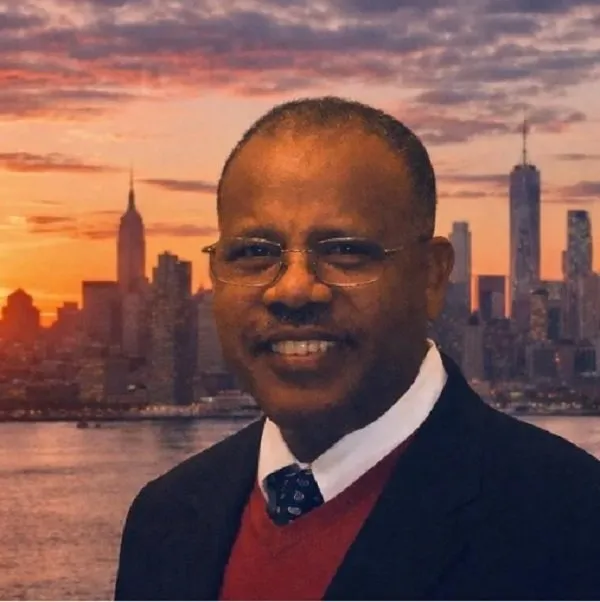
While searching for news about my country, Ethiopia—a country where millions of people continue to suffer under insecurity, fear, displacement, and violence—I came across an interview that immediately caught my attention. The speaker was Taye Atske Selassie, a man whom I consider to be a political opportunist and someone who has consistently aligned himself with those in power rather than standing on principle.
As I searched for updates about the ongoing crises affecting ordinary Ethiopians, I stopped when I heard Taye speaking to members of the international media and the diplomatic community regarding Ethiopia’s recent election. Out of curiosity, I listened to what he had to say, despite my long-standing skepticism about his political character and credibility.
In my view, Taye has spent much of his political life adapting his positions to serve whichever group holds power. Rather than demonstrating consistency, ethical conviction, or loyalty to a set of principles, he has repeatedly shifted his allegiances to accommodate those who control the state apparatus. Consequently, I have never regarded him as a trustworthy political figure.
I remember several occasions when Taye visited Dallas, where I live. He did not come as a private citizen but as a representative of the then-ruling authorities. At different times he appeared alongside senior government officials and political figures who were attempting to persuade members of the Ethiopian diaspora to abandon opposition politics and support the government. During those visits, many of us organized protests and challenged the messages being presented. Because of those confrontations, Taye became familiar with many diaspora activists, including myself.
What surprised me most during this recent interview was not simply that he was defending the election, but the extent to which he portrayed it as an example of democratic progress. Taye currently occupies the largely ceremonial position of President of Ethiopia, a role that many observers consider to have very limited executive authority. Nevertheless, he spoke confidently about the election process and presented it to the international community as evidence that democracy is taking root in Ethiopia.
According to his remarks, the election was free, fair, and representative of the people’s will. Yet many Ethiopians, both inside and outside the country, continue to raise serious concerns about political repression, restrictions on opposition activities, media limitations, ongoing armed conflicts, and the broader political environment in which the election was conducted. These concerns, in the eyes of critics, make claims of a fully free and fair electoral process difficult to accept.
Looking back over Taye’s political journey, I see a pattern of adaptation to changing political realities. Like many young Ethiopians of his generation, he was once associated with EPRP politics. Later, following the political upheavals of earlier decades, he pursued a different path and eventually became involved with organizations and political movements that were connected to those in power. Over time, he served under successive political arrangements and administrations, eventually becoming associated with the current government led by Prime Minister Abiy Ahmed.
As I listened to the interview, I found myself wondering how political figures continue to defend policies and political processes that many citizens believe have failed to address the country’s deep crises. Ethiopia remains burdened by armed conflict, economic hardship, political polarization, displacement, and loss of life. Yet some officials continue to present a picture of democratic success and national progress that many ordinary citizens struggle to recognize in their daily lives.
On June 21, Ethiopia’s electoral authorities announced the results of the latest election. According to the official figures, the ruling Prosperity Party won an overwhelming majority of parliamentary seats. Supporters of the government have described the outcome as a reflection of popular support, while critics argue that the result was largely predictable given the political environment, the weakness or absence of major opposition competitors in some regions, and the broader limitations facing the electoral process.
The results also showed relatively small representations for several opposition parties. Critics contend that these parties were allowed limited political space while posing no significant threat to the ruling establishment. Supporters, on the other hand, argue that their participation demonstrates political pluralism within the system.
For many Ethiopians, however, the announcement of the election results felt less like a celebration of democratic competition and more like the conclusion of a political process whose outcome had long been anticipated. Whether one views the election as a democratic achievement or a political performance, the deeper challenges facing Ethiopia remain unresolved. The suffering of civilians, the displacement of communities, the persistence of armed conflict, and the absence of national consensus continue to demand attention long after the election results have been declared.
History will ultimately judge not only the election itself but also the roles played by those who defended it, opposed it, or remained silent while the nation struggled through one of the most difficult periods in its modern history.
The Enablers of a Shame Election
In this election, the controversy does not end with Taye Atske Selassie alone. In my view, many of the political figures and organizations that participated in, defended, or helped legitimize the process share responsibility for what many critics regard as a deeply flawed election. This includes individuals such as Birhanu Nega and others who chose to participate despite widespread concerns about the political environment under which the election was conducted.
Critics of the election argue that by taking part in the process and endorsing its legitimacy, these political actors helped provide political cover for a government that continues to face serious accusations regarding its handling of conflicts, human rights concerns, and military operations in various parts of the country. Many Ethiopians, particularly in the Amhara region, believe that the ongoing war, aerial bombardments, civilian casualties, displacement, and humanitarian suffering have not received the attention or accountability they deserve. For those citizens, participation in the election by opposition parties appeared less like genuine democratic competition and more like participation in a predetermined political outcome.
From this perspective, the primary purpose of the election was not to provide meaningful democratic choice but to secure domestic and international legitimacy. Critics argue that the ruling establishment sought recognition from the international community while continuing policies that many Ethiopians consider harmful and destructive. In their view, the election was intended to project an image of democratic progress while the underlying political and security crises remained unresolved.
History teaches that political power is never permanent. Many leaders throughout the world who once appeared untouchable eventually faced political downfall, public rejection, or historical condemnation. Governments that rely excessively on force, repression, or political manipulation often discover that legitimacy cannot be sustained indefinitely through power alone. Ultimately, leaders are judged by history, and history’s judgment is often harsher than that of their contemporaries.
The same principle applies to all political actors who choose short-term political advantage over principle. Those who defend controversial actions, justify abuses, or help legitimize flawed political processes may gain temporary rewards, but they cannot escape public scrutiny forever. Their actions become part of the historical record.
At the same time, it is important to recognize the distinction between organizations that continued to defend the election and those that eventually rejected its outcome. In this regard, I believe the Ethiopian People’s Revolutionary Party (EPRP) and its allies ultimately took a principled position. Although I disagreed with the earlier decision to participate, I acknowledge that the organization later publicly challenged the legitimacy of the process, criticized its shortcomings, and declared that the election failed to meet the standards of a free and fair democratic contest.
While many supporters wished that this position had been taken earlier, EPRP’s final declaration nevertheless reflected its long-standing tradition of opposing what it considers authoritarian rule. By rejecting the outcome and exposing what it viewed as the weaknesses of the electoral process, the party sought to demonstrate that democracy is more than simply holding elections. Genuine democracy requires political freedom, independent institutions, equal opportunity for opposition parties, respect for human rights, and the ability of citizens to make political choices without fear or coercion.
For many Ethiopians, therefore, the debate is not simply about who won seats in parliament. The deeper question concerns legitimacy, accountability, justice, and the future direction of the country. Those questions remain unresolved and will continue to shape Ethiopia’s political future long after the election results have faded from the headlines.
The writer can be reached at : mmusie2@gmail.com
Editor’s Note: Views in the article do not necessarily reflect the views of borkena.com
__
Join our Telegram Channel: t.me/borkena
Like borkena on Facebook
To submit a press release, send the submission to info@borkena.com
Add your business to Ethiopian Business Listing / Ethiopian Business Directory
Join the conversation. Follow us on X (formerly Twitter) @zborkena to get the latest Ethiopian news updates regularly.
To Support Borkena : https://borkena.com/subscribe-borkena/—one- time support or small monthly options available. Inquire information about it : info@borkena.com