
By Bilelenlgne Gashaw Mengistu
It was December 2013, ‘Enku’, an Amharic entertainment magazine, published a special edition to mark the 100th anniversary of Emperor Menelik II’s death on December 15. The issue featured interviews with prominent Ethiopians reflecting on Menelik’s legacy. One of them was the celebrated singer Tewodros Kassahun, better known as Teddy Afro. To boost sales, the editors put Teddy’s photo on the cover, with a caption “One who does not look back cannot move forward.” The line came from his track “About Love”, from his recent Album ‘Tikur Sew’. Over the years, across his albums, Teddy had built his reputation not by criticizing past leaders, but by honouring their virtues — urging the nation to learn from history to chart its future. And that was exactly what he did on that interview too. And the sale was a hit. A week later, something unexpected happened.
A manipulated image of ‘Enku’s cover began circulating on social media, supposedly for overseas readers. It looked identical to the original — same layout, same photo — except for one detail. Where the real cover read “One who does not look back cannot move forward,”, the fake version said: “Emperor Menelik’s war in southern Ethiopia was a holy war.”, which Teddy had never said in his interview. The quote was fabricated. When journalists pressed the magazine for a response, the editors vanished. A month later, ‘Enku’ shut down for good for an unknown reason.
The forces behind the forgery had been bitter enemies until then. They forged a temporary alliance for one reason: to take down Teddy Afro, their shared target. Before telling who the culprits were, let’s rewind a little back.
The Making of a Target
In April 2012 EC, Teddy Afro released his third album ‘Tikur Sew’. As expected, it swept the country. With ‘Abogida’ and ‘Ja Yasteseriyal’ before it, Teddy had risen to become “King of Music” by celebrating Ethiopian unity, honouring its kings and heroes, and preaching forgiveness over revenge. That message made the ruling party and some ethnic nationalists deeply uncomfortable.
The bad blood between Teddy and the EPRDF touched the ceiling in the 2005 election; his album ‘Ja Yasteseriyal’ filled the air a week before the historic election. The title track was interpreted as a coded endorsement of CUD, the main opposition coalition. The regime took it as a personal affront. They nursed a grudge for three years, then in April 2008, arrested him on charges that he had hit and killed a street boy with his car. The case was absurd from the start—clearly fabricated for revenge. Sentenced to six years, his term was reduced to two on appeal. He walked free in August 2009 after serving one year and four months. The regime believed prison had broken him, coming out as a safer, apolitical pop star.
Instead, ‘Tikur Sew hit” harder. Centering Emperor Menelik II—a figure despised by the ruling party and ethnic hardliners—Teddy named the heroes of Adwa verse by verse: the generals from Amhara, Oromo, Tigray, and the South who fought for one Ethiopia and one flag. On the rest of the album, he exalted love and forgiveness, drowning out years of divisive politics in two hours of music. Then the regime lost its grip. Prime Minister Meles Zenawi, the strongman who held the party together, died months after ‘Tikur Sew’ came out. With him gone, the system began to wobble, shaken by crises at home and abroad.
Boycott Bedelle
Along came a new voice: Jawar Mohammed, a politician in his mid-20s, based in the U.S., a man with a polished delivery and a knack for grabbing attention. His interviews after Meles’s death drew crowds. He spoke in a way people hadn’t seen in Oromo politics—inclusive, engaging—which made him a friend of Pan-Ethiopian politicians.
Then, on Al Jazeera’s AJ Stream, he said, “I am Oromo first, and Ethiopian identity was only imposed on me.” Pan-Ethiopian groups that had begun warming to him recoiled. Later, he further claimed Christians used to be attacked with machetes when they arrived into his village — a statement that set diaspora media ablaze. Many thought it would end his career. Instead, Jawar weaponized the outrage.
Hardline Oromo nationalists, detested by his previous flirtation with pan-Ethiopian forces, welcomed him with open arms, and he didn’t disappoint. Using his charisma and education, he began steering their radical agenda. The time was when Facebook and YouTube started exploding, and Jawar effectively made use of it. But he needed a spark big enough to launch a mass movement. That’s when ‘Enku’s Teddy Afro interview gave him one. Without hesitation, Jawar commissioned a Photoshop forgery of the magazine cover and pushed it viral. Then he launched a media campaign accusing Teddy of endorsing the killing of Oromo, especially Arsi people, by Menelik’s army 100 years earlier. This fake news went viral, at home and abroad.
But Jawar knew fake news alone doesn’t make politics, and to turn his lie into leverage, he did what few opposition figures would dare: he forged a coalition with OPDO, the Oromo wing of the ruling EPRDF. He knew Teddy was the regime’s top target, and the regime knew Jawar could mobilize street power. First, they silenced ‘Enku,’ threatening the editors and shutting the magazine down so no one could debunk the lie. With the truth buried, the forgery became “fact” for those who wanted to believe it.
Then they aimed at Teddy directly. At the time, Teddy had signed a 10-million-birr sponsorship deal with Heineken to promote its ‘Bedele Beer’ brand through concerts in 10 Ethiopian cities, some in Oromia. From the U.S., Jawar and the ruling party launched a joint campaign to make Heineken cancel the deal, or Oromia would boycott Bedele beer. They flooded social media with #BoycottBedele and plastered flyers across Adama, Jimma, and Dire Dawa. This was done with the help of security forces. The boycott, however, had a reverse effect on the sale of Bedelle Beer. When Teddy Afro’s fans heard about Jawar’s call, they drank more Bedele, not less. This emboldened Heineken, and they confirmed the concerts would go ahead as planned. Jawar doubled down with angry statements and online petitions. Then OPDO intervened, summoned Heineken’s top executives, and issued a stern warning. Cornered, Heineken “mutually” cancelled the sponsorship. The concerts were scrapped.
Jawar’s camp exploded with triumph. They claimed the boycott had punished Teddy for his “insult” and forced him to cancel. It was a lie on two counts: Teddy never said the quote, and the concerts were killed by OPDO pressure, not by the boycott. But those two lies changed Ethiopia’s history. First, they set a foundation for the future movement driven by someone from North America, executed by Oromo youth at home. Everyone now believed Jawar could move the streets. Money poured in. He launched OMN, a TV station, and for four years he became the voice of Oromo youth protests.
Second, the fake boycott proved Jawar could work with OPDO—something unthinkable before. Older politicians had always scorned OPDO officials as traitors; even being seen with them was blasphemy. Jawar showed the possibility of partnering with OPDO to bring down the EPRDF government. What’s ironic is that TPLF, the Tigray wing that dominated EPRDF, approved the marriage out of sheer hatred for Teddy. They never imagined that same alliance would help bring Abiy Ahmed to power in 2018, and ultimately bury both TPLF and EPRDF.
The youth uprising that began with Boycott Bedele culminated in Abiy Ahmed’s rise. And now the Oromo youth’s demands were never met. Instead, a system that became hell on earth for Oromo people was born.
Back to Arsi via Arsenal.
Fast forward to 2026. Eight years later, Abiy Ahmed is ruling Ethiopia as an unchallenged autocrat, dragging her through endless war. Jawar Mohammed, once the hero of the Oromo protests and author of the Bedele Boycott myth, spent months in Abiy’s prison before returning to exile. And in early June 2026, Addis Ababa saw a boycott no one saw coming.
On the last week of May, a horrific ethno-religious massacre in Arsi Zone killed over 50 Orthodox Christians, displaced thousands, and left nearly 100 missing. Abiy’s government, true to form, denied it was targeted violence, blaming “historical enemies of Ethiopia.” Reports from the ground said security forces took part. The massacre happened the day after the regime declared its second “flawless election”, so Abiy didn’t want any noise ruining the celebration. In fact, they were looking for a distraction to link their “election victory” with a military campaign in Arsi. Then they saw an opportunity that they want to take advantage of.
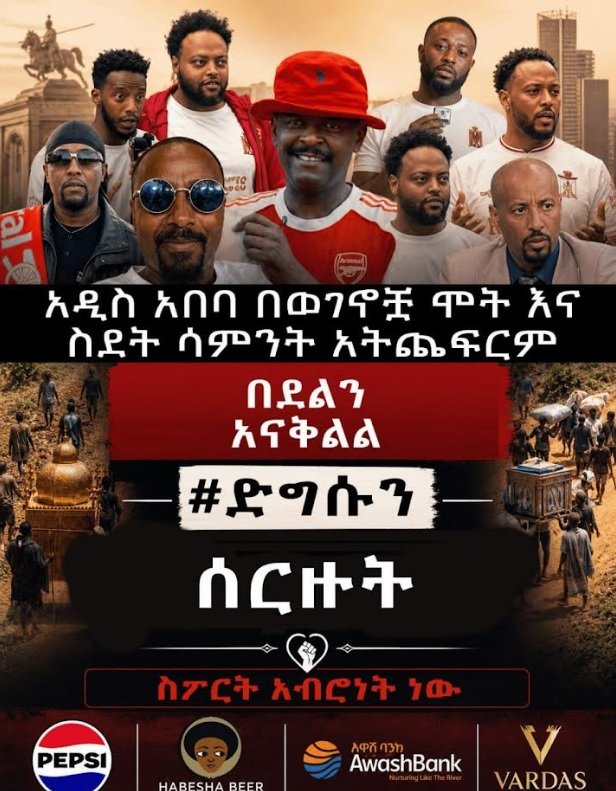
The love for English football is like a fever across Africa, and Addis is no exception. When Arsenal won the 2026 Premier League, fans took to the streets of Addis and other cities for two days of celebration. A week later, an events organizing company named ‘Vardas’ announced an Arsenal Victory Concert at Addis Ababa Stadium, featuring top singers. But the timing was awful: it fell right after the Arsi massacre. In Ethiopian culture, dancing during mourning is taboo. And with Arsenal fans in England themselves pivoting to the World Cup, many asked: why was Addis partying while the country grieved? It started as polite requests by some Addis Ababans to postpone. Then the organizers and young TikTok promoters began mocking them, then the tone soured. These same youth began meeting in secret. Their goal was simple: Arsi was in mourning. Hosting a dance party would make Addis look heartless. So the concert must never go ahead. To this end, they launched a wide social media campaign.
The organizers first dismissed it, then began calling what they assumed were the ringleaders. They insisted the event had been planned months before the Arsi massacre, and offered to donate most proceeds to victims. The singers, they said, would send messages of solidarity before and during the show. Then came the shocking part: they admitted the regime had threatened to jail them if the concert was cancelled.
That was the revelation the activists needed. They quickly planned a full boycott campaign. They knew the regime wouldn’t cancel its own event. So they shifted targets: 1) Urge Arsenal fans in Addis to stay home. 2) Pressure the invited artists to drop out, warning of a lifetime boycott if they performed. The campaign exploded on Facebook, X, TikTok, and Instagram. The response from Addis Arsenal fans was moving: they all chanted in their pages, “Arsenal can wait. Arsi comes first.” One by one, they pledged to stay away. The singers stayed silent until two days before the show. Then, under mounting pressure, they all cancelled.
The regime was furious and took over the event directly. When it realized Addis residents wouldn’t show, it bussed in lower-level party members and safety-net aid recipients from nearby towns, dressed them in Arsenal jerseys, gave them free entry and free beer coupons, and filled the stadium. What began as a concert ended with DJs and TikTokers dancing for an audience of party cadres. It was a financial and moral disaster. The organizers lost everything. The regime, desperate for image repair, only humiliated itself.
Twelve years after Boycott Bedele—a boycott born from a lie—Addis youth launched a real boycott, for a real reason: to protest the Arsi massacre by the same OPDO-turned-Prosperity Party officials Boycott Bedele helped bring to power. The people who rode to power on a fake claim about Teddy Afro and Menelik’s Arsi campaign were now hit by a true boycott over a real Arsi massacre. And in a poetic twist, the wave of change now rising among Addis youth has been stirred by Teddy Afro’s new album, ‘Das Tal.’ Truth came full circle.
Editor’s Note : Views in the article do not necessarily reflect the views of borkena.com
__
Join our Telegram Channel : t.me/borkena
Like borkena on Facebook
To submit Press Release, send submission to info@borkena.com
Add your business to Ethiopian Business Listing / Ethiopian Business Directory
Join the conversation. Follow us on X (Formerly Twitter) @zborkenato get the latest Ethiopian News updates regularly.
To Support Borkena : https://borkena.com/subscribe-borkena/ – one time support or small monthly options available. Inquire information about it : info@borkena.com