
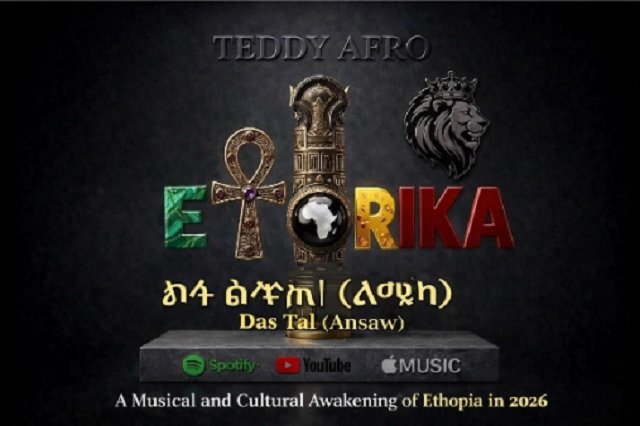
Teddy Afro’s “Etiorika – Track 1: ዳስ ጣል (አንሳው) / Das Tal (Ansaw)”
Introduction: When the Lion Roars — Truth as a Cultural Force
By Caleb Ta. (Dr.)
Independent Researcher in African Political Affairs; Human Rights Advocate
“When the Lion Roars — The Rabbit Trembles, When Truth Emerges — Lies Panic!”
On one side, there is a so-called “king of chaos,” seated on a trembling throne in the halls of power, constantly shaken by fear, disturbed by the silent roar of the people. His authority is fragile, sustained not by trust, but by anxiety. He rules in tension, haunted by the very silence he tries to control.
On the other side stands Teddy Afro — the “King of Art” — who carries no weapon, no army, no shield, yet commands the heart of a nation through music, truth, and cultural consciousness.
One attempts to rule through the barrel of a gun, while the other awakens generations through the power of melody. One survives by manufacturing enemies; the other plants hope through the message that love wins.
The ruling system behaves like a restless insect—striking anything it touches, reacting with fear and aggression. But Teddy Afro stands like the sun: when he rises, darkness retreats; when he shines, no boundary can contain his light.
The reason the system fears him is simple: he embodies the voice of the people. Even his silence carries the weight of a volcano, shaking the foundations of authority. In Ethiopia, where citizens long for unity and dignity, any voice that calls for togetherness unsettles systems built on division. Yet one truth remains unshakable: the heart of a people cannot be locked by force.
What is built on confusion ends in confusion. What is built on truth, culture, and artistic vision endures.
When Music Becomes a National Event: The Arrival of Etiorika
Ethiopian music icon Teddy Afro has introduced his highly anticipated album Etiorika, a project that has ignited widespread excitement across Ethiopia and the global diaspora. More than a musical release, it stands as a cultural moment—an intersection of patriotism, history, love, resistance, and emotional reflection.
The album’s release was preceded by tension, including the reported cancellation of a planned press briefing in Addis Ababa. Yet despite these barriers, the project emerged powerfully, immediately resonating with audiences and sparking nationwide and diaspora-wide dialogue.
At its emotional core lies a line that captures both unity and interruption:
“መሐል ገቡና አቆሙን ከዳር”
This single phrase introduces the central conflict—interference in unity, disruption in collective movement, and the fragile nature of national cohesion.
Track 1: “ዳስ ጣል (አንሳው)” — The Architecture of Emotion and Collective Release
There are moments in a nation’s life when music stops being entertainment and becomes something heavier—something closer to memory, to mourning, to truth. Etiorika begins in that space. Not with celebration, but with a call:
“ዳስ ጣል። ልቤ!”
Raise the shelter, my heart.
But this is not a physical shelter. It is emotional architecture—a space built not from wood or cloth, but from grief, history, and the quiet weight of things long unspoken. In Ethiopian tradition, a ዳስ is where people gather in moments that matter most: mourning, reckoning, remembrance. Here, Teddy Afro transforms it into something national. The entire country is invited underneath it.
And what gathers inside is not simple.
The opening track is not merely heard—it is felt, lived, and processed.
This is a call to construct an emotional shelter—a space where truth, grief, memory, and identity can gather without suppression.
Emotional Time and Cultural Waiting: ጉጉት (Gugut)
“ጉጉት” reflects the lived emotional anticipation surrounding the album:

Waiting becomes transformation—silence ferments emotion into meaning.
Lyric Analysis: Full Amharic Text and Deep Interpretation
Memory, Sacrifice, and Historical Weight

This is not a metaphor alone—it is history speaking. Ethiopia is a land shaped by resistance, by survival, by generations who paid in blood for the idea of a nation. The fire here is both literal and symbolic: war, suffering, sacrifice, and the ongoing burn of unresolved memory.
The question lingers beneath the line:
What does it mean to live in a country others died to preserve?
How can one bow their head when the flag is built on sacrifice?
Love, Peace, and National Responsibility

Love is not passive—it is an ethical stance. The artist challenges the listener:
Can personal peace outweigh national responsibility?
Unity vs. Fragmentation
“ባቆዩት ሀገር ጀግኖች በአንድነት እንዴት ይገፋ ኢትዮጵያዊነት”
This line questions the erosion of unity. If heroes preserved the nation together, how can identity now be pushed aside?
Identity and Symbolism of the Flag
“ወይድ አንተ አትንገረኝ ማንነቷን…
ባንዲራዬ አረንጓዴ ቢጫ ቀይ”
The flag becomes identity itself—non-negotiable, deeply personal, and historically rooted.
Betrayal, Silence, and Pain

Here, betrayal is framed as emotional violence. Silence becomes complicity.
Tears, Regret, and Reflection
“ከነገ ዛሬ ይሻል ባልኩኝ የራሴን እንባ ተነጠኩኝ”
This line captures regret—the realization that hope postponed becomes pain internalized.
National Mourning and Existential Question

A profound philosophical question:
Where does a nation cry when it is wounded?
Addis Ababa and Disrupted Unity

This passage reflects disrupted unity—external and internal forces interrupting collective harmony.
Core Emotional Refrain
“መሀል ገቡና አቆሙን ከዳር”
“ዳስጣል። ልቤ!”
The repetition reinforces emotional urgency—unity interrupted, healing demanded.
Belonging and Identity Crisis
“ባሳደገኝ ቀዬ ባደኩበት መንደር ባይተዋር ሰው ሆኜ እንደሌለው ሀገር”
This expresses alienation—feeling like a stranger in one’s own homeland.
Moral Strength and Resistance
“ያቆምኳትን ሰንደቅ ተፈትኜ በእሳት እንዴት አቀርቅሬ ባንዲራዬን ላንሳት”
A declaration of resilience—identity must not be lowered, even under trial.
Inner Conflict and Denial

Denial becomes self-harm; truth delayed becomes suffering extended.
Silence vs. Responsibility
“ወርቅ ያበደረ ደርሶት አለት እንዴት ይችላል ዝም ማለት…”
Silence is questioned again—how can one remain quiet when truth demands voice?
Collective Emotional Release

Each individual carries grief. The “ዳስ” becomes a mechanism for emotional release.
Etiorika as Immersive Cultural Storytelling
Etiorika extends beyond sound into a broader cultural storytelling experience, merging tradition with contemporary visual expression. It explores national pride, emotional healing, historical continuity, youth identity, and diaspora nostalgia—transforming music into a lived cultural environment.
Conclusion: The Voice of a Generation
Etiorika is not merely an album—it is a cultural archive of emotion, identity, and national reflection.
Through Das Tal (Ansaw), the listener is invited not just to hear—but to feel, to remember, and to confront.
“በአስተሳሰብ ትልቁ ብላቴናው… የኢትዮጵያ የቅርብ ጊዜ ታሪክ ያለ ቴዲ አፍሮዜማዎች ሙሉ ሊሆን አይችልም”
For millions, this is more than music.
It is memory.
It is identity.
It is a voice.
Editor’s Note : Views in the article do not necessarily reflect the views of borkena.com
__
Join our Telegram Channel : t.me/borkena
To Support Borkena : https://borkena.com/subscribe-borkena/ – one time support or small monthly options available. Inquire information about it : info@borkena.com
Like borkena on Facebook
To submit Press Release, send submission to info@borkena.com
Add your business to Ethiopian Business Listing / Ethiopian Business Directory
Join the conversation. Follow us on X (Formerly Twitter) @zborkenato get the latest Ethiopian News updates regularly.
Teddy Afro
Since Ethiopia fall under the Woyanee regime ethnicity as a political force has become the decisive political currency. Tedy Afro’s lyrics might galvanize the Ethiopian nationalist. Will also the ethnic political enterpnoror be nostalgic about greater Ethiopia?
Dr. Caleb, እናንት ምሁራን Borkena ላይ post የምታደርጉትን አይቼ – እኔም ነሸጥ አርጎኝ – ለዶማ አማራ ምሁራን ያዘጋጀሁትን Seminar ልጋብዞት አሰብኩ — [አደራዎን እንዳይንቋት!]:-
Reminder to Ethiopians of Amara Origin: No Ethiopian should fall for ‘Music’ Propaganda of Tewodros Kassahun [aka Teddy Afro], Hamleset Muchie [Teddy Afro’s Spouse & Music Manager], and other Eritrea’s Proxies like them.
1). Fiorina: It was Teddy Afro’s [Tewodros-Hamleset honeymoon-song-like] photo-video shoot on the Red Sea’s Dahlak Islands [right after Isayas Afewerqi went directly from the airport to Tewodros-Hamleset’s home]. Isayas was invited by Abiy and that was Isayas’ first ever visit to Ethiopia ever since the 1998-2000 EPLF/ሻብያ-TPLF/ወያኔ War.
Wasn’t it Abiy who invited him? Why did the Amara-hater Isayas choose Tewodros & Hamleset after those many years? Isayas covered it up like this: ≈ “Teddy is my most favorite singer.” Tewodros has many Eritrea-praising songs ever since!
2). After Eritrea’s 1993 bogus referendum & secession, Amharic & Amharic Songs were banned in Eritrea. There were even incidents where ‘Eritreans’ born-and-raised in Ethiopia were sent to prison for speaking Amharic. The EPLF also ramped up its world-wide Anti-Amara Smear Campaign of Hate using Ethiopia’s resources & enemies [TPLF, OLF-IFLO, etc.].
3). Amaras have no worse enemy than Eritrea’s EPLF [led by Isayas Afewerqi ever since EPLF’s inception in the 1960s]. Most Amaras know what Egypt’s TPLF-EPLF Duo did to Amaras after they invaded-and-occupied Ethiopia [1991-1998]. Would Amaras forget Prof. Asrat Woldeyes’ plea to the West about the 1990s blatant TPLF-EPLF atrocities against Amaras?
4). The Enemy Within: In case those back home didn’t know, EPLF & TPLF agents abroad wreaked havoc at Ethiopian Community Centers abroad and presented Ethiopian Passports whenever the police were called for intervention.
Who is doma?, you and the likes , Abiy kill innocent and unarmed civilians act like nothing has happend . cowards like you are devoide of morality . The time has come that your middle school drop out genocider will face the law and the justice of Ethiopians .
The recent address delivered by Prime Minister Abiy Ahmed, coinciding with the release of Teddy Afro’s latest musical project, has ignited considerable public discussion and analysis. While the Prime Minister’s remarks did not explicitly name the artist or his new work, the temporal proximity of these two events has, for many observers, highlighted and reinforced a prevalent sentiment regarding the reception of independent voices and collective expressions of dissent within the Ethiopian social and political landscape.One might posit that a more judicious and strategically nuanced approach by the Prime Minister’s office could have yielded more advantageous results. Had there been an effort to identify shared understandings or even pursue avenues of collaborative engagement with Teddy Afro, it could have potentially cultivated a more positive rapport with his vast and influential public following. Instead, the perceived posture of opposition appears to have inadvertently magnified Teddy Afro’s substantial popular appeal and cultural impact, consequently posing potential challenges to the Prime Minister’s public image and popular acceptance. This course of action suggests a possible underestimation of the profound artistic leverage and public connection that Teddy Afro commands.