
Editor’s Note : Views in the article do not necessarily reflect the views of borkena.com
By Yilma Adamu
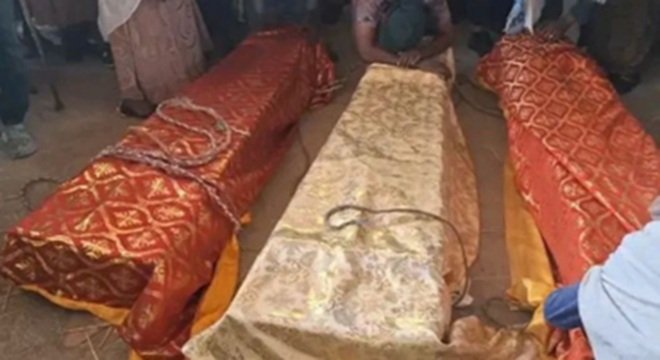
Ethiopian Orthodox churches living in the safety and comfort of the diaspora have largely failed to expose and condemn (in the strongest terms) the atrocities committed against fellow Orthodox Christians in Arsi, Bale, southern Wollo, and other parts of southern Ethiopia.
One would have expected diaspora churches to organize protest marches, raise funds for the bereaved families and mobilize advocacy in the countries where they operate. Yet very little of this has materialized.
By surrendering much of their independence to the Ethiopian Synod, diaspora Orthodox churches have rendered themselves largely impotent. Let us be honest: many Synod officials are widely viewed as political appointees of the government, often constrained from speaking or acting freely even when Orthodox communities suffer.
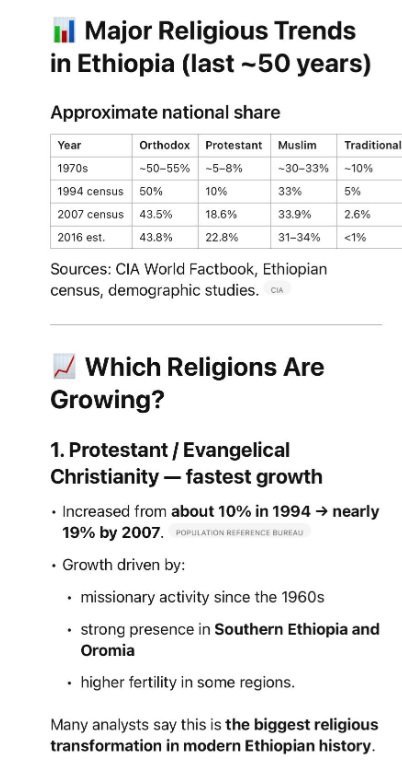
Meanwhile, the religious landscape in Ethiopia has been shifting dramatically over the past forty years. (See attached data which covers only till 2017). Protestant denominations and various evangelical movements have expanded rapidly, often at the expense of Orthodox Christianity. With the even more aggressive expansion campaigns of these groups in the last decade, the negative trend has likely accelerated.
Equally troubling is the quiet disengagement of the youth, especially the educated youth, from the Church. Most no longer attend services. None of my friends’ or family members’ adult children attend church services, for example. Don’t tell me they are the exception, they are the rule. The liturgy is long, designed for an epoch when time did not have that much intrinsic value. It’s mostly conducted in the ancient and almost dead Ge’ez language, which many do not understand or care much about. Sermons often are not structured, fail to meet the intellectual and social realities of the young. Sermon premises contradict the scientific and historical knowledge congregations have acquired through modern education.
It looks like the ascending religions have figured this out.
Yet there is little open discussion within the Orthodox community about why the Church is losing ground to others. The situation resembles that of a patient who refuses diagnosis in the naive hope that the disease will simply disappear.
Silence will not reverse the trend.
If the Ethiopian Orthodox Tewahedo Church is to remain relevant, several steps are essential: Honest internal reflection about institutional weaknesses; greater independence and activism among diaspora churches; meaningful engagement with youth through accessible language. It should be noted that one way communication from the pulpit without any kind of system wide feedback doesn’t cut it any more. Only thoughtful dialogue does.
The Ethiopian Orthodox Tewahedo Church has survived empires, invasions, and centuries of upheaval. Its spiritual depth, intellectual tradition, and cultural legacy remain extraordinary. But history alone cannot guarantee its future.
Renewal begins with honesty. Without diagnosis, there can be no cure
Editor’s Note : Views in the article do not necessarily reflect the views of borkena.com
__
Support Borkena : https://borkena.com/subscribe-borkena/
Join our Telegram Channel : t.me/borkena
Like borkena on Facebook
Add your business to Ethiopian Business Listing / Ethiopian Business Directory Business Listing Toronto
Join the conversation. Follow us on X (Formerly Twitter) @zborkena to get the latest Ethiopian News updates regularly. Subscribe to YouTube channel To share information or for submission, send e-mail to info@borkena.com
Tekawmo madreg ayteqmim. EOTC needs to unite because now many Kesis are competing each other. In my church, Gurage separate from us and made two churches. It is not like before.