
Fikeru Zewdie
Part I — What Happened in Congress
Congressional Briefing Raises Concerns Over Violence Against the Ethiopian Orthodox Church
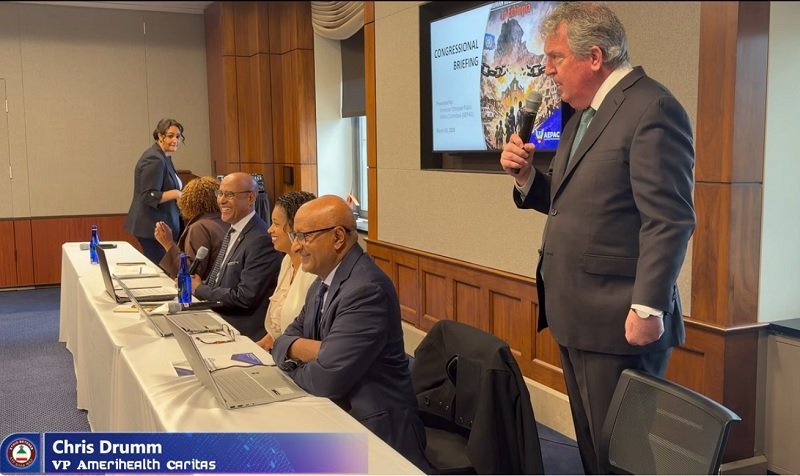
A recent congressional briefing in Washington, D.C. brought renewed attention to concerns surrounding violence affecting the Ethiopian Orthodox Tewahedo Church and the broader instability impacting Ethiopia’s institutional landscape.
The event gathered members of the Ethiopian diaspora, advocates, and policy observers who addressed U.S. lawmakers and congressional staff about the challenges facing religious communities and civilians in several regions of Ethiopia.
Presenters highlighted reports of attacks on churches, clergy, and worshippers, describing what they characterized as a troubling pattern of violence that has drawn increasing concern from members of the Ethiopian diaspora community.
Beyond the immediate humanitarian concerns, the discussion also addressed deeper structural issues affecting the country. Speakers pointed to growing institutional strain, fragmentation of authority, and declining public trust in state institutions.
Participants emphasized that the crisis affecting Ethiopia cannot be understood solely as isolated incidents of violence. Instead, they suggested that the situation reflects broader governance challenges that have weakened institutions responsible for maintaining stability and protecting citizens.
Particular attention was given to the historical role of the Ethiopian Orthodox Church. For centuries, the Church has served not only as a religious institution but also as an important pillar of Ethiopia’s cultural identity and social cohesion.
Speakers warned that continued violence targeting religious communities risks deepening existing social tensions and further complicating efforts to stabilize the country.
The briefing also underscored the importance of continued international engagement. Several presenters encouraged U.S. policymakers to remain attentive to developments in Ethiopia and to support diplomatic efforts aimed at protecting civilians, safeguarding religious institutions, and encouraging peaceful political solutions.
Key Takeaways from the Congressional Briefing
Protection of Religious Institutions
Speakers stressed the urgent need to protect the Ethiopian Orthodox Church and other religious communities from violence. Safeguarding these institutions was described as essential not only for religious life but also for maintaining social stability.
Escalating Violence Against Civilians
Participants raised concerns about violence affecting civilians in several regions, emphasizing the need for accountability and stronger mechanisms to protect vulnerable communities.
Institutional Strain and Governance Challenges
Beyond immediate incidents of violence, the discussion highlighted deeper governance concerns, including fragmentation of authority, weakened institutions, and declining civic trust.
Importance of International Engagement
Presenters encouraged continued diplomatic engagement from the United States and the broader international community to support peaceful solutions and the protection of civilians.
The full congressional briefing referenced in this article runs approximately 58 minutes. The remarks by Youm Abiy Fiseha begin around 41:07.
This discussion in Washington raises broader questions about the institutional and governance challenges facing Ethiopia today. These deeper implications will be explored in the second part of this reflection.
Part II — Why the Discussion Matters
Beyond the Headlines: Interpreting Ethiopia’s Institutional Challenges
The congressional briefing discussed in Part I offered a revealing glimpse into how Ethiopia’s current challenges are increasingly being interpreted in policy circles.
While the immediate focus of the discussion was violence affecting religious communities and civilians, the broader themes raised during the event point to deeper structural concerns about governance and institutional stability.
Toward the conclusion of the briefing, Youm Abiy Fiseha addressed policymakers about the urgency of raising international awareness regarding the situation affecting Ethiopia’s religious communities.
Speaking at approximately 41:07 in the hearing, he emphasized the importance of ensuring that the challenges facing the Ethiopian Orthodox Church and civilians are understood beyond Ethiopia’s borders.
“The world needs to understand what is happening and why these issues matter for Ethiopia’s future.”
His remarks reflected a broader sentiment among participants that the violence affecting the Ethiopian Orthodox Tewahedo Church cannot be separated from wider institutional challenges facing the country.
Observers of the hearing noted that several presentations moved beyond individual incidents of violence to describe patterns of institutional strain, fragmentation of authority, and declining public trust.
This shift in framing is significant. For many years, international discussions about Ethiopia have largely focused on humanitarian crises or specific conflicts. Increasingly, however, analysts are recognizing that Ethiopia’s challenges are also rooted in deeper questions about governance, institutional capacity, and civic legitimacy.
Institutions such as the Ethiopian Orthodox Church have historically served as important pillars of Ethiopian society. When institutions of this nature come under sustained pressure, it often reflects broader stresses within the national system.
The congressional discussion therefore highlights an emerging understanding that Ethiopia’s crisis cannot be addressed solely through short-term responses. Rather, it requires long-term efforts aimed at strengthening institutions, rebuilding civic trust, and creating durable governance frameworks capable of maintaining stability.
As conversations about Ethiopia continue to unfold in Washington and within the diaspora, the central challenge remains clear: addressing not only the immediate crises but also the deeper institutional foundations upon which lasting stability must be built.
Author Note:
Fikeru Zewdie is the author of Ethiopia at the Crossroads: Institutional Fragmentation, Civic Legitimacy, and the Architecture of National Breakdown.
Editor’s Note : Views in the article do not necessarily reflect the views of borkena.com
__
Support Borkena : https://borkena.com/subscribe-borkena/
Join our Telegram Channel : t.me/borkena
Like borkena on Facebook
Add your business to Ethiopian Business Listing / Ethiopian Business Directory Business Listing Toronto
Join the conversation. Follow us on X (Formerly Twitter) @zborkena to get the latest Ethiopian News updates regularly. Subscribe to YouTube channel To share information or for submission, send e-mail to info@borkena.com
‘Ethiopian Diaspora [ED]’: Over 70% of ED are those same people who made Ethiopia “The World’s Poster Child of Poverty & Famine” and turned “We are the World” in to ‘The World’s National Anthem for Ethiopia.’ Had they ever cared about Ethiopians, they could have air-dropped 100g [10¢] bread for ≈200K starving Ethiopians back in their era.
Destabilizing & Weakening Ethiopia via Domestic Proxies: Over 3 variables are often at play to destabilize-and-weaken Ethiopia from within via inter-ethnic or inter-religious conflict: Amara Supremacists, Oromo Extremists, Former Regime Proxies, Egypt’s Dogs [EPLF-TPLF, OLF-IFLO, ‘Amara Fanno’, etc.], etc.
Amara Supremacists & Hate Crime against Oromos [ youtu.be/SOGPEJ9XI-o?t=20 ]: Wouldn’t such Amara Supremacists’ Anti-Oromo Venom put the Amaras in Oromo Zone [OZ] in harm’s way? Don’t more Amaras live in OZ than in Amara Zone [AZ] itself? Why don’t the Amaras in OZ return to AZ if they ever feel unsafe in OZ and feel safer in AZ?
More Amaras Live in OZ than in AZ itself: Over 15 million Amaras live in OZ alone → youtu.be/IXBVqbOe9uY?t=2320 Most are also usually from Gojjam & Gonder [G&G]. Yet, I met NO Oromo in G&G over many years of sojourns. Frankly speaking, G&G are unwelcoming to Ethiopians! Should they ever expect hospitality from others?
Cherry-Picking Violent Crimes | Amara Fanno [Misnomer] Crimes | Egypt’s Proxy Wars: Why hasn’t any of these ‘Amara Fanno’ crimes against Amaras & Oromos ever presented?
(1).→ youtu.be/07zObPwWPrA?t=255
(2). → youtu.be/pHfPNs2Xr9k?t=1
(3). → youtu.be/xvv-gCotkVo?t=1
(4). → youtu.be/_kicLjxC3HQ
(5). → youtu.be/orm0ZK0fKe0