
By: Habte H.
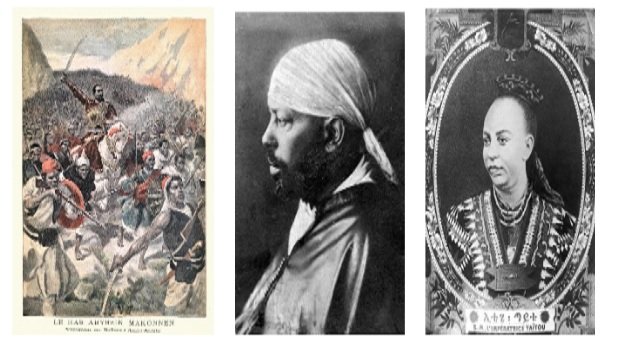
Every year, Ethiopians gather to celebrate Adwa. Flags wave. Songs rise. Speeches echo with pride. The victory at Adwa is remembered as the day Africa stood tall against European imperial ambition. It inspired anti-colonial movements across the continent and shook the confidence of empires that believed expansion was destiny. But what if we are celebrating Adwa without fully understanding it? What if the real power of Adwa is not in the victory itself, but in the principles that made it possible? Adwa was not simply a military triumph. It was a moral event. A psychological turning point. A statement about dignity, courage, unity, and sacrifice. If we reduce it to ceremony, we risk missing its most urgent lessons.
- Having Truth Was Critical – But Desire for Freedom and Unshakable Conviction Were the Game Changers
Italy marched toward Ethiopia armed with modern rifles, structured battalions, and imperial confidence. European observers assumed Ethiopia would fall quickly because the logic of empire suggested technological superiority guaranteed victory. On paper, the outcome looked predictable. But history is rarely written by paper calculations alone. What defeated Italy was not merely Ethiopian weaponry or battlefield positioning; it was a collective moral clarity, an uncompromising desire for freedom, and an unshakable conviction that sovereignty was non-negotiable.
The Italians fought for expansion and prestige; Ethiopians fought for dignity and survival. That difference shaped the psychology of the battlefield. Many colonized nations possessed truth and longed for freedom, yet truth by itself does not repel invasion. At Adwa, truth was fused with courage and a willingness to sacrifice. That combination turned moral belief into decisive action. Ethiopia did not win because it had superior technology; it prevailed because its people were prepared to pay the price of freedom. Firepower may win moments, but conviction sustained by sacrifice wins history.
- Our Ancestors Had Every Reason Not to Fight, but They Refused to Surrender
Before Adwa, Ethiopia was not enjoying stability or prosperity. Drought had strained communities, disease had weakened populations, and transportation and communication systems were limited. From a purely pragmatic perspective, war seemed ill-timed. Leaders could have delayed confrontation and justified caution as wisdom. Yet nations are not preserved by convenience; they are preserved by resolve.
Farmers left their fields, clergy left their monasteries, and regional leaders set aside rivalries to mobilize for a common cause. They marched north not because conditions were ideal, but because surrender would have been fatal to national dignity. Adwa teaches those decisive moments rarely arrive at comfortable times. Waiting for perfect circumstances can become a disguised form of surrender. The victory reminds us of that history favours those who act when action is costly and necessary.
3. War Was Not Ethiopia’s First Choice
Adwa was not born from recklessness or blind patriotism. Diplomatic efforts preceded confrontation. Negotiations were attempted, warnings were issued, and patience was shown. However, restraint was misinterpreted as weakness. The invading power assumed that measured responses signalled fear rather than principled caution, and this miscalculation shaped the path to war. The lesson remains relevant: strength and restraint are not opposites. A nation can seek peace sincerely while remaining prepared to defend its sovereignty decisively. True strength is not loud or impulsive; it is controlled and deliberate. Yet when dignity is dismissed and negotiation rejected, firmness becomes a responsibility. Adwa illustrates that peace is preferable, but submission is unacceptable.
4. It Was the Ethiopian Spirit That Won
The victory at Adwa was not merely Ethiopian bodies defeating Italian bodies; it was a worldview defeating imperial arrogance. What is often called the Ethiopian spirit is neither myth nor romantic exaggeration. It is a deeply rooted attachment to independence, a refusal to normalize humiliation, and a belief that dignity is sacred. That psychological foundation shaped the nation’s response long before the first shots were fired.
Today, however, that spirit faces internal challenges. Corruption weakens trust, fragmentation fractures unity, and injustice erodes moral authority. These internal forces can be more destructive than external threats because they dissolve cohesion from within. These internal forces can be more destructive than external threats because they dissolve cohesion from within. If Adwa teaches anything, it is that a nation’s greatest strength lies in its moral clarity and collective self-respect. Celebrating Adwa while tolerating moral decay contradicts the very spirit that secured the victory.
5. Faith, Moral Imagination, and Collective Courage
Adwa cannot be understood without recognizing the moral infrastructure that sustained it. For generations, religious teachings emphasized human dignity, spiritual sovereignty, and the sacredness of freedom. These values shaped the moral imagination of the people and provided a framework through which resistance was understood not as rebellion, but as defence of God-given dignity.
When mobilization occurred, it was not only political, but it was also moral. Faith did not produce fanaticism; it produced meaning. It helped ordinary people interpret sacrifice as honourable rather than tragic. Nations do not stand firm on strategy alone; they require moral conviction that binds individuals into a shared purpose. At Adwa, belief reinforced courage, and courage reinforced unity.
6. Unity Was Not Emotional, It Was Strategic
Perhaps the most enduring lesson of Adwa is that unity was not symbolic or sentimental; it was strategic. Regional identities did not disappear in 1896, but they were subordinated to national survival. Leaders and communities recognized that fragmentation would guarantee defeat, while cohesion would create strength beyond numerical calculations.
This lesson remains urgent today. Economic progress, political stability, and social harmony cannot flourish amid suspicion and division. Unity is not the denial of diversity; it is the disciplined alignment of diversity toward a shared purpose. Adwa demonstrates that when Ethiopians unite around dignity and sovereignty, they are formidable. When they fracture, they become vulnerable.
Beyond Ritual, Toward Reflection
Adwa is not merely an anniversary to commemorate; it is a mirror that reflects who we are and who we aspire to be. It challenges us to ask whether we still value dignity above convenience, whether we are willing to sacrifice for justice, and whether we preserve unity or casually weaken it through short-term interests.
Celebration without reflection turns history into ritual. Reflection transforms history into guidance. The victory of Adwa lives not in parades or speeches, but in the principles that shaped it. If we truly wish to honor Adwa, we must move beyond applause and measure ourselves against its standards. Only then does Adwa remain more than a memory. Only then does it remain a living foundation for Ethiopia’s future.
Editor’s Note : Views in the article do not necessarily reflect the views of borkena.com
__
Support Borkena : https://borkena.com/subscribe-borkena/
Join our Telegram Channel : t.me/borkena
Like borkena on Facebook
Add your business to Ethiopian Business Listing / Ethiopian Business Directory Business Listing Toronto
Join the conversation. Follow us on X (Formerly Twitter) @zborkena to get the latest Ethiopian News updates regularly. Subscribe to YouTube channel To share information or for submission, send e-mail to info@borkena.com
Most countries around the world have Independence Day or in some cases, Victory Day. It is not something to be overly boastful about. We fought against Italy yet Italy still has a large influence on our economy. Europeans in Addis are taking advantage of us now more than ever. Worst than that, many Ethiopians have moved to European countries, throwing away their pride to have resemblance with the Westerners.
It seems, Too complex or confusing… a notion, in 2026, clear as day in 1880’s. As the author stated. “It challenges us to ask whether we still value dignity above convenience,…”
“Independence Day or in some cases, Victory Day” are, for regaining LOST DIGNITY, Adwa prevented Ethiopia & Ethiopians.
The rest of your statements are describing, ‘convenience’: foreign-investment & individual choice of movent , have nothing to do National dignity!
You do not need to go far, just read what the British did to the Kenyans south of our border, and to the Indians for 200 years… while toy are on it what they did to Chinese, and all other ‘nations’ all over the globe, USA, Canada, Australia, Ireland… theconversation.com/kenya-the-shameful-truth-about-british-colonial-abuse-and-how-it-was-covered-up-218608
Be well.
Thank you!
Be well.
8 ኛው ሺ።
ADWA Spirit:
The war-tactic of ADWA (water & water-way) is going to be the key for Iran to defeat ‘Israel 1ster’ Trump (+EU,UK) and US-MIC.
“Professor Jiang Predicts: US WILL LOSE Iran War ” , Breaking Point.
======================================
“Professor Jiang using game theory in 2024 predicted 3 things:
1. The election of Trump
2. Trump would start a war with Iran
3. US would be defeated in a war with Iran ”
Link = youtube.com/watch?v=4Ql24Z8SIeE
“Those who cannot remember the past are condemned to repeat it.”
– 1975 “Fall of Saigon” &
– 2021 “Midnight-Run off Afghanistan”
Coming Soon!
As Ukraine WAR demilitarized USA, NATO, EU, UK completely.
Trump’s “Epstein -Furry” WAR on Iran is not only going to demilitarize USA, Israel, & ALL the USA & Israel Middle East VASSALS, it is going to make the Arab vassals to beg for drinking-WATER & FOOD in the desert sun. ( If what the Prof says come to pass).
“Your Life is your KARMA”
Karma = your ACTON ( physical, emotional, psychological/mental, & energetic ) creates /leads to what you going to experience NEXT ( Your present ‘actions’ creates your future.)
Gog & Magog
Link = hebrewnationonline.com/gog_magog-map/
Be Well.