
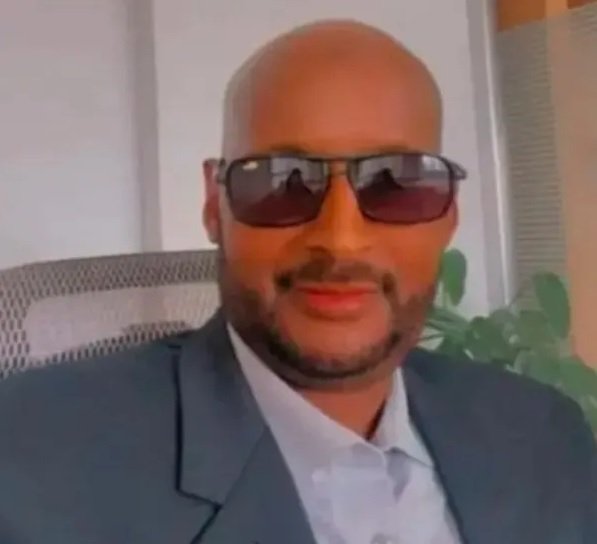
Mohamud A. Ahmed – Cagaweyne
Before proceeding, a word about tone and intent. I respect intellectual contestation. I appreciate the time and conviction invested in the article titled “Abiy Is a Mole Implanted to Dismantle Ethiopia – Fitting the Pattern of Destroying a Nation” by Agonafir Taye, published in Borkena. I have never met the author. I do not question his sincerity. But sincerity does not substitute for evidence. My rebuttal is not a shield for Prime Minister Dr. Abiy Ahmed. It is a defense of standards. Ethiopia deserves fierce criticism when warranted. It also deserves arguments that survive scrutiny.
The accusation is blunt and seismic: that Dr. Abiy Ahmed is a foreign mole, strategically implanted to dismantle the Ethiopian state through hybrid warfare, financial subjugation, and engineered internal conflict. It is an argument designed to shock. It is also one that collapses under examination.
Extraordinary claims require extraordinary proof. What the article provides instead is a crescendo of analogy and suspicion. Libya is invoked. Syria is invoked. Yemen and Sudan are cited as cautionary templates. A catalog of geopolitical strategies is listed as if naming the weapons proves their deployment. But resemblance is not evidence. Vocabulary is not verification.
Consider the analogy to Syria. Syria’s devastation involved sustained foreign military occupation, aerial campaigns by multiple global powers, territorial control by extremist groups, and overt proxy confrontation among rival states. Libya’s implosion followed direct NATO intervention and the dismantling of central authority. Yemen’s tragedy unfolded under cross border bombardment and open regional warfare.
Ethiopia’s crises are grave. They have cost lives, displaced families, and scarred communities. But they do not replicate those structural conditions. There is no foreign army administering Addis Ababa. There is no international coalition partitioning Ethiopia into protectorates. The mathematical probability that Ethiopia’s situation is identical to Syria’s, given the absence of sustained foreign occupation and territorial partition, approaches zero. Analogical inflation does not equal analytical precision.
The mole thesis also rests on monocausality, the seductive idea that one individual’s hidden allegiance explains a nation’s turmoil. But Ethiopia’s fault lines did not begin in 2018. The 1995 Constitution institutionalized ethnic federalism, granting regional states substantial autonomy, including security structures. Regional special forces, interethnic mistrust, and insurgent networks were not inventions of the current administration. They were embedded in the constitutional architecture and political culture.
This does not absolve federal leadership from responsibility. Decisions during the Tigray war were consequential and devastating. Security operations in Oromia and Amhara have drawn scrutiny and anger. But to attribute all instability to a single mastermind is to erase structural inheritance. Complex systems rarely collapse because of one variable. They strain under interacting pressures.
The sovereignty argument is similarly overstated. Ethiopia’s engagement with the International Monetary Fund is presented as evidence of capture. Yet Ethiopia entered debt restructuring discussions under the G20 Common Framework amid foreign exchange shortages and unsustainable debt burdens. Ghana and Zambia have undertaken comparable processes. Sovereignty is not defined by isolation from global finance. It is defined by retained decision making authority within constraint.
If Ethiopia’s sovereignty has been ceded, where is the treaty. Where is the clause transferring command authority. Where is the documented chain of command subordinating Ethiopian forces to foreign powers. Without such evidence, the assertion of total capture is rhetorical escalation, not demonstrable fact.
The geopolitical imagination underpinning the mole thesis is also dated. It assumes a unipolar order governed by a singular cabal capable of installing leaders at will. Today’s global landscape is multipolar and competitive. Gulf states compete with one another. Turkey pursues independent ambitions. China, Western institutions, and regional actors intersect in complex ways. Ethiopia engages across these axes, sometimes successfully, sometimes clumsily. Engagement is not submission. Diplomacy is not betrayal.
There is a difference between strategic miscalculation and treason. Political literature has long warned against conflating the two. Hannah Arendt observed that total explanations thrive in times of anxiety because they relieve citizens of uncertainty. Karl Popper cautioned against closed systems of thought that interpret every outcome as confirmation of a preexisting belief. The mole thesis risks becoming such a closed system. If infrastructure is built, it is camouflage. If diplomacy expands, it is manipulation. If reform is attempted, it is misdirection. In such a framework, no evidence can disprove the accusation because every counterexample is reinterpreted as deeper concealment.
That is not analysis. It is an immunized belief.
At this point, a broader reflection is necessary. Ethiopia’s political crises are often misread not only by external commentators but by segments of its own elite class. There is a recurring habit among intellectuals and political actors to interpret every setback as evidence of total collapse and every reform as illusion. Progress, when it occurs, is minimized. Institutional continuity is dismissed. Development projects are portrayed solely as vanity or camouflage. This reflexive pessimism may emerge from legitimate frustration. But when it hardens into doctrine, it distorts judgment.
Some elites misread out of fear. Others misread out of political calculation. Still others deliberately twist the narrative to delegitimize any rival center of power. In doing so, they risk belittling tangible, if imperfect, achievements while magnifying failures into existential doom. The effect is corrosive. It amplifies polarization. It feeds grievance. It reduces space for nuanced evaluation.
What Ethiopia urgently requires is metacognition, the discipline of examining our own political assumptions before declaring final verdicts. Self examination is not weakness. It is civic maturity. If we do not interrogate our own interpretive habits, we risk adding fuel to a fire already burning. The arithmetic is simple. If every policy is treated as treason and every disagreement as betrayal, then the probability of reconciliation approaches zero. The temperature of discourse rises while the space for reform shrinks.
The article also leans heavily on personal characterization. Dr. Abiy Ahmed is portrayed as analytically limited, intoxicated by recognition, manipulated by handlers. Personal ridicule may electrify readers. It does not substitute for policy critique. If governance failures exist, they must be demonstrated through budget allocation, legislative shifts, security sector restructuring, or documented administrative decisions. Institutions are not dismantled by adjectives. They are reshaped by policies.
There is contradictory evidence that complicates the mole narrative. During the 39th African Union Summit in Addis Ababa, African leaders convened in a capital undergoing visible transformation. Corridors were expanded. Diplomatic infrastructure modernized. One may debate priorities. Was beautification premature. Should reconciliation have preceded construction. Those are legitimate policy questions. But deliberate dismantlement rarely manifests as state investment in capital projection and continental diplomacy.
African leaders are not naive. Their continued engagement reflects recognition of Ethiopia’s strategic weight. A state being quietly liquidated by foreign handlers does not project institutional continuity at continental summits.
The civic consequences of conspiracy framing are profound. When every failure is attributed to foreign manipulation, domestic accountability erodes. Regional elites escape scrutiny. Armed movements become passive instruments rather than responsible actors. Citizens begin to see politics as a shadow game beyond their agency. Fatalism replaces participation.
History offers cautionary arithmetic. In Zimbabwe, prolonged emphasis on external sabotage obscured internal governance failures. In Sudan, cycles of outward blame masked elite competition within security institutions. Conspiracy unifies outrage but divides responsibility. It simplifies the equation by assigning one villain, when in reality the variables are many.
This rebuttal does not canonize Dr. Abiy Ahmed. It does not deny suffering. The Tigray war inflicted immense human cost. Security operations across regions demand transparency and reform. Economic stabilization remains fragile. Social cohesion requires rebuilding. These are serious concerns.
But serious concerns require serious methods. If Ethiopia’s military is commanded by foreign actors, produce the documents. If sovereignty has been transferred, present the legal instruments. If factionalization is deliberate doctrine, provide internal directives establishing intent. Without such proof, the mole thesis remains emotionally powerful but evidentially thin.
Political judgment requires proportionality. Aristotle described virtue as the mean between extremes. In politics, this means distinguishing between flawed leadership and existential betrayal. When every error is labeled treason, language loses calibration. And when language loses calibration, national discourse loses balance.
Ethiopia stands at a fragile moment. Its challenges are structural, historical, and institutional. They demand reform grounded in evidence, constitutional recalibration, security accountability, and economic clarity. They do not demand mythmaking.
Serious nations require serious arguments. The future of Ethiopia will not be decided by dramatic accusations, but by disciplined reasoning, institutional courage, and a citizenry willing to examine not only its leaders, but its own political assumptions.
Mohamud A. Ahmed – Cagaweyne is a Columnist, Political and Security Analyst, Researcher at Greenlight Advisors Group – in the Somali Region of Ethiopia. He can be reached at +251 900 644 648 or +254 759717898 (WhatsApp).
Editor’s Note : Views in the article do not necessarily reflect the views of borkena.com
__
Support Borkena : https://borkena.com/subscribe-borkena/
Join our Telegram Channel : t.me/borkena
Like borkena on Facebook
Add your business to Ethiopian Business Listing / Ethiopian Business Directory Business Listing Toronto
Join the conversation. Follow us on X (Formerly Twitter) @zborkena to get the latest Ethiopian News updates regularly. Subscribe to YouTube channel To share information or for submission, send e-mail to info@borkena.com
One can agree with you there are many elements of elites’s misreading of current political analysis of Ethiopia . But the characterization of “the strategies misreading ” attributes that the current government you portrayed as visionaries elites rather than as an extended appendages of “EPDRF ” headed by Tigrayan political class replaced by “OROMO” junior class through palace conspiracy is absud.
‘
You write “Ethiopia stands at a fragile moment. Its challenges are structural, historical, and institutional. They demand reform grounded in evidence, constitutional recalibration, security accountability, and economic clarity.” That was the reason Abyie was supported overwhelmingly when he came to power. However, rather than attempting to solve the Constitutional problem he spent most of the time and resources in consolidating power for the continuation of the structural problem, TPLF implemented, for his advantage. If he is not a mole why would he do almost everything against the strengthening of the Ethiopia? It is not fair to ask for proof while Abyie is destroying the country in the open. All the commissions he created in solving the structural problems are self serving, not genuine ones.
Mr Mohamud’s rebuttal does not canonize PM Abiy Ahmed. It does not deny the immense suffering caused by the Tigray war or the legitimate anger over security operations in the regions. These are serious concerns. But serious concerns demand serious methods. If the goal is to prove the Prime Minister is a mole, then produce the documents. Present the internal directives. Show us the proof. Until then, the thesis remains what Mohamud A. Ahmed correctly identifies: emotionally powerful, politically seductive, but evidentially thin. And a nation facing numerous problems needs more than thin arguments; it needs the kind of disciplined reasoning and institutional courage that can actually lead to accountability and reform.The future of Ethiopia will not be decided by dramatic accusations, but by disciplined reasoning, institutional courage, and a citizenry willing to examine not only its leaders, but its own political assumptions
I have not read the article mentioned, and I agree 100% with the author of this article and the points made.
There was an exaggerated expectation when Abiy came to power, therefore emotions run high in various camps as a result. I remember him saying “I can only do what a PM can do, expecting me to act on events that takes place in every Woreda, Awraga of this nation is not only unreasonable, it cannot be done. Regional presidents like the one in Oromo region have let him down in my opinion, Shimelis Abdisa could have done more to stop the killings of his own citizens in the region regardless of origin. In other words Authorities are not doing enough, & their incompetence & lack of empathy is the major problem for the nation as well as the PM, making him look unconcerned, bringing misdirected criticisms, and fake labels as mentioned.
Though unfortunate for the nation at large what took place in Tigray, the entire blame resets on the leadership of TPLF particularly on Debretsion Gebremichael .
Not Only Abiy begged for peaceful resolution, Elders from all persuasion and standings in the society went to Mekele where they were strip-searched, mistreated, & sent back empty handed. Armed & sitelight data fed by their Sponsors & handlers were were meant to come & take over 4 killo.. Debretsion Gebremichael has not learnt his lessons, he appear to be determined to destroy Tigray and our people there.
“The 1995 Constitution institutionalized ethnic federalism, granting regional states substantial autonomy, including security structures. Regional special forces, interethnic mistrust, and insurgent networks were not inventions of the current administration”
Q) Why, and what is the basis that Only the Amhara region is condemned to have it constitutional right to have “Regional special forces’, & war is declared to ‘DISARM Amhara’ and the armed forces of Ethiopia is wagging war on the people of Amhara as if it is a foreign invader?
Makes no sense, while TPLF’s 200,000 SF is not disarmed as required by the ‘Pretoria agreement’, and all the other regions maintain their own well armed strong ‘Regional special forces’.
Yes, as mentioned in the article, there are many mistakes made and many issues remain outstanding, we also have to recognize the monumental progress achieved under this PM, for me the completion of GERD and how it was done with the grassroots Ethiopian peoples determination is a national Pride not only for the living for our forefathers.
Abiy Ahmed is the leader of Ethiopia at this time, constructive criticism yes, uncontrolled emotional reactions and labeling is not warranted or necessary. He is ours, period.
We have an old saying in this country, ‘governing is easy to criticize but hard to do’ (paraphrasing) . HIM H. S. the I, is said to have said the same things.
My suspicion is, the label though untrue may have come by connecting a few dots.
(1) It may have been in 2019, Adiy hosted a well known American journalist for a week or so and the journalist wrote an op-ed and stated among other things that Abiy told him that “arming an american solder with full gear, is very expensive, here for a fraction of that cost we can help america’s security needs in the region, etc. etc.” Now, with recent Abiy & G. Berhanu Jula meetup with U.S. AFRICOM and the talk of ‘Red-sea access’ ( considering US’s 3 decades long rivalry with Eritrea ) it seems to suggest some sort of collaboration ( dual use/purpose effect ) in the minds of observers.
My take, Eritrea will always be our cloth neighbor and blood-brother/sister, whatever ailing us both today will not be there tomorrow, in other words we are inseparably linked-by-blood, we are ‘family-in-distrusts’ (temporarily) soon the dust will settle as it may and we will be visiting each other, god willing even better than that.
So my advise to both the current ‘leaders’ of Eritrea & Ethiopia, ‘take a step back, “You can catch more flies with honey than with vinegar”, as we both regretted in 2018 the 9098-2000 war and settled for PEACE, we do not need to repeat regrets again, and again. we share a land we cut with an imaginably line the land or nature does not recognize, here today gone tomorrow PEACE is the only way to LIVE; and the POSSIBILITIES are endless.
(2) Abiy’s close relations/collaborations with UAE has not been viewed positively in certain quarters locally as well as in the region and Saudi Arabia ( for which I will post a link (why SA)). Locally many citizens worry about the hidden cost to this very cloth collaboration with UAE for the long term. Rightly so, considering the unknown ‘Quid pro quo’ only Abiy knows, even refusing to to answer such question in the Parliament. (2) UAE’s involvement in Sudan’s civil-war siding one, and there was recent claim the UAE supported Sudanese fighters training-camp in Ethiopian border, and UAE’s involvement in Somali-land, and Somalia, its potential for regional dis-stabilization.
Concerning H. Kissinger’s ‘Nations have no friends, but INTERESTS’, concern is normal, label without CONCERT evidence, no. Abiy, as TPLF-ers told us time and again, ‘he is a ‘S’- ‘politician’ ( flipping them at every turn).
Saudi vs UAE:
“The Abrahamic Divide Why Saudi Arabia Rejects UAE’s Israel Embrace”
Link = youtube.com/watch?v=d_9Ifn8eCK8
#2)
“Abu Dhabi is ‘Israel’s Trojan horse’, senior Saudi figure tells The David Hearst Podcast”
Link = youtube.com/watch?v=uiPSPg_PMbo
Be well.