
Petros Dejene
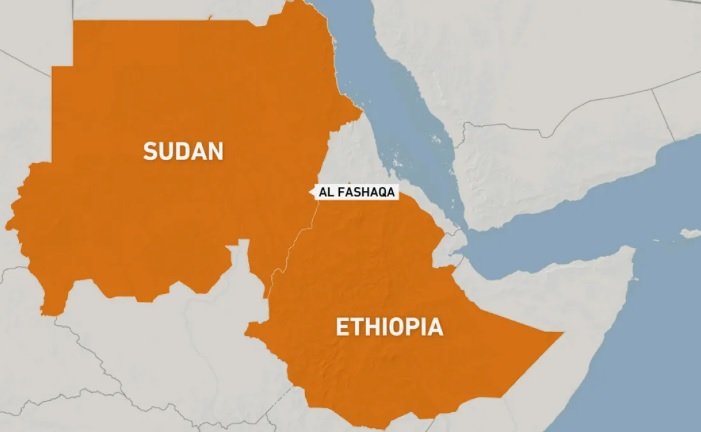
The recent exchange between Jawar Mohammed and Getachew Reda regarding Ethiopia’s stance on the conflict in Sudan was a missed opportunity. Instead of a substantive debate on a critical national security issue, the discourse slipped into a familiar Ethiopian pattern: motive attribution.
When Jawar raised concerns that the administration’s alignment with the UAE and the Rapid Support Forces (RSF) could jeopardize Ethiopia’s long-term interests, the response focused less on the structural logic of the policy and more on political positioning. Once again, questioning a policy risked being framed as questioning the State itself.
This reaction reflects a broader weakness in our political culture. Too often, elites in both government and opposition default to binary camps: unconditional support or reflexive condemnation. What remains underdeveloped is a culture of serious policy analysis; one that separates partisan rivalry from strategic reasoning. If we are to mature politically, we must be willing to examine the logic of the government’s Sudan policy dispassionately, assess its comparative risks, and judge it by its domestic consequences.
To critics, engagement with a militia such as the RSF appears reckless or morally indefensible. But if we suspend moral reflex and examine the policy through a realist lens, the administration’s strategy rests on a coherent, if cynical, tripod of interests. It may not be ethically comforting, but it is strategically intelligible.
1. Breaking the Egyptian Encirclement
The Sudanese Armed Forces (SAF), under General Burhan, represent the traditional Khartoum establishment — historically aligned with Cairo on Nile and security matters. A consolidated SAF victory risks producing a northern neighbor operating in strategic lockstep with Egypt. From Addis Ababa’s perspective, such alignment could harden pressure over the GERD and strengthen a coordinated front against Ethiopian interests.
By contrast, a fragmented Sudan or an RSF-dominated order disrupts that alignment. The logic is not ideological; it is positional. A Sudan too internally consumed to function as a stable Egyptian partner cannot easily serve as a strategic platform for sustained Nile pressure.
The question is not whether this approach carries risk. It unquestionably does. The question is whether the alternative, a unified SAF–Egypt axis, poses a greater long term structural threat. The administration appears to have concluded that it does.
2. The Economic Quid Pro Quo: The UAE Factor
Ethiopia faces acute foreign exchange constraints, debt ceilings, and tightened Western assistance. In this environment, the UAE has emerged as a primary source of liquidity, investment, and financial breathing room. The UAE, in turn, is the principal external backer of the RSF.
This creates a transactional geopolitical reality. To secure financial stabilization at home, Addis Ababa aligns with the interests of its immediate economic patron next door. One may object to the morality of such transactions, but denying their strategic logic is difficult. States under fiscal strain do not operate in moral isolation; they operate within leverage constraints.
Critics often invoke reputational damage as a deterrent. Yet recent history suggests that reputational costs in international politics are elastic. Ethiopia’s re-engagement in global diplomacy following the Tigray war demonstrates that geopolitical necessity often overrides moral censure. Reputation matters, but rarely in a vacuum detached from strategic value.
3. The “Weak Neighbor” Doctrine
The most controversial component of the strategy is the implicit preference for a weakened Sudan. Critics warn that this creates long-term instability and potential blowback. But the status quo was not benign. A strong Sudan has historically hosted Ethiopian armed opposition groups from the TPLF to the OLF and more recently Fano. Hostility did not originate with the current conflict.
The cold calculation appears to be this: Ethiopia is not choosing between stability and instability in Sudan. It is choosing which configuration of instability it can better tolerate. A fragmented Sudan may produce unpredictability. A consolidated SAF aligned with Cairo may produce strategic encirclement. From a realist standpoint, the latter may be considered the more dangerous structural outcome.
International relations are not governed by sentiment but by geography and necessity. Even if SAF were to prevail, the 1,600-kilometer border and shared Nile basin would compel transactional engagement over time. States rarely enjoy permanent enmity when interdependence is unavoidable.
Where the Real Debate Should Be
The opposition’s role is not to dismiss strategic logic reflexively. Nor is it to weaken incumbents at any cost. A constructive opposition begins by acknowledging when a foreign policy move has rational foundations, even if it is uncomfortable, and then scrutinizes its implementation and domestic consequences.
It is entirely possible to argue that limiting Sudanese alignment with Egypt serves Ethiopia’s long term security interests. It is simultaneously possible and necessary to condemn the use of diplomatic leverage and foreign capital to entrench authoritarian consolidation at home.
The tragedy is not that the government occasionally pursues coherent foreign policy. The tragedy is that foreign policy gains are not translating into domestic stabilization. When a government secures drone technology or financial lifelines through strategic maneuvering, those gains should function as dividends for the people stabilizing the currency, expanding opportunity, protecting the border and creating space for political reconciliation. Instead, too often, diplomatic leverage appears to finance coercive consolidation.
Conclusion
Real opposition requires intellectual honesty. It must be capable of saying:
“This foreign policy move has strategic logic. But we reject a government that converts national leverage into internal repression rather than national healing.”
Until we elevate our discourse to that level of debating structural logic rather than imputing motive, we will remain trapped between competing propagandas. Ethiopia deserves something more serious than that.
Editor’s Note : Views in the article do not necessarily reflect the views of borkena.com
__
Support Borkena : https://borkena.com/subscribe-borkena/
Join our Telegram Channel : t.me/borkena
Like borkena on Facebook
Add your business to Ethiopian Business Listing / Ethiopian Business Directory Business Listing Toronto
Join the conversation. Follow us on X (Formerly Twitter) @zborkena to get the latest Ethiopian News updates regularly. Subscribe to YouTube channel To share information or for submission, send e-mail to info@borkena.com