
Mengistu Musie (Dr.)
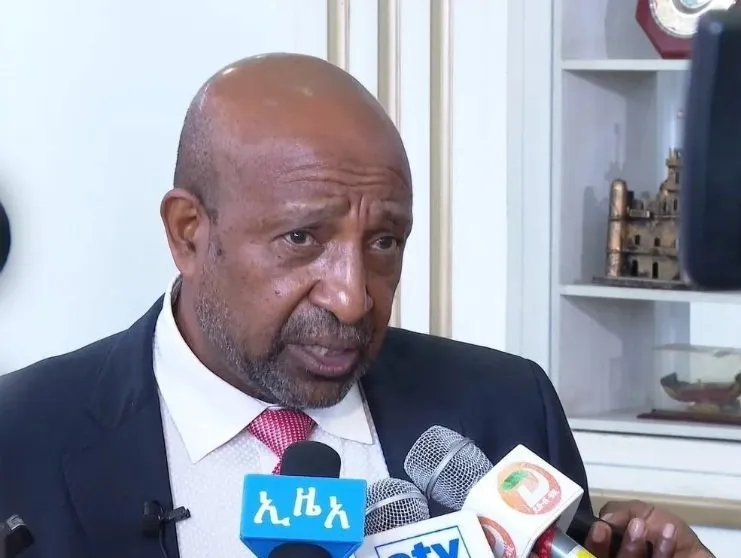
Birhanu Nega of Ethiopia has become one of the names associated with the recent wave of scandals revealed over the weekend. These disclosures have shocked many observers, particularly when viewed against the backdrop of his public claims at the time. While presenting himself as a leading figure committed to unseating what he described as an ethno-Tigrayan dictatorship in Ethiopia, Birhanu was allegedly engaged in activities that appeared inconsistent with that narrative. Reports that he was traveling back and forth to Eritrea during this same period raise serious questions about his political intentions, alliances, and overall transparency.
What I find especially surprising is the extent of the connections he appeared to have and the apparent ease with which he secured a position that many qualified individuals struggle to obtain—often only after years of sustained effort and sacrifice. This rapid transition invites closer scrutiny and fuels public skepticism that political rhetoric was primarily used as a vehicle for personal advancement rather than for genuine democratic or national goals.
Taken together, these revelations have understandably led many Ethiopians to reassess Birhanu Nega’s role, credibility, and legacy within the broader opposition movement. More broadly, they expose a recurring and deeply troubling pattern in Ethiopian politics: the persistent gap between public declarations and private conduct, and the urgent need for accountability, consistency, and ethical leadership.
Setting aside the recent allegations for a moment, even during the period when Birhanu enjoyed significant public trust, many now recall statements and promises that, in retrospect, appear misleading or irresponsible. At one point, he publicly claimed that he could remove the TPLF from power by force if only 500 supporters contributed $500 each—an assertion that resonated emotionally with a frustrated public but raised serious questions about realism, transparency, and intent.
Following the change of government in Ethiopia, which many citizens initially welcomed with hope, the situation deteriorated sharply. Widespread violence, ethnic polarization, and mass killings—particularly against the Amhara population—came to define this period. In the eyes of many Ethiopians, the new order did not bring reform but instead empowered armed groups and entrenched lawlessness. Against this backdrop, Birhanu Nega, once viewed as a principled opposition figure, lost further credibility when he aligned himself with the administration of Prime Minister Abiy Ahmed and accepted a government role. For his critics, this decision symbolized a profound betrayal, especially given the government’s alleged responsibility for grave human rights abuses. Many now argue that moral and political responsibility cannot be separated from participation in a system accused of widespread violence.
In addition to political controversies, persistent rumors and reports concerning Birhanu’s personal life have further damaged his public image. Allegations surrounding his divorce from his longtime wife and claims of an inappropriate relationship with a much younger woman—now widely discussed in public discourse—have reinforced perceptions of hypocrisy and poor judgment. While such matters remain part of public speculation rather than established fact, their circulation has nonetheless shaped how many people assess Birhanu Nega’s character and integrity.
For a growing number of Ethiopians, the issue is no longer about a single individual, but about a broader failure of leadership. When those who speak in the language of justice, sacrifice, and national unity are seen as compromising their principles for power or personal gain, public trust erodes deeply. The consequences are lasting—not only for the individual involved, but for the opposition movements, institutions, and democratic aspirations they once claimed to represent.
Personally, when I saw Birhanu’s name surface in connection with this global scandal, I was not entirely surprised. That reaction stems in part from long-circulating stories and rumors I had previously heard about his personal life and conduct—stories I treated with caution and skepticism at the time. However, in light of the recent disclosures, those earlier questions resurfaced, prompting deeper reflection on character, judgment, and integrity. For many observers, this convergence of political controversy and personal conduct reinforces a painful conclusion: that some individuals who speak most loudly about justice and reform may themselves fall short of the ethical standards they demand of others.
Ultimately, this episode serves as a broader lesson. Political movements cannot be sustained by rhetoric alone. They require leaders whose private actions align with their public principles, and whose personal ambition does not overshadow collective responsibility. Without such alignment, trust erodes—not only in individuals, but in the causes, they claim to represent.
I have also reflected on events that reportedly occurred in Dallas, Texas, where I live. According to accounts circulating within the local diaspora community, Birhanu Nega quietly visited the area around October 2025. His presence was not publicly announced, nor was there any open community engagement. Instead, it is widely said that he met privately with a small group of individuals—primarily supporters of Prime Minister Abiy Ahmed and members of affiliated organizations—at a private residence in one of the Dallas suburbs.
Those who discussed the meeting afterward alleged that the gathering focused on strategies to covertly influence or take control of key diaspora institutions, including the Ethiopian Community Association and other relevant community organizations. The concern expressed by many community members was that these institutions, which are meant to serve broad and diverse Ethiopian interests, could be politicized and repurposed to advance the agenda of the current Ethiopian government.
According to these accounts, Birhanu reportedly encouraged his associates to work in support of the Abiy Ahmed administration, a government that many Ethiopians and human rights advocates accuse of committing grave abuses. For critics, this alleged effort to mobilize diaspora structures in favor of what they describe as a genocidal government represents not only a moral failure but also a deliberate attempt to silence dissent and fracture independent community spaces abroad.
While these claims remain allegations discussed within diaspora circles rather than publicly documented facts, they have nonetheless intensified mistrust and anger among many Ethiopians in the Dallas area and beyond. For them, the secrecy surrounding the visit and the reported objectives of the meeting reinforce long-standing concerns about covert political maneuvering, manipulation of diaspora institutions, and the erosion of trust between leaders and the communities they claim to represent.
In conclusion, the appearance of Birhanu Nega’s name in the so-called Epstein Files comes as little surprise to me. In my view, this is the same individual who has aligned himself with the Abiy Ahmed government—an administration that many Ethiopians and international observers accuse of grave human rights violations. Despite presenting himself as a learned and principled figure, Birhanu has continued to defend what many consider indefensible: a system widely described as criminal, repressive, and deeply destructive to Ethiopia’s social fabric.
More troubling is his open political support for military actions, including aerial bombardments and operations that have reportedly resulted in the mass killing of Amhara civilians. By endorsing these actions, he has, in the eyes of many, aligned himself with a narrow, exclusionary, and increasingly authoritarian political project led by Prime Minister Abiy Ahmed and his close circle. Critics argue that this campaign reflects fascistic tendencies rooted in ethnic nationalism rather than inclusive governance or the rule of law.
For those who once trusted Birhanu Nega as an opposition figure and reformist voice, this trajectory represents a profound betrayal. What was once framed as a struggle for democracy and justice has, according to his critics, devolved into complicity with repression and violence. As a result, many now regard him not merely as a political opportunist but as someone who bears moral and political responsibility for the suffering inflicted under the government he supports.
Ultimately, history has shown that no government built on violence and impunity lasts forever. When accountability finally comes—through legal, political, or historical judgment—those who enabled, justified, or defended crimes against civilians will be called to answer for their actions. In that reckoning, many believe Birhanu Nega’s record will not be judged kindly, regardless of titles, positions, or past rhetoric.
Editor’s Note : Views in the article do not necessarily reflect the views of borkena.com
__
Support Borkena : https://borkena.com/subscribe-borkena/
Join our Telegram Channel : t.me/borkena
Like borkena on Facebook
Add your business to Ethiopian Business Listing / Ethiopian Business Directory Business Listing Toronto
Join the conversation. Follow us on X (Formerly Twitter) @zborkena to get the latest Ethiopian News updates regularly. Subscribe to YouTube channel To share information or for submission, send e-mail to info@borkena.com
“ I am not an admirer of Berhanu Nega ,but I want accuracy . Where is the statement that links Berhanu’s name to the Epstein files.? On what basis are you making that inference? Or are you trying to spread a form of blackmail?
I live in Dallas and am active in the Ethiopian community . We have never heard any indication of the involvement you are suggesting.”
Dr. Birhanu Nega built his reputation as a formidable intellectual and opposition figure. A co-founder of the exiled Ginbot 7 movement, he was a leading critic of the TPLF/EPRDF government’s ethnic federalism, advocating instead for a strong, unified, civic-based Ethiopian state. His scholarly work provided a theoretical framework for this vision, and his personal sacrifice—including imprisonment and exile—cemented his image as a principled dissident. His primary achievement was establishing himself as the intellectual anchor for a potent strand of Ethiopian nationalism that prioritized national unity over ethnic identity, inspiring a significant political constituency.
Dr. Birhanu Nega is a central figure in Prime Minister Abiy Ahmed’s cabinet, serving as the Minister of Education since his appointment on July 18, 2024. This followed his tenure as Mayor of Addis Ababa, a position he held from April 2023 to July 2024. His rapid elevation from leading the capital to overseeing the nation’s education portfolio underscores his trusted status within the administration. In his current role, he is the chief architect of national education policy, a position of profound long-term influence. He implements the government’s agenda through this critical system, advancing the centralizing, state-building project he has long championed, now from a pinnacle of executive power.
Dr. Mengistu Musie’s article is less analysis than a polemical prosecution. Its searing condemnation relies on unverified diaspora gossip—like the alleged Dallas meeting—presented as foundational evidence, and deploys toxic associations like the “Epstein Files” to poison rather than argue. The selective, one-directional outrage and total absence of any engagement with Birhanu’s stated ideological consistency or his significant, verified roles in government reveal the author not as a truth-teller, but as a merchant of narrative for a specific faction. It makes me wonder less about Birhanu and more about Mengistu’s own project: whether he seeks understanding or merely seeks to weaponize grievance, deepening communal fractures from afar while offering no constructive path forward.
Dr. Birhanu Nega built his reputation as a formidable intellectual and opposition figure. A co-founder of the exiled Ginbot 7 movement, he was a leading critic of the TPLF/EPRDF government’s ethnic federalism, advocating instead for a strong, unified, civic-based Ethiopian state. His scholarly work provided a theoretical framework for this vision, and his personal sacrifice—including imprisonment and exile—cemented his image as a principled dissident. His primary achievement was establishing himself as the intellectual anchor for a potent strand of Ethiopian nationalism that prioritized national unity over ethnic identity, inspiring a significant political constituency.
Dr. Birhanu Nega is a central figure in Prime Minister Abiy Ahmed’s cabinet, serving as the Minister of Education since his appointment on July 18, 2024. This followed his tenure as Mayor of Addis Ababa, a position he held from April 2023 to July 2024. His rapid elevation from leading the capital to overseeing the nation’s education portfolio underscores his trusted status within the administration. In his current role, he is the chief architect of national education policy, a position of profound long-term influence. He implements the government’s agenda through this critical system, advancing the centralizing, state-building project he has long championed, now from a pinnacle of executive power.
Dr. Mengistu Musie’s article is less analysis than a polemical prosecution. Its searing condemnation relies on unverified diaspora gossip—like the alleged Dallas meeting—presented as foundational evidence, and deploys toxic associations like the “Epstein Files” to poison rather than argue. The selective, one-directional outrage and total absence of any engagement with Birhanu’s stated ideological consistency or his significant, verified roles in government reveal the author not as a truth-teller, but as a merchant of narrative for a specific faction. It makes me wonder less about Birhanu and more about Mengistu’s own project: whether he seeks understanding or merely seeks to weaponize grievance, deepening communal fractures from afar while offering no constructive path forward.
What’s your proof??? Other wise this is complete defamation.
Hello Abdul Hassen, Emedo Farda, and Marta,
Mengistu Musie (Dr.) is correct, and his article is referenced and evidence-based
Dr. Mengistu Musie’s article should be read carefully and in full before it is dismissed or misrepresented. The piece is grounded in referenced material and applies an evidence-based framework to the evaluation of public figures, particularly in light of the recent release of Jeffrey Epstein–related documents by the U.S. Department of Justice.
Importantly, the article does not assert criminal guilt or make definitive legal claims about Birhanu Nega. Rather, it uses the Epstein document release as a case study in transparency, accountability, and standards of evidence, echoing Deputy Attorney General Todd Blanche’s emphasis on careful review, redaction, and the distinction between verified facts and unsubstantiated claims.
Within this framework, Dr. Musie examines the discrepancy between public image and documented behavior in Ethiopian political life. Birhanu Nega is presented as a figure whose reputation—built during years of opposition politics—has come under increasing scrutiny due to his later political choices, including alignment with the Abiy Ahmed administration and acceptance of senior government roles. These developments are matters of public record and legitimate political analysis.
The article also references widely circulating reports and diaspora discussions, including accounts of private political meetings and strategic efforts to influence community institutions abroad. These accounts are clearly framed as allegations discussed within diaspora circles, not as established facts. Their relevance lies in how such reports shape public trust, perception, and political legitimacy—not in asserting their legal certainty.
Similarly, references to global scandals are not used to assign guilt, but to illustrate how reputations are reassessed when transparency standards rise and when public figures operate across political, academic, and transnational spaces.
Critics are free to disagree with Dr. Musie’s conclusions. What is not reasonable is to label the article “defamation” while ignoring its sources, its analytical framing, and its repeated distinctions between allegation, perception, and verified conduct. Political critique—especially of powerful figures—is not defamation simply because it is uncomfortable.
For readers who want further context, a related analysis is available on Zehabesha:
“Berhanu Nega: Academic Claims, Political Activism, and the Disheartening Fall of a Legend” by Dr. Caleb. zehabesha.com/berhanu-nega-academic-claims-political-activism-and-the-disheartening-fall-of-a-legend/
Ultimately, Dr. Musie’s work raises a broader and necessary question for Ethiopian politics: how leaders who speak in the language of justice, reform, and sacrifice should be evaluated when their actions appear to diverge from those principles. That question is not only legitimate—it is essential.
Did Dr. Berhanu respond to the allegation?