
Dagmawi S Mikael
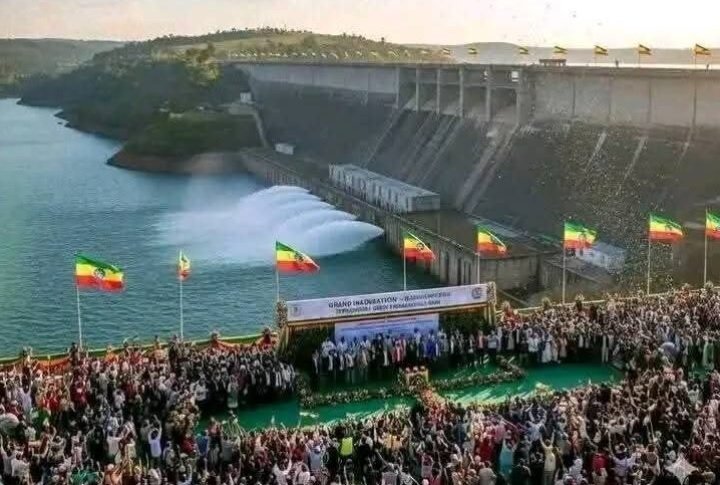
The debate over the Grand Ethiopian Renaissance Dam has often been framed as a zero sum struggle between upstream and downstream states. That framing is legally flawed and historically outdated. International law does not grant any country ownership of a transboundary river, nor does it give downstream states veto power over upstream development. On the contrary, modern international water law firmly supports Ethiopia’s right to build and operate the GERD, provided it acts reasonably, cooperatively, and without causing significant harm.
At its core, the GERD dispute is not about legality, but about whether colonial era dominance should continue to define Africa’s shared resources in the twenty first century.
No Requirement for Permission Under International Law
There is no rule in international law that requires a sovereign state to seek permission or conclude a binding agreement before constructing a dam on a river within its territory. This is not an oversight or legal gap. It is intentional. International water law balances development and cooperation, not control and veto.
The governing framework is found in customary international law and reflected in the 1997 UN Convention on the Law of the Non Navigational Uses of International Watercourses. Although not universally ratified, the Convention largely codifies principles that are widely accepted and applied by international courts.
Equitable and Reasonable Utilization Is the Cornerstone
The most fundamental principle is equitable and reasonable utilization. This principle recognizes that all riparian states have a right to use shared watercourses for development. Equity does not mean equal division of water, nor does it preserve historical usage patterns created under colonial or geopolitical dominance. Instead, it requires fairness based on objective criteria such as population, economic and social needs, contribution to the river’s flow, and the availability of alternatives.
Ethiopia contributes more than eighty five percent of the Nile’s flow, yet for decades was effectively excluded from its use. At the same time, Ethiopia remains one of the least electrified countries in the world, while downstream states have long benefited from large scale water infrastructure. Under any serious application of equitable utilization, Ethiopia’s case is exceptionally strong.
The Obligation Not to Cause Significant Harm Is Not a Veto
Downstream states frequently invoke the obligation not to cause significant harm as if it were an absolute prohibition on upstream development. It is not. International law does not require zero impact, which would make any development impossible. It requires reasonable measures to prevent significant, measurable, and sustained harm.
Crucially, this obligation must be interpreted together with equitable utilization, not above it. International courts have consistently rejected the idea that historical use alone can block new projects indefinitely. The GERD, designed primarily for hydropower rather than consumptive use, does not permanently reduce downstream flows. On the contrary, it offers potential benefits, including reduced flooding, sediment control, and more regulated water availability.
Cooperation Does Not Mean Consent
International law also imposes a duty to cooperate through notification, consultation, and good faith negotiation. Ethiopia has complied with these procedural obligations by sharing data, participating in negotiations for more than a decade, and agreeing to joint technical studies.
What the law does not require is prior consent or a binding agreement that effectively hands control of Ethiopia’s development decisions to others. This distinction has been clearly articulated by the International Court of Justice.
In the Pulp Mills case, the Court held that states must assess environmental impacts and consult affected neighbors, but it explicitly stopped short of requiring approval. In the Gabcikovo Nagymaros case, the Court emphasized negotiation and common solutions, while rejecting unilateral vetoes or frozen historical arrangements.
Colonial Era Nile Treaties Are Not Binding
Much of the opposition to the GERD rests on the 1929 and 1959 Nile agreements. These were colonial instruments negotiated without Ethiopia’s participation and designed to entrench exclusive downstream control. International law does not recognize such treaties as binding on non signatory sovereign states.
This position is reinforced by the Clean Slate doctrine, widely accepted in international practice, which holds that newly sovereign states are not bound by colonial treaties imposed without their consent. Ethiopia’s rejection of these agreements is not radical. It is orthodox international law.
The Declaration of Principles Does Not Surrender Sovereignty
The 2015 Declaration of Principles signed by Ethiopia, Egypt, and Sudan is often misrepresented as a commitment to secure a final binding agreement before filling or operating the dam. It is not. The document affirms cooperation, equitable utilization, avoidance of significant harm, and peaceful dispute resolution. It does not grant veto power, impose water allocations, or condition Ethiopia’s sovereign right to complete the GERD on external approval.
To interpret the Declaration otherwise is to convert a confidence building framework into a tool of coercion, a reading unsupported by its text or by international legal norms.
A Question of Law, Equity, and the Future
The GERD is not a violation of international law. It is an expression of it. Ethiopia’s position aligns with contemporary legal principles that reject colonial privilege, promote equitable development, and encourage cooperation without domination.
The real question is whether the Nile will continue to be governed by inherited power asymmetries, or by modern rules that recognize fairness, sovereignty, and mutual benefit. International law is clear on which direction it points.
Ethiopia’s right to build the GERD is not a threat to the Nile. It is a long overdue step toward a more just and cooperative future for all basin states.
Editor’s Note : Views in the article do not necessarily reflect the views of borkena.com
__
Support Borkena : https://borkena.com/subscribe-borkena/
Join our Telegram Channel : t.me/borkena
Like borkena on Facebook
Borkena Ethiopian News Youtube Channel
To submit Press Release, send submission to info@borkena.com
Add your business to Ethiopian Business Listing / Ethiopian Business Directory
Join the conversation. Follow us on X (Formerly Twitter) @zborkena to get the latest Ethiopian News updates regularly.