 stands as a monumental testament to Ethiopian ambition, a project poised to catalyze national...)
by Emedo Farda
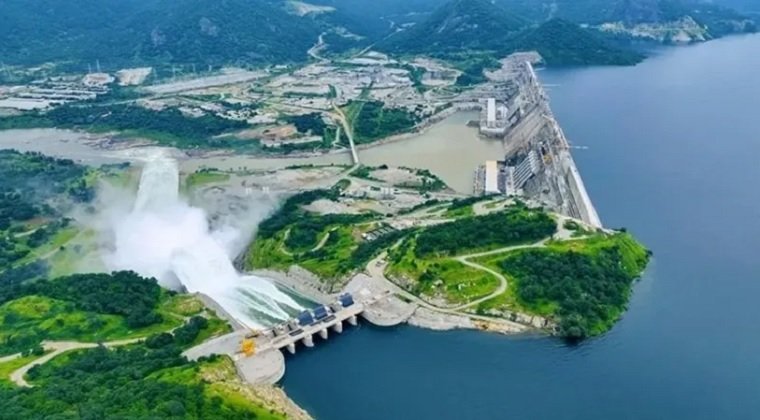
The Grand Ethiopian Renaissance Dam (GERD) stands as a monumental testament to Ethiopian ambition, a project poised to catalyze national development and redefine the nation’s geopolitical posture. Yet, its realization is entangled in a diplomatic labyrinth where aspiration clashes with hard geopolitical reality. Prime Minister Abiy Ahmed’s prevailing strategy of silent avoidance toward international mediation, particularly from the United States, is not a policy but a peril. It is a vacuum into which adversaries pour narratives and influence. The moment demands a decisive pivot from passive hope to active, sovereign statecraft. Ethiopia’s path forward must be built not on bravado or silence, but on a clear-eyed recalibration centered on proactive diplomacy, internal cohesion, and transactional multi-alignment.
The most immediate and critical error is the silent treatment toward the U.S. mediation offer. In the theatre of global diplomacy, silence is never neutral; it is interpreted as intransigence, weakness, or incoherence. It allows Egypt, with its superior institutional outreach, to frame the narrative unchallenged as the responsible party seeking dialogue against a recalcitrant adversary. Therefore, the first corrective step must be to break this silence with strategic purpose. Ethiopia should not outright accept or reject the U.S. proposal, which risks either walking into a biased framework or alienating a pivotal power. Instead, we must immediately propose a “pre-mediation consultation.” This move formally acknowledges the U.S. role while allowing Ethiopia to set the initial terms of engagement. In these consultations, our envoys can directly gauge American intentions, firmly establish our non-negotiable sovereign rights to development for electricity, and voice our historical skepticism of mediation frameworks tilted toward historic riparian rights. This transforms Ethiopia from a passive object of diplomacy into an active architect, setting a precedent that our voice shapes the process from its inception.
Simultaneously, we must shift the diplomatic ground from the abstract and perpetually stalled “final agreement” to a concrete, manageable process. To this end, the government should announce a unilateral, transparent, and verifiably slow schedule for the next phase of reservoir filling. This schedule must be explicitly tied to objective metrics like seasonal rainfall and technical necessity, stripping it of political provocation. Crucially, this action must be paired with an invitation—not to the UN or the U.S., but to the African Union (AU)—to appoint an independent technical committee to monitor and verify the fill. This achieves multiple strategic objectives: it reaffirms the fait accompli of the dam’s operational reality, alleviates downstream security concerns by removing the element of surprise, and, most importantly, actively re-centers the AU as the primary institutional forum. This appeal to Pan-African solidarity and institutional pride is our natural diplomatic home ground, contrasting Egypt’s extra-continental alliances and reinforcing the GERD as a symbol of African self-determination.
However, no foreign policy can be sustained without addressing the profound internal vulnerabilities that currently undermine our credibility. A nation at war with itself projects fragility, not strength. Our adversaries capitalize on this, painting Ethiopia as an unstable actor. Thus, foreign policy and domestic policy must be fused through an “Internal Cohesion for External Power” campaign. Every step taken toward genuine reconciliation—be it the full implementation of peace agreements, accountable governance, or inclusive dialogue—must be framed and understood as directly bolstering our diplomatic hand. A stable, unified Ethiopia is exponentially harder to intimidate, more credible in its commitments, and more attractive as an economic partner. We must demonstrate to the world that we are not just building a dam, but a resilient nation capable of stewarding a transformative resource responsibly. The dam’s turbines will spin on the water, but its diplomatic power will be generated by the unity of our people.
Furthermore, our regional engagements require an urgent and sober reset under a “Do No Harm” principle. The Prime Minister’s earlier, erratic regional forays have sown distrust and provided Egypt with a potent narrative of Ethiopian destabilization. We need a period of deliberate regional de-escalation. With Sudan, we must uncouple bilateral cooperation—on cross-border trade, electricity sales, and agricultural coordination—from the GERD deadlock, building a reservoir of goodwill. With Eritrea, we must pursue quiet stability over grand, volatile partnerships. And regarding our alignment with the UAE, a critical yet problematic patron, the strategy must be to diversify, not abandon. We maintain the relationship but reduce its volatile public profile, using back-channels for assurance while visibly broadening our partnerships. The goal for the next year is to transform our regional image from that of a disruptive force to a predictable, engaged neighbor, thereby depriving our primary adversary of a key line of attack.
Underpinning all this is the need for a ruthless reassessment of how we engage with great powers. Our current posture risks appearing as supplicant or defiant, both of which are weak. We must adopt a “Multi-Alignment Plus” strategy: proactive, transparent, and ruthlessly transactional. To the U.S. and Western bloc, our message should be clear: “We seek a strategic economic partnership, but it cannot be conditional on the surrender of our sovereign development rights. Let us negotiate debt restructuring, IMF programs, and investment in manufacturing and agriculture alongside discussions on regional water stability.” To China, we must demand a shift from a mere creditor-debtor relationship to one of technology transfer and equitable industrial partnerships, testing their commitment beyond easy loans. Concurrently, we must actively court Türkiye, India, South Korea, and Brazil, creating a diversified web of investments and diplomatic support that grants us true room to maneuver. This approach acknowledges our financial dependencies but uses them to create competitive leverage, ensuring no single power can hold our sovereignty hostage.
Mr. Prime Minister, the crossroads before us is stark. The legacy of the GERD—and indeed, of your administration—will be determined not merely by its completion, but by the strategic acumen demonstrated in securing its rightful place. The current path of diplomatic silence is a slow-motion forfeiture of that legacy. The alternative is a confident, principled, and proactive statecraft that replaces avoidance with controlled engagement, turns weaknesses into platforms for maneuver, and grounds our towering aspirations in the hard rock of realistic capacity. We must speak to be heard, act to be respected, and unite to be strong. The dam is a fact. Now, we must build the formidable diplomacy it deserves and Ethiopia’s future demands. Let us begin.
Editor’s Note : Views in the article do not necessarily reflect the views of borkena.com
__
Support Borkena : https://borkena.com/subscribe-borkena/
Join our Telegram Channel : t.me/borkena
Like borkena on Facebook
Add your business to Ethiopian Business Listing / Ethiopian Business Directory Business Listing Toronto
Join the conversation. Follow us on X (Formerly Twitter) @zborkena to get the latest Ethiopian News updates regularly. Subscribe to YouTube channel To share information or for submission, send e-mail to info@borkena.com