 to Ethiopian Prime Minister Abiy Ahmed on social matters. Read more.)
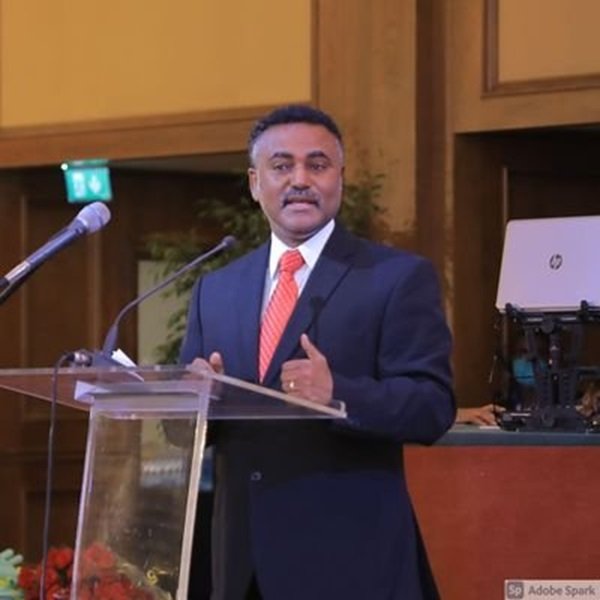
(Getahun Assefa)
In Ethiopia, where qualified educationalists, renowned academics, and researchers are deliberately silenced and made voiceless by Abiy Ahmed Ali’s regime, a deacon is appointed Chairman of the Board of Kotebe University – one of the nation’s premier higher-learning institutions. Daniel Kibret is currently serving as advisory (with ministerial rank) to Prime Minister Abiy Ahmed on social matters. His background is in theology, and he has no experience in research, teaching, or academic leadership. He doesn’t either have the educational qualifications and acumen to lead a teaching, learning, and research institution such as the Kotebe University. For any onlookers, this may sound like a joke, but it is a reality that made academic governance in Ethiopia a laughingstock among its African peers.
Daniel’s role and responsibility as the chairman of the Board of the University come at a time when the country’s higher education institutions are increasingly demanding freedom from political interference and legal rights to operate on a chartered status. While Professor Berhanu Nega continues with his well-known mischievous tactics, boasts ad-nauseum of “chartering higher education”, what we see in action is the endemic politicization of education and ethnicization of the teaching-learning and research environment in the country.
The politicization of education in the country has long been a primary obstacle to building a robust teaching and learning environment, eroding quality at all levels, particularly in higher education. When political loyalty dictates policy formulation, resource allocation, and leadership appointments, meritocracy suffers, giving way to patronage, ethnic favoritism, and ideological control. Curricula often prioritize propaganda over critical thinking, funds are diverted to reward allies rather than invest in infrastructure or faculty development, and academic freedom is curtailed as institutions become extensions of the ruling apparatus. This interference has historical roots, from the Derg regime’s ideological indoctrination to the ethnic federalism era, where university leadership roles are frequently allocated based on regional or partisan affiliations rather than expertise. The result is stagnant research output, deteriorating facilities, a brain drain of qualified academics, and graduates ill-prepared for national development needs.
The consequences are profound: rapid expansion of universities has increased access but sacrificed quality, with political meddling exacerbating issues like corruption, low student performance in exams, and institutional inefficiency and above all the continued polarization and politicization of educational and research institutions. Appointments to university presidencies and boards often reflect political or ethnic considerations, limiting autonomy and fostering distrust. As studies highlight, ethnicized governance has turned national institutions into regional fiefdoms, breeding favoritism and weakening overall standards. Ethiopia’s youth, the nation’s greatest resource, deserve universities that foster innovation and excellence, yet politicization perpetuates cycles of underachievement and societal fragmentation.
Leadership by Loyalty: A Barrier to Academic Excellence
A recurring pattern in Ethiopian higher education is the placement of political figures or advisors in oversight roles, prioritizing allegiance over academic credentials. While specific high-profile appointments to university boards may vary, the broader trend of selecting leaders through political channels—often influenced by ethnic representation or proximity to power—undermines institutional integrity. Such practices stifle innovation, discourage scholarly dissent, and signal that expertise and meritocracy are secondary to political or ethnic connections. Authoritative research and evidence in the field point to how these decisions contribute to crises like poor exam results, inadequate research, and eroding public confidence in universities.
To reclaim education as a driver of progress, Ethiopia must depoliticize governance through transparent, merit-based processes for leadership selections, involving academics and independent experts. Laws granting greater university autonomy, protecting budgets from diversion, and limiting political appointments are essential. Civil society and educators should advocate for reforms that shield institutions from partisan influence. Only by entrusting higher education to qualified professionals can Ethiopia transform its universities into centers of excellence, equipping generations to build a prosperous, unified nation free from the shadows of political expediency and ethnic polarization of institutions. Otherwise, Ethiopia’s education will continue sinking down further, significantly lagging behind the rest of developing countries including those in Africa.
Editor’s Note : Views in the article do not necessarily reflect the views of borkena.com
__
Support Borkena : https://borkena.com/subscribe-borkena/
Join our Telegram Channel : t.me/borkena
Like borkena on Facebook
Borkena Ethiopian News Youtube Channel
To submit Press Release, send submission to info@borkena.com
Add your business to Ethiopian Business Listing / Ethiopian Business Directory
Join the conversation. Follow us on X (Formerly Twitter) @zborkena to get the latest Ethiopian News updates regularly.
‘Critical thinking’:
“When see Religious organizations (Theologians) allied with political power, you should ask, “what are they really serving?” ”
“How Paul Hijacked Jesus’s message and built Christianity | Prof Jiang Xueqin”
Link = youtube.com/watch?v=bx3_vs_uyZk
#2)
“The Most Dangerous Person in History Who Ever Lived | Prof Jiang Xueqin”
Link = youtube.com/watch?v=VNrh3OiNt_U
Be well.