
By Ayele Wolde
In the highest form of intellectual tribute, I express profound gratitude and deep admiration for Kebour Ghenna’s seminal article, “Ethiopia’s Crisis Is Not Just Political, It Is a Crisis of Meaning.” With the piercing clarity of a master diagnostician, he performs a vital surgery on the nation’s soul, moving beyond the superficial symptoms of ethnic conflict and political rivalry to expose the foundational pathology: the collapse of a shared moral architecture. His insight—that the nation dismantled an exclusionary unifying narrative without replacing it with a new covenant of belonging—is nothing short of revolutionary in its understanding. By framing the turmoil as a structural crisis of meaning, he elevates the discourse from the transactional realm of power politics to the existential plane of national identity, offering not just an analysis but an indispensable philosophical framework for any future redemption. This work stands as a courageous and essential illumination, a beacon that challenges all Ethiopians to confront the profound question of what binds them together, making it an indispensable contribution to the arduous journey toward a just and sustainable peace.
For centuries, Ethiopia endured—through famine, invasion, and internal revolt—united not by wealth or robust institutions, but by a profound civilizational belief. This belief, a narrative of divine-chosenness and historical continuity centered on the Solomonic dynasty and the Christian highlands, served as the nation’s moral architecture. Yet, as Kebour Ghenna argues, this unifying story was exclusionary by nature, experienced as ancestral truth in the north but as an imposed hierarchy in the incorporated south and peripheries. Today, Ethiopia finds itself in a perilous paradox: more openly diverse than ever, yet more profoundly divided. This is not merely a political crisis, but a crisis of shared meaning, where the dismantling of an old national ethic has left a vacuum filled by competing ethnic truths, structural violence, and an unanswered question of common belonging.
The heart of the crisis lies in the unresolved transition from an unifying but exclusionary historical narrative to a new national covenant. For generations, the state propagated the “3,000-year history” of the Abyssinian core, marginalizing the histories of Oromo, Somali, Sidama, and southern nations incorporated during Emperor Menelik II’s expansions. When this narrative was rightly deconstructed in recent decades, nothing cohesive emerged to replace it. The vacuum was inevitably filled by ethnicity as the primary political currency. Politics devolved into a marketplace of grievance, where legitimacy stems from historical victimhood and mobilization is almost exclusively ethnic. The formation and dominance of parties like the TPLF, OLF, and Amhara nationalist groups exemplify this shift, transforming the public sphere into a battlefield of competing memorializations rather than a forum for shared future-building.
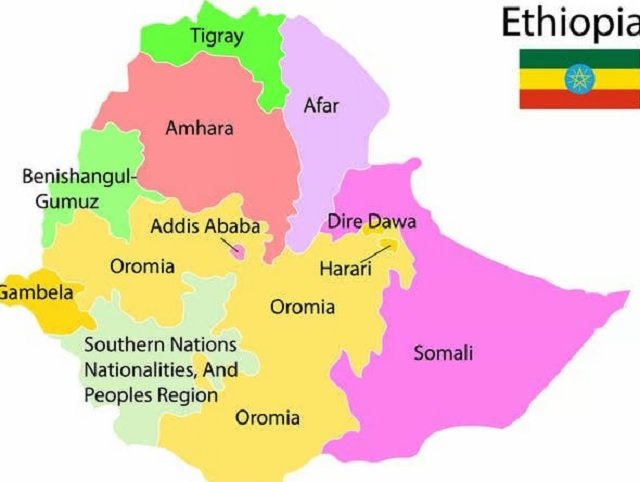
This ethnicization of politics found its institutional form in Ethnic Federalism, a system that diagnosed the problem of diversity but could not cure it. By constitutionally organizing the state into ethnic-based regions and enshrining the right to secession (Article 39), it territorialized identity and hardened group boundaries. The result has been tragic fragmentation: recurrent deadly conflicts along regional borders like Somali-Oromo or Amhara-Oromo, and the internal displacement of millions of people subjected to local majoritarianism. The system incentivized each group to seek maximum autonomy and security, often at the direct expense of neighboring groups. Without a unifying civic identity to transcend these categories, federalism became a engine of division, making the structural nature of current violence almost inevitable. Conflicts in Tigray, Amhara, Oromia, and beyond are not mere policy failures; they are the logical outcome of a structure where every community, lacking a protective national umbrella, feels compelled to resort to armed self-preservation.
The historic power shift from north to south, symbolized by Prime Minister Abiy Ahmed’s Oromo heritage, was a necessary correction to centuries of exclusion. However, this shift remains tragically incomplete. Power redistribution alone, without a new national ethic, risks merely inverting the hierarchy. The devastating war in Tigray (2020-2022) was, in part, a violent eruption from a formerly dominant elite resisting its loss of central authority. Simultaneously, Abiy’s government faces accusations from various groups, including some within Oromia, of either centralizing power or failing to address their specific insecurities. This demonstrates that correcting historical injustice without a narrative of shared destiny easily devolves into cycles of retaliation and renewed grievance.
Therefore, the path forward cannot be a return to the imperial past or a descent into partition. Ethiopia requires a new covenant, a reinvented philosophy of belonging that acknowledges historical injustices without weaponizing them, and celebrates ethnic identity without making it the sole basis for political life. Faint glimpses of this effort exist in concepts like “Medemer” (synergy) and the embattled National Dialogue Commission, but forging this covenant demands difficult sacrifices from all. Former elites must relinquish their exclusive ownership of Ethiopian identity. Newly empowered groups must govern through a vision of the future, not solely the rectification of past grievances. All political actors must abandon the shortcut of ethnic mobilization.
Ultimately, Ethiopia’s survival hinges on its ability to collectively answer the foundational question: What does Ethiopia mean to all of us now? Is it a civilizational empire, a voluntary federation of nations, or a multi-ethnic democracy with inviolable individual rights? Until a convincing, shared answer emerges from genuine national conversation, the country will remain trapped in a cycle of conflict. Elections, military campaigns, and political deals will only provide temporary respite. The crisis is one of meaning, and only by forging a new, inclusive meaning can Ethiopia transform its painful paradox into a cohesive, just, and lasting peace. The struggle is not for power tomorrow, but for the soul of the nation itself.
Editor’s Note : Views in the article do not necessarily reflect the views of borkena.com
__
Support Borkena : https://borkena.com/subscribe-borkena/
Join our Telegram Channel : t.me/borkena
Like borkena on Facebook
Borkena Ethiopian News Youtube Channel
To submit Press Release, send submission to info@borkena.com
Add your business to Ethiopian Business Listing / Ethiopian Business Directory
Join the conversation. Follow us on X (Formerly Twitter) @zborkena to get the latest Ethiopian News updates regularly.
If one dissected into the political crisis in Ethiopia,the potent fuel fo Ethnic crisis emanates from a dysfunctional state service practiced throughout the nation experienced by all citizens daily regardless which tribe one claimes on or in the power.