
Eyassu Epheraim G Hanna
Introduction: How India First Entered My Life
Like many young urban Ethiopians of my generation, I grew up with India long before I ever set foot there.
In Addis Ababa, places like Cinema Ethiopia, Ras, and Empire were not just movie theatres; they were destinations. They were where you went with someone you loved or hoped to love. With ten birrs—sometimes even five if you were careful—you could manage two cinema tickets, two sandwiches, two soft drinks, and still afford a taxi ride home. Those evenings mattered.
The Indian movies we watched followed familiar patterns. A poor man’s son falls in love with a rich man’s daughter. The father refuses. Fate intervenes. A hidden treasure appears, fortunes reverse, and by the end, the barriers of class collapse. The rich become poor, the poor become rich, and love prevails. The stories were predictable, yet deeply emotional, and they stayed with us.
One film, however, left a deeper mark: Mother India. The song “Dukh Bhare Din Beete Re Bhaiya” remains unforgettable. It spoke of endurance, dignity, and suffering with a gravity that went beyond entertainment. For many of us, it was our first emotional encounter with India as something more than spectacle.
At the same time, we were being taught by Indian teachers—biology, physics, mathematics—sometimes struggling to follow their accents, sometimes struggling with the content itself, but always aware that knowledge was being shared across borders. Their presence normalized India in our lives. India was not distant; it was familiar.
That familiarity shaped decisions. Like hundreds of other Ethiopians, I eventually travelled to India for higher education—some on scholarships, others supported by family sacrifice. I joined the University of Delhi. There, India ceased to be cinematic. It became lived reality.
Beyond classrooms, I learned about Indian culture, society, history, religion, and politics. I learned about contradiction and resilience, inequality and ambition, tradition and change. To fully capture what India taught me would require another essay altogether.
But I can say this simply: I love India. I respect India. I admire Indians. There is much Ethiopia can learn from India—not as an idealized model, but as a society that has struggled, adapted, and advanced through its own complex path.
With that personal history in mind, my reflections on Ethiopia–India economic cooperation are not rooted in cynicism, nor in blind enthusiasm. They come from familiarity, respect, and a desire to see partnership grounded not only in grand announcements, but in outcomes that improve ordinary lives—on both sides.
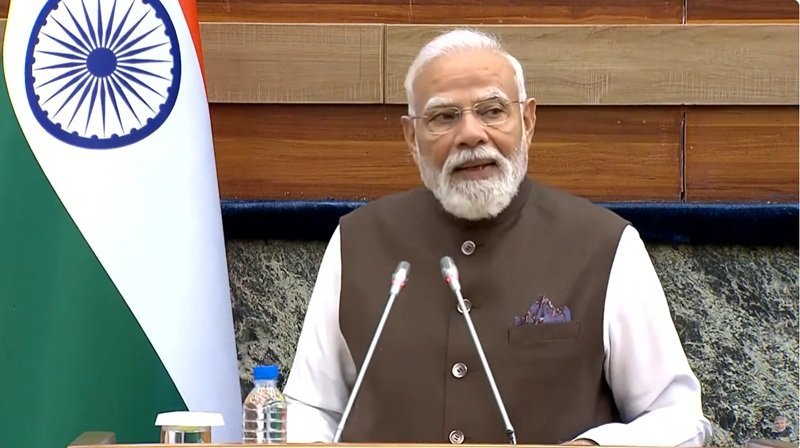
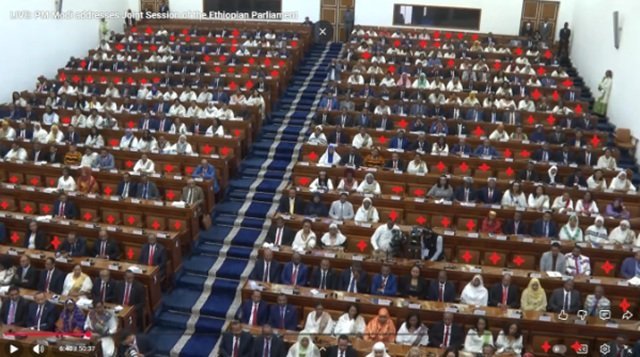
When the Indian Prime Minister stood before Ethiopia’s parliament during his recent state visit, the ceremony was meticulously choreographed: traditional colours, diplomatic warmth, and bold promises of a shared future, capped by a headline-grabbing $15 billion infrastructure framework. Yet one detail quietly unsettled the image—rows of empty parliamentary seats.
The absence was not subtle. Take, for example, a single bench designed to accommodate fifteen representatives: only five were present. Across the chamber, similar gaps appeared—two seats empty here, three or four there—creating a pattern of visible disengagement rather than an isolated oversight. This was not a matter of poor camera angles or momentary absences; it reflected a broader failure of mobilization.
In well-managed state visits, attendance is not left to chance. If parliamentary participation is uncertain, organizers typically fill the chamber with senior civil servants, military leadership, regional officials, and institutional representatives. The goal is not deception, but projection of unity, seriousness, and respect for the visiting head of government. That is how states signal coherence.
The Ethiopian government demonstrated that it understands mass mobilization when it serves domestic political objectives. Large crowds were efficiently assembled for the launch of Ye-Medemer Mengist, the Prime Minister’s book, proving that organizational capacity exists. The contrast, therefore, is telling.
The half-empty parliament during a major international address was not merely a logistical failure. It exposed the growing distance between executive power and state institutions, and it inadvertently revealed the fractures within Ethiopia’s governance structure. In a moment intended to project stability and strategic confidence, the absence instead underscored institutional weakness and diminishing internal cohesion.
For a government seeking investment, legitimacy, and long-term partnerships, such signals matter. Diplomacy is as much about what is seen as what is said—and in this case, the empty seats spoke louder than the speeches.
At first glance, this might seem like a minor protocol failure. In reality, it offers a powerful entry point into a deeper question: what does economic cooperation between Ethiopia and India really mean, and who is it likely to benefit?
There is no doubt that with a population of approximately 1.45 billion and a GDP of about $3.9 trillion, India is one of the world’s fastest-growing major economies (World Bank, 2024–2025). Yet size and growth alone do not equate to full development. According to World Bank and ILO data, India remains a developing country with significant structural constraints.
Only about 37 percent of India’s population is urbanized, reflecting the continued predominance of low-productivity rural livelihoods (World Bank, India Country Overview). According to the Indian government and the World Bank, less than 30% of the nation is poor, and 70% of the poor (225 million) live in the villages. These official statistics are based on a per capita consumption expenditure of Rs. 356 ($8.70) per month, or Rs. 11.70 ($0.28) per day. This low yardstick grossly undercounts the number of poor people in rural India and certainly does not reflect the living conditions for most of them. Female participation in the formal labour market stands at roughly 33 percent by ILO measures, a figure that points to deep gender and social barriers to inclusive growth (ILO, ILOSTAT). Even in the digital sphere—often cited as India’s global strength—only around 56 percent of individuals use the internet. This gap is striking given the global prominence of Indian IT firms and the narrative of a technologically transformed society (ITU/World Bank Digital Development Indicators).
These indicators reveal an important reality: India’s economic power is substantial but unevenly distributed and socially incomplete. For this reason, assessing whether India is a strong economic partner for countries like Ethiopia requires more than headline GDP figures or diplomatic optimism. It demands an evaluation through a development lens—one that prioritizes human outcomes, institutional capacity, and the ability of economic engagement to translate growth into broad-based welfare improvements.
Empty Seats, Full Power
Ethiopia’s parliament has 659 members across its two houses. On paper, a joint address by a visiting head of government should represent national consensus. In practice, the visibly thin attendance revealed a familiar reality: Ethiopia’s political system remains highly centralized, with executive power far outweighing institutional participation.
There is an Ethiopian proverb that says: አሳ ከአናቱ ይገማል—literally, “a fish begins to rot from the head.” The meaning is straightforward and widely understood when the leadership of a person, institution, or organization fails, dysfunction spreads throughout the entire body.
What unfolded in Ethiopia’s parliament during the Indian Prime Minister’s address can be read through this lens. The half-empty chamber was not merely a failure of mobilization or protocol. It was a visible symptom of deeper institutional malaise—an indication that leadership itself is no longer capable of coordinating, commanding, or inspiring the structures beneath it.
In Ethiopian political culture, the proverb also carries a warning. No one eats spoiled fish. To do so is to accept harm knowingly. Applied to governance, the metaphor asks a harder question: who willingly works with, invests in, or places long-term trust in a state whose leadership shows signs of malfunction?
This is not a question asked only by Ethiopians. International partners, investors, and multilateral institutions observe the same signals. Empty seats, disengaged institutions, and performative diplomacy are not invisible to external actors. They register as risk—political, institutional, and economic.
Seen this way, the parliamentary scene was not an embarrassment in isolation. It was a message, unintended but unmistakable, about the condition of the state itself. And like the proverb suggests, when the head falters, the consequences are felt everywhere else.
For Indian observers—coming from a political culture where parliamentary symbolism carries real weight—this was not a neutral image. It suggested that major international agreements are negotiated at the top, with limited legislative scrutiny or public ownership.
That matters because large economic partnerships are not sustained by ceremonies alone. They require institutions that can absorb, oversee, and distribute benefits over time. The empty seats were not just embarrassing; they were symbolic of a broader governance gap.
India Is Not Blind to Ethiopia’s Fragility
There is a tendency to assume that foreign investors are either naïve or cynical. In reality, they are usually cautious—and India is no exception.
Publicly available humanitarian assessments describe Ethiopia in 2025 as a country still grappling with overlapping crises (UNOCHA, Ethiopia Humanitarian Needs Overview 2025): localized conflict, climate shocks, displacement, disease outbreaks, and economic strain. This information is not hidden. Indian policymakers, financiers, and corporations are fully aware of it.
That awareness explains why the much publicized $15 billion “deal” should not be interpreted as an unconditional cash injection. It is more accurately a framework—phased, state-backed, and tied to Indian contractors, financing instruments, and political guarantees. This is not speculative private capital taking open-ended risks. It is controlled exposure.
India’s engagement reflects a calculated assessment of risk—one shaped by political guarantees, phased commitments, and strategic interests rather than assumptions of stability.
Two Growing Economies, One Uncomfortable Truth
India is often presented as a rising global powerhouse—and in aggregate terms, it is. But aggregate size hides an uncomfortable truth: India remains a country with deep internal development challenges.
This becomes clear when we look at infant and child mortality rates. Ethiopia’s infant mortality rate in 2025 is estimated to be in the range of the high 20s to low 30s per 1,000 live births. India’s rate has declined impressively, but it now sits at roughly 25 per 1,000—remarkably close. (UNICEF/WHO/World Bank Child Mortality Estimates)
Life expectancy tells a similar story. Ethiopians today can expect to live around 68 years. Indians, on average, live about 72 years. A four-year gap between economies of such different size is revealing. (WHO Global Health Estimates; World Bank)
These indicators matter because they capture what GDP often obscures: how effectively an economy translates growth into lived well-being.
The conclusion is unavoidable. India is not exporting surplus development from a position of completion. It is still navigating its own demographic and social transition. Its outward economic push is driven as much by domestic pressure—job creation, market expansion, supply security—as by generosity.
Ethiopia–India cooperation is currently shaped more by political necessity than by developmental intent.
The Indian Prime Minister’s visit to Ethiopia also carries a clear geopolitical dimension. According to Indian media commentary, including analysis by Firstpost’s Palki Sharma, India is expected to assume the BRICS chairmanship in 2026. (Firstpost, Palki Sharma, 2025) In that context, Ethiopia’s political support—both symbolically and within multilateral forums—matters to New Delhi. Securing goodwill from African BRICS members is therefore not incidental, but strategic.
For Prime Minister Abiy Ahmed, the visit represents something different: a diplomatic reprieve. In recent months, Ethiopia’s foreign policy posture has suffered a series of setbacks. Efforts to secure port access—from Berbera in Somaliland to ambitions involving Assab and the Red Sea—have generated regional tension rather than strategic gains. International media coverage, including reporting by outlets such as the BBC and The Guardian, has been largely critical, while growing scrutiny from Western policymakers, including resolutions in the U.S. Congress, has further narrowed Abiy’s diplomatic space. (BBC World Service, 19 Nov 2025; The Guardian, 1 Dec 2025)
Against this backdrop, hosting the leader of one of the world’s largest emerging economies offers Abiy an opportunity to reset the narrative—both domestically and internationally. The visit allows him to project control, relevance, and international acceptance at a moment when Ethiopia’s global standing has been under pressure.
This convergence of interests helps explain the intensity of the symbolism surrounding the visit. For India, the engagement strengthens its positioning ahead of a key multilateral leadership role. For Abiy, it serves as a political counterweight to recent diplomatic isolation. Yet this alignment also underscores a central concern: the partnership appears driven more by image management and geopolitical signalling than by a coherent strategy for transforming the daily lives of ordinary Ethiopians.
When diplomacy prioritizes optics over institutions and announcements over outcomes, economic cooperation risks becoming performative. The real measure of success will not be the applause generated by state visits, but whether such engagements translate into tangible improvements in employment, health, and long-term human development.
Not Donor and Recipient, but Unequal Peers
This reframes the Ethiopia–India relationship. It is not a classic donor–recipient dynamic. Nor is it a partnership of equals.
It is better understood as cooperation between two transitional societies, where one has greater capital, technological depth, and state capacity, while the other offers labour, markets, and geopolitical access.
This helps explain India’s preference for non-interference and transactional diplomacy. Unlike Western actors, India does not attach human rights conditionality or governance benchmarks to its engagement. For Prime Minister Abiy Ahmed, that makes India an attractive partner—one that offers legitimacy and opportunity without pressure.
But that political convenience comes with a cost.
The Real Test: Do People Live Longer and Healthier Lives?
If economic cooperation is meaningful, it should show up not only in roads, factories, or trade volumes, but in human survival over time.
Infant mortality measures how a state protects life at the beginning.
Life expectancy measures how an economy sustains life across decades.
Together, they form a powerful test.
If Ethiopia’s partnership with India leads to:
- Local production of affordable medicines
- Better nutrition and food systems
- Safer industrial employment
- Cleaner water and urban infrastructure
- Stronger public health capacity
Then we should see faster declines in child mortality and steady gains in adult longevity.
If, however, infrastructure expands while health outcomes stagnate, the result will be familiar: growth without development.
A Shared Responsibility
For Ethiopia, the lesson is clear. Partnerships negotiated solely at the executive level, without parliamentary engagement or public oversight, risk prioritizing political survival over national transformation. Health and longevity data provide Ethiopia with analytical leverage—not weakness—to demand cooperation that builds local capacity rather than dependency.
For India, Ethiopia is a test case. If India aspires to leadership among developing nations, its success will not be measured by the size of announced deals, but by whether partner societies live longer, healthier lives as a result.
The Indian PM visit to Ethiopia has other dimension according to Indian news source Fistpost, Palki Sharma, said in 2026 India will take over BRICS chairmanship, so the support of Ethiopia is needed. On other hand for Abiy it is a diplomatic coup data internationally and nationally. The last few months its was a disaster for Abiy diplomacy, the port access from Somalia land (Berbera) to acquiring red sea access via Assab brought nothing but diplomatic disaster. International media such as BBC and the Guardian and American congress man resolution all go against Abiy. Now Abiy get an opportunity to show the nation and the international community he is in control. So, it is more politics that economics, it is more about image than transforming the citizen life.
Conclusion: What It Really Meant
In the end, the half-empty parliament was not merely a public relations flaw. It was an honest reflection of where power currently resides in Ethiopia—and where accountability does not.
For many Ethiopians, this was not surprising. The Prime Minister has shown limited regard for institutional autonomy, and parliament is no exception. State institutions increasingly function less as independent pillars of governance and more as instruments deployed when politically convenient. When institutions lose their autonomy, attendance becomes symbolic, deliberation hollow, and legitimacy fragile.
These signals are not visible only to Ethiopians. They are also observed by foreign governments. India, with its long experience of institutional politics, is unlikely to miss such cues.
The contrast between the two countries is stark. India’s democratic system is built around three distinct but interdependent branches of government: the Legislature, the Executive, and the Judiciary. Rooted in constitutionalism and shaped by both British influence and Indian adaptation, these institutions—while imperfect—operate with real checks and balances. Power is contested, courts assert independence, and parliament matters.
In Ethiopia, by contrast, the formal separation of powers has increasingly collapsed into executive dominance. In practice, the legislature, executive, and judiciary often converge around one centre of authority. This concentration of power weakens accountability and undermines institutional credibility.
Global indices reinforce this divergence. According to the 2025 Human Freedom Index, Ethiopia scores 5.16, compared to India’s 6.26. On media freedom, Ethiopia scores 27, while India scores 51. Overall freedom scores place Ethiopia at 18, compared to India’s 63. These figures do not suggest perfection on the Indian side—far from it—but they do indicate a significant institutional gap.
Human rights records further complicate the comparison. India does not officially recognize the category of “political prisoners,” yet organizations such as Amnesty International have documented cases of arbitrary detention involving activists, journalists, and marginalized communities. These concerns are real and serious. However, in Ethiopia, the scale is markedly different. Human rights groups report thousands of individuals detained for political reasons across multiple regions, particularly Amhara and Oromia. Even conservative, case-based counts—such as those documented in files like Meskerm Abera’s—suggest hundreds of identifiable political detainees. (Amnesty International; Human Rights Watch)
This divergence matters. It explains why Delhi and Addis Ababa, despite diplomatic warmth, operate on fundamentally different institutional logics. India engages Ethiopia pragmatically, with caution and calculation. Ethiopia, in turn, seeks legitimacy, leverage, and diplomatic breathing space.
Seen this way, the relationship between Prime Minister Modi and Prime Minister Abiy is less a meeting of democratic peers than a marriage of convenience—driven by geopolitical timing, multilateral positioning, and image management rather than shared institutional values.
Such marriages can be useful. But they are rarely transformative.
And unless cooperation begins to strengthen institutions rather than bypass them, the empty seats in parliament will remain not an anomaly—but a metaphor.
Economic cooperation between Ethiopia and India has potential. But potential alone does not feed children, reduce maternal deaths, or extend life expectancy. Institutions do. Policies do. Outcomes do.
If, years from now, Ethiopia’s child mortality remains stubbornly high and life expectancy barely moves, no amount of diplomatic theatre will hide the truth.
In development, the ultimate measure is not how loudly leaders speak about partnership, but how long—and how well—their people live.
References and Sources
- World Bank. India Country Overview and Development Indicators. World Bank Group, 2024–2025.
- International Labour Organization (ILO). ILOSTAT Database: Labour Force Participation.
- World Health Organization (WHO). Global Health Estimates.
- UNICEF / WHO / World Bank. Child Mortality Estimates, latest updates.
- International Telecommunication Union (ITU) / World Bank. Digital Development Indicators.
- UNOCHA. Ethiopia Humanitarian Needs Overview, 2025.
- Firstpost (Palki Sharma). “India and BRICS Leadership in 2026.” Video commentary, 2025.
- BBC World Service. “‘It would have been better if they’d killed me’: A forgotten war destroying women’s lives.” Published 19 November 2025.
- The Guardian. Robin Tutenges. “Inside Ethiopia’s Fano insurgency – photo essay.” Published 1 December 2025.
Eyassu Epheraim G Hanna: is a Horn of Africa political analyst focusing on governance, political economy, and regional diplomacy. He writes regularly for Borkena and contributes to public political debate through social media and YouTube. His work emphasizes human development outcomes, institutional strength, and accountability.: London UK: 18 December 2025
Editor’s Note : Views in the article do not necessarily reflect the views of borkena.com
__
Support Borkena : https://borkena.com/subscribe-borkena/
Join our Telegram Channel : t.me/borkena
Like borkena on Facebook
Borkena Ethiopian News Youtube Channel
To submit Press Release, send submission to info@borkena.com
Add your business to Ethiopian Business Listing / Ethiopian Business Directory
Join the conversation. Follow us on X (Formerly Twitter) @zborkena to get the latest Ethiopian News updates regularly.
I find this article enlightening on many levels. To put it in a nutshell, it is very instructive, and nearly all the author’s points are valid and well-tethered to the reality on the ground. Institutional weakness and overbearing executive are not new to Ethiopia, nor phenomena that came about with the current Prime Minister. It has always been the reality of our country. Past and present parliaments and judicial institutions have always functioned at the behest of the powers that be. What the conspicuous absence of many members of the House of Representatives tells me more than anything is that the Prime Minister is losing his grip over this and other institutions. If he were in total control of the legislative and judiciary bodies as his predecessors – I am not, of course, suggesting that this is desirable – there would be no such embarrassing display of complete disengagement without fear of retribution. Not even in countries known for their more advanced democracies would we see such a display of disengagement, regardless of the agenda of the executive. I fear that this disengagement on the part, especially of the legislative body, is a symptom of a country inching towards chaos.