
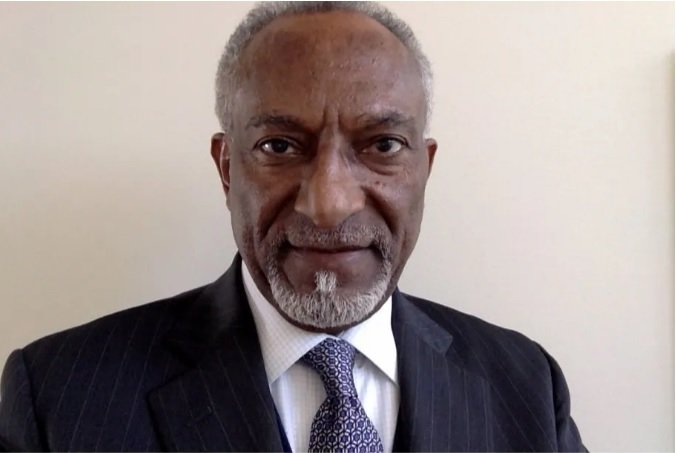
As a political economist attuned to the intricate interplay of power, institutions, and economic incentives in the Global South, I have long observed how fragile states in Africa manipulate multilateral frameworks to mask domestic authoritarianism. As a timely response to unfolding events, I have chosen to share this short piece in the form of executive summary with the busy reader in mind.
Ethiopia under Prime Minister Abiy Ahmed exemplifies the pathology described above with acute poignancy. On December 4, 2025, the signing of a so-called “permanent peace agreement” between the Amhara Regional Government and a splinter faction of the Amhara Fano Popular Organization (AFPO), represented by the marginal figure Captain Masresha Sete, stands as a masterclass in institutional co-optation. Far from heralding reconciliation, this maneuver reveals Abiy’s regime as a predatory entity, enlisting the African Union (AU) and the Intergovernmental Authority on Development (IGAD) as unwitting accomplices in a charade designed to delegitimize a burgeoning resistance movement. In lending their imprimatur to this farce, these continental bodies have not only eroded their own normative capital but have inadvertently fortified Fano’s moral and geopolitical standing, exposing Abiy’s tactics as those of a common street oppressor whose repertoire of divide-and-conquer sleights is now laid bare to the international gaze.
To dissect this episode, one must first contextualize Masresha Sete’s anomalous elevation. Sete, a low-echelon operative within Fano’s decentralized structure, was publicly expelled by the organization’s senior echelons for a litany of infractions—alleged indiscipline, unauthorized engagements, and perhaps more prosaically, personal aggrandizement that clashed with Fano’s ethos of collective Amhara self-defense. Once a fugitive, evading both federal dragnets and his former comrades’ censure, Sete’s sudden rehabilitation under the Amhara Regional Government’s aegis smacks of opportunistic realignment. The agreement he inked with Chief Administrator Arega Kebede—ostensibly addressing “short-term and long-term issues” amid Ethiopia’s spiraling ethnic fissures—bears all the hallmarks of a coerced capitulation, not a negotiated settlement. Sete’s platitudinous endorsement, intoning that “no one profits from conflict,” rings hollow against the backdrop of Fano’s grassroots legitimacy, forged in the crucible of Abiy’s post-Pretoria betrayals: the unilateral disarmament demands on Amhara forces that precipitated the 2023 War in Amhara, the mass internment of ethnic Amharas, and the economic strangulation of the region through fertilizer delays and infrastructural neglect.
Abiy’s masterstroke, however, lies not in Sete’s improbable phoenix-like ascent but in the deft instrumentalization of IGAD and the AU as purported “facilitators.” IGAD’s Deputy Executive Secretary, Mohamed Abdi Ware, effused that the accord would bolster “peace and stability… for the region and Africa at large,” a boilerplate affirmation that belies the event’s contrived choreography. These bodies, headquartered in Addis Ababa no less, were paraded as neutral arbiters, their presence at the signing ceremony lending a veneer of multilateral sanctity to what was, in essence, a bilateral stitch-up between the regime and a discredited proxy. This is no mere diplomatic courtesy; it constitutes a profound devaluation of IGAD and the AU’s institutional worth. Born from the ashes of Africa’s post-colonial turmoil—the AU from the Organization of African Unity’s anti-imperialist mantle, IGAD from the Horn’s hydra-headed conflicts—these entities were enshrined to safeguard sovereignty while curbing its tyrannical excesses. Yet here, they have been reduced to props in Abiy’s theater of the absurd, their mediation claims echoing the Pretoria Agreement’s hollow legacy: a 2022 Cessation of Hostilities that excluded Amhara stakeholders, only to unleash purported genocidal reprisals and Eritrean encroachments in Tigray.
Economically, this co-optation exacts a steeper toll than the diplomatic sleight. Ethiopia’s macroeconomy, already teetering under $28 billion in reconstruction debts from the Tigray conflagration and hemorrhaging foreign direct investment amid Amhara’s insurgency, hinges on the AU and IGAD’s credibility as guarantors of regional stability. By associating themselves with Abiy’s ploy, these institutions risk alienating Western donors—the United States, European Union, and bilateral lenders—who have increasingly recognized Fano’s salience. Recent overtures from Washington and Brussels to “majority Fano forces,” bypassing minority splinters like Sete’s, signal a paradigm shift: Fano is no longer a parochial militia but a transnational actor, courted for its potential to recalibrate Ethiopia’s federal balance and forestall Horn-wide spillovers into Sudan or Somalia. Abiy’s gambit, in portraying IGAD and AU as anti-Fano bulwarks, thus invites sanctions and aid suspensions, exacerbating Ethiopia’s 30% inflation and birr devaluation. The opportunity cost is staggering: foregone remittances from a stabilized Amhara heartland, where Fano controls swaths of territory vital for wheat exports and Nile Basin hydrology.
Worse still, this alignment unmasks Abiy’s modus operandi as irredeemably oppressive, a revelation that will haunt his regime’s international parleys. The pattern is unmistakable—from the Oromia playbook, where minority OLA factions were cherry-picked for photo-ops while dominant cadres were vilified, to the Amhara theater, where Eskinder Nega’s marginal influence was inflated to fracture resistance cohesion. Abiy, once lionized with a Nobel Peace Prize for his Eritrea détente, now embodies the archetype of the “strongman lite”: a rhetorician of pan-African unity who wields emergency decrees and command posts as blunt instruments of ethnic subjugation. His invocation of IGAD and AU here is but the latest iteration of a doctrine that René Lefort aptly terms “de-institutionalization”—hollowing out multilateralism to prop up personalist rule, much as he appointed loyalists like Workneh Gebeyehu (yes, that same Dr. Gebeyehu of the infamous ’73 r d’ fame, for seventy third, and a one-time foreign minister) to IGAD’s helm for precisely such pliancy.
In forecasting the denouement, I predict this act will not cleave Fano asunder but will, contrariwise, galvanize its sinews. The organization’s decentralized genius—rooted in Amhara cultural resilience and untainted by the Prosperity Party’s corruption—renders it impervious to such crude vivisections. Sete’s ostracism, far from a schism, broadcasts Abiy’s desperation, rallying diaspora networks and great-power patrons who see in Fano a bulwark against jihadist creep from the Sahel or Red Sea realignments. Economically, Fano’s de facto control over agrarian corridors will sustain shadow economies, drawing informal capital flows that eclipse regime coffers. Abiy’s oppressiveness, once shrouded in reformist patina, now stands exposed: a street-level extortionist whose divide tactics, bereft of ideological heft, invite opprobrium from Addis’s own AU mandarins and beyond. The Horn’s equilibrium demands Fano’s empowerment, not its dilution; in rebuffing this farce, Fano emerges not diminished, but ascendant—a phoenix amid Ethiopia’s institutional inferno. Abiy’s legacy, meanwhile, curdles into infamy: not the visionary statesman, but the venal operator whose gambles hasten the federation’s unraveling.
Teshome Abebe, PH.D., a former Provost and Vice President for Academic Affairs at two institutions, is Professor of Economics and Faculty Laureate.
Editor’s Note : Views in the article do not necessarily reflect the views of borkena.com
__
Support Borkena : https://borkena.com/subscribe-borkena/
Join our Telegram Channel : t.me/borkena
Like borkena on Facebook
Borkena Ethiopian News Youtube Channel
To submit Press Release, send submission to info@borkena.com
Add your business to Ethiopian Business Listing / Ethiopian Business Directory
Join the conversation. Follow us on X (Formerly Twitter) @zborkena to get the latest Ethiopian News updates regularly.
The so called Pretoria agreement is dead and void because the government of Abiy Ahmed has not been implementing it. He accepted it survive but his refusal to implement it will cost him his power. The diplomacy and patience of the regional power Tigray have come to their limits and the use of military power to dethrone Abiy Ahmed is the only option left now. The TDF which routed the forces of Abiy Ahmed and moved closer to Finfine was stopped by the diplomatic intervention of the Biden administration. Tigray with its competent diplomats and statesmenn has chosen the diplomatic and civilized path to resolve the crisis.
” The organization’s decentralized genius ” Does this statement shows strength or infancy of Fano? I have never read a decentralized armed group attained a formidable challenge to existing government in Africa’s political ecosystem.
Teshome Abebe’s( PhD) critique transcends disagreement, constituting a comprehensive verdict of contempt for Abiy Ahmed’s government. His language systematically denies the regime legitimacy, framing it not as a flawed administration but as a “predatory entity” led by a “venal operator” employing the crude tactics of a “common street oppressor.” This lexical arsenal is designed to degrade, suggesting a regime engaged in criminal enterprise rather than statecraft. Abiy’s strategy is dismissed not as complex politics but as transparent, desperate “sleights” in a “theater of the absurd,” a performance whose inevitable outcome is self-defeat and national unraveling.
This disdain is amplified by a stark, romantic counterpoint: the Fano resistance. Celebrated for its “decentralized genius” and “grassroots legitimacy,” Fano is portrayed as the authentic, uncorrupted embodiment of popular will. The resulting narrative creates a rigid, polarizing dichotomy: a morally bankrupt state versus a virtuous insurgency. This framework is deliberately divisive for Ethiopia’s political elite, erasing distinction and forcing a binary allegiance that escalates conflict and forecloses dialogue.
While the impulse to critique authoritarian overreach is valid, Teshome’s (PhD) polemic succumbs to the very reductionism it might seek to combat. By mythologizing one side and demonizing the other, it ignores the intricate, often grim realities within both the state apparatus and the decentralized resistance—realities that include internal fractures, competing interests, and human rights concerns on all sides. Such polarized storytelling, however compelling, is a catalyst for perpetual strife. The profound challenge for Ethiopia is to forge a narrative that can hold the complexity of its crisis: one that condemns oppression without sanctifying armed rebellion, and that seeks accountability while leaving a path for a political future beyond mutually assured contempt.
How come there is always such huge disparity between Dr. Teshome’s version of Ethiopia and the real Ethiopia? How is Ethiopia still standing if he were so right all along? Why is he so hell-bent on such misinformation-disinformation spree?
1). Democratic Election [DE] in Ethiopia: As requested by ≥100 opposition parties, the last election was held under on-site scrutiny by AU/UN/EU/US. No election fraud filed!
2). Amaras | DE: As all the other 85 Ethiopian Ethnics, the Amaras held elections in their Amara Zone and ELECTED AMARAS as their leaders. Isn’t that what DE is all about?
3). Abiy | Prosperity Party [PP]: Abiy’s PP won & elected Abiy as PM. [Q: Which Amara Party would enroll Abiy? I even wonder if his Amara mom is ‘Amara-enough’ to them!]
4). Domestic Terrorism [DT] | Domestic Terrorists [DTs]: Insurrection against an Elected Government is DT. DTs & Abettors are legitimate targets of Ethiopian Defense Forces & Law Enforcement Agencies →they enforce democracy, get people’s votes honored, etc.
5). Abiy & Ethiopia’s Economy: I cite a few of what anyone can go & see in Ethiopia
i). IMF’s Vice Director on Ethiopia’s Economy [days ago]: youtu.be/d2cuHwjMhJI
ii). When Abiy took over, Debt/GDP Ratio was 59%: youtu.be/upKEL9wQvrY?t=1198
[Compare: Debt ↓≈80% under Abiy in just 6 years → youtu.be/_25xW32xrYU?t=10 ]
iii). Under Abiy, ≥ 10 million students enjoy ≥2 free meals per day. What a relief for ≈20 million parents! [Compare: The Monarchy/Derg/TPLF failed to airdrop 100g (10¢) bread for ≈200K famine victims→(Ethiopia = “World’s Poster Child of Poverty & Famine”)].
iv). Consistent GDP growth [by ≥8%] | Poverty ↓ | Food Self-Sufficiency ↑:
(a). WB/IMF [GDP↑ 8.1% (Beat IMF’s Prediction)]: youtu.be/SJBVcbtzS3A?t=1
(b). UN-WFP [GDP↑ 10% (Millions out of poverty)]: youtu.be/MFHaKycK4P0?t=35
(c). Poverty↓ [23 million OFF safety net aid programs]: youtu.be/hMIcgPSgnlw
(d). Food Self-Sufficiency↑ [UN-FAO Award]: youtu.be/IFkIFUFWHgw
With the spanking new fleet of F35’s and Al-Toweel Isu’s Su35’s, Ethiopia, you’re toast. You will not even a chance to say ‘What did just happen?’ After the victorious armies of el-Sisi, Al-Toweel and a squadron F35’s march into Addis, the first task in order will be to deport all those Amharas and Oromos from Ethiopia to where they came from, Hadhramaut[ and Dhofari in Southeastern Yemen and Southwestern Oman. These two groups of people have always been causing mischief and trouble. Good riddance!!! The rest groups of people will be used as hammaals(coolies) ny the victorious Sisi and Al-Toweel.
Somebody asked me how about the Tigres. They have their own country. Debre and his entourage will move to Al-Toweel Isu’s fiefdom to do the brick laying on his driveway and shoe shine his boots everyday. The rest of Tigres will voluntarily deport themselves to where they came from: Along the Tigris River in present day Iraq.