
Editor’s Note : Views in the article do not necessarily reflect the views of borkena.com
By Bilelegne Gashaw Mengistu
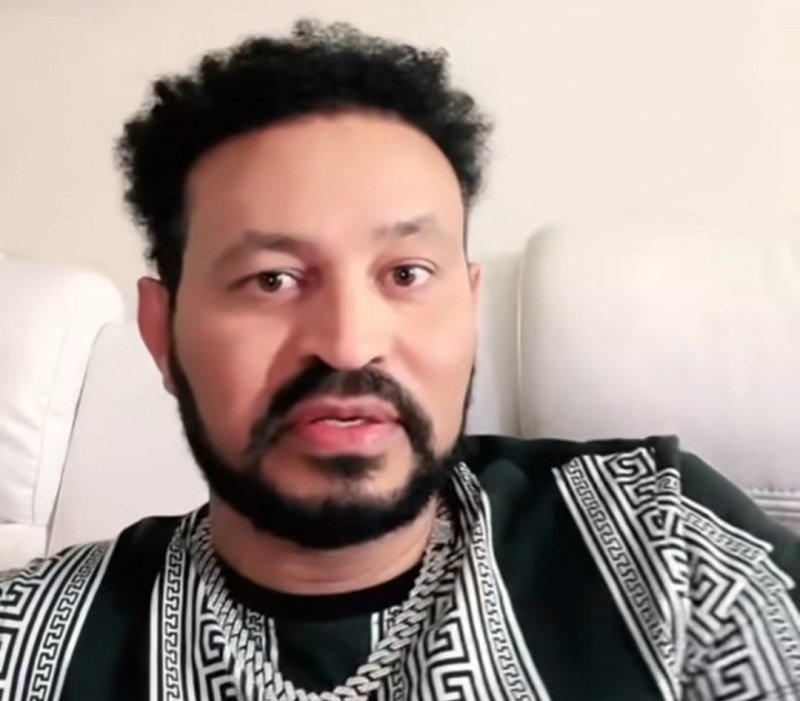
Years ago, this man was playing like the guardian of the Ethiopian Orthodox Tewahedo Church, and he was even starting his live speeches saying ‘Glory be to the Mother and the Son’. At that time, a considerable number of digital crowds who considered themselves followers of Tewahedo were following Yoni Magna, more than their reverend fathers and their religious teachers. And quite surprisingly, he came out live on YouTube and announced that he had accepted Islam, leaving ‘the digital Tewahedo’ to bow down their heads with shame.
Then, it was the turn of ‘the Muslim digital crowd’ to say ‘Marhaba Marhaba Yoni Magna’. Ignoring the word of the Holy Quran that says ‘The only accepted religion in the sight of Allah is Islam’, they seemed to confirm the correctness of their faith by Yoni Magna.
But, he then ran away from them too and, a few years later, he insulted in public the great religion of Islam and its followers with his filthy tongue. Although there was a campaign to have his TikTok account banned, it was too late to fix the damage.
Very recently, he claimed to be baptized as a follower of an evangelical church, and he even began preaching. And this time too, ‘the digital evangelical crowd’ began to shout ‘Amen, Amen’. The euphoria among them was as if the Gospel was revealed to the world on the day Yoni Magna was born. But after only few months as a champion of evangelism, Yoni came out on TikTok Live yesterday, shouting ‘d**n with the gospel’, leaving the digital crowd to wear sackcloth and cry.
For years Yoni has been playing the same game to fool those naive digital ethnc politicians too. When he wanted to fool the digital Tigray nationalists, he came out and said ‘Oh you the great Tigrayans, such and such ethnic groups caused you suffering’, and the digital crowd cried and followed him. He then switched a camp and became more Amhara than the Amhara themselves, saying, ‘Oh you the son of the great Belay Zeleke, you the son of the emperors, rise up before your enemies destroy you!’ And the digital Amhara crowd moved towards him until both their mind and finance was fully drained. After he was done with them, he then reached out to the digital Oromo and said ‘Iijollee biya Kegnaa, how can we forget the 100 years of oppression and suffering? we shall rise up and show them our greatness’, and the digital Oromo crowd rose up to his favor.
The amazing thing is that, no matter how many times he changes camps, there is always a large crowd that believes and follows him. Few among the crowd say, ‘Please, let’s calm down, this man has no firm stance, he won’t stay here for long, let’s not follow him and regret it later’.
Yoni Magna is an embodiment of our instability, the permanent example of our short-sightedness, and the mirror of our foolishness.
Editor’s Note : Views in the article do not necessarily reflect the views of borkena.com
__
Support Borkena : https://borkena.com/subscribe-borkena/
Join our Telegram Channel : t.me/borkena
Like borkena on Facebook
Borkena Ethiopian News Youtube Channel
To submit Press Release, send submission to info@borkena.com
Add your business to Ethiopian Business Listing / Ethiopian Business Directory
Join the conversation. Follow us on X (Formerly Twitter) @zborkena to get the latest Ethiopian News updates regularly.
Yoni Magna is a very stupid person and anyone who listens to him is not a real Ethiopian
He has been struggling with his faith, experiencing frequent shifts that seem to reflect an unstable mindset. It appears he is seeking validation from large naive audience , which may be causing his emotional, mental, and spiritual pain. May Almighty God grants him clarity, stability, and renewed his faith—Orthodox Tewahedo Church. May the Almighty restore his peace, harmony, and strength. Amen.
The Prosperity Party of Abiy Ahmed —callous leader of all time—is an enemy of Ethiopia. UAE is the enemy of Africa.
Mr. Gebrehana has once again touched my soul when he spoke about Yoni Magna—something many others failed to do. I still remember being invited to a friend’s house on the occasion of an Ethiopian holiday during the height of the social-media politicking era. The gathering was meant as a holiday celebration, but on the side we were watching a TV show, and I was invited specifically to watch Yoni Magna. At the time, he was regarded as sharp, insightful, and a dominant social-media personality who could command and influence large audiences with confidence.
I also recall his collaboration with Habtamu Besha, a man I deeply respect for his integrity, clarity, and strong ability to mentor others. This stood in stark contrast to Zemedkun Bekele, a notorious social activist and former deacon known for fabricating accusations against innocent people—someone who seemed to take pleasure in the harm he caused, regardless of where the truth lay.
During that visit, I remember telling my friend that Yoni Magna had no real substance. He was wish-washy, lacking personal integrity, often saying one thing today and the complete opposite the next day. Over time my friend observed him more critically and eventually came to agree with my initial assessment.
A similar smear campaign was later launched against Fano commander Skinder Nega. Social activists—and even some professors—accused him of being “anti-Amhara,” suggesting he should step aside from the very existential struggle that concerns all Amharas. Imagine that: an existential struggle—yet some believe they have the authority to decide which Amharas are worthy of participating, as if certain individuals are “more Amhara” than others. Ironically, many of these newly awakened “defenders of Amhara identity” only developed their political consciousness recently, despite the struggle stretching back to the Derg era. Now they attempt to present themselves as more Catholic than the Pope. In that regard, I feel vindicated by Mr. Gebrehana’s razor-sharp commentary in Borkena, which exposed Yoni Magna for what he is—a political chameleon.
There is, indeed, a great deal of awareness the Amhara people must develop, with one of the most important being the cultivation of critical thinking. Strengthening the education sector to produce critical thinkers and making this a defining cultural characteristic of the Amhara community should be a key priority for intellectuals—including brilliant and principled figures such as Mr. Gebrehana.
Mr. Mengstu has once again touched my soul when he spoke about Yoni Magna—something many others failed to do. I still remember being invited to a friend’s house on the occasion of an Ethiopian holiday during the height of the social-media politicking era. The gathering was meant as a holiday celebration, but on the side we were watching a TV show, and I was invited specifically to watch Yoni Magna. At the time, he was regarded as sharp, insightful, and a dominant social-media personality who could command and influence large audiences with confidence.
I also recall his collaboration with Habtamu Besha, a man I deeply respect for his integrity, clarity, and strong ability to mentor others. This stood in stark contrast to Zemedkun Bekele, a notorious social activist and former deacon known for fabricating accusations against innocent people—someone who seemed to take pleasure in the harm he caused, regardless of where the truth lay.
During that visit, I remember telling my friend that Yoni Magna had no real substance. He was wish-washy, lacking personal integrity, often saying one thing today and the complete opposite the next day. Over time my friend observed him more critically and eventually came to agree with my initial assessment.
A similar smear campaign was later launched against Fano commander Skinder Nega. Social activists—and even some professors—accused him of being “anti-Amhara,” suggesting he should step aside from the very existential struggle that concerns all Amharas. Imagine that: an existential struggle—yet some believe they have the authority to decide which Amharas are worthy of participating, as if certain individuals are “more Amhara” than others. Ironically, many of these newly awakened “defenders of Amhara identity” only developed their political consciousness recently, despite the struggle stretching back to the Derg era. Now they attempt to present themselves as more Catholic than the Pope. In that regard, I feel vindicated by Mr.Mengstu’s razor-sharp commentary in Borkena, which exposed Yoni Magna for what he is—a political chameleon.
There is, indeed, a great deal of awareness the Amhara people must develop, with one of the most important being the cultivation of critical thinking. Strengthening the education sector to produce critical thinkers and making this a defining cultural characteristic of the Amhara community should be a key priority for intellectuals—including brilliant and principled figures such as Mr. Mengstu.