
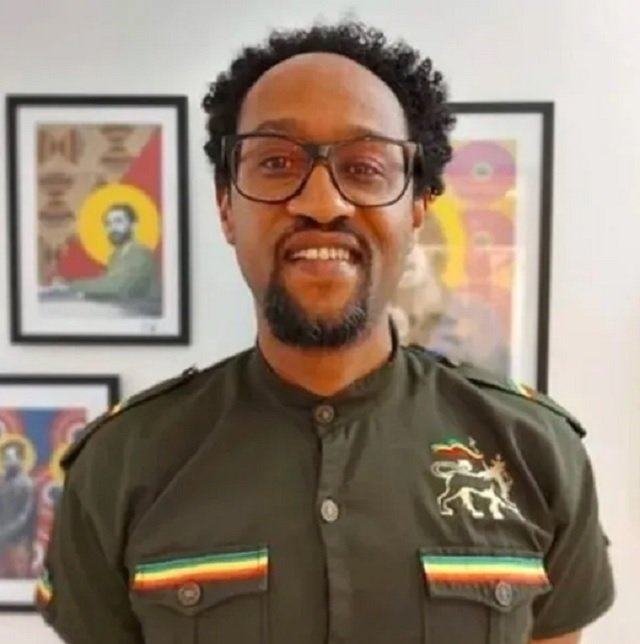
By – Wondmagegn Ejigu Kebede
Uppsala, Sweden
The persistent failure of Ethiopia’s opposition political elites to form durable coalitions reflects a broader illusion rooted in scientistic political theory—the belief that formal alliances among elites alone can dismantle authoritarian structures. Drawing from Robert Michels’ “iron law of oligarchy,” which posits that even revolutionary movements inevitably centralize power in a small elite, Ethiopia’s opposition has replicated this pattern by prioritizing top-down unity while neglecting grassroots agency. By fixating on symbolic alliances between factional leaders, they echo what James Scott critiques as “seeing like a state”: reducing complex societal struggles to bureaucratic negotiations among disconnected elites. This approach ignores the lived realities of Ethiopians enduring systemic repression, rendering such coalitions inert, as they lack organic ties to the masses whose mobilization is essential for meaningful change.
This delusion also aligns with Mancur Olson’s theory of collective action, which warns that narrow interest groups—in this case, opposition elites—often fail to achieve broader public goods without incentivizing participation. Ethiopia’s opposition coalitions, formed through backroom deals rather than mass organizing, resemble Olson’s “logic of collective failure.” Their focus on shared antipathy toward the regime, rather than a unifying program grounded in local needs, creates fragile pacts vulnerable to defection and infighting. Scientific political theory clarifies why such alliances collapse: without grassroots buy-in, there is no countervailing force to hold elites accountable or sustain momentum. The result is a cycle of performative unity followed by disintegration, leaving the authoritarian regime unchallenged and ordinary Ethiopians disillusioned.
Ultimately, the opposition’s misstep mirrors Antonio Gramsci’s analysis of hegemony, wherein ruling classes maintain power not solely through coercion but by dominating cultural and ideological narratives. By fixating on elite-level coalition-building, Ethiopia’s opposition cedes the “war of position”—Gramsci’s concept of grassroots ideological struggle—to a regime that skillfully manipulates ethnic and regional divisions. To “do the real work,” the opposition must abandon the illusion of quick-fix alliances and instead invest in bottom-up mobilization, building networks of local councils, unions, and civil societies capable of articulating a counter-hegemonic vision. Only then can political theory align with praxis, replacing hollow elite bargains with a movement rooted in the daily struggles and aspirations of Ethiopians.
Grassroots mobilization is the lifeblood of any opposition movement that seeks to transcend symbolic gestures and achieve tangible political transformation. Political theorist Hannah Arendt, in “The Human Condition”, emphasizes that genuine power arises not from hierarchical structures but from the collective action of individuals organized in public spaces. In Ethiopia’s context, this means that opposition movements must prioritize direct engagement with communities—knocking on doors, listening to grievances, and fostering trust through sustained presence. Grassroots work transforms abstract political rhetoric into lived solidarity, creating networks of resistance that authoritarian regimes cannot easily co-opt or dismantle. Without this foundation, even the most ideologically coherent opposition remains a hollow shell, disconnected from the material struggles of citizens who face daily repression. Scientific studies of social movements, such as those by Charles Tilly, reinforce
this: successful revolutions historically depend not on elite pacts but on the “contentious performances” of ordinary people—strikes, protests, and local assemblies—that build collective identity and pressure regimes from below.
However, grassroots mobilization demands more than fleeting activism; it requires disciplined organization and strategic foresight. As sociologist Sidney Tarrow notes in “Power in Movement”, movements gain traction only when they institutionalize dissent—structuring local committees, training organizers, and linking immediate needs to broader political visions. This “hard work” stands in stark contrast to the performative politics of YouTube interviews, which prioritize visibility over substance. For Ethiopia’s opposition, building such infrastructure means cultivating leaders embedded in communities rather than self-appointed elites, and crafting strategies that adapt to local realities rather than importing abstract models. Political scientist Erica Chenoweth’s research on nonviolent resistance underscores this: movements with strong grassroots participation are twice as likely to succeed, as they leverage localized knowledge and resilience. Until Ethiopia’s opposition embraces this arduous, unglamorous labor—trading camera-ready rhetoric for village-level organizing—it will remain trapped in the illusion of influence, while the regime’s tyranny persists unchallenged.
The Ethiopian opposition’s current trajectory—exemplified by the fractured Fano movement and performative diaspora politics—exposes a profound disconnect from the principles of effective resistance. While Fano factions expend energy on internecine propaganda battles and diaspora elites jostle for influence over leaders, the absence of coordinated strategy or grassroots alignment renders their struggle tragically incoherent. This disarray mirrors a broader failure: the lack of parallel civil resistance, such as strikes, boycotts, or mass protests, which historically amplify armed campaigns (as seen in South Africa’s anti-apartheid movement or Nepal’s Maoist insurgency). By fixating on internal squabbles and elite posturing, these groups squander the moral and tactical leverage needed to challenge a regime that thrives on division. The public’s silence is not apathy but a damning indictment—a people unconvinced that these factions represent their aspirations or understand their daily struggles.
Equally alarming is the illusion of relevance peddled by “prominent” opposition figures who mistake YouTube theatrics for political organizing. Their elite coalitions, devoid of grassroots structures, prioritize media visibility and abstract debates over the laborious work of building local networks, training organizers, or articulating a unifying vision rooted in material demands. This mirrors what sociologist Pierre Bourdieu termed “political fetishism”—the substitution of symbolic gestures (e.g., viral speeches, diaspora conferences) for the messy, incremental work of mobilization. In contrast, successful movements—from India’s independence struggle to Serbia’s Otpor!—succeeded by embedding themselves in communities, aligning with localized grievances, and creating parallel institutions (schools, clinics, unions) that prefigured a new political order. Ethiopia’s opposition, however, remains trapped in a cycle of elite negotiation and digital grandstanding, mistaking clicks for credibility.
For Ethiopia’s opposition to transcend irrelevance, a radical reorientation is nonnegotiable: either embrace grassroots mobilization as the core of resistance or cede the stage entirely. This requires dismantling the diaspora’s corrosive influence—which prioritizes control over collaboration—and demanding accountability from Fano leaders to unify behind a clear roadmap tied to public needs. Politicians must abandon the comfort of YouTube studios and return to the streets, villages, and workplaces where power is ultimately contested. As historian Timothy Snyder warns, “A politics without bodies in spaces is a politics without power.” The choice is stark: continue the charade of elite activism and witness the regime’s consolidation, or invest in the unglamorous, dangerous work of organizing—house by house, bloc by bloc—until the opposition becomes indistinguishable from the people it claims to represent. Anything less is not just failure but betrayal.
Editor’s Note : Views in the article do not necessarily reflect the views of borkena.com
__
Support Borkena : https://borkena.com/subscribe-borkena/
Join our Telegram Channel : t.me/borkena
Like borkena on Facebook
Borkena Ethiopian News Youtube Channel
To submit Press Release, send submission to info@borkena.com
Add your business to Ethiopian Business Listing / Ethiopian Business Directory
Join the conversation. Follow us on X (Formerly Twitter) @zborkena to get the latest Ethiopian News updates regularly.
A critical analysis deserves rethinking
Fantastic political suggestion…I believe that is what is missing …your statement “invest in the unglamorous, dangerous work of organizing—house by house, bloc by bloc—until the opposition becomes indistinguishable from the people it claims to represent.” Thank you Wondmagegn.