
Gedion Yilma
1. Introduction
Ethiopia, once hailed as one of Africa’s fastest-growing economies and a model for poverty reduction, now faces a severe reversal in progress. According to the World Bank’s latest projections, the share of Ethiopians living below the poverty line is expected to rise to 43% by 2025, up from 33% in 2016 and 39% in 2021. This sharp increase represents millions of additional people falling into poverty and signals deep structural and governance challenges.
The surge in poverty coincides with a period marked by intense internal conflict, political repression, economic mismanagement, and social instability under Prime Minister Abiy Ahmed’s administration. Understanding whether this dramatic rise in poverty can be explained by the ongoing war and governance failures is critical for shaping Ethiopia’s recovery and humanitarian policy.
2. Conflict and Poverty: A Destructive Nexus
a. Destruction and Displacement
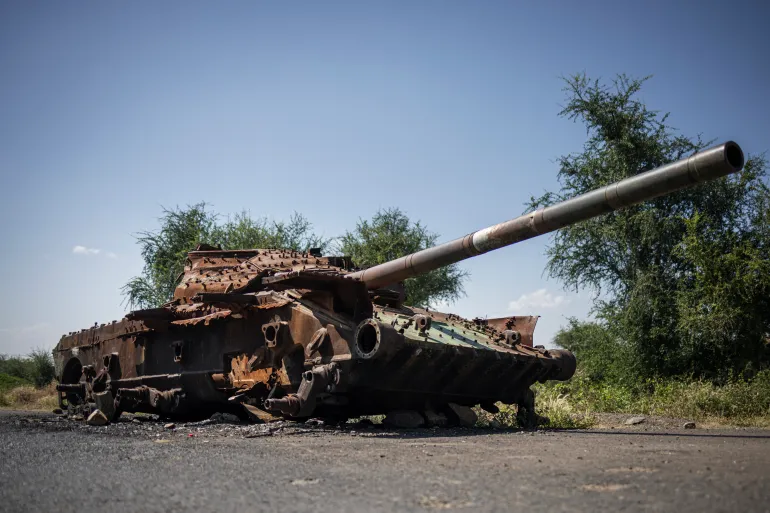
The civil war that erupted in northern Ethiopia in 2020—initially between federal forces and the Tigray region—has since expanded to include other regions such as Amhara and Afar. The war has caused massive loss of life, widespread displacement, and destruction of livelihoods.
Estimates suggest that damages in Tigray alone exceed USD 22 billion, with agricultural and industrial productivity collapsing. Millions have been internally displaced, losing homes, farmlands, and access to markets, pushing entire communities into destitution.
b. Disruption of Services and Economic Activity
Conflict has eroded essential infrastructure—schools, health facilities, and roads—severely disrupting service delivery. Public investment and donor funding have been diverted toward military expenditure and emergency responses. Inflation, currency depreciation, and food shortages have worsened the cost-of-living crisis, especially in urban centers.
c. Spillover to National Economy
Even regions not directly affected by fighting face the ripple effects: declining exports, reduced investor confidence, capital flight, and the suspension of foreign aid. The Productive Safety Net Programme (PSNP)—a lifeline for millions of rural poor—has been disrupted in several areas due to insecurity and resource diversion.
3. Why Poverty Is Rising: War, Policy, and Governance
The 43% poverty projection is not merely a statistical anomaly—it reflects the compounded effects of war, weak governance, and ill-timed economic reforms under Abiy Ahmed’s leadership.
a. Governance Failures and Policy Missteps
The government’s economic reform agenda—focused on liberalization, privatization, and subsidy removal—was launched amid widespread instability and fragile institutions. Instead of cushioning vulnerable populations, austerity and inflation have deepened hardship.
Meanwhile, the administration’s centralized control, corruption, and politicized aid distribution have limited the effectiveness of poverty alleviation programs.
b. Militarization and Fiscal Strain
Excessive military spending has drained resources from critical social sectors such as education, health, and agriculture. Reconstruction in war-torn regions has been delayed, leaving millions without livelihoods or basic services. The war’s economic cost has crowded out pro-poor investment and worsened public debt.
c. Economic Shock Multipliers
War-related disruptions have interacted with global shocks—notably the COVID-19 pandemic, food and fuel price spikes, and climate-induced droughts—to create a perfect storm for poverty expansion. Inflation rates exceeding 30% have sharply reduced real incomes, particularly for wage-dependent urban households.
4. Human and Structural Consequences
The implications of this surge in poverty are profound:
- Human Capital Erosion: Children in conflict areas face malnutrition, interrupted schooling, and trauma, setting back decades of human development gains.
- Rural Vulnerability: Rural communities—already poor—are hardest hit by displacement, loss of assets, and reduced access to inputs and markets.
- Urban Hardship: Inflation and unemployment have intensified urban poverty, shrinking the middle class and eroding purchasing power.
- Institutional Weakness: The breakdown of local governance and safety nets has undermined the state’s ability to respond effectively to crises.
- Regional Inequality: Conflict-affected regions (Tigray, Amhara, Afar, Oromia) now lag even further behind, deepening geographic disparities.
5. Explaining the 43% Poverty Projection
The World Bank’s projection that 43% of Ethiopians will live below the poverty line by 2025 is entirely plausible given the cumulative damage inflicted by war and poor governance.
- The destruction of productive assets (land, livestock, industry) directly reduces household income.
- Inflation and economic instability erode purchasing power.
- Service disruption increases non-monetary deprivations.
- Reduced donor inflows and rising debt limit government capacity to provide safety nets.
In short, the ongoing conflicts and the state’s failure to ensure peace, stability, and equitable recovery are the principal explanations for Ethiopia’s poverty reversal.
6. Policy Implications: Peace as a Precondition for Prosperity
To reverse the tide of poverty, Ethiopia must first achieve sustainable peace and inclusive governance. The following priorities are urgent:
- Ceasefire and National Reconciliation: Peace negotiations must address the root causes of conflict—ethnic grievances, political exclusion, and impunity.
- Reconstruction and Livelihood Restoration: Immediate rehabilitation of infrastructure, schools, hospitals, and farmlands is essential to restore livelihoods.
- Reinvestment in Human Capital: Redirect spending from military to social sectors—education, healthcare, and nutrition.
- Strengthen Social Protection: Scale up PSNP and cash-transfer programs with transparency and community participation.
- Governance Reform: Curb corruption, decentralize decision-making, and enhance accountability in public resource management.
- Inclusive Economic Reform: Align liberalization with pro-poor policies to ensure growth benefits the marginalized.
7. Conclusion
Ethiopia’s poverty crisis is not merely a byproduct of external shocks—it is a human-made tragedy, largely exacerbated by war, governance failure, and policy mismanagement under the current administration. The World Bank’s projection of 43% poverty by 2025 is therefore both credible and alarming. Unless Ethiopia halts its internal wars, prioritizes peace, and redirects its focus toward human development and reconstruction, poverty will remain entrenched for generations.
Peace is not only a moral imperative—it is an economic necessity. Without it, Ethiopia’s vision for prosperity will remain an illusion built on suffering and deprivation.
Key References
- World Bank. Ethiopia Poverty Assessment and Economic Update (2024–2025).
- Africa Press (2025). Ethiopia’s Poverty Rate Projected to Reach 43% by 2025.
- APA News (2025). World Bank Forecasts Rising Poverty in Ethiopia.
- The New Humanitarian (2023). War, Drought, and the Fallout of Collapse.
- Ethiopian Policy Institute (2024). Poverty and Conflict Are on the Rise in Ethiopia.
- AP News (2024). Ethiopia Introduces New Tax After USAID Funding Pause.
Editor’s Note : Views in the article do not necessarily reflect the views of borkena.com
__
Support Borkena : https://borkena.com/subscribe-borkena/
Borkena Ethiopian News Youtube Channel
Join our Telegram Channel : t.me/borkena
Like borkena on Facebook
To submit Press Release, send submission to info@borkena.com
Add your business to Ethiopian Business Listing / Ethiopian Business Directory
Join the conversation. Follow us on X (Formerly Twitter) @zborkena to get the latest Ethiopian News updates regularly.