
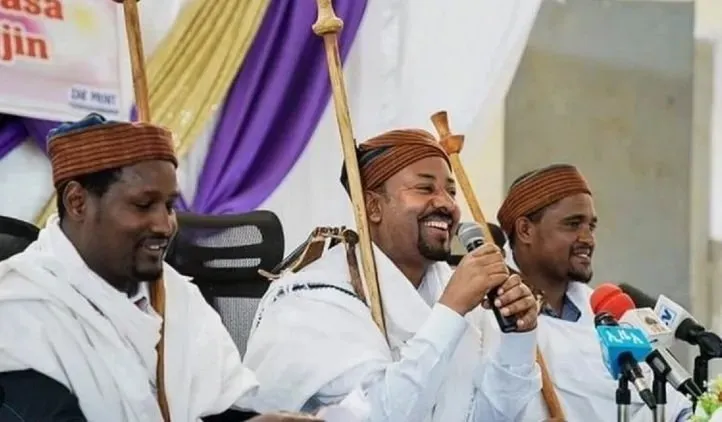
The political landscape unfolding in Ethiopia, particularly concerning the killing of Christian’s in the Oromo region, has been a source of deep concern and critical observation. A recurring theme in analyses of recent political maneuvering suggests that the underlying impetus for many struggles for influence is a primary drive for power and material gain, often overshadowing broader national or communal objectives and leading to prolonged instability.
During the period preceding the decline of the Tigray People’s Liberation Front (TPLF) government, the Oromo nationalist movement emerged with significant organizational strength. Their strategic positioning, notably bolstered by considerable external support—including financial and intelligence assistance from various foreign entities, with Egypt frequently cited—was largely perceived as focused on advancing Oromo self-determination. This objective was sometimes interpreted by critics as fundamentally challenging the existing Ethiopian state structure. Reports indicated that Egyptian intelligence agencies were actively involved in capacity building for various Oromo nationalist figures, organizing training sessions in Cairo for leaders and activists, including prominent figures such as Jawar Mohammed. This external engagement was widely understood to be part of a broader geopolitical strategy, particularly intensified following the Grand Ethiopian Renaissance Dam’s initiation, aimed at influencing regional power dynamics and potentially weakening the Ethiopian central government.
Initially, while both external and internal Oromo nationalist groups collaborated in efforts to undermine the TPLF, there was a strategic realization that a broader alliance with the Amhara political bloc offered a more decisive path to dislodge the TPLF from power. This pragmatic shift led to the temporary embrace of what was termed the “Oromo-Amhara” political coalition, a strategic alliance aimed at presenting a united front. Following this coordinated effort, the TPLF government was indeed compelled to relinquish power peacefully.
However, the post-TPLF era quickly devolved into internal struggles for political dominance and resource control within the Oromo political landscape, leading to significant fragmentation and internecine conflicts. As various Oromo factions vied for ascendancy, the initial unity dissolved, giving way to persistent infighting that continues to this day, leaving many groups weakened.
Conversely, Prime Minister Abiy Ahmed‘s ascent to power involved a strategic consolidation of his position. Leveraging a narrative of Ethiopian unity and national renewal, he sought to strengthen his administration in its contestation with both residual TPLF influence and rival Oromo groups. This approach allowed him to garner significant political and financial backing from both domestic and international stakeholders, appealing to a broad base of support, particularly within the Amhara community, effectively positioning himself against other Oromo political rivals.
In response, rival Oromo factions, including elements aligned with figures like Jawar Mohammed and certain Oromo Liberation Front (OLF) factions, allegedly engaged in a calculated political strategy. This involved orchestrating and exploiting tensions, including incidents of violence, abductions, and displacement targeting Amhara communities. The aim appeared to be to demonstrate the government’s perceived inability to protect its citizens, thereby fostering deep resentment among the Amhara population towards Abiy Ahmed’s administration and creating an irreconcilable rift. Concurrently, a deliberate campaign of incitement and propaganda was reportedly waged, portraying the Amhara community as historical adversaries of the Oromo people and accusing Abiy’s administration of aligning with these ‘enemies’ and opposing Oromo national aspirations. These tactics, coupled with the government’s inability to contain the violence, and sometimes organizing groups to attack Amharas, arguably contributed to a significant erosion of trust and support for Abiy Ahmed among a substantial segment of the Amhara populace, leading to widespread public discontent.
Under immense pressure to reassert his Oromo credentials and solidify his political base, Abiy Ahmed’s administration subsequently faced accusations of implementing policies that were perceived as detrimental to Amhara interests, further exacerbating the existing ethnic tensions. This complex interplay of political maneuvering has created a deeply fractured environment where the interests of Abiy’s administration and the Amhara community have become increasingly difficult to reconcile. This volatile situation has been further exploited by factions, including those associated with Jawar Mohammed and OLF-Shene, who continue to fuel contradictions, ensuring that the conflict remains active. Political actors are often observed shifting allegiances and offering superficial support, primarily to gain leverage and advance their own political dominance.
The tragic outcome of these relentless political and power struggles has been the immense suffering of the Ethiopian populace. Tens of thousands of Ethiopians across various communities have tragically lost their lives, and millions more have been forcibly displaced from their homes, facing dire humanitarian conditions and persistent hunger. Since Abiy Ahmed assumed power, the nation has grappled with an escalating humanitarian crisis that underscores the profound human cost of these protracted conflicts.
The humanitarian catastrophe unfolding in Ethiopia is reaching unprecedented levels. Millions have been violently uprooted from their ancestral lands, forced to abandon their homes, livelihoods, and communities. These internally displaced persons (IDPs) are now confronting acute food insecurity, with hunger becoming a daily struggle, particularly for vulnerable populations like women, children, and the elderly. Access to clean water, sanitation, and essential healthcare is severely compromised, leading to a surge in preventable diseases and a tragic loss of life.
Compounding this human tragedy is a rapidly deteriorating economic crisis. The sustained conflict has systematically dismantled the nation’s productive infrastructure, obliterating agricultural capacity and industrial output. This has, in turn, crippled domestic economic activity and driven away both local and international investors, who seek stability and predictability. Simultaneously, the drastic reduction in foreign aid, often a lifeline for developing nations, has exacerbated the financial strain. The government is now struggling to meet its basic obligations, drowning in insurmountable debt and unable to provide essential public services, pushing the entire nation to the brink of financial insolvency.
The trajectory is clear: Ethiopia stands perilously close to a full-scale state collapse. Such an outcome would not merely be an internal tragedy; it would ignite a ripple effect of profound instability across the entire Horn of Africa and beyond. A collapsed Ethiopia would unleash an uncontrollable wave of refugees, intensify regional conflicts, create fertile ground for extremist ideologies, and disrupt critical international trade routes. The idea that any nation could remain unaffected by such a catastrophic scenario is a dangerous illusion. The current destructive path must be abandoned immediately.
Therefore, it is imperative that all parties involved recognize the gravity of this moment and act with urgent responsibility. This escalating madness must cease without further delay. The preservation of Ethiopia, and by extension, the stability of the wider world, hinges on immediate, concerted efforts towards peace and reconstruction.
Editor’s Note : Views in the article do not necessarily reflect the views of borkena.com
__
Support Borkena : https://borkena.com/subscribe-borkena/
Borkena Ethiopian News Youtube Channel
Join our Telegram Channel : t.me/borkena
Like borkena on Facebook
To submit Press Release, send submission to info@borkena.com
Add your business to Ethiopian Business Listing / Ethiopian Business Directory
Join the conversation. Follow us on X (Formerly Twitter) @zborkena to get the latest Ethiopian News updates regularly.