
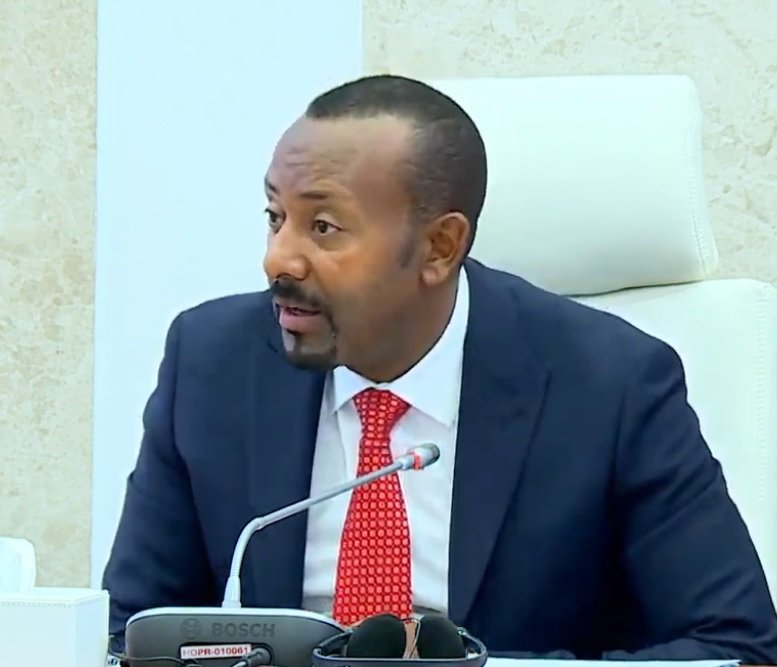
Mengistu Musie (Dr.)
The issue of Ethiopia’s access to the sea and the propaganda currently being orchestrated by Prime Minister Abiy Ahmed’s administration is now one of the most dominant and divisive topics in the country’s political discourse. The rhetoric surrounding the so-called “port question” is not new. It is a recycled narrative dating back to Colonel Mengistu Hailemariam’s military government. Like Mengistu, Abiy has weaponized the issue to inflame nationalist sentiment, distract from internal crises, and delegitimize dissenting voices.
In both cases, the “sea access” debate is a convenient tool for political manipulation. It is not a genuine foreign policy concern. Under Mengistu, rhetoric about reclaiming the Red Sea coast and “defending Ethiopia’s sovereignty” justified militarization, suppressed opposition, and rallied the public around the regime amid economic collapse and war. Abiy Ahmed’s government has revived this emotionally charged discourse at a time when the nation faces internal wars, widespread displacement, and severe economic hardship.
To fully grasp the current drama surrounding the port issue, it is necessary to examine the historical context and the ideological contradictions within Abiy Ahmed’s Prosperity Party. During the struggle against the former EPRDF/TPLF-led government, Abiy and many in his Oromo-centered circle openly supported Eritrea’s secession. They rejected the idea of Ethiopian unity espoused by unionist and pan-Ethiopian forces. At the time, those who advocated for Ethiopia’s territorial integrity were dismissed and vilified as “Amhara chauvinists.”
This background exposes deep hypocrisy in the current nationalist posturing. The same political actors who once celebrated Eritrea’s independence and condemned unionist Ethiopians for defending national unity now present themselves as defenders of Ethiopia’s sovereign right to access the sea. This abrupt reversal reveals that the “port question” is not rooted in a sincere national agenda. It is part of a desperate political strategy.
Abiy’s regime faces armed resistance from multiple fronts, especially in the Amhara and Oromia regions. The government is using the port narrative to reassert control and undermine the influence of nationalist movements such as Fano and other unity-oriented forces. By framing himself as the champion of Ethiopia’s geopolitical revival, Abiy seeks to consolidate waning public support, divert attention from government failures, and fracture the opposition.
Ultimately, the renewed “port propaganda” is less a strategic vision for Ethiopia’s future and more a survival tactic for a regime under pressure. It tries to transform legitimate domestic grievances into external ambitions. It replaces accountability with aggression and dialogue with distraction. Ethiopia’s real crisis lies not in its lack of access to the sea but in its leadership’s inability to build internal peace, justice, and national unity.
Historical Context: The Roots of the Port Issue
Ethiopia’s access to the sea has never been a mere question of geography. It has always carried profound political, economic, and symbolic significance. For centuries, access to the Red Sea represented Ethiopia’s lifeline to global trade and diplomacy. It was also a tangible expression of its sovereignty as one of Africa’s oldest and continuously independent states. Historically, Ethiopia’s connection to the sea was maintained through the ports of Massawa and Assab. Both were integral components of the Ethiopian state prior to Eritrea’s secession in 1993. These coastal territories not only facilitated commerce and military logistics but also embodied Ethiopia’s strategic relevance in the Horn of Africa and the wider Red Sea corridor.
The eventual loss of these ports cannot be understood in isolation. It was the result of a long chain of twentieth-century political miscalculations, colonial legacies, and international power dynamics. These forces reshaped the Horn of Africa. The Italian colonization of Eritrea in the late nineteenth century (beginning in 1890) severed Ethiopia’s traditional coastal link and set the stage for decades of geopolitical tension. After Italy’s defeat in World War II, Eritrea came under British military administration. This left its future status unresolved and opened the door to intense diplomatic debate.
When Eritrea was federated with Ethiopia in 1952, the decision was not the result of a local consensus. It was an outcome of United Nations Resolution 390 (A), which sought to balance competing interests. Western powers—particularly the United States and Britain—feared that an independent Eritrea might fall under Soviet influence or destabilize the region. Meanwhile, Ethiopia, under Emperor Haile Selassie, argued strongly for reunification on historical and cultural grounds. The federation was intended as a diplomatic compromise. Eritrea would retain autonomy under its own parliament, flag, and administration. However, it would remain united with Ethiopia under the Emperor’s sovereignty.
A central figure in achieving this outcome was Aklilu Habte-Wold. He was a brilliant diplomat, statesman, and one of Ethiopia’s postwar intellectual architects. As a World War II veteran and one of the founding representatives of Ethiopia at the newly formed United Nations, Aklilu played a crucial role in securing international support for Ethiopia’s claim to Eritrea. His efforts ensured that Ethiopia regained access to the Red Sea while ostensibly respecting Eritrea’s local autonomy. This arrangement was hailed at the time as both a victory of diplomacy and a model for postcolonial integration.
However, the federation’s promise was short-lived. By the late 1950s, Emperor Haile Selassie was under growing domestic pressure from conservative elements of the nobility and military. He began to erode the autonomy guaranteed to Eritrea under the federal constitution. His government gradually dismantled Eritrea’s independent institutions. He suspended its parliament, abolished its flag, and imposed Amharic as the official language. In 1962, the Emperor’s decision to unilaterally dissolve the federation and annex Eritrea as a province of Ethiopia proved catastrophic.
The annexation was driven in part by Haile Selassie’s centralizing instincts and the influence of powerful advisers such as Ras Kassa Hailu. It ignored both the letter and the spirit of the UN resolution that had established the federation. This act of political overreach—what many Eritreans viewed as a betrayal of the international covenant- sparked widespread resentment. It ultimately ignited the Eritrean armed struggle for independence, which would last for three decades. The Eritrean Liberation Front (ELF) and later the Eritrean People’s Liberation Front (EPLF) drew strength from this perceived injustice. They framed their cause as a liberation movement against imperial domination.
Thus, Ethiopia’s eventual loss of its coastline in 1993, when Eritrea gained internationally recognized independence, was not an inevitable outcome of geography. It was the culmination of decades of political mismanagement, broken agreements, and mutual mistrust. What began as a carefully crafted diplomatic compromise in 1952 devolved into one of the most protracted and devastating conflicts in modern African history.
The historical lesson is clear: Ethiopia’s access to the sea was not only an economic necessity but a symbolic expression of national integrity. This was compromised by short-sighted policies and a failure to respect federal principles. Understanding this history is essential to contextualizing the current “port question” debate. It reminds us that the issue is not simply about reclaiming lost geography but about confronting the political failures and historical wounds that fractured Ethiopia’s unity in the first place.
The Role of the OPDO and the Hypocrisy of the Present
To understand Prime Minister Abiy Ahmed’s current rhetoric about Ethiopia’s access to the sea, examine the ideological origins of his political organization. Abiy’s movement is not an isolated phenomenon; it is the direct successor of the Oromo People’s Democratic Organization (OPDO)—later the Oromo Prosperity Party (OPP)—which was formerly a key member of the Ethiopian People’s Revolutionary Democratic Front (EPRDF).
The EPRDF was formed in the late 1980s under the Tigray People’s Liberation Front (TPLF). It was a coalition of ethno-nationalist parties that represented different regions and identities. This included the OPDO for the Oromo, the ANDM for the Amhara, and the SEPDM for the Southern Nations. When the EPRDF overthrew the Derg regime in 1991, it inherited a fragmented nation scarred by war and repression. Instead of pursuing national reconciliation or democratic unity, the new rulers embraced ethnic federalism. This approach institutionalized divisions along identity lines.
During this transitional period, Eritrea’s status became a key issue. The EPRDF leadership was heavily influenced by the TPLF’s alignment with the Eritrean People’s Liberation Front (EPLF). They endorsed Eritrea’s right to secede unconditionally. The decision was justified with the principle of “self-determination,” rooted in Marxist-Leninist liberation theory. In practice, they applied this principle without regard for Ethiopia’s long-term strategic, economic, or national interests.
In 1993, a UN-organized referendum led to Eritrea’s formal independence. Eritrea took the ports of Assab and Massawa—Ethiopia’s only direct access to the Red Sea. The EPRDF government, including the OPDO, accepted this outcome. They did not demand any negotiated settlement on maritime use, customs arrangements, or compensation. As a result, Ethiopia—one of the world’s oldest sovereign states—became landlocked overnight due to its own ruling coalition’s decision.
At the time, opposing this policy was rare and risky. Only a few independent intellectuals and nationalist voices challenged the prevailing orthodoxy. Professor Asrat Woldeyes, founder of the All-Amhara People’s Organization (AAPO) and a respected physician and patriot, was outspoken. He warned against the long-term consequences of unconditional secession. He argued Ethiopia should negotiate terms with the emerging Eritrean state, especially regarding shared use of ports, economic ties, and regional security.
Members of the Ethiopian People’s Revolutionary Party (EPRP) voiced similar concerns. They argued that accepting Eritrea’s secession without conditions would weaken Ethiopia’s economy. They also warned it would create future geopolitical instability in the Horn of Africa. The EPRP foresaw that the same political forces celebrating separation might exploit nationalism for political gain in the future. This warning has now come to pass.
These warnings were ignored and often met with repression. The EPRDF dismissed critics as “chauvinists” or “reactionaries.” They portrayed any defense of Ethiopian territorial integrity as Amhara nationalism. Ironically, Prime Minister Abiy Ahmed’s administration now uses similar language. It accuses critics of his own policies of being “anti-Ethiopia” or “agents of division.”
Today, the same political lineage that once celebrated Eritrea’s independence now claims to defend Ethiopia’s maritime rights. This shift does not reflect ideological growth but political opportunism. Abiy Ahmed and his Oromo Prosperity Party now invoke nationalism as a tool. They use it to consolidate power, distract from crises, and suppress opposition—mainly from the Amhara region and unity-oriented movements.
This contradiction lies at the heart of today’s “port question.” Abiy’s talk of national sovereignty runs counter to the historical stance of his political roots. The OPDO and EPRDF played a key role in breaking Ethiopia’s territorial continuity. Their failure to foresee the results of unconditional secession still haunts the country’s geopolitical standing.
Abiy’s new nationalism rings hollow. It is less an act of patriotism and more a strategic rebranding. He tries to rewrite history and present his administration as Ethiopia’s savior. This approach rallies the public around a cause and masks the government’s role in losing Red Sea access.
The Double Standard and the Manipulation of Nationalism
The double standard is glaring. Abiy Ahmed’s government, which has for years undermined the very symbols of Ethiopian nationhood—the flag, the language, and the shared historical identity—now waves those same symbols as tools of manipulation. His administration and its cadres within the Prosperity Party attempt to portray any opposition to their policies as “anti-national” or “foreign influenced.”
But let us recall that these are the same forces that once labeled the Ethiopian state as an “imperial relic.” These are the same circles that resisted the Amharic language as a unifying national medium, despised the tricolor flag, and accused Ethiopia’s founders of being colonialists. Their sudden conversion to ultra-nationalism is not born of conviction but of convenience—a desperate political maneuver to consolidate power at a time of growing disillusionment and domestic crisis.
The so-called “port issue” is not primarily about access to the sea. It is about power, distraction, and political theater. By raising the question of a port in such a provocative and militaristic manner, Abiy Ahmed seeks to redirect public attention away from internal failure, economic collapse, inflation, corruption, human rights violations, and political instability. In a classic authoritarian playbook, externalizing the crisis is a way to unify the people against a perceived external enemy, thereby silencing internal dissent.
Abiy Ahmed’s Rise and the Disillusionment of Hope
When Abiy Ahmed came to power in 2018, he inspired remarkable optimism within Ethiopia and abroad. Ethiopians across regions and backgrounds saw him as a long-awaited symbol of renewal, a young, energetic reformer who promised peace, reconciliation, and unity. His early appeals to love, forgiveness, and cooperation resonated deeply with a population weary from decades of repression, ethnic strife, and stagnation.
At first, Abiy’s reforms seemed genuine. One of his earliest and most praised moves was his outreach to Eritrean President Isaias Afwerki, which led to the Joint Declaration of Peace and Friendship in July 2018. This agreement ended two decades of hostility between Ethiopia and Eritrea after the 1998–2000 border war. The world lauded Abiy as a statesman and peacemaker. His diplomatic success earned him the 2019 Nobel Peace Prize, symbolizing global admiration and high hopes for Ethiopia’s future.
However, Abiy Ahmed’s image as a reformer soon faded. His outreach to Eritrea appeared less like true reconciliation and more like a strategic alliance to consolidate power. The partnership with Isaias Afwerki became a calculated maneuver. This was clear when Eritrean troops joined Ethiopian forces against the Tigray People’s Liberation Front in November 2020. The same leaders who were once praised for peace now presided over a devastating war marked by atrocities, famine, and displacement.
For many Ethiopians, the Nobel Prize — once a beacon of hope — became a symbol of betrayal. The award, meant to honor reconciliation, showed how quickly ideals can become tools for political gain. Instead of dismantling authoritarianism and division, Abiy’s government perpetuated them and, at times, deepened them. Under the banner of “national unity,” dissent was suppressed, opposition imprisoned, and state violence escalated in several regions, including Oromia and Amhara.
Throughout Ethiopia’s recent history — from the Derg regime to the EPRDF and now the Prosperity Party — impunity has defined governance. Crimes by consecutive regimes have neither been acknowledged nor prosecuted. Without truth and transitional justice, Ethiopians still bear unaddressed trauma. The lack of accountability fuels cycles of violence and erodes trust in democracy.
A democratic Ethiopia cannot be built on denial or selective justice. The country needs a genuine transitional process rooted in truth-telling, justice, and reform. All communities, including those long marginalized, must help shape a shared national vision. Despite appeals from civil society and outside observers, the government continues to resist. Instead of dialogue and reconciliation, it pursues control and exclusion, deepening rather than healing divisions.
Until Ethiopia faces its past and commits to true transitional justice, no reform — no matter how polished — will bring lasting peace or democracy. Abiy Ahmed’s rise and swift decline serve as a cautionary tale: charisma and rhetoric, without conviction and accountability, can mislead a nation and the world.
The War Drum and Its Historical Futility
The recent rhetoric of a so-called “war for a port” echoes the failed militarism that has repeatedly plagued Ethiopia’s history. Mengistu Hailemariam, the military dictator of the Derg regime, did the same. He invoked nationalism and the notion of existential threats to justify brutal campaigns and consolidate power. His wars targeted Eritrean rebels, insurgent groups, and internal dissenters. These wars were devastatingly costly in human lives and national resources. Ultimately, they achieved little strategic value. The hundreds of thousands of lives lost, the economic collapse, and the international isolation that followed should have stood as a permanent cautionary lesson for Ethiopian leaders. War does not produce national pride or security; it produces national tragedy.
Yet, under Abiy Ahmed, Ethiopia appears at risk of repeating earlier missteps. His speeches, which emphasize Ethiopia’s “right” to sea access and imply it will be pursued “by any means necessary,” appear to prioritize domestic sentiment over diplomatic engagement. These statements may encourage nationalist feelings rather than facilitate reasoned discussion or multilateral negotiation.
Today, war in the Horn of Africa is much more complex than past battles for territory or resources. It now operates within a dense web of regional alliances, international economic and security interests, and deep humanitarian stakes. Any miscalculation risks a cascade of violence that could engulf not just Ethiopia but the whole region. Neighboring states, foreign powers, and millions of civilians could be drawn in and placed in peril. The stakes are no longer simply national; they are regional and global. This demands caution, foresight, and above all, a commitment to dialogue over escalation.
Ethiopians might consider drawing lessons from Aklilu Habtewold’s emphasis on careful diplomacy rather than Mengistu Hailemariam’s reliance on militaristic approaches—an approach that was costly for the nation in many ways. While Aklilu advocated for negotiation, strategic alliances, and measured engagement with international partners, Mengistu’s era was marked by aggressive, high-risk military campaigns that often-prioritized immediate concerns over long-term national interest. History shows that diplomacy, though slower and less conspicuous than war, better preserves the country’s sovereignty, resources, and human capital, whereas militarism often brings significant setbacks.
The Only Viable Path: Diplomacy and Regional Integration
If Ethiopia’s long history with Eritrea teaches anything, it is that only patient, strategic, and genuine diplomacy brings lasting solutions. The post–World War II efforts of Ethiopian statesmen like Aklilu Habtewold, Wolde Giorgis Wolde Yohannes, and Dr. Menale Haile demonstrate that measured negotiation can restore territorial integrity and mutual respect without bloodshed.
Through diplomacy, Ethiopia regained Eritrea’s federation after World War II, legitimized by the United Nations. These leaders relied on intellect, law, and international consensus, not reckless militarism or populist grandstanding, to achieve what weapons could not.
The same approach is needed today, not only to resolve the port question but to reshape the entire Horn of Africa into a community of cooperation rather than conflict. The region’s challenges—poverty, climate change, terrorism, and underdevelopment —cannot be solved by war or territorial claims. They can only be addressed through collective economic planning, shared infrastructure, and peaceful coexistence.
Ethiopia, as the largest and historically most influential country in the region, has both the moral duty and the strategic interest to lead this process—not through coercion, but through persuasion and partnership. Now is the time for Ethiopia to champion renewed dialogue, propose regional forums for cooperation, and invite all Horn of Africa nations to commit to collective problem-solving for lasting peace and prosperity.
The Deeper Problem: Ethno-Nationalism as a Political Disease
Ethiopia’s recurring crisis stems from ideology, not geography. The ethno-nationalist framework dominating politics fragments people into tribal blocks, each with distinct symbols and grievances. It erases the shared history that made Ethiopia unique—a nation that resisted colonialism, preserved sovereignty, and inspired African independence.
Abiy Ahmed’s party, despite “Prosperity” rhetoric, remains trapped in this divisive paradigm. The OPP is essentially a coalition of ethnic interests posing as a national party. Its policies often favor one group over unity, and its discourse shifts between superficial pan-Ethiopians and subtle ethnocentrism.
This ideological confusion keeps the regime from articulating a consistent foreign or internal vision. One day it promotes “Ethiopian unity:” the next, ethnic autonomy. One day it flies the Ethiopian flag; the next, it enables groups that insult it. Such a contradiction erodes national integrity and credibility.
Eritrea and Ethiopia: Beyond Blame, Toward Maturity
The Ethiopia-Eritrea relationship cannot be anchored in nostalgia for lingering resentment. Eritrea is today a sovereign nation, shaped by decades of historical suffering and political miscalculations—first under the monarchy, then under the militaristic regime of Mengistu Hailemariam, and finally through the agency of secessionist forces that determined its fate, such as TPLF. Any hope of re-annexation is both unrealistic and strategically counterproductive. Ethiopia’s future lies not in reviving old claims, but in pursuing structured, pragmatic cooperation—through shared port access, trade agreements, and mutually beneficial security arrangements.
A stable and peaceful Horn of Africa offers far greater rewards than the pursuit of imagined victories through conflict. Eritrea’s ports could serve as vital economic gateways, not only for Ethiopia but also for South Sudan and Sudan, transforming the Red Sea corridor into a hub of African commerce and connectivity. Conversely, Ethiopia’s industrial capacity and expansive domestic market could provide lifelines for Eritrean and regional development, fostering interdependence rather than antagonism.
This is the approach of visionary statesmanship: prioritizing coexistence, shared prosperity, and regional integration over revenge, expansionism, or short-term nationalist posturing. True national strength is measured not by the ability to wage war, but by the capacity to create durable partnerships that enhance security, economic growth, and stability for all.
The Way Forward: Reclaiming Ethiopia’s Dignity Through Peace
True patriotism is not measured by the volume of war drums, but by the commitment to safeguard the nation’s long-term future. The current rhetoric surrounding the so-called “port issue” is more than political posturing; it is a test of Ethiopia’s national maturity. Ethiopians face a profound choice: will another generation be sacrificed on the altar of pride and nationalism, or will the country embrace a path of coexistence, peace, and dignity with its neighbors?
Abiy Ahmed’s militaristic rhetoric may temporarily ignite emotion and rally domestic support, but it cannot address the pressing realities confronting the nation. It will not feed the hungry, rebuild the economy, restore public trust, or mend fractured social and political bonds. The challenges of modern Ethiopia require careful diplomacy, meaningful reform, and transparent, accountable leadership. Only through these measures can Ethiopia recover its reputation — not as a reckless, confrontational state, but as a principled actor that leads by moral and strategic example in the region.
A deeper structural problem lies in the constitution that Abiy Ahmed and his political organization, first the OPDO and now the Prosperity Party (OPP), continue to uphold. Article 39, which grants the right to secession along ethnic lines, remains enshrined, perpetuating Ethiopia’s ethnic federalist framework. This system, initially drafted and promoted by the TPLF, OPDO, and OLF, has contributed to ethnic fragmentation, political instability, and Ethiopia’s landlocked status, creating the very conditions that fuel disputes over port access. By clinging to a constitution that entrenches division, the leadership prioritizes ideological attachment over national cohesion and practical solutions.
If Ethiopia is to avoid repeating past mistakes, it is imperative to confront these structural flaws. True national security is not achieved through aggressive posturing or warmongering, but through constitutional reform, inclusive governance, and a shared vision for the country’s future. Discarding a constitution that undermines unity and sovereignty is not just a legal necessity; it is a moral imperative for any leadership genuinely committed to Ethiopia’s long-term survival and prosperity.
Conclusion: The False Prophet of Nationalism
Abiy Ahmed’s propaganda exposes a deeper crisis in Ethiopian politics—the use of patriotism for personal gain. His party’s actions contradict its words; his policies betray his promises. The champion of peace now stokes war; the advocate of unity now divides.
History moves at its own pace. Truth, though delayed, prevails. Ethiopia’s greatness never depended on its loudest demagogues. It relied on its people—farmers, scholars, workers, patriots—who serve quietly, refuse propaganda, and know Ethiopia’s strength comes from conscience, not conquest.
The port question is not about geography, but morality. Will Ethiopia choose wisdom or arrogance, diplomacy or destruction, truth or propaganda? The answer shapes not only Ethiopia’s future, but also peace in the Horn of Africa.
The writer can be reached at : Mmusie2@gmail.com
Editor’s Note : Views in the article do not necessarily reflect the views of borkena.com
__
Support Borkena : https://borkena.com/subscribe-borkena/
Borkena Ethiopian News Youtube Channel
Join our Telegram Channel : t.me/borkena
Like borkena on Facebook
To submit Press Release, send submission to info@borkena.com
Add your business to Ethiopian Business Listing / Ethiopian Business Directory
Join the conversation. Follow us on X (Formerly Twitter) @zborkena to get the latest Ethiopian News updates regularly.
1). Eritrea & Propaganda: Play victim/cry foul, intimidate/demonize/destabilize Ethiopia. Look at Ethiopia’s efforts for peaceful Red Sea access: youtu.be/esedLTkujB0?t=338
2). Eritrea’s Secession [1993]: Ethiopia didn’t ratify that. TPLF’s Meles, EPLF’s Isayas, and UN’s Boutros-Gali [Egyptian] did & fast-tracked Eritrea’s membership in AU/UN.
3). Eritrea destabilizes the Horn of Africa: No sooner had Eritrea declared independence [1993] than invaded Sudan, Ethiopia, Djibouti, and even Yemen [The Hanish Islands].
4). Eritreans & “The Stockholm Syndrome”: Under Italian Occupiers [≈1896 to ≈1945], Eritreans were limited to Grade-4, denied dawn-to-dusk street access, etc. Yet, Eritreans adore them & demonize the Ethiopians who showered them with equality, education, etc.
5). Ethio-Eritrea Remedy: Right the Wrongs committed by Egypt’s Thugs [EPLF/TPLF] against Ethiopia. ALL the 1990s TPLF-EPLF Anti-Ethiopia Treaties should be Null-and-Void! Eritrea MUST start with handing over Ethiopia’s Affar Red Sea Coast [ARSC].
6). ARSC [South of Massawa to North of Djibouti]: ARSC is the Ethiopian Affars’ homeland since the dawn of time. It has never been part of Eritrea/Bahirè-Nègash!
7). Bahirè-Nègash | Eritrea: Italy snatched Ethiopia’s Bahirè-Nègash [1st Italo-Ethiopian War (1895-1896)], renamed it ‘Eritrea’, and occupied it till the end of WW-II [1945].
8). Eritrea [Ethiopia] vs. Alsace-Lorraine [France]: When WW-II ended, the Axis Powers surrendered to the Allied Powers and the Italians in Eritrea surrendered to the British. The Allied returned most Axis-occupied land to former owners. So, German-occupied Alsace-Lorraine went back to France. Alas, Britain didn’t hand back Eritrea to Ethiopia.
9). ARSC | Derg [1974-1991] | EPLF-TPLF: Under Derg, the ARSC was “The Affar Autonomous Administrative Region.” In 1991, Egypt’s Proxy Secessionist [EPLF & TPLF] invaded-and-occupied Ethiopia. In 1993, Eritrea officially annexed the ARSC.
10). Land-Locking Ethiopia: TPLF & EPLF were co-ruling Ethiopia [1991-1998]! EPLF concocted the “Eritrean Affars & Ethiopian Affars” crap and land-locked Ethiopia.
11). Lest We Forget: Eritrea has mostly been serving Ethiopia’s Enemies as proxy/spring board/breeding ground or accomplice combatant [ youtu.be/Yk-_YFJwDH4 ]. Egypt’s EPLF & ELF have also been poisoning Eritreans with anti-Ethiopia venom for ≥50 years.