
By: Habte H.
Participation vs. Bulldozer Politics
Community participation is not a slogan – it is the foundation that keeps public projects standing after the ribbon-cutting crews go home. In Ethiopia, where neighbourhood bonds run through iddirs, equb, mahiber, and elders’ councils, any “development” that side-lines people are treated like fool’s gold: denied, neglected, or dismantled when tempers – or times – change. The Prosperity Party (PP) has forgotten this rule. Nowhere is that amnesia clearer than in its corridor drive: glossy makeovers and road widenings rolled out with bulldozers first, consent later.
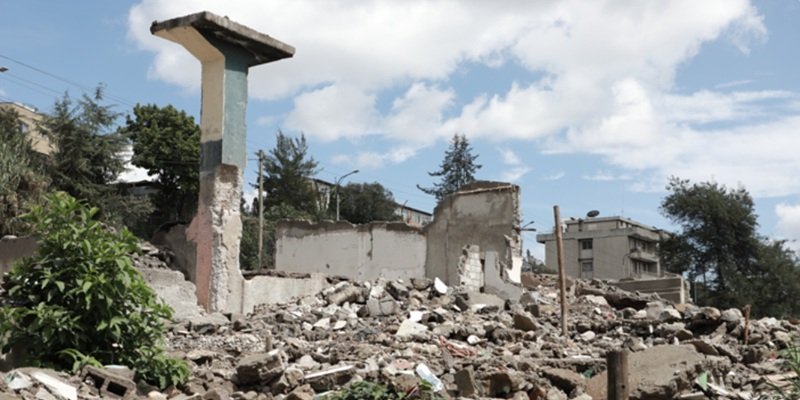
In April–May 2025, Amnesty International urged the federal government to pause the Corridor Development Project (CDP), reporting forced evictions in at least 58 cities and calling for a human-rights impact assessment, fair compensation, and safeguards that meet international standards. Residents, Amnesty said, were expelled without genuine consultation or adequate notice – protections required under human-rights law. That is not participation; it is dispossession by decree.
Consequences of Excluding Communities
Excluding residents from planning has bred predictable backlash. A 2023 Ethiopian Urban Studies Institute study found that 67% of affected residents felt “completely excluded” from planning, while 54% said they “extremely hate” the projects, seeing them as elite impositions rather than communal progress. The PP may read the new pavement as success; many residents see the theft of the place. Ethiopia’s history offers the same lesson: projects imposed without local buy-in – like the Derg’s forced villagization – collapse amid resistance. Today, social media intensifies the blowback and hardens identities. If genuinely free elections were held, this governance style would invite punishment at the polls. By sidelining people, the PP risks not just project failure but political backlash that could define its legacy.
Showcasing Is Not Statecraft
The stock defense is familiar: Ethiopia must “showcase” progress to attract investment and join the high-tech future. But showcasing is not statecraft. When a government clears spaces where people live, work, and remember – sports clubs, historic alleys, informal markets – it also clears away the trust that holds a city together. Symbols matter. Threatening century-old community spaces tells residents exactly where they rank in the development pecking order. A government can widen roads and still narrow its legitimacy.
Call the approach what it is: legibility from above. Draw a straight line on a map, label it “corridor,” then force reality to conform. In this vision, citizens are obstacles to be moved, not partners to be heard. Yet every credible standard of good practice says the opposite. Real development starts with people: early disclosure; genuine design alternatives; fair compensation and livelihood restoration; culturally sensitive site protection; independent grievance redress; public monitoring; and community-benefit agreements. These are not “Western niceties.” They are guardrails that save money, prevent conflict, protect heritage, and build durable assets. Ignore them, and the bill arrives later – delays, court fights, reputational damage, heavier security, and a frayed social contract.
The Real Cost of Skipping Consent
The PP confuses construction with consent. You can pave a boulevard in months; you cannot pave over distrust. A city is not just concrete and glass – it is relationships and routines: vendors staking out a corner at dawn; elders convening under a tree older than any ministry; youth football on a dusty lot that may not be “productive” to an investor but is priceless to a neighborhood. Sever those threads and you do not modernize Ethiopia; you unweave it.
Meanwhile, the party is burning political capital it cannot spare. Each eviction without due process is a ledger entry against the PP. Even citizens who like tidier roads and parks see the double standard: showcase for the few, shock for the many. If electoral competition recovers, this governance style will be judged long before the paint dries on the next “transformational” project.
A Practical Course Correction
The remedy is straightforward. Pause the CDP where rights violations are alleged. Restore what can be restored; compensate fairly where losses are irreversible. Publish plans, budgets, and timelines in plain language. Hold kebele-level forums at concept stage. Present at least two route or design options and show what changed because people spoke. Protect heritage and sacred sites identified by communities – at the design table, not after demolition notices. Guarantee independent grievance mechanisms empowered to halt harm and deliver remedies on a public clock. Share value locally through jobs, small-supplier quotas, and community funds tied to corridor-driven land-value gains. These are not concessions; they are the price of legitimacy and the basis of pride.
None of this asks Ethiopia to abandon ambition. It asks the PP to abandon the illusion that a nation can be renovated like a lobby – by clearing out the old and ushering in the new under deadline. Development without consent is the demolition of consent. If the ruling party wants its projects to last, it must trade the bulldozer mindset for a covenant with citizens: nothing about a community without the community. Until then, the “corridor” will remain what it feels like to those pushed aside: a fast lane for the connected and a dead end for everyone else.
Editor’s Note : Views in the article do not necessarily reflect the views of borkena.com
__
Support Borkena : https://borkena.com/subscribe-borkena/
Borkena Ethiopian News Youtube Channel
Join our Telegram Channel : t.me/borkena
Like borkena on Facebook
To submit Press Release, send submission to info@borkena.com
Add your business to Ethiopian Business Listing / Ethiopian Business Directory
Join the conversation. Follow us on X (Formerly Twitter) @zborkena to get the latest Ethiopian News updates regularly.
I admire your writing skills, but the city’s projects have been completed by all means , unless The soul of city Addis asks us its eulogy .