
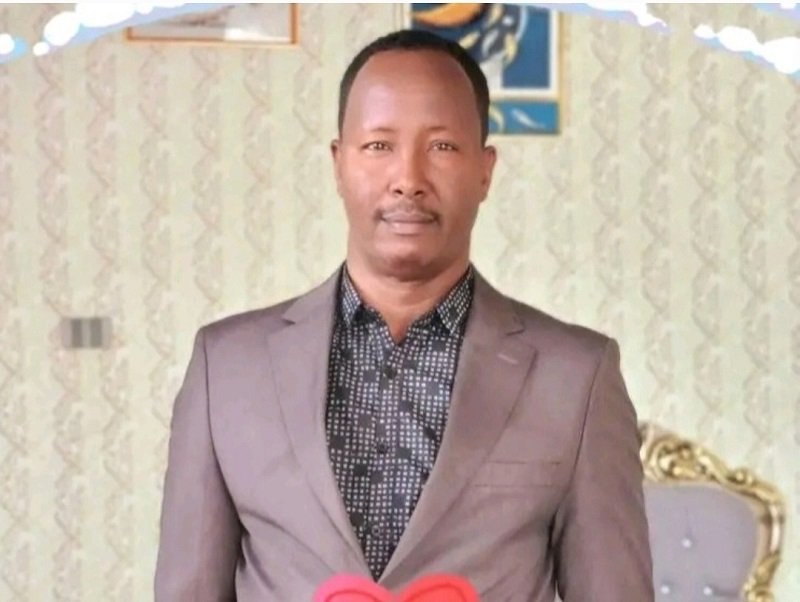
By: Mohammed Hassen Mohamed (Xareed)
Introduction
Ethiopia, a land revered for its ancient civilization and rich cultural mosaic, is today witnessing a wave of internal ethnical uprisings that have shaken its political foundation and social conscience. What once began as regional grievances has evolved into a nationwide reckoning with identity, justice, and power. In an era dominated by social media, these events no longer remain confined to distant villages — they unfold live before the “social naked-eye” of millions of Ethiopians.
The question now reverberates across digital platforms and households alike: Are these uprisings exaggerated, underestimated, or do they reveal something peculiarly transformative happening beneath Ethiopia’s social fabric?
The Dynamics Behind the Internal Ethnic Uprisings
The roots of Ethiopia’s current internal uprisings are both historical and systemic. Decades of ethnic-based politics and uneven development have bred grievances that transcend generations. The country’s experiment with ethnic federalism, designed to ensure equality and autonomy, has paradoxically deepened divisions. Political representation became synonymous with ethnic identity, and administrative borders turned into ideological battlefields.
In several regions — Oromia, Amhara, Somali, Benishangul-Gumuz, and others — disputes over land, local governance, and resource ownership have escalated into violent confrontations. Each outbreak is more than a local conflict; it is a reflection of deeper questions of legitimacy, justice, and national identity.
But these uprisings are far from uniform in their motives. Some analysts attribute them to groups seeking justice and political balance, arguing that long-marginalized communities are demanding equal participation and dignity. Others, however, describe a darker motive: certain factions driven by a lust for power, nostalgic for past dominance. These groups, critics say, are unwilling to accept that Ethiopia’s political order has evolved — that the era of overpowering and controlling other ethnicities has ended and will never return.
This tension between justice-seekers and power-chasers defines the volatile character of Ethiopia’s ethical unrest today.
The Social “Naked-Eye”: Ethiopia Watches Itself
The emergence of social media has radically transformed the way Ethiopians experience their own history. In real time, citizens are exposed to the raw and often brutal realities of violence, displacement, and fear. The “social naked-eye” — a metaphor for this unfiltered digital witnessing — has become a defining feature of Ethiopia’s modern crisis.
Platforms like Facebook, X (Twitter), and Telegram now serve as the nation’s collective conscience and courtroom. Videos, testimonies, and images spread within seconds, revealing scenes that would have once remained hidden. This exposure has had dual consequences:
- Awakening and Awareness:
Many Ethiopians have become more politically conscious and empathetic. The shared pain across ethnic lines has inspired young voices calling for peace, truth, and reconciliation. The digital era has made apathy impossible; everyone is a witness. - Division and Distortion:
Yet, social media has also become a weaponized arena. False information, edited footage, and emotionally charged propaganda inflame divisions. Algorithms favor outrage over accuracy, and truth becomes the first casualty of digital warfare.
Thus, Ethiopia’s digital awakening is both a blessing and a burden — it opens the nation’s eyes to its wounds while deepening the emotional scars that keep those wounds from healing.
Overreaction, Underestimation, or Something Peculiar?
The public debate now revolves around three interpretations of Ethiopia’s internal turmoil:
- Overreaction:
Some believe the chaos has been overblown by social media sensationalism. Local disputes, they argue, are amplified into national crises, creating panic and portraying the nation as perpetually unstable. The digital echo chamber can exaggerate fear far beyond reality. - Underestimation:
Others insist the crisis is underplayed by authorities and official media. Behind the scenes, entire communities are being displaced, and human suffering is deepening without adequate response. What is seen online may, in fact, represent only a fraction of what is happening on the ground. - Something Peculiar:
Yet, many observers sense something peculiarly transformative emerging — a national awakening disguised as chaos. Ethiopia appears to be undergoing a profound social shift: its citizens are confronting long-suppressed questions about identity, equality, and justice. This peculiarity lies not just in the conflicts themselves but in the collective consciousness being formed through them.
The uprisings are forcing Ethiopians to look at themselves without illusion — to question power, truth, and the meaning of unity in a multi-ethnic state.
Endless Movements Along the Borders: A Nation in Motion
The border regions, where one ethnic zone meets another, have become the most visible flashpoints of these movements. In places where cultural coexistence once flourished, suspicion and displacement now dominate. Families are uprooted, lives disrupted, and communities fractured.
Ethiopians, exposed to these images online, experience both sorrow and shock. For the first time, every citizen becomes an eyewitness to national fragmentation. The once-abstract concept of “regional conflict” has turned into personal, emotional reality.
These border conflicts are not merely physical struggles; they symbolize Ethiopia’s ongoing search for identity — a contest between memory and modernity, between justice and domination, between shared destiny and divided past.
Conclusion: Groundbreaking Insights and the Road Ahead
The dynamics of Ethiopia’s internal ethical uprisings are more than a sequence of violent episodes; they represent a deep moral and structural transformation. Through the lens of the public’s naked-eye and the amplifying power of social media, Ethiopians are now forced to confront both the visible flames of unrest and the invisible roots that feed them.
Groundbreaking Key Points:
- Ethiopia’s ethnic federalism has matured into a critical turning point — it must evolve toward justice, equality, and national cohesion rather than division.
- Social media has become the country’s mirror and magnifier, exposing truths while distorting perceptions — both a tool for awareness and a threat to peace.
- The uprisings carry mixed motives: some driven by genuine demands for fairness, others by outdated dreams of dominance and control.
- The “peculiarity” of this moment lies in Ethiopia’s awakening — a painful but necessary confrontation with its political and moral realities.
- National rebirth depends on digital responsibility and inter-ethnic empathy, transforming online outrage into constructive dialogue and collective healing.
Ethiopia’s fractured pulse beats loudly across the screens of its people. Whether this moment marks the collapse of unity or the rebirth of national consciousness depends on how Ethiopians choose to interpret and act upon what they now so clearly see.
In the glare of the digital naked-eye, denial is no longer possible. What remains is the challenge — and the hope — of rebuilding a nation that can embrace its diversity not as a weakness, but as its most enduring strength.
Mohamed Hassan Mohamed (Xareed), an MBA graduate of distinguished merit, is a seasoned academic and lecturer whose expertise spans scientific economic management, business information systems, human development, and a range of interdisciplinary domains. His intellectual contributions—marked by a fusion of advanced scholarly inquiry and strategic analysis—primarily explore the intricate dynamics of geoeconomic competition and regional conflict across the Horn of Africa. He can be reached at: Xareedmo45@gmail.com
Editor’s Note : Views in the article do not necessarily reflect the views of borkena.com
__
Support Borkena : https://borkena.com/subscribe-borkena/
Borkena Ethiopian News Youtube Channel
Join our Telegram Channel : t.me/borkena
Like borkena on Facebook
To submit Press Release, send submission to info@borkena.com
Add your business to Ethiopian Business Listing / Ethiopian Business Directory
Join the conversation. Follow us on X (Formerly Twitter) @zborkena to get the latest Ethiopian News updates regularly.
Right on Brother Mohamed Hassan Mohamed (Xareed), right on!!! Keep plugging away. Sooner if not later, it will stick.
Thank you for your article. keep up the good work.