
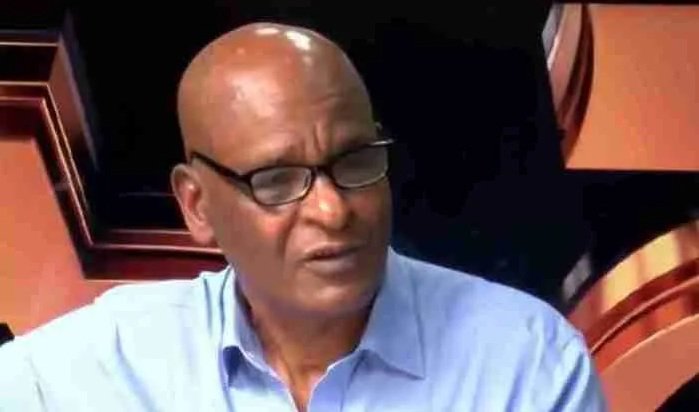
Ephrem Madebo
Liberalism is a political and ethical philosophy founded on core values such as the rule of law, justice, human rights, equality, liberty, and individualism. These ideals are regarded as universal, applying to everyone regardless of race, ethnicity, gender, or social and economic status. Originating during the Age of Enlightenment, liberalism is credited with challenging and replacing systems like hereditary privilege, state religion, absolute monarchy, the divine right of kings, and traditional conservatism, introducing principles such as representative democracy, legal equality, and the rule of law. Over the past 75 years, especially following World War II, liberal Western nations have consistently promoted principles such as justice, rule of law, liberty, human rights, and democracy. However, their dedication to these ideals has at times appeared selective, a point this article identifies as atypical and noteworthy.
The extent to which Western nations genuinely advocate for justice and democracy is often debated, even among Western scholars. While these countries frequently present such values as central to their identity and foreign policy, critics highlight historical and ongoing actions that sometimes contradict these ideals. Western political thought, rooted in the Enlightenment, emphasizes individual liberty, the rule of law, and democracy—principles that have shaped modern democratic systems. After World War II, the United States and its allies promoted democracy and economic development in Germany and Japan, helping transform them into stable, democratic societies. The Western concept of inherent human rights has also influenced international standards, such as those found in the UN Charter, and Western nations continue to support pro-democracy movements and human rights defenders around the world.
There is no doubt that after World War II, the United States and its allies played a major role in helping former adversaries like Germany and Japan achieve rapid economic recovery. However, their approach in Africa was quite different, where both economic development and democracy were lacking. Historically, Western nations have both supported and hindered liberty and democracy in Africa. While they provided aid and encouraged elections, their efforts were often inconsistent and motivated by self-interest. Critics argue that Western policies sometimes imposed a uniform model that failed to consider Africa’s unique circumstances. Additionally, the lingering effects of colonialism continue to shape African politics and complicate the establishment of stable, democratic governments.
Western countries have invested heavily in multilateral organizations that oversee elections and send observer missions to African nations. International groups supported by the West, such as Amnesty International, have regularly reported on human rights abuses in Africa, maintaining pressure on authoritarian governments. However, Western support for democracy has often been inconsistent, with backing for authoritarian or corrupt regimes when it suited strategic interests, especially during the Cold War. Critics argue that imposing a Western-style liberal democracy does not always align with Africa’s distinct cultural, historical, and social realities, and may disrupt indigenous governance systems—sometimes amounting to neocolonialism. In Africa, Western efforts have tended to prioritize elections over deeper institutional reforms, resulting in situations where multiparty elections are held but underlying institutions remain weak, and corruption persists. This has sometimes led to “illiberal democracies” lacking true accountability and transparency.
The last 75 years of history show that the liberal West has played very different roles in war-torn Europe compared to Africa. In countries like West Germany, the United Kingdom, France, and Japan, the US Marshall Plan helped finance rapid economic recovery. In contrast, the US also supported authoritarian leaders in Africa, such as Paul Biya in Cameroon, Yoweri Museveni in Uganda, Hissène Habré in Chad, and Mobutu Sese Seko in the Democratic Republic of Congo. This contrast highlights that the US and its allies have not only acted differently in various regions, but sometimes even within the same country, revealing a complex and often contradictory approach to foreign policy.
In November 2020, forces from the TPLF launched attacks on federal military posts in Tigray, resulting in the brutal killing of Ethiopian army personnel. This act of treason ignited the Tigray conflict and triggered a coordinated propaganda campaign against Ethiopia, led by the US & its allies, western liberal media and certain international institutions influenced by the West.
Here are the words of the then Assistant Secretary for African Affairs Tibor Nagy on the Tigray conflict: “I want to make it very clear that this is not about Tigray. There is no equivalency here. This is not two sovereign states fighting against each other. This is a faction of the government running a region in Ethiopia that has decided to undertake hostilities against the central government, and it has not – in my view – has had the effect that they thought that they were going to get” Tibor Nagy’s statement unequivocally indicates that the Ethiopian government was dragged into the Tigray conflict by the violent actions of the TPLF.
In July 2021, the TPLF declined a government-proposed ceasefire and advanced into the Afar and Amhara regions, where reports indicated attacks on civilians, destruction of property, and other serious abuses. The TPLF dismissed the ceasefire offer from the Ethiopian government, and their actions were met with little response from the US, its allies, or major western media outlets. This lack of reaction was interpreted by some as tacit approval. Throughout the two-year Tigray conflict, Western governments, prominent media organizations, and certain UN agencies were accused of exacerbating ethnic tensions in Ethiopia by supporting the TPLF’s confrontational stance. At times, proposals were even made for a transitional government for Ethiopia to be formed in Washington, DC.
The two-year Tigray conflict ended with the Pretoria Peace Agreement in November 2022. However, in July 2023, Prime Minister Abiy Ahmed’s government launched another large-scale military campaign against ethnic Amharas, which has now entered its third year. The ongoing war between federal forces and Amhara Fano fighters has resulted in significant civilian casualties, widespread destruction of schools, hospitals, places of worship, and residential areas, and has halted both agricultural and industrial production. Currently, more than five million children in the Amhara region are unable to attend school. Federal forces have reportedly used drones and heavy artillery, causing the deaths of mothers, children, and the elderly. Reports of gang rape, brutal killings, kidnappings, and looting have emerged as common tactics employed by the Ethiopian army in the region. Despite the severity of the crisis, Western media and governments—who closely followed and exposed war crimes during the Tigray conflict—have remained largely silent about the situation in the Amhara region.
Compared to the Tigray conflict, media coverage and advocacy regarding the situation in the Amhara region have been noticeably limited. While outlets like BBC and Al Jazeera have reported on the atrocities committed by the Ethiopian government, countries such as the US, UK, and Ireland—who repeatedly brought the Tigray crisis before the UN Security Council—have remained silent about the violence against ethnic Amharas by federal forces. This raises important questions: Why is there such a difference in response from Western governments and media between the suffering of Amharas and Tigrayans? Does the West truly stand for human rights, justice, and liberty in Ethiopia, or is there another agenda behind its actions in the name of democracy?
There have been numerous reports of atrocities and war crimes committed by forces loyal to Prime Minister Abiy Ahmed in the Amhara region. While many of these crimes remain uninvestigated, some particularly shocking incidents deserve attention, especially given the lack of coverage by Western media. One such case involves Ethiopian forces conducting house-to-house searches in an Amhara village, where they discovered a man hiding. After pulling him out, they shot him multiple times, and when he was dead, they beheaded him and reportedly played soccer with his head as his family watched in horror. In another incident, Ethiopian soldiers allegedly killed two captured female Fano fighters. The first, Balem Wasse, was wounded and taken alive, but her breast was severed and her body mutilated to remove a tattoo reading “Amhara,” leading to her death. The second, Tigest Wedajo, had her right breast severed and was left to die after being captured. These appalling acts occurred in the Gojam and Wello regions. There’s a very important issue that demands urgent attention here. Federal forces have reportedly committed severe crimes against captured female Fano fighters, while Fano forces are said to have treated prisoners from Abiy Ahmed’s forces in line with international standards and handed them to the International Red Cross.
Advocating for human rights and condemning atrocities in one region while ignoring similar issues elsewhere in the same country is a clear example of double standards. Double standards occur when groups with equal legal rights receive different levels of protection or are treated unequally. Such practices are widely regarded as unjust because they violate the fundamental legal principle that everyone should be equal before the law. Double standards often reveal hypocrisy, bias, or unfair behavior. The moral wrongness of double standards lies in the damage they cause to fairness, respect, trust, and ethical reasoning. For the past 75 years, the liberal West has acted immorally in Africa by supporting brutal dictators and armed groups that served its interests, while quietly allowing human rights abuses and civilian killings by siding with the perpetrators.
If the United States and its western allies truly stand by their stated principles and actions, they should openly condemn the ongoing war crimes and atrocities committed by Prime Minister Abiy Ahmed’s forces. They must also exert financial and diplomatic pressure on the Ethiopian government to immediately and unconditionally end the conflict against ethnic Amharas. Furthermore, the US and its allies should encourage the Ethiopian government to cease hostilities against its own citizens, engage in negotiations with all armed groups, and work towards achieving the peace and stability that Ethiopians have long desired.
The writer can be reached at : emadebo@gmail.com
Editor’s Note : Views in the article do not necessarily reflect the views of borkena.com
__
Support Borkena : https://borkena.com/subscribe-borkena/
Borkena Ethiopian News Youtube Channel
Join our Telegram Channel : t.me/borkena
Like borkena on Facebook
To submit Press Release, send submission to info@borkena.com
Add your business to Ethiopian Business Listing / Ethiopian Business Directory
Join the conversation. Follow us on X (Formerly Twitter) @zborkena to get the latest Ethiopian News updates regularly.
All war crimes against civilians and combatants from both sides should be condemned in particular with heavy magnitude to the ruling government . Diplomatic relations between TPLF and West is deep .TPLF had aguired many tentacles of NGO’s throughout its rules of Ethiopia. The fundamental issues Fano has not acquired a political philosophy which appeals to West political appetite nor to Ethiopians of Urban population. Horrifing Atrocities in rural Ethiopia’s war conflicts zones is common among combatants in both sides that is who are in emotional rage.We need to seek a peaceful solutions rather been a propagandist to score points
Welcome to the realpolitik. The concept of liberalism has been discredited. Most of the world (minus the 13% give or take westerns) had rejected liberalism. Look around what is happening in BRICS, Gaza, Africa and the global south.
Yes there is and has always been double standard you just are not awake to realize it.
Most of us know this and have moved towards a concept of sovereignty and self determination. The isms are not the answer to complex and nunanced societal challenges. Each civilization will need to determine what works best without someone else telling them what to do.
So stop crying to the so called failing collective west and build your own path. Then find partners who treat you as partners not as vassals. In other words open your mind to the multipolar world. Strategic autonomy and Self determination.
No more being a vassal of ባዕድ የምዕራባዊያን እኩይ ፍልስፍና።
ድል በኢትዮጵያ አባቶች አምሳል የተቀረጹት የዐማራ ፋኖዎች።
Exactly!!!