
By Ephrem B Hidug
The Legacy of War and the Politics of Geography
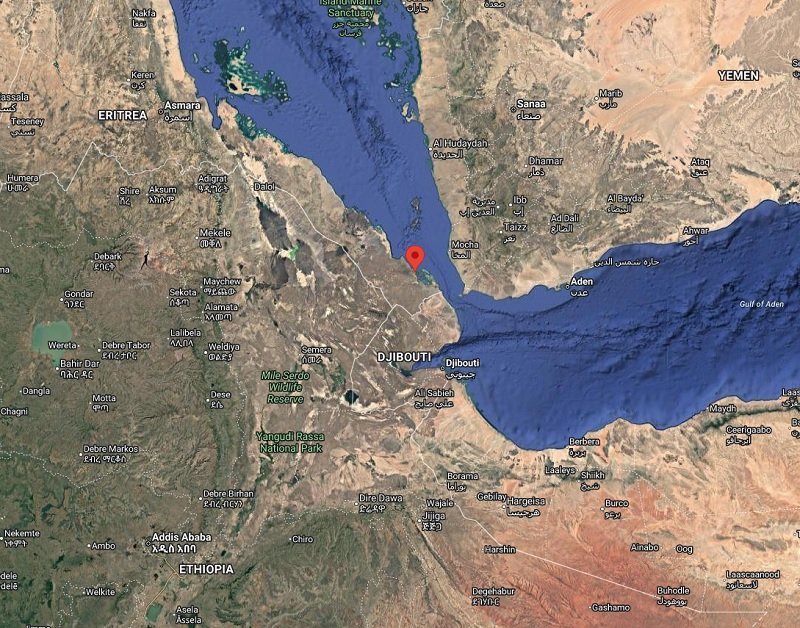
The Horn of Africa has long been a region where geography collides with politics, and few issues illustrate this tension more than Ethiopia’s enduring quest for maritime access. Since Eritrea’s independence in 1993 left Ethiopia landlocked, successive governments in Addis Ababa have wrestled with the strategic implications of relying on foreign ports to sustain trade, security, and economic growth.
Yet this is not merely a matter of logistics. The loss of access to the Red Sea remains a deeply emotional and politicized issue, particularly surrounding the ports of Assab and Massawa, which Ethiopia had used for decades before Eritrea’s secession. In political discourse, nostalgia for those ports often morphs into nationalist longing—a tendency that recent Ethiopian leaders have been increasingly willing to exploit.
The trauma of the Ethiopia-Eritrea war (1998–2000), which resulted in approximately 100,000 deaths, continues to shape how elites and citizens alike interpret questions of access, sovereignty, and national pride. Despite the 2000 Algiers Agreement, which mandated binding border arbitration, Ethiopia’s delay in implementing the Eritrea-Ethiopia Boundary Commission (EEBC) ruling only deepened distrust and entrenched hardline positions on both sides.
Against this backdrop, Prime Minister Abiy Ahmed’s recent rhetoric surrounding Ethiopia’s “historical right” to sea access must be interpreted with care. While the desire for reliable maritime connectivity is valid and strategically essential, the means by which it is pursued matter greatly— for Ethiopia, for the region, and for the rules-based international order.
This historical context is essential for understanding the contemporary dynamics driving Ethiopia’s maritime aspirations and the potential risks inherent in its current strategic direction. (Negash & Tronvoll, 2000)
The Precarious Path of Reconciliation
Prime Minister Abiy Ahmed’s ascent to power in 2018 initially appeared to herald a transformative era in Horn of Africa politics. The peace agreement with Eritrea, celebrated internationally as a breakthrough, suggested the possibility of transcending decades of hostility. However, this apparent détente proved remarkably short-lived. Multiple authoritative analyses indicate that President Isaias Afwerki strategically exploited the diplomatic opening primarily to secure relief from international sanctions, while the incoming Abiy administration pursued a foreign policy orientation that deliberately bypassed established diplomatic institutions and protocols (International Crisis Group, 2019). Prime Minister Abiy’s vigorous international campaign for removing sanctions against Eritrea ultimately contributed to their lifting, a development that regional experts argue enabled Eritrea to acquire military resources subsequently deployed in ways that further destabilized the Horn of Africa region (UN Security Council, 2018). Abiy Ahmed, viewed by some as inexperienced and emotionally driven, is believed to have been manipulated by Isaias, who saw an opportunity to use Ethiopia’s emerging leadership as a diplomatic Trojan horse.
The strategic alignment between Addis Ababa and Asmara appears to have been fundamentally motivated by their shared determination to marginalize the Tigray People’s Liberation Front (TPLF) from Ethiopia’s political landscape. This collaborative endeavor culminated in the catastrophic Tigray conflict, characterized by systematic atrocities and humanitarian suffering meticulously documented by multiple international human rights investigations (UN Human Rights Council, 2021). Evidence suggests that Eritrea effectively leveraged its privileged access to Ethiopian leadership to extract significant economic concessions and strategic advantages, while simultaneously strengthening its military capabilities through shared technology and intelligence (UN Security Council Final Report of the Somalia and Eritrea Monitoring Group, 2018). Furthermore, following the 2022 Pretoria Agreement that nominally ended the Tigray conflict, Eritrea appears to have recalibrated its strategy toward internal destabilization within Ethiopia, with mounting evidence indicating its active arming and training of militia groups operating in the Amhara region (Ethiopia Peace Observatory, 2023).
The Crisis of Governance and the Search for Legitimacy
Concurrently, Ethiopia has experienced a progressive erosion of state legitimacy driven by intersecting economic and political crises. The World Bank’s 2023 assessment highlighted particularly alarming economic indicators, including hyperinflation, critically depleted foreign reserves, and unsustainable public debt levels, all of which have substantially intensified popular discontent. Confronting this erosion of public confidence and facing increasingly organized political opposition, the Ethiopian government has increasingly resorted to nationalist mobilization as its primary strategy for consolidating support. This pattern represents a concerning trend toward leveraging external issues to deflect from mounting domestic challenges.
This strategic reorientation became particularly evident when Ethiopia’s leadership, having suffered significant diplomatic setbacks in various international forums, introduced its new maritime access initiative. The controversial Memorandum of Understanding with Somaliland— a territory whose sovereign status remains unrecognized by the international community— represented the most concrete manifestation of this new direction. The diplomatic initiative backfired spectacularly, provoking unified condemnation from the African Union, IGAD, and other international bodies for violating Somalia’s territorial integrity, thereby further deepening Ethiopia’s diplomatic isolation (African Union, 2024; IGAD, 2024).
The Legal Architecture of Maritime Rights
After the collapse of the MOU with Somaliland, the governments emerged with new narrative framing Ethiopia’s “historic right” to sea access as an existential imperative which demands careful legal scrutiny. This rhetoric systematically obscures crucial distinctions within international law and potentially elevates regional tensions to dangerous levels.
Ethiopia government officials, media and government affiliated elites are intentionally mix up Ethiopia’s right to access to the sea and became maritime state right to become maritime state with landlocked state’s rights to access the high seas for political mobilization and diversion of internal economic and security challenges. The narrative to confuse the public under the well-established framework of the United Nations Convention on the Law of the Sea (UNCLOS), coastal states exercise clearly defined sovereign rights over adjacent maritime zones, including territorial seas, contiguous zones, and exclusive economic zones. Ethiopia, as a landlocked country, falls outside these provisions, which explicitly apply only to states with recognized coastlines under Articles 2, 3, 33, and 55–77 of UNCLOS.
Ethiopia’s legal claim to coastal state status under historical rights arguments that collide with established principles of international law. The doctrine of uti possidetis juris, which preserves colonial administrative boundaries upon independence, unequivocally confirms Assab as Eritrean territory (Shaw, 2007). This legal reality was further reinforced by Ethiopia’s voluntary acceptance of the Algiers Agreement and the subsequent binding determinations of the Eritrea-Ethiopia Boundary Commission.
In contrast, UNCLOS Part X provides specific provisions guaranteeing landlocked states like Ethiopia legal rights of access to and from the sea, including freedom of transit through neighboring coastal states. These rights, codified in Articles 124–132, ensure non-discriminatory access for trade and maritime operations. However, these provisions establish rights of usage and transit rather than territorial ownership, creating what international legal scholars characterize as a form of legal servitude that requires negotiated cooperation with transit states rather than coercive demands.
Peaceful Mechanisms for Resolving Access Disputes
When landlocked states encounter resistance or intransigence from transit nations, international law provides multiple avenues for peaceful resolution beyond conventional bilateral diplomacy. States can initiate third-party mediation or seek binding adjudication through the International Court of Justice to enforce their transit rights. They can mobilize regional organizations like the African Union or global institutions like the United Nations to apply concerted diplomatic pressure. Additionally, they can design economic partnership frameworks that create mutual benefits, thereby incentivizing cooperative access arrangements.
The political assertion that peaceful mechanisms have been exhausted often represents strategic positioning rather than an accurate reflection of diplomatic reality. Genuine failure occurs only when states abandon the established international legal framework in favor of coercive threats, which inevitably produces regional instability and conflict.
The Ethiopian government’s rhetorical strategy appears to deliberately conflate the right to maritime access with the status of being a coastal state. These represent fundamentally distinct legal concepts with dramatically different implications. Coastal state status entails sovereignty over maritime territories, while access rights guarantee transit conditioned on mutual agreements with neighboring states.
The Human Cost of Strategic Miscalculation
From an analytical perspective, the current maritime initiative risks being interpreted not as a genuine patriotic project but as a calculated effort to manufacture national unity by directing public attention toward external challenges. This approach contains inherent dangers for regional stability and Ethiopia’s long-term interests.
Sustainable solutions to Ethiopia’s maritime needs cannot be found through territorial claims over coastal areas. The genuine path forward begins with resolving internal conflicts, reconstructing the national economy, and pursuing good-faith diplomatic engagement with neighboring states. While transit rights can be secured through persistent negotiation and confidence-building measures, the pursuit of sovereignty through coercion or military means inevitably leads to destructive conflict.
The populations of Ethiopia and the broader Horn of Africa region have already endured immense suffering from recent conflicts. There exists an urgent need to transcend appeals to historical grievance and instead demand a foreign policy grounded in legal principles and regional cooperation.
Any attempt to seize Assab through military force would necessitate the unilateral nullification of multiple internationally recognized treaties and constitute a flagrant violation of Eritrean sovereignty. Such arguments derive their appeal from political expediency rather than legal validity, serving primarily to divert attention from fundamental governance deficiencies.
A Call for Responsible Statecraft
As scholars, civil society actors, and advocates for sustainable peace, we must resist the temptation to embrace confrontational approaches that ultimately serve narrow elite interests at the expense of national stability and regional harmony. Ethiopia’s legitimate need for maritime access can only be securely achieved through unwavering commitment to international legal frameworks and constructive regional diplomacy. The alternative path—marked by coercive tactics and historical revisionism—promises only further instability and suffering for the people of the Horn of Africa. The choices made today will reverberate for generations, demanding wisdom, foresight, and steadfast commitment to peaceful resolution of disputes.
References:
∙ African Union. (2024). Statement on the Respect of the Sovereignty and Territorial Integrity of the Federal Republic of Somalia. [Peace and Security Council Communiqué].
∙ Ethiopia Peace Observatory. (2023). Update 14: Regional Conflict Dynamics and Militia Alliances in Northern Ethiopia. ∙ International Crisis Group. (2019). The Ethiopia-Eritrea Peace Deal: From Euphoria to Reality. Africa Report N°281. ∙ Negash, T., & Tronvoll, K. (2000). Brothers at War: Making Sense of the Eritrean-Ethiopian War. Oxford: James Currey. ∙ Shaw, M. N. (2007). International Law (6th ed.). Cambridge University Press.
∙ UN Human Rights Council. (2021). Report of the International Commission of Human Rights Experts on Ethiopia. ∙ UN Security Council. (2018). Final Report of the Somalia and Eritrea Monitoring Group.
∙ World Bank. (2023). Ethiopia Economic Update: Overcoming Macroeconomic and Structural Challenges to Foster Growth
About the Author:
Ephrem B Hidug is a scholar-practitioner with 20+ years in international law and diplomacy. He holds an LL.M. in International Dispute Resolution and an M.A. in International Relations.
Joseph Goebbels [Nazi Propagandist]: Repeat a lie often enough & it becomes the truth.
1). Claiming Ethiopia’s Own vs. Ethiopia’s Maritime Ambition: Ethiopia is just claiming what has been its own since the dawn of time, but annexed by EPLF/Eritrea in 1991/1993 with the complicity of TPLF/Tigray [Both are Egypt-funded/armed Secessionist Bandits].
2). Affar is Ethiopia’s Land & Sea Coast: Affar is Ethiopia’s Affars’ Red Sea Coast home land [from south of Massawa to north of Djibouti]. It was annexed by EPLF/Eritrea in 1991 when Egypt’s Proxy Secessionists [EPLF & TPLF] invaded-and-occupied Ethiopia.
3). West’s Travesty of Justice-1: Germany occupied France’s Alsace-Lorraine twice and forced to return it to France twice [≈1918 & ≈1945]. Eritrea was Ethiopia’s land occupied by Italy during the First Italo-Ethiopian War (≈1896) and stayed under Italy till ≈1945.
When WW-II ended [≈1945], the Italian Command in Eritrea surrendered to the British [Allied Powers] & handed Eritrea over to the British. Why didn’t the British/Allied return Eritrea to Ethiopia as the European Allied Command returned Alsace-Lorraine to France?
4). West’s Travesty of Justice-2: Djibouti is also another Ethiopian land never returned to Ethiopia. Ethiopia leased Djibouti to France for 99 years. France let Djibouti become an independent country rather than returning it to Ethiopia or renewing its lease on Djibouti.
5). Disingenuous Proposal [The Third Travesty of Justice]: Portraying Aseb/Affar as “Eritrean Sovereign Territory” & “Ethiopia’s Quest for Access to Red Sea via Aseb” as aggression on Eritrea’s Sovereignty is just the Third Travesty of Justice in the Series…
Treating the symptoms of a disease rather than focusing on the main causes and seek treatment is weak advocacy. Port of Assab and land of Danekel and its inhabitants denied the right of referendum to be part of Ethiopia. Eriteria a new nation which is dominated its state apparatus by ” Hamsanite ” ethnic clique was awarded illegally the whole coastal land
The issue is more complicated than a wish list. As an Ethiopian, I want coastal territory — but how? This is more complex than a daydream or a summary of history. A government in Ethiopia is using the issue to mobilize soldiers. Does it have any legal basis? Your wish is a good one. The issue remains: are you ready to go to battle and reclaim it, or will you stay on a webpage and ask others to die for nothing?