
Editor’s Note : Views in the article do not necessarily reflect the views of borkena.com
Amin Yasin
Updated on October 2, 2025 at 11:26 Toronto Time
This paper examines Ethiopia through the lens of the politics of persuasion and confusion. Ethiopia has long been marked by recurring and overlapping conflicts, rooted in deep economic, social, and political marginalization—especially of minorities and peripheral communities. Political elites have historically shifted between identity politics and civic politics, deploying each discourse strategically to maintain power.
The analysis focuses on Ethiopia’s claims over the Assab port, tracing their historical and geopolitical foundations in Afar territory under the Rahaita Sultanate. While Ethiopia invokes history, geography, and ethnicity to justify its claims, its access to the coast was historically mediated through alliances rather than sovereignty. Today, international law grants Ethiopia rights of sea access, but not ownership.
The study argues that Ethiopia’s shifting narratives—sometimes framing Assab as commercial access, other times as a natural right of possession—create confusion among the public. Against this backdrop, Afar elites must ground their political agendas locally, prioritizing socio-economic and political rights within both Ethiopia and Eritrea. By doing so, Afar communities can resist being instrumentalized in wider Ethiopian politics and instead move toward genuine representation and sustainable development.
Markakis describes the Horn of Africa as a “textbook of conflict,” and Ethiopia represents a full chapter of this book. The country has long experienced deep economic, social, and political marginalization—especially of minorities and peripheral peoples. This history has branded Ethiopia as a nation of internal strife.
Whenever an ethnic, religious, or class-based group has seized power, it has tended to elevate its own position at the expense of others. Many scholars attribute this cycle to the absence of democracy. While democracy is vital for stability, justice remains central to peace.
Mistrust among Ethiopia’s nations and nationalities gave rise to demands for ethnic recognition and socio-economic rights. These rights, though supported by political systems, are ultimately grounded in human dignity and are inalienable.
In 1991, Ethiopia established a federal system of government to address these grievances, which disproportionately benefited Tigrayan elites. For nearly three decades, they dominated Ethiopia’s political, economic, and administrative structures.
These imbalances shape the current political climate, marked by overlapping conflicts: the TPLF/TDF versus the Prosperity Party, Oromo elites and the OLA, Amhara claims for dignity and survival, and Afar divisions concerning Somali territorial claims. Eritrea’s involvement adds further complexity.
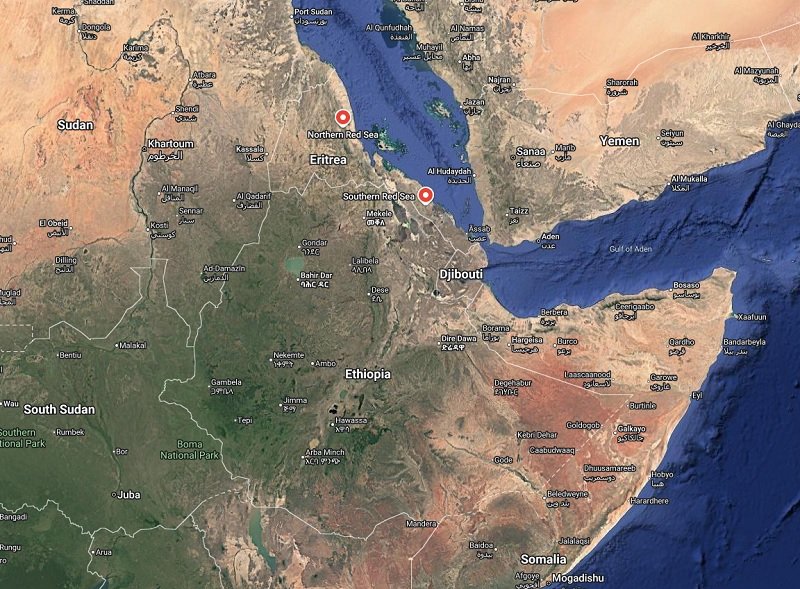
Ethiopia’s discourse over Assab port often invokes history, geography, and ethnicity. Historically, the Afar community maintained a centralized governance system, with an economy based on pastoralism, fishing, and trade. Due to harsh desert geography, including Assab, Afar lands were peripheral, with Abyssinian highland influence limited beyond the highlands. Ethiopia’s access to the coast historically relied on alliances rather than sovereignty.
Assab lies on the Red Sea, bordering eastern Africa (today’s Eritrea) and the Arabian Peninsula near the Bab-el-Mandeb Strait. Prior to colonization, it was under Afar clans, particularly the Rahaita Sultanate. Modern international law recognizes landlocked countries’ right to sea access, exercised through negotiated agreements, not unilateral claims.
The confusion arises as Ethiopia alternates between framing Assab as commercial access or as a natural territorial right. This creates public confusion. Clarifying that access does not equal ownership would enhance policy discourse.
Ethiopia’s politics oscillates between identity politics, embraced by a minority of elites, and civic politics, promoted by others as sacred. Civic politics emphasizes state integration over societal integration, leaving little space for identity claims. Historically, Abyssinian highland elites held political power and cultural dominance. In 2018, power shifted to the Kushitic Oromo, reducing Orthodox Church influence. As Ali Mazrui notes, ethnic mobilization is a tool for elites to pursue wealth and power. The government strategically shifts between Ethiopianist and identity politics to maintain survival, often blurring realities and diverting public attention.
Afar elites must ground political agendas locally, focusing on socio-economic and political rights within Ethiopia and Eritrea. Symbolic gestures like flags or slogans cannot replace strategy. Eritrean Afar should prioritize community development, rights, and self rule. Ethiopian Afar should consolidate rights, democratize governance, and empower their people. Grounded political strategies enable Afar communities to move toward genuine representation, sustainable development, and autonomy, avoiding being used as pawns in broader Ethiopian politics.
References
Wolde-Yesus, A. (1992). Eritrea: Root causes of war and refugees. Bagdad. Mazrui, A. A. (1983). The African condition. Edinburgh: Heinemann. Al-Anazi, T. (2001). The strategic importance of the Red Sea. Saudi Arabia.
Magnet, J. (n.d.). Afar perspective on Eritrea and Ethiopia rapprochement: Two roads to Assab. University of Ottawa.
Zahorik, J., & Ylonen, A. (Eds.). (2018). The Horn of Africa since 2018: Continuities, transformations, and prospects. Routledge.
Zazzaro, C. (2013). The ancient Red Sea port of Adulis and the Eritrean coastal region.
OpenAI. (2025). ChatGPT (Sept 29 version) [Large language model]. https://chat.openai.com/
Editor’s Note : Views in the article do not necessarily reflect the views of borkena.com
__
Support Borkena : https://borkena.com/subscribe-borkena/
Join our Telegram Channel : t.me/borkena
Like borkena on Facebook
To submit Press Release, send submission to info@borkena.com
Add your business to Ethiopian Business Listing / Ethiopian Business Directory
Join the conversation. Follow us on X (Formerly Twitter) @zborkena to get the latest Ethiopian News updates regularly.