
By Mohammed Hassan Investigative / Field Report
The Gaza Strip is suffering a humanitarian rupture of a scale and speed that has few modern parallels. For months, waves of airstrikes, ground operations and blockade measures have driven vast numbers of Palestinians from their homes, overwhelmed hospitals and shelters, and left entire neighborhoods uninhabitable. International organisations, relief agencies and media correspondents describe a pattern of forced displacement, chronic shortages of life-saving supplies, and repeated evacuation orders that leave families with little time and fewer options. What follows is an in-depth, sourced account of the situation on the ground, the legal and political controversies it has ignited, and the uncertain blueprints being discussed for Gaza’s future.
Flight Without a Destination: How Evacuations Are Being Issued and Received
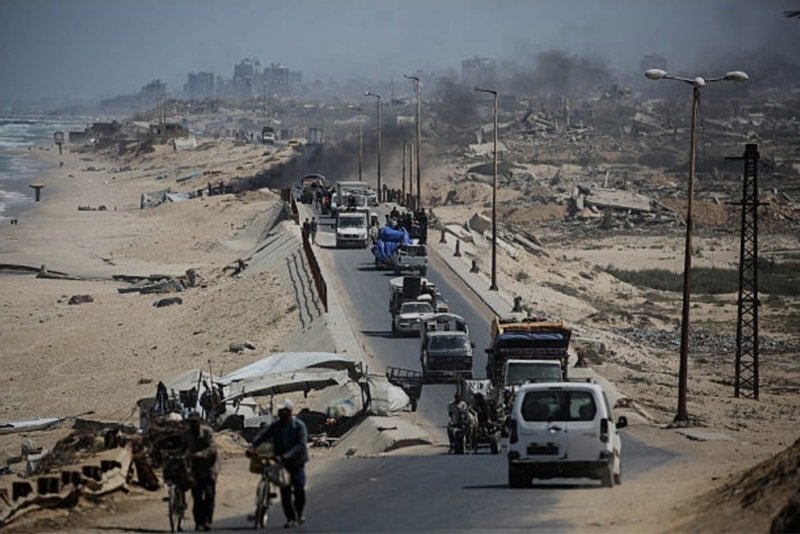
Local authorities and humanitarian groups consistently report that many Palestinians receive extremely short warnings to leave their homes — sometimes only minutes — before strikes or incursions. Residents say these orders frequently come with no clear, safe destination and under conditions where roads and crossings are blocked or dangerous. Aid agencies have documented repeated internal displacement inside Gaza and note that temporary shelters are rapidly overcrowded. The UN Office for the Coordination of Humanitarian Affairs (OCHA) and major news outlets have reported mass movements of civilians southward and across central routes as military operations intensify.
The Immediate Human Cost: Hospitals, Water, Food and Shelter
Hospitals in Gaza are reporting catastrophic strain: closures or dramatic curtailments of services, staff shortages, and shortages of essential medicines and fuel. Multiple international reports and press investigations show that health facilities — already operating near capacity before the most recent escalations — have been forced to suspend or relocate critical services, leaving the wounded and chronically ill with diminishing options for care. At the same time, potable water and power have been intermittently cut, while aid deliveries have dropped sharply in recent weeks, exacerbating risks of malnutrition and disease. Humanitarian agencies warn that without sustained corridors for assistance, famine and public-health collapse become real possibilities.
Allegations and Investigations: Collective Punishment and International Law
Leading rights organisations — Human Rights Watch and Amnesty International among them — have accused Israeli authorities of actions that amount to forced displacement and, in some reports, unlawful collective punishment. These organisations point to evacuation orders issued without safe alternatives, extensive destruction of civilian infrastructure, and restrictions on the passage of food, fuel and medical supplies. The International Criminal Court (ICC) and various UN bodies have opened or signalled inquiries into alleged violations, while a UN Commission of Inquiry has produced assessments that have intensified calls for accountability. Those accused by such reports reject blanket characterisations and say military operations are aimed at degrading armed groups embedded in civilian areas; nevertheless, independent investigators stress the legal obligation to protect civilians and ensure humanitarian access.
The Narrative on Both Sides: Security Claims and Civilian Appeals
Israeli officials frame the operations as necessary security measures, aimed at dismantling militant infrastructures and preventing attacks that threaten Israeli civilians. They emphasise that warnings are used to reduce civilian harm and that military objectives justify operations in urban environments where combatants may operate from within dense residential areas. Palestinian accounts, civil-defence testimonies, and multiple NGO reports counter that the tactics employed — including mass evacuation orders, largescale demolitions, and heavy bombardment of residential districts — impose intolerable burdens on non-combatants and are pushing entire communities toward erasure. Independent observers say the gap between those narratives is not merely rhetorical but shapes access to aid, legal evaluations and international diplomacy.
The Latest Reports from Gaza: Scenes and Statistics from the Ground
Recent reporting from frontline outlets and UN agencies paints a bleak, evolving picture: thousands displaced daily; entire hospital wards closed; severe shortages of fuel and medical supplies; and food distribution curtailed by both security and logistical constraints. Media dispatches describe families walking long distances with whatever possessions they can carry, and makeshift camps that are already beyond capacity. OCHA’s situation updates show a substantial decline in delivered aid truckloads over short reporting periods, and UNRWA and other relief agencies describe a hunger emergency in several zones of the Strip. These field reports — corroborated by international press bureaus and humanitarian monitoring — underscore a rapidly deepening crisis.
Who Can Shelter Gaza? International Proposals and Political Roadmaps
Diplomats and policy experts have floated several pathways for Gaza’s future, but each is entangled in politics:
- A temporary international trusteeship or UN-administered interim authority — pitched as a way to stabilise services, secure reconstruction and depoliticise immediate governance — attracts some support, but opponents say it would be difficult to implement without Israeli and Palestinian consent and broad regional backing.
- Regional mediation (chiefly by Egypt, Qatar and Turkey) aims for negotiated ceasefires and phased reconstruction tied to security guarantees and prisoner/hostage arrangements; these efforts have repeatedly faltered amid renewed hostilities and domestic pressures.
- A return to protracted blockade and fragmentation — the default if political deadlock persists — risks long-term humanitarian stagnation, repeated waves of displacement, and further entrenchment of territorial and demographic changes that fuel international condemnation. Analysis from international relations scholars and humanitarian planners stresses that any durable solution must connect security needs to civilian protections and reconstruction finance.
The Moral and Legal Crossroads: Accountability, Aid and the Politics of Evidence
Beyond headlines, the crisis raises urgent practical questions: who will document and adjudicate alleged crimes; who will fund and supervise rebuilding; and how will the rights of displaced Palestinians be guaranteed? The ICC’s inquiries and UN investigative mechanisms aim to establish accountability, but their processes are long, contested and politically fraught. At the same time, humanitarian responders demand unobstructed access; medical organisations plead for fuel and supplies; and civil society groups call for independent verification of military claims about the presence of combatants in civilian areas. The tension between expedient military aims and obligations under international humanitarian law remains at the heart of international debate.
Testimonies That Refuse to Be Abstracted
Amid statistics and legal analysis, personal stories remain the most brutal evidence — children who know only the sound of air-raid sirens, elderly people forced to abandon life-long homes with an hour’s notice, parents who cannot find medical care for wounded infants. Journalists on the ground repeatedly record the same refrain: “Nowhere to run.” Those words echo through crowded camps, damaged clinics and lines for dwindling food rations. Field correspondents and aid workers warn that public attention and political will are the clearest determinants of whether the Strip will see immediate relief or prolonged catastrophe.
What the World Is Doing — And Not Doing — Right Now
International responses range from emergency appeals and diplomatic condemnations to efforts aimed at negotiated pauses and prisoner exchanges. Several governments reaffirm Israel’s right to self-defence even as they push for measures to protect civilians. Others call for immediate ceasefires and independent investigations. Humanitarian actors contend that calls and condemnations are insufficient without practical steps: scaled humanitarian corridors, unconditional lifting of life-saving restrictions, and guarantees for civilian safety during reconstruction. The coming weeks will test whether rhetoric translates into access, funding and enforceable protections.
The Long Shadow: Displacement, Memory and the Question of Return
What remains less disputed is this: displacement today will shape the politics and social fabric of the region for generations. The memory of being uprooted — already a central feature of Palestinian collective memory since 1948 — is being renewed on a massive scale. Decisions made now about reconstruction, population returns, citizenship and reparations will carry weight far beyond immediate security imperatives. Legal scholars and historians warn that without guarantees of return, restitution and political recognition, temporary displacements risk entrenching permanent demographic and territorial changes.
Conclusion: A Moment for Law, Aid and Diplomacy to Meet
Gaza’s plight is at once immediate and systemic. The images of families walking past ruined buildings, the reports of hospitals forced to close, and the legal complaints lodged with international courts are not isolated fragments but part of a larger human story: people stripped of home and security, confronting choices not of their making. The pathways forward are neither straightforward nor certain. They will demand far more than emergency relief: they require political facilitation, impartial investigation, enforceable protections for civilians, and a sustained international commitment to rebuild the social and physical infrastructure that allows communities to survive and thrive.
If readers take away one fact, let it be this: displacement is not merely movement — it is an erasure of ordinary life. The question facing the international community is whether it will act decisively to stop that erasure and to secure the conditions for restoration and justice.
Sources and further reading
Key sources used in this report include situation updates and field reporting from the United Nations OCHA and UNRWA; investigative and rights-based analyses from Human Rights Watch and Amnesty International; frontline reporting by AP, Al Jazeera and The Washington Post; and statements and procedural actions from the International Criminal Court and UN investigative bodies. Specific references include OCHA Situation Update #326, UNRWA situation reports, HRW’s reports on forced displacement, Amnesty International analyses on siege and collective punishment, recent AP and Washington Post dispatches from Gaza, and ICC/UN procedural documents.
Editor’s Note : Views in the article do not necessarily reflect the views of borkena.com
__
Support Borkena : https://borkena.com/subscribe-borkena/
Join our Telegram Channel : t.me/borkena
Like borkena on Facebook
To submit Press Release, send submission to info@borkena.com
Add your business to Ethiopian Business Listing / Ethiopian Business Directory
Join the conversation. Follow us on X (Formerly Twitter) @zborkena to get the latest Ethiopian News updates regularly.