 Widespread Unemployment — or a Widespread Skills Gap?)
Evidence-based analysis and policy roadmap
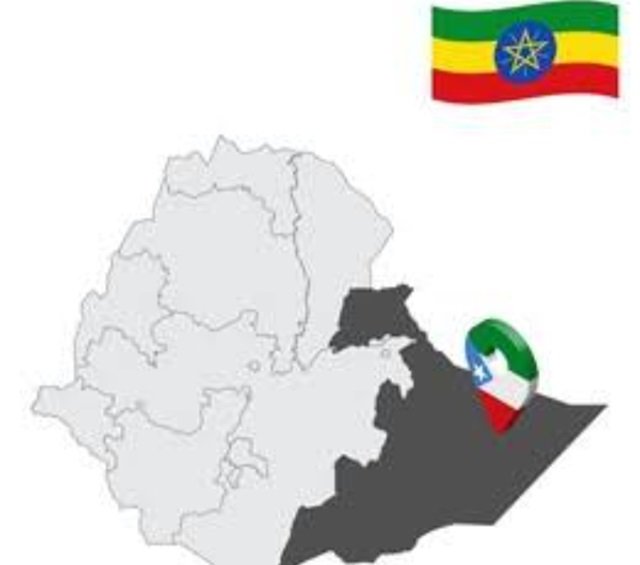
By: Mohamed Hassan Mohamed (Xareed)
Abstract
This article examines whether the labour-market challenge in Ethiopia’s Somali Region — with emphasis on Jigjiga city — is primarily one of severe, widespread unemployment affecting both youth and older workers, or instead a problem of a widespread mismatch between employer needs and the skills of available workers (a “skills gap”). Using recent regional studies, national survey results and international labour-market diagnostics, I show that both phenomena coexist in Somali Region but with different spatial and occupational patterns. Urban Jigjiga faces high youth unemployment and long-term joblessness for some older workers, while at the same time employers report shortages of occupation-specific and certified technical skills. I conclude with a prioritized, locally-tailored policy package addressing (a) immediate demand constraints, (b) short-to-medium term skills supply, and (c) matching and non-skill barriers — with an implementation and monitoring roadmap suitable for Jigjiga and the wider Somali Region.
1. Introduction and context
Ethiopia’s labour market exhibits large regional heterogeneity. National and international assessments identify Somali Region — and its urban centres such as Jigjiga — among the areas with comparatively high urban unemployment and precarious youth labour-market outcomes. National surveys and grey-literature assessments have repeatedly found higher-than-average urban inactivity and unemployment rates in Somali Region, while targeted field studies in Jigjiga record very large shares of unemployed youth in select samples.
At the same time, labour-market diagnostics conducted by development agencies in and around Jigjiga highlight employer complaints about the low availability of specific technical competences, weak match between TVET outputs and firm requirements, and slow hiring for some skilled occupations — signs consistent with a skills-mismatch problem. Integrated labour-market assessments carried out in Jigjiga and adjacent towns document both demand constraints and specific skill shortages.
This mix — high unemployment among broad groups, and localized employer-reported skill shortages — raises a central policy question: which problem is dominant, and how should policymakers sequence interventions?
2. Diagnostic framework used here
To distinguish between (A) primarily demand-driven unemployment and (B) primarily supply-side skills mismatch, this article applies a three-part diagnostic logic adapted from standard labour-market analysis:
- Macro and vacancy signals — aggregate unemployment and vacancy indicators (V/U ratio; presence/absence of many open vacancies).
- Micro evidence from firms and workers — employer surveys, time-to-fill, reasons for non-hire; tracer studies and local youth employment surveys.
- Friction and non-skill barriers — transport, childcare, discrimination, health, and search/information inefficiencies.
We synthesize regional sources for Jigjiga and Somali Region using this lens. Key empirical inputs are: (i) national Urban Employment–Unemployment Survey (CSA/ESS) findings on regional urban unemployment, (ii) World Bank and ILO/partner labour-market studies for Jigjiga, and (iii) smaller-scale field studies of urban youth in Jigjiga and nearby towns.
3. Empirical findings for Somali Region and Jigjiga
3.1 High urban youth unemployment and low activity
- Countrywide urban unemployment is concentrated in a few regions. Somali Region’s urban areas show above-national unemployment and low labour-force activity in many surveys — the CSA/ESS rounds indicate Somali as one of the regions with lower activity rates and elevated urban joblessness.
- Smaller, targeted studies of urban youth in the Somali Region (including samples from Jigjiga) report very large shares of unemployed or NEET (not in employment, education, or training) youth in specific cohorts — some field surveys report figures as high as ~60% unemployment among sampled youth, though these are not nationally representative and highlight concentrated pockets of exclusion.
3.2 Employer reports of skill shortages in certain occupations
- ILO/partner integrated labour-market assessments in Jigjiga and nearby Kebribeyah find a dual reality: many households struggle to find any job, while firms — especially in construction, hospitality, certain technical services and logistics — report difficulties hiring workers with specific certified skills, experience or English/digital literacy required for higher-value tasks. This suggests occupational and qualification mismatches coexist with broad slack.
3.3 Frictions and non-skill constraints amplify both problems
- Internal migration patterns, refugee/host dynamics, limited transport, childcare gaps, and weak career guidance worsen outcomes: many youth lack information on vacancies and work-based learning, and older displaced workers face age-related hiring biases and credential obsolescence. Recent policy briefs on internal labour migration around Jigjiga document these frictions.
Synthesis: empirical sources point to coexistence rather than an exclusive diagnosis: Jigjiga faces high youth unemployment and pockets of long-term unemployment among older workers, while employers simultaneously identify occupation-specific shortages — especially where certifications, practical experience and basic digital or language skills are required.
4. Why both can appear at once (mechanisms)
- Segmented labour market: a large informal sector absorbs low-skill workers with precarious pay (reducing vacancy signals) while formal firms demand certified, often technical skills that are in short supply.
- Search and information frictions: unemployed youth may not know about or be prepared for the few available skilled vacancies; firms may post hard-to-fill positions but be unwilling to train from scratch.
- Credential and quality gaps in training: TVET programs often lack employer linkage, leading to graduates who do not meet workplace quality expectations.
- Non-skill constraints (transport, childcare, discrimination) prevent many from taking available jobs even when skill gaps are moderate.
5. Policy recommendations — a prioritized, Jigjiga-focused package
The response should be multi-pronged and sequenced: short-term relief and job creation, medium-term skills supply and matching, and long-term structural reforms.
A. Short term (0–12 months): protect livelihoods and create immediate opportunities
- Targeted public works / labour-intensive municipal projects in Jigjiga (urban upgrading, drainage, small irrigation, roads) with quotas/reservations for youth and older long-term unemployed; include short on-site training modules (e.g., masonry, basic electrical safety).
- Rapid wage-subsidy pilots for firms hiring first-time youth entrants and displaced older workers (conditional on retention for 3–6 months).
- Mobile job fairs and outreach to refugee-hosting neighbourhoods and peri-urban settlements to connect applicants with employers and training providers. (These measures address demand shortfalls while building data.)
B. Medium term (6–36 months): fix supply-side skills and matching
- Scale dual training and apprenticeships: create local public–private apprenticeship schemes anchored in Jigjiga’s growth sectors (construction materials, logistics/transport, hospitality, agro-processing). Use employer cost-sharing and small stipends to participants. Evidence from labour assessments shows employer willingness to engage if training quality and certification improve.
- Competency-based short courses (stackable micro-credentials): develop 8–16 week modules (digital literacy, English for the workplace, welding, HVAC basics, hospitality customer service) aligned with occupational standards and recognized by employers. Link these modules to RPL (Recognition of Prior Learning) so older workers can convert experience to credentials.
- TVET-employer councils in Jigjiga: formalize a local skills council to align curricula, share equipment, and co-supervise apprentices — improving the credibility of graduates.
- Public employment services & a regional job portal: integrate vacancy posting, short-course signups, and counselling; collect tracer data for monitoring.
C. Cross-cutting measures to remove frictions
- Transport and childcare support for training participants and low-income hires to increase take-up.
- Anti-age bias and re-employment incentives: employer awareness campaigns and subsidies for mid-career retraining.
- Data and monitoring: repeat the Urban Employment-Unemployment Survey rounds at regional level and fund tracer studies in Jigjiga to measure program outcomes.
6. Institutional and financing arrangements (practicalities)
- Governance: create a Jigjiga Skills & Employability Steering Group (regional government, city administration, employer representatives, NGOs, donor partners, and TVET institutions).
- Finance: blended model — reallocate part of municipal public works budgets to employ and train youth; pursue donor funding (ILO/World Bank) for apprenticeship scale-up; consider a small, time-limited payroll training levy for larger firms, with rebates for verified training.
7. Monitoring and indicators
Measure both quantity and quality of outcomes:
- Employment rate of program participants at 3, 6, 12 months (disaggregated by age and gender).
- Time-to-fill and employer satisfaction in targeted occupations.
- Share of vacancies closed by locally trained workers (indicator of reduced mismatch).
- Cost per placement and retention rates to ensure value for money.
8. Limitations and research gaps
Existing regional and local studies vary in methodology and representativeness: some high unemployment figures come from targeted samples that highlight pockets of exclusion rather than region-wide prevalence. There is a need for repeated, standardized LMI (labour-market information) and representative tracer studies in Jigjiga to track outcomes over time. Continued coordination with ILO/World Bank analytical work is recommended.
9. Conclusion
The evidence for Jigjiga and Somali Region points to both severe pockets of youth (and some older worker) unemployment and significant skills-mismatch in specific occupations. The correct policy response is not binary: it requires simultaneous demand-support (jobs and subsidies), supply-side improvements (work-based training, RPL, modular micro-credentials), and matching/friction reductions (job intermediation, transport/childcare). Prioritizing interventions that create jobs while upgrading skills — for example, labour-intensive municipal projects combined with on-site apprenticeships and modular certification — delivers the fastest, most sustainable impact for Jigjiga’s labour market.
Selected sources and further reading
- ILO — Integrated Labour Market Assessment in Jigjiga and Kebribeyah (ILO assessment report).
- Ethiopian Statistical Service (ESS/CSA) — UEUS key findings (urban employment/unemployment survey).
- World Bank — Employment in Urban and Rural Ethiopia (labour market brief/analysis).
- Preprint studies on urban youth unemployment in Somali Region (Jigjiga, Dollo Ado, etc.) reporting high shares in sample surveys.
- Samuel Hall / local labour studies — Jigjiga labour-market analysis and programmatic assessments (host/refugee & host community labour systems).
Mohamed is based in Jigjiga, Somali Region, He is Admas University Alumnus. Somaliland, Hargeisa Branch.He is an MBA holder, and wrote hundreds of scholarly articles, essays and conducted research. He is a small business owner and university lecturer. He can be reached at:
Xareedmo45@gmail.com
Editor’s Note : Views in the article do not necessarily reflect the views of borkena.com
Support Borkena : https://borkena.com/subscribe-borkena/
Join our Telegram Channel : t.me/borkena
Like borkena on Facebook
To submit Press Release, send submission to info@borkena.com
Add your business to Ethiopian Business Listing / Ethiopian Business Directory
Join the conversation. Follow us on X (Formerly Twitter) @zborkena to get the latest Ethiopian News updates regularly.