
Elena Bantiwa
Introduction: An Autopsy of a National Idea
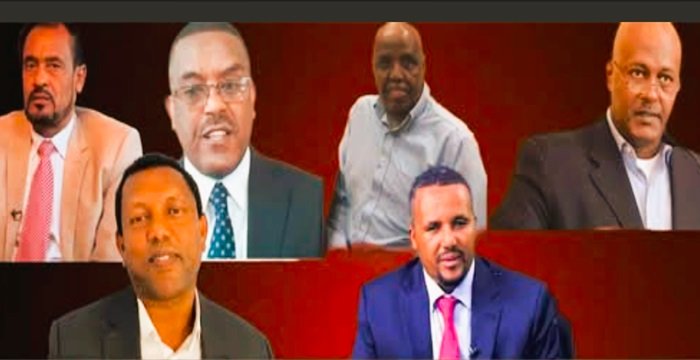
The key actors in Ethiopia’s contemporary political drama—from Prime Minister Abiy Ahmed, a product of the EPRDF’s security and political apparatus, to influential opposition figures like Jawar Mohammed, whose activism was shaped by ethno-nationalist discourse, to civic-minded critics like Lidetu Ayalew, who operate in reaction to this dominant system—are all inheritors of a specific intellectual legacy. Their political consciousness was formed within an academic tradition that itself underwent a tragic metamorphosis. What began as a project to forge a modern nation devolved into a process that supplied the ideological blueprints for its fracture.
This descent was not an accident but the outcome of a scholastic tradition where inquiry was often subordinated to political utility and the university became an instrument of state-building projects. This article traces how a revolutionary theory, amplified by academic inquiry and instrumentalized by political elites, shaped the nation’s trajectory. The central, agonizing question is not simply how Ethiopia arrived at this precipice, but whether a political class so deeply steeped in this tradition can transcend the very intellectual and moral frameworks that have defined their political world.
I. The Revolutionary Crucible: A Fateful Pivot in Thought
The intellectual genesis of modern Ethiopia lies in the Ethiopian Student Movement (ESM). In its prime, Haile Selassie I University was a vibrant center of excellence, a crucible where a new elite imagined a modern nation. The ESM’s initial cry, “Land to the Tiller,” was a powerful, unifying call for social justice that resonated across ethnic lines. As historian Bahru Zewde argues, the movement’s radicalism was an organic response to domestic grievances, with Marxism serving as a tool to articulate a distinctly Ethiopian reality.
However, a fateful pivot occurred in 1969 with Wallelign Mekonnen’s essay, “On the Question of Nationalities in Ethiopia.” His thesis introduced a powerful alternative framework, reframing Ethiopia not as a nation of citizens with class grievances, but as a “prison of nations” built on ethnic subjugation. This single act of knowledge production shifted the revolutionary project’s center of gravity from class struggle toward a divisive ethnic one. It established a compelling, and ultimately catastrophic, binary: the oppressor versus the oppressed, defined primarily by ethnicity. This intellectual framework became the political software for the TPLF, the OLF, and eventually the entire EPRDF coalition, creating the ideological environment that would produce the current generation of leaders. The “national question” was no longer a debate topic; it became the foundational operating system for Ethiopian politics.
II. The Role of Scholarship in Forging Ethnic Consciousness
As the ESM’s focus shifted, the academic disciplines of sociology, history, and anthropology were simultaneously providing the intellectual architecture for the coming conflict. This scholarship did not invent grievances, but it codified, amplified, and gave theoretical structure to them.
Sociologist Donald Levine’s work on a cohesive Greater Ethiopia, while intended to demonstrate unity, was ironically co-opted. His essentialized descriptions of ethnic groups as distinct systems were repurposed by ethno-nationalists as justifications for political separation. In contrast, anthropologist Asmarom Legesse’s scholarship on the Oromo Gadaa system was an act of profound intellectual empowerment. By reclaiming a sophisticated indigenous democracy, his work became a cornerstone of modern Oromo nationalism (“Oromummaa”), providing movements like the OLF and activists like Jawar Mohammed with a narrative of a unique civilization suppressed by an imperial state.
Simultaneously, a distinct Tigrayan narrative of historical grievance was intellectually fortified, centering on the idea that Tigray, the cradle of Axumite civilization, was marginalized after the center of power shifted south. This reinterpretation of history provided the TPLF with a potent ideological justification for its rebellion. For other groups, particularly in the south, scholarship highlighting the history of conquest under Emperor Menelik II provided the basis for movements demanding self-determination. The university thus became a crucial site where the intellectual foundations for competing nationalisms were laid, ensuring every side was armed with its own academically validated rationale.
III. The Theory Made Flesh: Constitutionalizing a Divided Polity
When the TPLF/EPRDF seized power in 1991, they brought this campus-born ideology with them. Their political project was the direct implementation of their solution to the “national question,” and this theory was made flesh in the 1995 Constitution.
Its most consequential provision, Article 39, enshrined “the unconditional right to self-determination, including the right to secession.” A radical student theory became the supreme law of the land. This document created the architecture of political reality for all of today’s leaders. Prime Minister Abiy governs through its ethnic structures. The political mobilization of figures like Jawar Mohammed draws legitimacy from its language. Civic alternatives, like those proposed by Lidetu Ayalew, are by necessity defined in opposition to its ethnic-centric framework. The constitution, justified by a historical narrative of “internal colonization” that resonated with Italian colonial propaganda, established the legal rules of the game, ensuring all future political combat would be fought on ethnic terms.
This project represents a unique, internal application of the post-colonial trend Adom Getachew analyzes in Worldmaking after Empire. Getachew argues that the grand, Pan-Africanist vision of self-determination was “narrowed” from a project of regional federation into the creation of sovereign nation-states within colonial borders. The EPRDF took this logic of narrowed sovereignty and turned it inward, deconstructing a national identity into its constituent parts and applying a global anti-colonial principle to a domestic context.
IV. The Final Collapse: From Battleground to Killing Field
The state’s instrumentalization of education had its most devastating impact on the universities themselves. The EPRDF’s expansion of higher education into regional states created institutional microcosms of the federal system’s flaws. By the late 2010s, the battleground of ideas had become a physical one. Students were murdered on campuses in Debre Markos, Aksum, and elsewhere, not for their ideas, but for their ethnicity.
The outbreak of the Tigray War in November 2020 marked the final, horrific stage of this devolution. Universities became military objectives, their libraries burned and campuses used as barracks. This physical destruction mirrored a complete intellectual collapse. The war exposed the surrender of academic integrity to what can be called intellectual tribalism, as universities actively participated in the conflict’s polarization. The system had come full circle: the institution that produced the ideology of ethnic division was now being consumed by the violence that ideology unleashed.
Conclusion: The Unlearning Paradox—Can the Products of a System Transcend It?
This brings Ethiopia to its present, agonizing paradox. The very leaders tasked with navigating the country out of its crisis are the inheritors of this broken intellectual and educational tradition. Abiy’s “Medemer” philosophy can be interpreted as an attempt to create a post-ethnic synthesis, yet he governs through the very ethnic structures he inherited. Jawar’s political strategy operates effectively within the ethno-nationalist framework that was academically and politically legitimized over decades. Lidetu argues for a civic alternative but struggles for traction in a political marketplace where ethnicity remains the primary currency.
The fundamental question is one of unlearning. How can a political class move beyond the intellectual and moral frameworks that shaped their worldviews and are the source of their political legitimacy? It would require them to abandon the oppressor-oppressed narratives that mobilize their bases, to question the historical grievances that justify their political projects, and to develop a new political language beyond the confines of Article 39.
This is more than a political challenge; it is an epistemological one. Rebuilding Ethiopia requires a profound intellectual reckoning. The challenge for Ethiopia’s current and future leaders is to confront this intellectual inheritance and forge a new political language of shared citizenship and destiny. Without such a fundamental shift, the nation risks remaining trapped in the very intellectual paradigms that led it from the ivory tower to the trenches.
Editor’s Note : Views in the article do not necessarily reflect the views of borkena.com
Support Borkena : https://borkena.com/subscribe-borkena/
Join our Telegram Channel : t.me/borkena
Like borkena on Facebook
To submit Press Release, send submission to info@borkena.com
Add your business to Ethiopian Business Listing / Ethiopian Business Directory
Join the conversation. Follow us on X (Formerly Twitter) @zborkena to get the latest Ethiopian News updates regularly.
One should ask how deep impacted the Eriterians sessasioist movement in North and Ogaden in South. and land tenure system exploited the pesantes to sympathize tribal intellectuals ?
Wow, This should have the opposite effect of the Walelegne piece.