
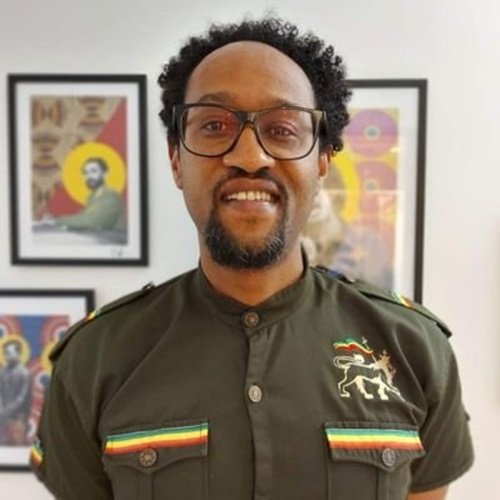
Wondmagegn Ejigu Kebede
Uppsala, Sweden
Ethiopia’s political landscape is trapped in a corrosive stalemate, shaped by two dominant yet irreconcilable ideological forces. For decades, these groups have perpetuated cycles of division, distrust, and desperation, leaving the nation in a precarious state of instability. Their recent claims of forming a ‘tactical’ alliance—despite fundamentally opposing worldviews—highlight not a path forward but the depth of the crisis they have created. Lidetu, Jawar, and their staunch supporters often dismiss criticism as mere pessimism. However, it must be emphasized that many of us have grown weary of passively observing these self-proclaimed political elites dance to what appears to be the wrong tune, with misguided steps. Our critiques persist not out of malice but from a place of constructive intent—assuming, of course, that Lidetu, Jawar, and their allies genuinely prioritize the goals they claim to champion.
The Primacy of Ethnicity: A Fifty-Year Legacy of Division
The first political force, rooted in ethno-nationalist primordialism, has long framed politics as a zero-sum game of ethnic identity. By weaponizing selective historical narratives, this camp portrays specific ethnic groups as perpetual victims or villains, embedding hostility into Ethiopia’s social fabric. The Ethiopian People’s Revolutionary Democratic Front (EPRDF) institutionalized this ideology through its ethnic federalist constitution, which fragmented the nation along rigid ethnic lines. It ultimately normalized ethno-centric governance, where dehumanizing “others” became politically expedient.
The decline of the Tigray People’s Liberation Front (TPLF) dominance in EPRDF and the rise of Oromo elites under Prime Minister Abiy Ahmed’s regime exposed the fragility of this model. Internal power struggles among Oromo elites, particularly over the control of 4 Kilo, devolved into populist rhetoric that reduced governance to ethnic entitlement. Today, this ideology has reached a dead end: its leaders claim
their respective ethnic groups hold an exclusive, primordial right to land, resources, and political power, dismissing other communities as “latecomers” dependent on their goodwill. Millions of followers, radicalized by decades of ethno-centric propaganda, now view politics solely through the lens of ethnic privilege, rendering merit-based governance obsolete.
The political reality in Ethiopia presents a stark divide: certain individuals exploit their ethnic affiliations to monopolize power and resources, while others within the same ethnic group anxiously await their turn to claim these privileges. Meanwhile, some have resorted to armed resistance, fueled by the same exclusionary rhetoric and assumptions of entitlement that perpetuate this cycle of division and opportunism.
The Fading “Unity” Camp: Opportunism and Desperation
The second political force, ostensibly advocating for a unified Ethiopia, has equally faltered. This camp dismisses discussions of ethnicity, language, or historical grievances as divisive, promoting an idealized vision of Ethiopia’s past as a harmonious bed of roses. However, its lack of coherent ideology and chronic opportunism have eroded public trust. Leaders within this group frequently shift alliances—even collaborating with former rivals—to survive politically. This political faction embodies chaos incarnate. The internal power struggles and ideological clashes among its elites could fuel a multi-season political soap opera. These leaders treat political parties as disposable garments—formed with fanfare, discarded on whim, then reinvented with new labels. At their core lies a profound existential vacuum: most members lack any coherent personal philosophy or clear purpose for entering into politics. This toxic cocktail of directionless ambition and perpetual identity crisis doesn’t merely characterize the group—it actively propels its erratic trajectory through the Ethiopian political landscape.
Abiy Ahmed’s initial courtship of this camp, followed by his abrupt abandonment of its figures, exemplifies its disintegration. Figures like Liditu Ayalew now cling to relevance, compromising principles for survival. Their rhetoric of unity rings hollow, as their actions reveal a willingness to align with anyone promising temporary leverage. This desperation has pushed them into their own dead end: a loss of credibility and an inability to articulate a vision beyond opposing ethnic federalism.
The Washington DC Mirage: Survival Over Substance
The recent spectacle of these two forces convening in Washington DC to announce an alliance underscores their shared desperation. Their claimed “common ground”—the need to “survive”—is less a political agenda than an admission of failure. While they seek to project unity against Abiy’s regime, their alliance is built on contradictions: one camp inherently legitimizes ethnic exclusion, while the other (nominally) rejects it.
For such an alliance to hold, explicit concessions are essential. The ethno-nationalist camp must renounce its foundational claim to ethnic supremacy, while the unity camp must acknowledge Ethiopia’s complex diversity. Yet neither has shown willingness to do so. Instead, their collaboration appears transactional—a bid to seize power in 4 Kilo rather than transform governance. Without transparency, their pact risks exacerbating tensions, as citizens grow disillusioned by elites recycling old tactics. It is both crucial and timely to pose fundamental questions to these elites convening in Washington DC: Does Jawar and his circle finally acknowledge that Addis Ababa belongs to all Ethiopians? Has Lidetu persuaded Jawar, or vice versa, to align on core principles? What is their unified stance on Ethiopia’s constitutional framework and federal structure? At minimum, shouldn’t they articulate a shared agenda for negotiating power and resource distribution—the very essence of politics as a process of compromise?
Politics, at its core, demands constructing a framework where elites reconcile competing interests through dialogue, ensuring equitable arrangements that all parties can accept. Given this, It is pivotal to ask: What concrete positions do Jawar and Lidetu hold on these foundational issues? Their silence—or ambiguity—on such basic questions undermines their credibility as leaders capable of bridging Ethiopia’s divides.
Beyond the Dead End: A Call for New Politics
Ethiopia’s crisis demands a radical departure from these entrenched conflicting ideologies. The nation needs leaders who prioritize meritocracy over ethnic entitlement, inclusive citizenship over exclusivist claims, and accountability over impunity. This requires:
1. A New Social Contract: Reimagining federalism to balance regional autonomy with shared national identity.
2. Truth and Reconciliation: Addressing historical grievances without weaponizing them.
3. Civic Education: Replacing divisive narratives with a culture of dialogue and coexistence.
The current elites, trapped in their dead ends, are ill-equipped to lead this transformation. Their Washington DC maneuver risks prolonging the stalemate, leaving Ethiopia’s youth in despair. The Ethiopian people endure unimaginable suffering under a ruthless authoritarian regime. At this critical juncture, the public cannot afford another cycle of political theater starring the same discredited elites. Ethiopia desperately requires innovative solutions to navigate out of this political impasse. Yet expecting salvation from the very architects of the current crisis—those who helped engineer the nation’s downward spiral—is not just futile but profoundly naive. True progress demands fresh perspectives untainted by the failures and compromises of the past.
Editor’s Note : Views in the article do not necessarily reflect the views of borkena.com
Support Borkena : https://borkena.com/subscribe-borkena/
Join our Telegram Channel : t.me/borkena
Like borkena on Facebook
To submit Press Release, send submission to info@borkena.com
Add your business to Ethiopian Business Listing / Ethiopian Business Directory
Join the conversation. Follow us on X (Formerly Twitter) @zborkena to get the latest Ethiopian News updates regularly.