
By Habte H
Today’s buzz across social media was a single arresting image: a forum where figures associated with the Tigray Defense Forces (TDF) and Fano appeared in the same frame. For many, it looked unthinkable only a short while ago. For others, it felt like a long-overdue reckoning with the politics of division that has wracked Ethiopia. However, one reads it, the symbolism is unmistakable: a conversation that once seemed impossible is now at least imaginable – and that alone can be a turning point.
Not because a photograph solves anything on its own. Images are fragile; they can be misread, weaponized, or dismissed. But images can also puncture fear. Years ago in Gondar, a stark slogan circulated – “Oromo’s blood is my blood.” It was simple, even rudimentary as political language, yet it cut through propaganda by asserting kinship across lines of suspicion. Such moments remind us of that solidarity, however imperfect, can disrupt the manipulative narratives that keep Ethiopians apart. If the old playbook relied on suspicion and scapegoats, the antidote is stubborn, public acts of cross-communal recognition.
Why does the prospect of Tegaru–Amhara unity feel so consequential now? Five reasons stand out.
1) Deep historical interconnection. Tegaru and Amhara are among the most ancient peoples of the Horn, bound by centuries of exchange, intermarriage, scholarship, and statecraft. That long coexistence was hardly free of conflict, but the wider arc is one of shared civilization. To acknowledge that reality is not to romanticize the past; it is to remember that estrangement is the deviation, not the default.
2) Shared records of national leadership. Across different eras, both communities have steered Ethiopia through expansion, reform, resistance, and nation-building. That history is contested, as all histories are. Yet the fact that both have credibly led at national scale is precisely the point: neither can be erased from the story, and neither can be coerced into silence. Durable governance in Ethiopia will always require inclusive legitimacy that embraces both.
3) Overlapping cultures and social psychology. From liturgy to literature, from agrarian rhythms to ethical vocabularies of honor, duty, and endurance, the cultural distance between Tegaru and Amhara is not a chasm. Differences matter, of course. But the deep grammar of meaning – religion, festivals, foodways, music, family structures – offers more bridges than barricades. Political entrepreneurs may profit from sharpening differences; communities, by contrast, thrive by metabolizing them.
4) Geographic proximity that forces honesty. Neighbors cannot indefinitely outsource their security to distant arbiters. Borders and roads, markets and monasteries, water and wheat all bind the northern highlands into one living mosaic. Proximity compels pragmatism: if we are to end cycles of siege and reprisal, we must design security guarantees, trade corridors, and dispute-resolution mechanisms that make coexistence cheaper than conflict.
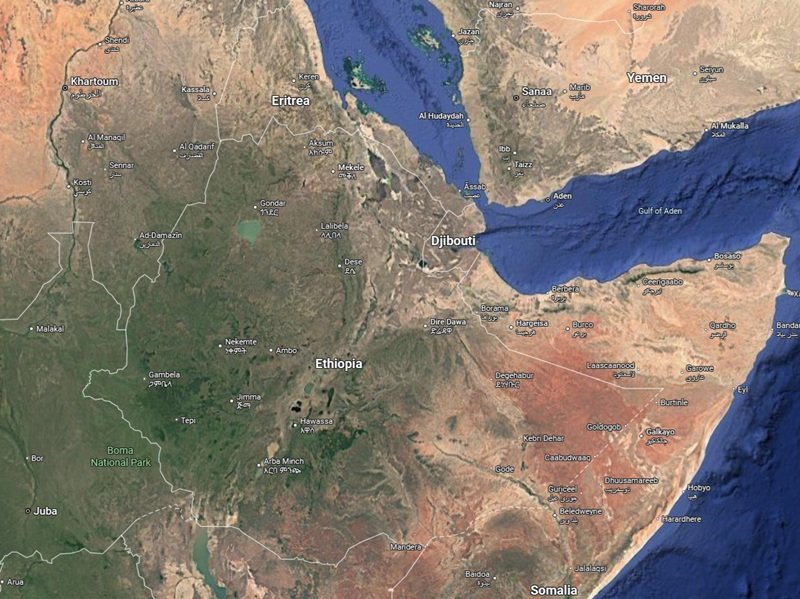
5) A wider regional horizon that includes Eritrea. The politics of the last half-century in the Horn has been crowded with false narratives and instrumentalized grievances. A sober regional compact – one that squarely faces historical harms while committing to never again – could flip the script. Inclusion of Eritrea in frank, principled dialogue is not about erasing accountability; it is about recognizing that sustainable peace will require a cross-border architecture of truth, demobilization, reparations where possible, and economic interdependence that raises the cost of war above any short-term gain.
To be clear, unity should not mean fusion, domination, or a tactical coalition against a third group. It must mean something morally sturdier: a shared refusal of mass suffering; a shared insistence on truth about atrocities; a shared investment in the children of every community. If unity is merely a new arrangement of elites and militias, it will collapse under the weight of familiar betrayals. But if unity centers ordinary people – mothers in displacement camps, farmers cut off from markets, youth who have known only checkpoints – it can become a civic covenant instead of a factional deal.
What Would a Responsible Path Forward Look Like?
First, truth-telling with humility. Communities must face their recent past honestly, but without vengeance. Elders, religious fathers, and respected community leaders should guide the process of listening, acknowledging pain, and encouraging forgiveness. Without truth, reconciliation is only performance; with truth, even slow healing becomes possible.
Second, humanitarian solidarity. People must be allowed to live with dignity. This means ensuring that food, health care, and basic services are never politicized. Religious institutions, civic groups, and local elders can help guarantee safe passage for aid and uphold the principle that human life stands above political differences.
Third, respectful dialogue and careful handling of sensitive issues. Differences such as contested territories (for example, Welkait) should be approached with wisdom, patience, and fairness. Rather than letting political elites weaponize these differences, both Tegaru and Amhara communities should look for win–win approaches—solutions that preserve dignity, ensure security, and offer mutual benefit. When handled with care and dialogue, even the most difficult issues can become opportunities for cooperation rather than sparks for division.
Fourth, shared prosperity and mutual benefit. Rehabilitating roads, markets, and infrastructure that connect communities will ensure that trade and livelihoods are shared across regions. When economic opportunities are structured to benefit everyone, suspicion gives way to cooperation, and prosperity becomes a common project.
Fifth, cultural and spiritual repair. Pilgrimages, interfaith gatherings, school exchanges, and joint cultural celebrations can restore familiarity and trust. When children learn each other’s songs, when neighbors share in religious festivals, and when communities gather in joint service, distance shrinks. Over time, former divisions become memories rather than barriers.
Sixth, investing in future opportunities. Beyond repairing what has been broken, Ethiopia must look ahead investing in education, innovation, and youth leadership that transcend ethnic lines. A generation raised with opportunities rather than grievances will be the strongest safeguard against relapse into division.
Editor’s Note : Views in the article do not necessarily reflect the views of borkena.com
Support Borkena : https://borkena.com/subscribe-borkena/
Join our Telegram Channel : t.me/borkena
Like borkena on Facebook
To submit Press Release, send submission to info@borkena.com
Add your business to Ethiopian Business Listing / Ethiopian Business Directory
Join the conversation. Follow us on X (Formerly Twitter) @zborkena to get the latest Ethiopian News updates regularly.
One should be reminded and ask for,_ is this a coalition between”Ethinic -Warlords ” or a genuine popular democratic movement to overthrow a dictatorial regime to establish a Democratic government in Ethiopia. I do not envisage a ” A warning Warlord evolve to student of Democracy .
“Tegaru – Amhara Unity: A Turning Point for Ethiopia’s Future” has deception written all over it. This is the dark world of Tplf, Shabby Ya, Olf, Fano, PP, and their minions. I don’t understand why Habte H is crying about Abiy’s foul-play. They are all in this together hoping the other trip to overtake! Three decades of tearing each other up can not be reversed before elections–no matter how much of the old brotherhood (which btw never existed) you try to recall. The history of Amhara, Tigray, and “Eritrea” is one of savagery, period. Stop deceiving yourself that somehow the Christian faith, language and culture could to come to your aid. I am embarrassed to read you mention “truth-telling and humility” in relation to Tegaru–Amhara unity. You must be on some drug, of course.