
Editor’s Note : Views in the article do not necessarily reflect the views of borkena.com
Mohammed Hassan
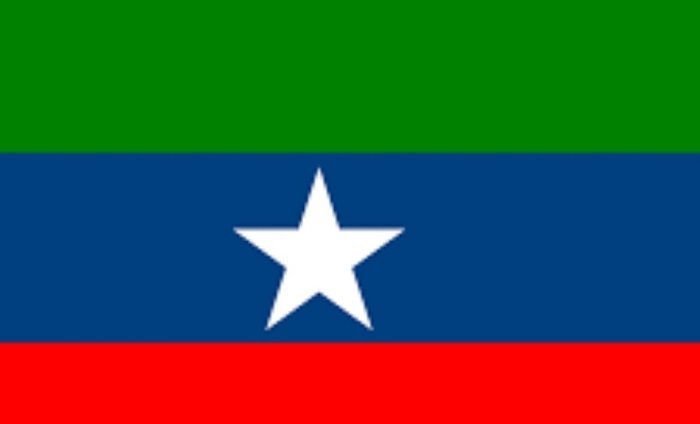
15 August marks the founding of the ONLF in 1984. The movement emerged from currents inside the Western Somali Liberation Front and allied youth networks; supporters commemorate the day annually as the organization’s anniversary (sometimes called “Ogadenia Day”).
Origins, aims and the long arc of its struggle
Founding ambition (1984–early 1990s). The ONLF’s defining goal from inception was self-determination for the Somali-inhabited Ogaden (today’s Somali Regional State). After Ethiopia’s transition in 1991–92, ONLF initially pursued that aim through regional politics, winning the first SRS regional assembly in 1992 before relations with the federal center deteriorated.
Shift to armed insurgency (1994–2018). By 1994, amid arrests and killings of ONLF figures and disputes over self-determination, the organization took up arms. The Ogaden insurgency waxed and waned for more than two decades, punctuated by high-profile incidents (including the April 2007 Abole oil site attack) and grave human-rights abuses reported in the region. The conflict’s persistence shaped politics, security and humanitarian conditions across the SRS.
Milestones and objectives reached to date
Despite reversals, three concrete gains since 2018 stand out:
- Removal from Ethiopia’s terrorist list (July 2018). Parliament delisted the ONLF (along with OLF and Ginbot 7), opening legal and political space.
- The Asmara Peace Deal (21 October 2018). Ethiopia and the ONLF signed a peace agreement that ended active hostilities and created a framework for peaceful political engagement and a joint implementation committee.
- Transition to party politics (2019–). ONLF leaders announced a shift to peaceful politics and filed registration papers with the National Election Board of Ethiopia in 2019.
These steps allowed ONLF leaders and members to return from exile, begin organizing legally, and articulate their platform publicly inside Ethiopia.
Policy orientation today
While positions are debated within and around the movement, four policy planks recur in ONLF texts and mediation literature:
- Self-determination via a democratic process. Historically, ONLF’s “endpoint” has been framed as self-determination for Somalis in the SRS—often described in terms of the right to a referendum rather than an immediate unilateral outcome. Post-2018, that claim has been recast for a peaceful, political route.
- Rights, rule of law, and inclusive governance. The group’s programmatic statements and third-party analyses emphasize civil liberties, representation, and an end to collective punishment and impunity in the region.
- Federalism that works. ONLF leaders have repeatedly located their demands within Ethiopia’s federal framework—arguing for genuine autonomy, accountable regional institutions, and fair participation at the federal level.
- Peaceful competition and normalization. Since 2018 the official line has been to pursue objectives legally as a registered political actor, while pressing for full implementation of the Asmara deal (reintegration of ex-combatants, release/rehabilitation issues, and functioning joint committees).
Vision for Somali Regional citizens
In ONLF discourse and in mediation-partner summaries, the movement’s stated vision for the region can be summarized as:
- A politics of consent: key regional decisions—security sector configuration, use of natural resources, and cultural/linguistic policy—should reflect the will of SRS residents, expressed through competitive politics and, where appropriate, referendums.
- Dignity and rights: protection of civilians, space for civil society and media, rehabilitation for communities harmed by the conflict years, and credible mechanisms to address abuses.
- Development tied to local benefit: infrastructure, trade, and extractives (oil, gas, renewables, cross-border logistics) should advance with transparent agreements that tangibly benefit local communities and the regional budget. (This is an inference from ONLF’s longstanding critique of extraction without consent and from mediation literature on root causes.)
Vision for Ethiopia “as one people”
The ONLF’s public posture since 2018 places its regional agenda within a unified Ethiopian constitutional order, arguing that stable federalism and a fair center–periphery bargain serve both the SRS and the country:
- A rules-based federation: durable unity is presented as a product of consent, not coercion—robust regional autonomy inside an Ethiopian constitutional framework.
- Democratic competition over militarized politics: the 2018 settlement is framed as proof that adversaries can reconcile and compete peacefully—if agreements are implemented and civic space is sustained.
- Inter-regional cooperation: security and growth in the SRS (a pivotal trade and energy corridor to Djibouti and Somaliland) are linked to Ethiopia’s overall stability and prosperity. (Synthesis from the mediation and conflict-resolution sources.)
Current debates and unresolved issues
The journey is not linear. Two recent dynamics matter:
- Implementation gaps. In 2024 ONLF leaders publicly reassessed the 2018 peace deal, claiming only a fraction of commitments (e.g., reintegration, resettlement, political guarantees) had been implemented; they also paused participation in the National Dialogue.
- Political contestation inside the SRS. In mid-2025, ONLF condemned moves it described as attempts to sideline the party and alter federal-regional balances, underscoring ongoing tensions about party registration, leadership disputes, and electoral rules.
These disputes don’t negate the milestones of 2018–19; they highlight the work still required—by all sides—to translate a cessation of hostilities into a settled, competitive, and representative politics.
Bottom line on 15 August
- What it is: the anniversary of ONLF’s founding (15 August 1984), widely commemorated by supporters worldwide.
- What it symbolizes: a forty-plus-year quest to secure the Somali Region’s self-determination while—since 2018—seeking to do so through peaceful, legal politics inside Ethiopia.
- What remains: consolidating a rules-based federal compact where SRS citizens can decide their affairs democratically, while contributing to—and thriving within—one Ethiopia.
Key sources: background and founding date; conflict history; peace-deal dates and terms; transition to party politics; policy orientation toward self-determination and referendum; recent reassessments and disputes.
Mohamed is based in Jigjiga, Somali Region, He is Admas University Alumnus. He is an MBA holder, and wrote hundreds of scholarly articles, essays and conducted researches. He has also practical experiences and diploma in public relation. He is small business owner and university lecturer. He can be reached at:
The writer could be reached at : xareedmo45@gmail.com
Editor’s Note : Views in the article do not necessarily reflect the views of borkena.com
Support Borkena : https://borkena.com/subscribe-borkena/
Join our Telegram Channel : t.me/borkena
Like borkena on Facebook
To submit Press Release, send submission to info@borkena.com
Add your business to Ethiopian Business Listing / Ethiopian Business Directory
Join the conversation. Follow us on X (Formerly Twitter) @zborkena to get the latest Ethiopian News updates regularly.