
By Addissu Admas
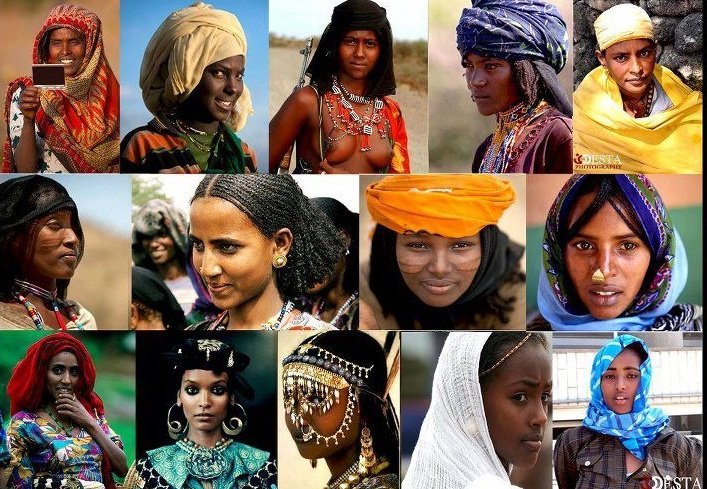
There are very few countries in the world that can match or exceed Ethiopia’s diversity in terms of geography, peoples, languages, religions, cultures and customs. With a territory that is just about 1.1 million square kilometers, Ethiopia possesses all kinds of terrains and climes. From the Danakil plains in the Rift Valley to the high plateaus of the Semien Mountains, from the southern savannah grasslands to the tropical forests of the southwest, from the Ogaden desert to the Nile Valley, few countries, if any indeed, have so much diversity in such relatively circumscribed area. In terms of her population, she is the land of some 80 ethnic groups with their respective languages, cultures and customs, three major religions – The Ethiopian Orthodox Tewahedo Church (EOTC), Islam, various other Christian denominations – not counting, of course, the numerous traditional religions. All, one needs to note, cohabiting in relative peace until a few decades ago. Her linguistic, cultural and customs heritage is so vast in fact that it continues to be the source of fascination and study for so many foreign scholars.
Yet this unusual country, a former empire indeed, is on the brink of disintegration because no ideology or policy has been found to be effective enough to preserve its unity for future generations. To be sure, several methods have been tried to preserve the unity of the country. However, all have been either misguided at best, or untenable at worst. To simplify the matter, I call the former the unifying attempts and the latter the disunifying ones.
Among the unifying, or if one prefers, the homogenizing attempts were the Amharanization process together with Orthodox Christianization, and later Marxism. Amharanization, as the term itself indicates, is primarily the process of making Amharic, spoken originally by the Amhara people only, to be not only the official language of government and administration, but also of education, media and culture. However, it did not limit itself to these areas alone. Either by design or by default – one can never be sure – Amharanization has also been the process by which large numbers of members of other ethnicities have become “Amhara” by not only adopting Amharic as their first language, but by adopting Amhara culture and customs. Today, these form a substantial segment of the urban population.
Were Amharanization and Orthodox Christianization deliberate and programmatic ideological agenda? Hard to say. However, there is no doubt that they follow clearly the logic of the politics of domination. Whoever dominates imposes his will and his ways on others. Because of her intimate relationship with the imperial regime, the EOTC has held enormous sway in Ethiopia’s cultural formation. Amharanization has always gone hand in hand with Orthodox Christianization until the end of the imperial era. In most instances, conversion to the EOTC has been in effect the completion of the Amharanization process. What we need to ask is: are Amharanization and Orthodox Christianization means of oppression and colonization as many non-Amhara intellectuals have argued?
To begin with, I say that colonization and assimilation are not the same though they do overlap at the edges. I would argue that Ethiopia has experienced Amhara assimilation and not colonization. Amharanization and Orthodox Christianization are not forms of colonization but of assimilationism. Any serious student of Ethiopia’s modern history cannot fall into the facile conclusion that Amharanization was a form of indigenous colonialism. Doing so, rather than shedding light on Ethiopia’s reality of the past century and a half, it distorts it to the point of obfuscation.
Colonialism, as we have come to know and define it, has at least the following salient features a) total subjugation of another people to establish political, economic, cultural and linguistic control over the entire country b) Systematic exploitation of the natural resources of the country c) Some form of forced labor d) Clear hierarchical segregation between colonizers and the colonized e) Orders, regulations and laws emanating from the distant metropolis of the colonizing power. All features that uniquely and solely define European colonization, and perhaps none other. The first of these features may apply to the Amhara conquest of the South, as it is usually present in nearly all expansionist nations. However, the other features are totally absent. In fact, if one pays a closer attention, feature one overlaps effectively with the assimilationist agenda. Thus, taking only one specific aspect of colonialism and considering it sufficient to label Amhara domination as colonialist is not only misleading, but mischaracterizes the reality on the ground and impedes serious discussion on the matter. Let’s not confuse the issue, there has clearly been a case of assimilation and not of colonialism in Ethiopia. Has this assimilationism and its unsavory practices been resented? Of course they have. But these are not a sufficient reason to call it colonialism.
The objective of the politics and praxis of assimilationism is to primarily unify the country into a tightly knit entity. In fact, countries which have a long period of assimilation find themselves today as integrated as much as nations which began with a homogeneous population. Is the process desirable? Not if the dominated people are opposed to it. However, it could have tangible advantages while it is being resented. The real objective of assimilation is not to establish as such a hierarchy, but it is a project to transform the other into oneself so that the other accepts the status quo by offering him or her the same access to the privileges, ranks and of course duties of the dominating group. Colonialism never sways from the master/subject relationship however évolué the colonized becomes by force or voluntarily. The colonizer wants the évolué to be only the perfect instrument of his colonizing agenda.
The Derg acknowledged and even made concessions to Ethiopia’s multiethnic reality by affirming the languages, cultures and customs of the “silent minorities” of the country. However, it only reaffirmed the imperial agenda of suppressing secessionist rebellions without ever engaging with them other than by force. The PNDR (Program for the National Democratic Revolution) of 1976 spoke of “nationalities rights”. However, it unwaveringly committed itself to a unitary socialist state, rejecting all secessionist movements, and even federalism. The fact of the matter is that the Derg did not move away from the imperial unitarist agenda, though it may have done it on a socialist principle.
In fact, the question of self-determination was an important issue that had been discussed by all the major Marxist thinkers of the early part of the 20th century. The one that many refer to is of course Joseph Stalin’s 1913 Marxism and the National Question. In it, Stalin, while supporting the (I may add theoretical) right to self-determination up to secession, he maintained that this needed to take a backseat to proletarian internationalism; and class struggle should take precedence over secessionist struggle. Thus, in point of fact, and ironically one may add, the Derg was much more in line with the prevalent Marxist stance than the self-declared Marxist secessionist “liberation fronts”. In fact, though it may have misunderstood many finer points of Marxism, and was grossly incompetent in implementing socialist agenda and, of course, exceedingly cruel in dealing with the opposition and the Ethiopian people in general, its Marxist credentials may have been better than those of the opportunist TPLF.
The self-declared Marxist, or perhaps more precisely Stalinist TPLF has been anything but. While it believed and fought for the secession of the people it claimed to represent and gave lip-service to the “self-determination” of other nationalities up to secession in the Constitution it drafted and approved, what it committed to in reality was a kind of tribalism or ethno-fascism, and the politics of “divide and rule”. The federal arrangement that has been in place for the last 30 years was supposed to end the very question of self-determination by allowing all “Nations, Nationalities and Peoples” a much greater degree of autonomy to express their will and chart their future. What we had and still have instead are regimes entirely dedicated to advancing the interests of one people to the detriment and disadvantage of the other peoples of Ethiopia. This has been the outcome of what many have dubbed the politics of Teregnanet. A very pernicious politics that will only increase the resentment and hostility of minority ethnicities, and will keep the country in a permanent state of instability.
It has been claimed by Western media, and repeated ad nauseam that Ethiopia has enjoyed relative peace and prosperity more than ever or since under the Woyane regime. The questions one needs to ask are: to whose advantage? by what method? and to what end? Even though we have a federal arrangement, the process of becoming a region (Killil) is often initiated from the top down rather than from the bottom up, as the Constitution requires. The people’s requests to become regions were and still are ignored, rejected and even ridiculed by the top executive. In doing so, not only the Woyane regime, but also the current one has been violating one of the cardinal tenets of self-determination. The request for self-governance (i.e. self-determination) must come from the people. Their wish must be fulfilled according to the provisions led down by the Constitution and directed by the House of Federation. Nothing of the sort has happened so far, except perhaps in the case of Sidama. In other words, the promises of self-determination are still far from being pursued and implemented.
I am not sure what the Prosperity Party (PP) created and managed by PM Abiy Ahmed stands on the issue regarding the conceptualization and management of Ethiopia’s multi-ethnic reality. I have not yet found a document or declaration that expresses his views on the subject. I am not sure either whether it is his party, his close advisors (politburo a’ la Woyane?), or just himself who is responsible for the policymaking and management of Ethiopia’s diversity. The fact that he has expressed his views in his book Medemer, which is essentially a pious call to unity and cooperation among the various groups in the country and even continent, is more aspirational than a clear political program. Since I don’t pretend to know the internal workings of his thought, planning and implementation of his policies, I can only make observational remarks.
PM Abiy appears to be guided by several incompatible ideologies and agenda. Being essentially an autocrat by instinct, he behaves and acts as a sole power wielding king. An apt description since he has said himself, on more than one occasion, that his mother had prophesied that he would one day become one. As a king, therefore, Abiy would be reigning over a multi-ethnic nation as he sees fit, like the emperors of yore, and not over “Nations, Nationalities and Peoples” that harbor in their hearts the promises of self-determination. He would simply ignore, misrepresent or distort their demands to pursue his agenda as we have seen him do several times. Being an Oromo, he has succumbed wholly or partially (who knows!) to the mal-formed and mal-digested Oromummaa ideology. If this ideology signified only “reclaiming Oromo identity, resisting historical marginalization and advocating self-determination”, no one would have any good reason to object to it. However, the problem is that some of its notable ideologues appear to counterpose it as a substitute for or an alternative to Amharanization. Even though they may not declare it openly, they appear to understand it as primarily an agenda for the absorption and integration of the smaller minority ethnicities surrounding Oromia. Obviously, this is not something that other smaller ethnic groups would tolerate let alone accept without resistance. Nevertheless, proposing Mogassa can only mean that any ethnic group can be turned into an Oromo people, either voluntarily or coercively. Just as the Amharanization process has ended, so any version of “Oromization” should have no place in a federal system of government! In fact, it would be not only an obvious violation of the principle of self-determination, but a sorry anachronism.
Having been a faithful soldier and official in the EPRDF, i.e. the storefront of the Woyane regime, Abiy Ahmed has pursued, besides ethnic politics, the politics of “divide and rule” and of power. His constant shifting alliances and his playing one ethnicity against another, though he may think is Realpolitik, shows clearly that it is taken from the Woyane playbook. What concerns me here is his less than convincing commitment to Ethiopia’s federal arrangement and democratic agenda. By all accounts, by temperament, religious worldview, and political conviction, he is more inclined to preside over a unitary state than a federal country. And in fact, I would venture to predict that with time and staying power permitting, he may very well work towards the dismantling or at least profound modification of the federal arrangement, and work towards the reinstatement of a unitary State system. This is what the logic of unfettered power requires.
Let us be realistic! Ethiopians should not consider for a minute abandoning their federal arrangement. In fact, they should not only be committed to it but should seriously consider embracing its more radical version, i.e. the confederal arrangement. This, far from advocating the disunity of the country, it would, in effect, prevent it from committing the same political, strategic and economic mistakes that have besieged it for far too long. Let’s not panic. Ethiopia will not only survive a confederal arrangement but will thrive in it like never before. It is a kind of set-up that will fulfill the deep-seated aspirations of all ethnicities of the country, except of course those who are intent at pursuing the ideology and politics of tribalism, ethnofascism, and the politics of power.
Confederalism is the only form of government that will allow even the smallest ethnic group to have its rightful space and voice in the community of peoples of Ethiopia. It will provide every person in the body politic to express one’s will in an egalitarian way. Diversity will not be something to efface, avoid or ignore but something to celebrate. I would even venture to say that even Eritrea can be part of our confederal arrangement eliminating thus the ever-present tensions and conflicts that have besieged our relations. I very much doubt, for the reasons I have already stated above, that the present regime of Abiy Ahmed and the Prosperity Party are, besides being ill-equipped to furthering the federalist agenda, show any commitment to it. In fact, they display clear reactionary tendencies that threaten to undo all the gains made so far. Any opposition political party, current or future, should make the furtherance of a confederal arrangement the core of its political program if it has the unity and prosperity of Ethiopia at heart.
Editor’s Note : Views in the article do not necessarily reflect the views of borkena.com
Support Borkena : https://borkena.com/subscribe-borkena/
Join our Telegram Channel : t.me/borkena
Like borkena on Facebook
To submit Press Release, send submission to info@borkena.com
Add your business to Ethiopian Business Listing / Ethiopian Business Directory
Join the conversation. Follow us on X (Formerly Twitter) @zborkena to get the latest Ethiopian News updates regularly.
Confederation is the highest form of federation, where federal institutions are structured and developed. In Africa, what we experienced totally was the capture of state machinery by elitites at the expense of the masses ,which caused state failure and ethnic civil war . You don’t promote elementary school students to colleges. You are promoting Confederation at the wrong historical epoch
1). Ethiopia & Confederation: It is the best of both worlds for ethno-nationalists [ethnicity + geography]. Yet, since Ethiopia is a third world country with ≥86 ethnics, it could be hard to implement and could become a management nightmare : (i). Federal Level [1 Parliament, 1 National Defense, Ministers, etc.] ; (ii). ≥86 federal replicas at the Ethnic Level.
2). Ethio-Eritrea Confederation: ‘Fear Thy Neighbor!’ To me, “Eritrea(n)” has long been synonymous with “Proxy, Bloodshed, Traitor, Mischief, etc.” Besides, EPLF has been poisoning Eritreans for ≥60 years with anti-Ethiopia disinformation venom. So, better amicably solve the Ethiopian Affars’ Red Sea Coast homeland case & protect Ethiopia.
3). Abiy | Ethnic Taxonomy: EPLF-TPLF’s 1991 Taxonomy categorized Abiy as Oromo. So, he joined an Oromo Party. Isn’t it good that all Oromo parties didn’t refuse him? Which Amara Party would have enrolled him [taking his maternal side in to account]?
4). Abiy | Oromuma: Whatever the ‘Oromuma’ crap means, why did the OLF-IFLO nearly bomb Abiy to shreds at Mesqel Square [days/weeks after he took office]? Aren’t the OLF-IFLO/Jawar/Bekele G./Merera G./etc. the Architects of Oromuma? Why do they attack Abiy if he is on their Oromuma Band Wagon? Why demonize Abiy where not due?
5). Abiy | Heritage: Mother [Christian Amara]; Father [Muslim Oromo]; Wife [Christian Amara]. Does that make Abiy any less Ethiopian or any less trustworthy than the ‘Pure-Breed’ Ethiopians? Ethnic Supremacists should face this new reality: Ethiopia doesn’t have any stepchildren anymore. Ethiopians of all ethnicity/religion/sex/etc. are ALL EQUAL!