
By George L.
The revised Ethiopian Disaster Risk Management Commission (EDRMC) Policy introduces a comprehensive framework for managing disaster risks, replacing the 1993 National Policy on Disaster Prevention and Management. The new policy outlines strategic pillars such as decentralizing disaster risk management (DRM), enhancing early warning systems and risk assessments, improving information management, building institutional capacity, and integrating disaster risk reduction into national development planning.
The principal objective of the policy is to reduce disaster risks and minimize the potential impacts of disasters by establishing a comprehensive, coordinated, and government-led DRM system aligned with sustainable development goals.
Politicization of Humanitarian Aid
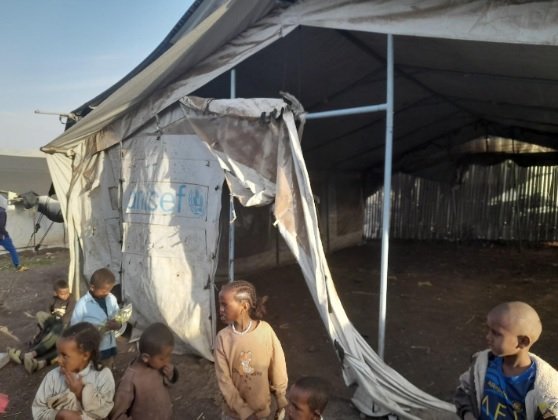
While the EDRMC’s push for national self-reliance and government-led response is commendable in principle, it raises serious concerns in practice—particularly amid increasing humanitarian needs across Ethiopia. Evidence indicates that food insecurity, malnutrition, disease outbreaks (malaria, cholera, measles), climate-induced drought, floods and conflict-driven displacement continue to worsen, especially in Amhara, Tigray, Oromia, Afar, Somali and Southern Nations regions.
Despite the scale of these challenges, the Ethiopian government and EDRMC have been criticized for downplaying humanitarian needs and blocking or delaying the recognition of emergency caseloads. This posture has made it difficult for the international community and humanitarian partners to mobilize sufficient resources or mount timely responses.
Notably, no official Humanitarian Response Plan (HRP) has been issued for 2025, marking a stark break from past practices that allowed transparent, coordinated aid planning. This omission reflects a troubling shift toward restricting humanitarian engagement and consolidating control, often at the expense of vulnerable populations.
Capacity Gaps and Denial of Needs
The Ethiopian government continues to face significant financial and logistical constraints in addressing the scale of humanitarian needs. However, instead of seeking coordinated international support, the EDRMC has frequently questioned or outright denied join needs assessments conducted by Government sectors, UN agencies, NGOs, and technical clusters. This includes refusal to use IPC acute food insecurity classification or delay the release of multi-agency seasonal assessment reports, further eroding trust with humanitarian partners.
This tension has created a politicized operating environment where access negotiations, aid delivery, and assessments are subject to political calculations rather than humanitarian principles.
Impact of Donor Cuts and Humanitarian Reset Agenda
At the same time, donor fatigue, funding cuts, and the global push for a humanitarian “reset” have further compounded existing response gaps. While the reset agenda seeks to reform the humanitarian system—placing greater emphasis on localization and nationally led responses—in the Ethiopian context, it has exposed significant shortcomings. In the absence of a transparent, accountable, and adequately prepared government-led response, this shift has left critical needs unmet on the ground.
The combined effect of these dynamics has left widening humanitarian gaps and unmet needs. There are credible but unconfirmed reports of starvation-related deaths, malnutrition among children, secondary displacement, and local-level violence, particularly in parts of Tigray, Amhara, Afar, Somali, Oromia and Southern. These situations risk escalating further without an immediate course correction.
The Way Forward: Accountability and People-Centered Action
The international community—including donor governments, UN agencies, international NGOs, civil society, and the Ethiopian diaspora and concerned citizen—must step up to advocate for a needs-based humanitarian response, grounded in humanitarian principles of neutrality, impartiality, and independence. Pressure should be applied to the Ethiopian government to restore transparency, facilitate access, and collaborate meaningfully with humanitarian actors.
No life should be lost because of a misguided interpretation of self-reliance or policy priorities divorced from the realities on the ground. Protecting lives and livelihoods must remain the central objective of any disaster response system, regardless of political or ideological orientations.
Editor’s Note : Views in the article do not necessarily reflect the views of borkena.com
__
Support Borkena : https://borkena.com/subscribe-borkena/
Join our Telegram Channel : t.me/borkena
Like borkena on Facebook
Add your business to Ethiopian Business Listing / Ethiopian Business Directory Business Listing Toronto
Join the conversation. Follow us on X (Formerly Twitter) @zborkena to get the latest Ethiopian News updates regularly. Subscribe to YouTube channel To share information or for submission, send e-mail to info@borkena.com
Charity starts at home: Why would Whites who make Europe/North America/Australia/etc. hell for Blacks all over the globe care about Blacks/Africa? Watch this: youtu.be/5mFSRb5dUOM