
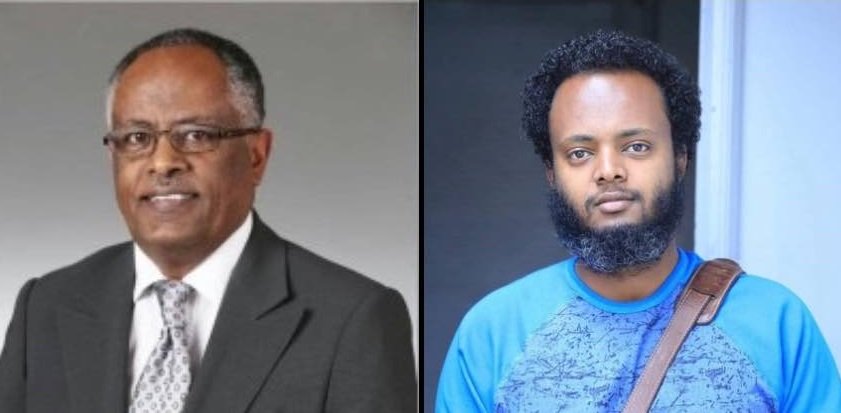
Yonas Tesfaye
The weight of history—and why we keep returning
It may seem almost absurd that in 2025, when the world has profoundly changed, Ethiopians still debate events from the 16th and 19th centuries. Yet in Ethiopia, history is never dead; it is never even past. It lingers powerfully in the present, shaping identities, loyalties, and resentments.
As Merera Gudina observes (Ethiopia: Competing Ethnic Nationalisms and the Quest for Democracy, 2003), memories of historical conquest are embedded in modern political claims, and the unfinished project of nation-building keeps the past alive. The violence of the 1990s, the tragic civil war of 2020–2022, and the current drumbeat for regional war show that atrocities on Ethiopian soil are not relics—they are recurring nightmares.
In this, Ethiopia echoes what Eric Hobsbawm called “the invention of tradition” (The Invention of Tradition, 1983): selective historical narratives that actively shape political programs in the present. The past here is not a sealed archive but ammunition—a living narrative over which battles continue.
The exchange between Dr. Yonas Biru and Eyasped Tesfaye opens an overdue conversation at the heart of Ethiopia’s nation-building project:
- How do we remember histories built on both democratic brilliance and brutal violence?
- How do we craft a shared narrative without flattening the complexity of multiple pasts?
This synthesis draws on two complementary frameworks:
- Ethnofabulation, as articulated by Tibebu Taye (2022): the creative weaving of myth, memory, and history by ethno-national groups to forge peoplehood. This idea resonates with Teshale Tibebu’s broader exploration in Ethiopian Modernity: An African Biography (2023).
- Critical fabulation, from Saidiya Hartman (Wayward Lives, Beautiful Experiments, 2019): a method that reads against archival silences to recover marginalized voices and expose the human cost of triumphant myths.
Together, these frameworks help us see why Oromo nationalist and pan-Ethiopianist narratives each construct selective myths—and why it remains so hard, yet so necessary, to hold multiple truths at once.
The Gadaa system—democratic brilliance and violent expansion, in a history that is never quite past
Dr. Yonas Biru questions how Oromo scholars can denounce Menelik II’s 19th-century campaigns as colonial and genocidal while celebrating the 16th-century Oromo expansions under the Gadaa system, which also involved conquest and subjugation. He accuses them of a selective historical morality.
Eyasped, drawing on Asmarom Legesse (Gadaa, 1973) and Mekuria Bulcha (Contested Narratives, 2016), defends the Gadaa system as a remarkable indigenous democratic innovation:
- When compared to premodern systems like the Athenian assembly or the Haudenosaunee Confederacy, Gadaa had real democratic elements: periodic elections, term limits, mass participation, and rotational leadership.
- Atrocities happened in both periods—but Menelik’s conquests occurred in the age of nation-states, backed by exclusionary land tenure and permanent subjugation. By contrast, the 16th-century expansions happened in a context where assimilation and identity remained fluid.
Eyasped also notes that historians like Mohammed Hassen (The Oromo of Ethiopia: A History 1570–1860, 1990) and chroniclers like Abba Bahrey (Zenahu le Galla, 1593) candidly documented Oromo conquests. Meanwhile, scholars like Asafa Jalata (Oromia and Ethiopia, 2010) argue that Menelik’s campaigns were explicitly colonial, permanently restructuring power and land.
Yet Dr. Yonas rightly points out the paradox:
How can we celebrate Gadaa’s democracy while ignoring the violent expansion it organized?
Mohammed Hassen and Abba Bahrey document:
- Raids and enslavement,
- Mass violence that transformed entire regions.
The deeper question remains: why are we still passionately arguing over these centuries-old events?
It feels strange, when Ethiopia has also lived through:
- A devastating civil war as destructive as any past conquest (Tigray conflict, see Alex de Waal, The Telegraph, 2022),
- The Red Terror and Derg purges (Bahru Zewde, A History of Modern Ethiopia, 2001),
- Recurring communal massacres and looming regional conflict.
Yet, as Donald Donham writes (Violence in Ethiopia, 2016):
“History is not past; it is a living force, shaping the moral claims and political agendas of the present.”
Critical ethnofabulation helps us see this: history here is not nostalgia—it is an active, unfinished argument structuring political claims and resentments.
Menelik II—modernizer, colonizer, and why the debate remains taboo
Eyasped (drawing on Harold Marcus, The Life and Times of Menelik II, 1995) presents Menelik II as:
- Builder of modern Ethiopia’s borders,
- Victor at Adwa, inspiring anti-colonial struggles worldwide,
- Modernizer: introducing coinage, telegraph, roads.
Yet Menelik’s expansion also:
- Alienated southern lands to the church and nobility (Donham & James, The Southern Marches of Imperial Ethiopia, 1986),
- Imposed hierarchical administration,
- Left a legacy of exclusion still felt today (Asafa Jalata, 1998).
- And other contested narratives.
Dr. Yonas has reservations accepting these contradictions also asks: why single out Menelik when earlier expansions also caused devastation? Shouldn’t we judge both periods by similar moral standards?
Why comparing the two eras is not straightforward
Dr. Yonas challenges Oromo nationalists: if Gadaa-era expansion also involved atrocity, why condemn Menelik uniquely?
Eyasped responds, drawing on modern historiography (Benedict Anderson, Imagined Communities, 1983; John Breuilly, Nationalism and the State, 1993):
- The 16th-century Oromo expansions occurred before the rise of modern nation-states and colonial ideologies.
- Conquered peoples were eventually assimilated into Oromo identity, blurring distinctions over generations.
- Menelik’s 19th-century campaigns, by contrast, unfolded within a modernizing imperial project, with land tenure, taxation, and cultural suppression locking conquered peoples into subordination.
This is why the trauma of Menelik’s conquests persisted: they shaped a national order where some groups felt permanently “less Ethiopian.”
Moreover, modern nationalism amplified these memories into ethnic identity politics — transforming old wars into present-day grievances.
Recognizing and critiquing the debate itself
What is striking is not just the content—but that the debate happened at all.
Most influential scholars remain silent, fearing politicization or backlash. These two broke the taboo:
- Dr. Yonas Biru, for his immense historical range and clarity,
- Eyasped Tesfaye, for his bravery and calm articulation as a young scholar.
Yet both risk haberism (from habera: chatter): the temptation to debate painful historical wounds in a tone that sometimes drifts toward performance over sober reckoning.
Their dialogue sometimes floats between virality and moral responsibility—simplifying what is, at heart, tragically complex.
The media ecosystem amplifies this:
- Contemporary media platforms privilege confrontational, binary debate over sustained inquiry.
- In an attention economy, hot takes outperform thoughtful adjudication.
As Evgeny Morozov (To Save Everything, Click Here, 2013) warns, virality and depth rarely coexist—Ethiopia’s historical debate is no exception.
Critical ethnofabulation and the hope for a shared narrative
Here, the concept of ethnofabulation—recently articulated by Tibebu Taye in Borkena (2024)—helps explain why these debates remain so charged. Tibebu defines it as:
“A reasoning mode where ethnic communities construct appealing historical narratives to justify political claims in the present.”
This builds on the broader reflections of Teshale Tibebu (Ethiopian Modernity: An African Biography, 2023), who shows how Ethiopian modernity was built on powerful, sometimes exclusionary historical myths.
Yet ethnofabulation alone risks entrenching separate, rival myths. Here, critical fabulation, from Saidiya Hartman (2019), becomes essential:
- Reading creatively against the archive,
- Recovering voices marginalized by dominant narratives,
- Asking: whose suffering was erased to build these myths?
Together:
- Ethnofabulation explains why Gadaa becomes pure democracy in nationalist telling, and Menelik becomes flawless unifier in pan-Ethiopianist telling.
- Critical ethnofabulation demands we also see the violence buried in these myths.
If we combine Tibebu’s insight about fabulation’s creative power with Hartman’s method of ethical critique, we can begin to craft a non-binary Ethiopian meta-narrative: one wide enough to hold multiple truths—even painful ones.
As Merera Gudina argues, true nation-building must move from conquest to consent, from myth to dialogue.
Exit—history as a shared burden
The debate between Dr. Yonas Biru and Eyasped Tesfaye shows that historical memory is both wound and resource. Ethiopia must stop asking who was “worse”—Menelik or the Gadaa expansions—and instead ask how to build a nation where no group’s suffering is denied, and no group’s dignity is erased.
Ethnofabulation—understood critically—offers a path: not by abandoning history, but by retelling it in ways that admit contradiction and complexity.
As Teshale Tibebu reminds us:
“A nation is not only what it remembers; it is also what it dares to forget—and why.”
History in Ethiopia is not dead; it breathes in the silences we choose to keep—or to break.
By:
- Recognizing Gadaa’s democratic brilliance and its violent expansion,
- Acknowledging Menelik’s modernizing genius and his colonial atrocities,
- Embracing ethnofabulation tempered by critical reading,
…we can begin to tell a shared story that heals rather than divides.
As Eyasped wisely says:
“A state can be forged by conquest; a nation must be built by consent.
And as Hartman teaches: the past is never fully gone—it lives on, waiting for us to reckon honestly.
Editor’s Note : Views in the article do not necessarily reflect the views of borkena.com
__
Support Borkena : https://borkena.com/subscribe-borkena/
Join our Telegram Channel : t.me/borkena
Like borkena on Facebook
Add your business to Ethiopian Business Listing / Ethiopian Business Directory Business Listing Toronto
Join the conversation. Follow us on X (Formerly Twitter) @zborkena to get the latest Ethiopian News updates regularly. Subscribe to YouTube channel To share information or for submission, send e-mail to info@borkena.com
The ‘past’ is (a) DEAD, (b) has an endless pit, (c) the talking heads (however expert they might be in their dissections of history ) have nothing but the ‘past’ to base their analytical nonsense & rubbish conclusions on…
Imagine the chines with their more than 5000 years of civilizations that contributed far too many invention such as compass, gunpowder, paper-making and printing, to mankind in the 9th century, have yet demonstrated their inventiveness and productive thinking in the last 45 years, showing us all, how to focus on PRODUCTIVE THINKING & TAKING ACTIONS to make a difference not only in their own lives but to improve the living & economic conditions of their fellow human-beings all around the World.
They had as many dynasties and rulers of smaller kingdoms within the greater china, and went through many hard-times & challenges through out their very long history perhaps similar to any other nation on Earth including ours.
However, they wisely figured the endless-suffering that comes from focusing on ‘THE PITFALLS OF OLD HISTORY’ is not going to make any difference in making their lives better NOW, therefore they decided to leave the PAST to stay PAST & BEHIND them untouched and to MOVE FORWARD & to LIVE LIFE in the PRESENT and use the present to CREATE a BETTER tomorrow for themselves and for children and CARVE THE WAY & establish the conditions that will help children’s of their children to live a better life than theirs now.
Their ‘elites’ engineered their current 45 years old SUCCESS, while our ‘elites’ chose to spend their time and ‘expertise’ (in the last 51 years) in dissecting & butchering the PAST, & coming up with their endless nonsensical conclusions and baseless interpretations that would make matters worse than they actually were and at the same time keeping the NATION’S young mind POISONED decades after decades with their baseless theories & concoctions to keep the NATION in perpetual STANDSTILL & the population at each others throats to no end.
Some of these people are retired former professionals of some kind living their life elsewhere… ‘steering the pot’ as a pastime hobby, without realizing the DAMAGE they are doing to the millions & millions of young minds, and the millions who have no access to these kinds of analysis with citations from overseas ‘experts’ (who themselves have no ideas about their own murders colonial past history) write books and publication about our Nation’s history based on their “COLONIAL’ & ‘missionary’ (spy) narratives & incomplete understanding of a foreign culture & land like ours.
It maybe necessary to cite some peoples work in an academic-endeavors in peer reviews to get one’s work accepted (in ‘dumb & dumber’ circles’ of buttering each other) but is is irresponsible to give credential to a talking head that happen to have scribbled some names and places in a foreign land and culture they have no clue as to what is what except the face value of their analysis based on their training in their schooling and biases they might carry…
One thing we can learn from no one else but the Chinese is this: steady persistence in adhering to a course of action NOW, and steadfastness to change the conditions we are in, which we have created knowingly or unknowingly or both in the past 50 years and continue to do so as we speak.
We need to STOP, these aimlessly going in circles with narratives after narratives to no end!
Instead of ‘SHOWING OFF’ what we ‘learnt’ & debating forever, lets use what we ‘learned’ to DO that which would produce some tangible OUTCOME to the our society as a whole. That would bring PROGRESS.
” All experience has shown that mankind is more disposed to suffer-while evils are sufferable than to right themselves by abolishing the forms to which they are accustomed.”,
The Four Horsemen
Basically:’ monkey see monkey do’ scenario, several varieties & outcomes exist, but for the sake our topic, the path the Chines took vs the one we are on are good examples to help us compare and contrast, and pick the one that produce CONCRETE RESULTS.
Coming together has done miracles for the Chinese, it would work for us too, if we have the courage!
“Whether you make a Miracle or misery out of your Mind simply depends on how Consciously you conduct yourself.” SG ( Joy & misery only exist in the mind, nowhere else.)
Be well.
You must be indoctrinated by Confucian’s thoughts, you need to remember under Mao stung dictatorship’s in Great Leap Forward 40 millions Chinese peasants perished.Every nation’s has it own fault line. Stop your Chinese gospels.
Perhaps you misread it, but I mentioned what you singled out, in aggregate ( in the second paragraph above).
As for the ‘Chinese gospels’, again, if you reread it in full, you might notice I ‘stressed’ (on their actions (post 1980), not their being) on their (‘choice’ to) FOCUS ON ‘the here & now’ to IMPROVE their LIVING-conditions AS WELL AS THE FUTURE of their NATION & their future GENERATIONS. (individual life is a ‘blink of an eye’ but the NATION & the continuum….).
Everything about life is, the CHOICE we make.
Be well.
Better Choice individually and then collectively and collaboration with like minded is the key.
We are entering The Age of Aquarius :
The last time Earth (the solar system) was at this spot in SPACE (in its orbit) was 25,000 years ago, humanity did not exist here, therefore all the 8 billions that are here to experience these spacial-transition time from darkness to the light for the first time. It is a transition like no other, think of it like what happened to the Caterpillar turn into a Butterfly ‘from within’.
‘Our arrival to the ‘Galactic Photon Belt”‘
Link = youtube.com/watch?v=B0NLfBQHw-8&ab_channel=OwenLucas
“Every choice you make, every word you speak, every frequency you carry is contributing to the architecture of what comes next…”
Link = youtube.com/watch?v=0lPTbuwumh8
Be well.