
Solomon Gebreselassie
In Euclidean Geometry (not in all Geometries) no matter how long they are extended in a plane, parallel lines never meet. They are, by definition, the same distance apart but never intersect. Ethiopian politics, both the “legal” parties legalized since EPRDF assumed power, and the opposition parties predating the EPRDF, are roughly divided into “kilil parties” and “ager akef parties”, or “multi-ethnic parties” and ethno-nationalistic parties”. The distinction is not as smooth as one would like it to be, but for the purposes of practical politics of the last 50 years or so, the two large groupings and their aspirations are clear. Having said that, there are palpable differences within each group and each is an aggregated group, with the choice of its forms of struggle and organization.
One of the major distinguishing aspects of the two groupings is their position on the current Ethiopian Constitution promulgated and ratified by the EPRDF in 1995. The multi-ethnic parties oppose the concept of Ethnic Federalism, although without exception, they all adhere to the notion of Federalism predicated on a combination of territorial/economic/linguistic criteria and not solely on linguistic criteria as the current constitution provides. They also vehemently call for the protection of minority rights which the current constitution deprives unless when it is politically desirable. On the other hand, the ethno-nationalist parties who were the main forces behind the adoption of this constitution largely want it to continue with slight modification, if any, (or implementation of certain provisions) or desire it to continue as is. As a result of these seemingly polarized positions, much consultation and negotiation are anticipated in post-Abiy Ethiopia (preferably earlier) regarding a mutually agreed upon document. The self-determination concept expressed in its extreme form in Article 39 of the constitution is also another major flashpoint.
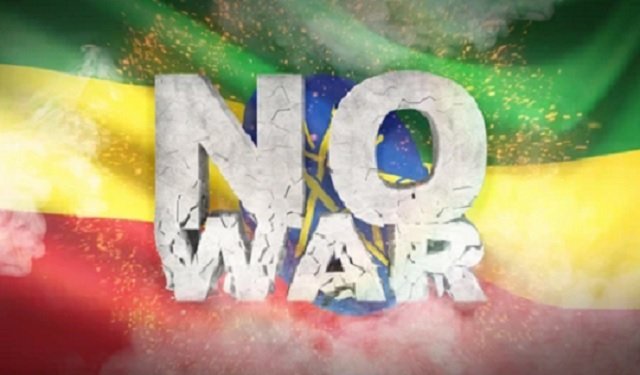
In the meantime, despite their differences, the two groups have two commonalities that each grouping seems to have a blind spot on perhaps due to the burden of rearview mirror politics: one is the determination to stop the civil wars in Ethiopia currently raging in Amhara and Oromia and threatening Tigrai and on-and-off skirmishes in other regions of the country. There were times when the two groupings inside Ethiopia came together and called for the slogan of “Stop the Wars”. Secondly, both groupings want to remove the Abiy Prosperity Party (PP) from power because they both believe, as most Ethiopians do, PP is the source of the insecurity of our people in Ethiopia and abroad. Now the question is what is the way to bring the two groupings, both inside the country and abroad, to wage a common struggle around a minimalist program containing the agendas of peace and a post-Abiy transitional structure? At the outset, it must be understood that no grouping within the first or the second can singularly dictate the terms of the struggle or the transition. Ethiopian politics heretofore is going to be a subject of good will negotiations, compromises and positive vibes, as difficult as that might be. Absent these, we shall continue descending into the familiar terrain of the vicious cycles of violence and poverty.
Therefore, to kickstart this process, the example set by the Ethiopian Opposition Parties Caucus inside Ethiopia in the last week of July 2025 can be used as a model: Their press release was titled, “NO TO WAR, YES TO PEACE AND DEMOCRACY”.
In a similar fashion, groupings abroad, such as Save Ethiopia Forum and the Ethiopian Solidarity Movement to which it belongs, Lidetu Ayalew’s ABRONET, organized Amhara groups, and the Oromo Scholars and Representatives Group, Tigrai Groups, other organized groups and notable Ethiopians from unrepresented communities must adopt a minimalist platform and coordinate their struggles. Which group abroad has the political courage to start the initiative and send out the invitation?
Editor’s Note : Views in the article do not necessarily reflect the views of borkena.com
__
Support Borkena : https://borkena.com/subscribe-borkena/
Join our Telegram Channel : t.me/borkena
Like borkena on Facebook
Add your business to Ethiopian Business Listing / Ethiopian Business Directory Business Listing Toronto
Join the conversation. Follow us on X (Formerly Twitter) @zborkena to get the latest Ethiopian News updates regularly. Subscribe to YouTube channel To share information or for submission, send e-mail to info@borkena.com
Parallel lines will not meet due to the inherent gravitational forces pulling them apart: cultural egoism , political incompetency,failure to understand shortcomings.
Yesss to all recent wars and the upcoming ones! They are all unavoidable!
It sounds nice and civilized when people talk about peace and NO war, but keep in mind that a country like ours who was abused for so long by her own ignorant children supported by our true enemies around the world, any country cannot sustain the level of disrespect we have witnessed for years against Ethiopia. The king at 4 kilo clearly know that a country with more than 120m People cannot beg for peace, he will just bring peace by taking out the bad person or a team. Imagine a keyboard without DELETE button.. useless, so please continue deleting any enemy that work against Ethiopia!!