
Overview: Beyond the Psyche of the Supporter
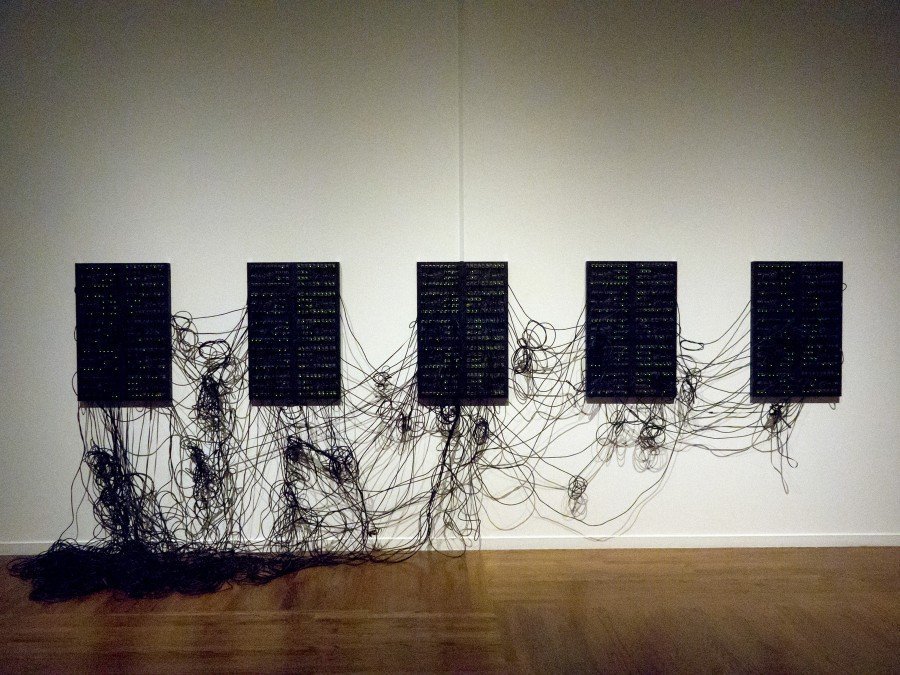
Patron A.
A society with revolutionary potential has been reduced to a fractured mass due to Ethiopia’s political landscape being caught in a vicious cycle of interethnic animosity and violence. Political agency has been methodically stifled and civic consciousness purposefully undermined. Historically strong, the Ethiopian people are now alienated and depoliticized, reduced to mere spectators in a battle for supreme power.
It is no coincidence that civic agency is being undermined. It is the result of intricate interactions between deep psychological dynamics, institutional deterioration, and elite manipulation. Professor Messay Kebede presents a compelling psychological argument in his most recent work, delving deeply into the thoughts of regime supporters using the ideas of “deflection” and “awe of power” to explain their allegiance. Separately, Dr. Yonas Biru advocates for a new paradigm of analysis, using “quantum physics” as a rhetorical device to criticize traditional social and political science for its inability to understand the complexity of the country.
Dr. Biru’s call is insightful, yet his analysis ultimately bounces back to a traditional, structural critique, missing the opportunity to engage with the actual essence of quantum-like thinking. Ironically, it is Professor Kebede who, without ever using the term, comes closer to a quantum-level analysis. His philosophical deep-dive into the supporter’s psyche—a mind existing in a state of moral superposition, dependent on the observer effect of self-deception—captures the paradoxical nature of human political behavior.
Giving credit to Dr. Biru’s call for a new approach, this article engages with the analytical framework of quantum physics in a more applied sense. I attempt to reconnect the micro-level psychological analysis of Professor Kebede with the macro-level structural elements that entangles individual psyche in a web of cultural and mental framework. My argument is that the “unconscionable servility” Kebede identifies is a symptom of a much deeper disease: the erosion of civic agency and the decay of republican institutions, which create the conditions for such
1. The Depoliticized Mass: The Fertile Ground for Servility
Supporters shift blame onto scapegoats, as Professor Kebede accurately notes, but this tactic only works because it takes place in a purposefully depoliticised public space. His description of “awe of power” necessitates a receptive audience. The state’s systematic eroding of public consciousness and historical repression are the causes of this civic inertia.
By using Antonio Gramsci’s theory of cultural hegemony, we can observe how the regime creates consent among the general public as well as among elites. Digital echo chambers that label critics as “anti-development saboteurs” stifle dissent while framing state-led initiatives like the Corridor Development Initiative as historic transformations. This results in a kind of citizen policing, where state propaganda is internalised by a dispersed and atomized populace.
This is the state that C. Wright Mills referred to as a “mass society,” in which the critical media, autonomous parties, and civil organisations—intermediary institutions that support independent thought—have been neutralised. In this vacuum, the public is a mirror reflecting power rather than acting as a check on it. Thus, the audience is trained to applaud in time as the elites’ servility is performed on a stage. The public’s inability to hold elites accountable is the issue, not just their loyalty.
2. The Extremist Scapegoat: Not Just a Cause, But a Result of State Failure
According to Kebede, elites shift the blame to “ethnonationalist and extremist forces.” This is accurate, but it overlooks a crucial detail: the extremism that the regime now exploits as a scapegoat was fostered by the regime itself. The “extremist political projects” of both Amhara and Oromo nationalism, which the current government has alternately supported and suppressed, are the main barrier to national discourse and stability, as stated in Borkena.
The Prosperity Party actively participates in this dynamic rather than acting as an impartial arbiter between extremists. As the Borkena analysis demonstrates, the legitimacy of the regime is directly tied to its ability to manage these competing nationalist ambitions. By failing to offer a unified, inclusive national vision, the government has created a political vacuum that allows armed forces to flourish. The continued conflict with the some of the armed groups (some of them were formerly the state’s allies) is directly attributable to this failure.
Therefore, when an elite supporter places the blame on “extremists,” they are pointing to a regime-created issues rather than an external bodies. This is a cynical feedback loop where the state’s failures create the very scapegoats required to defend its continued hold on power; it goes beyond simple deflection.
3. The Co-opted Opposition: When Alternatives Disappear
The “awe of power” is most potent when there are no viable alternatives. The systematic co-optation of opposition parties has eliminated any institutional challenge to the ruling elite, making loyalty to the regime appear as the only pragmatic choice
The examples are striking. In the same government they once opposed, Belete Molla of the National Movement of Amhara (NaMA) and Berhanu Nega of Ethiopian Citizens for Social Justice (EZEMA), currently serve as ministers. Their defence of “serving the people” conceals a more fundamental truth: the ceding of their political independence. Opposition parties stop serving as platforms for dissent when they turn into extensions of the ruling party and instead serve as tools for the consolidation of authoritarianism.
The conditions for the psychological phenomena Kebede describes are created by this institutional decay. The “awe of power” turns into an unstoppable force if the Prosperity Party is the only way to gain influence. These leaders’ subservience is a political result of a system that has effectively destroyed all independent power centres, not merely a personal shortcoming.
4. Foreign Policy as Spectacle: The Absence of Accountability
Ethiopia’s foreign policy, which has deteriorated into a string of careless, unilateral acts carried out for a domestic audience, is the clearest example of the lack of accountability. The growing hostilities with Eritrea over access to the Red Sea and the Memorandum of Understanding with Somaliland, which was signed without parliamentary discussion, are political stunts rather than calculated actions.
This recklessness is a direct consequence of the civic disengagement described earlier. When the public is not informed or consulted, leaders feel emboldened to act as the sole custodians of the national interest. Bombastic rhetoric—from promises of celebrating Irreecha in the Indian Ocean to boasts of military supremacy—replaces sober, interest-driven diplomacy.
This connects back to Kebede’s thesis: the “uplifted ego” he describes in individual supporters is mirrored at the national level. The regime projects an image of strength and ambition on the world stage to distract from its domestic failures. The elite supporter’s personal deflection is thus reinforced by the state’s national-level deflection.
5. Conclusion: A Crisis of the Republic, Not Just the Republican
Ethiopia’s political crisis is not merely a product of external threats or elite miscalculations—it is a siege from within, rooted in a complex entanglement of civic disengagement, ideological betrayal, and institutional decay. As this analysis has shown, the political mass, once envisioned as the backbone of democratic accountability, has become a passive audience to state theatrics.
Professor Messay Kebede has given us a profound and unsettling portrait of the individual enabler, arguing that the “unconscionable servility” of elite supporters is a psychological phenomenon—a product of the “awe of power” and the moral compromises it demands. His micro-level analysis reveals a mind in a state of quantum-like superposition, simultaneously aware of the regime’s failures and committed to its defense, using the mechanism of “deflection” to prevent a painful collapse into a single, coherent truth.
However, as this rejoinder has argued, this individual psyche does not exist in a vacuum. It is entangled within a macro-level, web-like structure of political and institutional decay. The supporter’s “deflection” is only possible because the state has systematically dismantled the very institutions that would hold it to account. The “awe of power” is only so potent because all legitimate alternatives—independent media, autonomous political parties, and a vibrant civic society—have been neutralized.
Dr. Yonas Biru correctly identifies the systemic nature of this crisis, pointing to the irreconcilable conflicts between extremist political projects and the constitutional failures that fuel them. But where he sees discrete, competing parts, a deeper analysis reveals a state of structural entanglement. The regime’s failures produce the very extremist scapegoats that Professor Kebede’s supporters need to justify their loyalty. The passivity of the political mass is inextricably linked to the co-optation of the opposition. The reckless spectacle of foreign policy is entangled with the absence of domestic accountability.
The true nature of Ethiopia’s crisis, therefore, is not a choice between a psychological or a systemic explanation. It is the recognition that the two are one and the same. The micro-pathology of the individual mind is a direct reflection of the macro-pathology of the republican body.
Unless Ethiopia can address this entanglement—by reclaiming its civic agency, reforming its political institutions, and fostering a politics of accountability—it risks remaining a republic where the people are not governed, but managed. The siege from within will continue, not just as a condition of the state, but as a state of mind.
Editor’s Note : Views in the article do not necessarily reflect the views of borkena.com
__
Support Borkena : https://borkena.com/subscribe-borkena/
Join our Telegram Channel : t.me/borkena
Like borkena on Facebook
Add your business to Ethiopian Business Listing / Ethiopian Business Directory Business Listing Toronto
Join the conversation. Follow us on X (Formerly Twitter) @zborkena to get the latest Ethiopian News updates regularly. Subscribe to YouTube channel To share information or for submission, send e-mail to info@borkena.com